
BuddhistCatholicContemplativeEvangelicalGeneral ChristianHinduJewishLatter-day SaintMuslimNew VisionsProgressive Christian
Beliefs
- Buddhist
- Catholic
- Contemplative
- Evangelical
- General Christian
- Hindu
- Jewish
- Latter-day Saint
- More Voices
- Muslim
- New Visions
- Pagan
- Progressive Christian
Topics
- Religion News
- Food and Religion
- Sports and Religion
- Religious Art
- Religious Music and Entertainment
- Religious Events
- History and Religion
- Style and Religion
- Politics and Religion
- Women in Religion
- Recreation Outdoors and Religion
- Business Finance and Religion
- Careers Workplace and Religion
- Education and Religion
- Family Parenting and Religion
- Health Fitness and Religion
- Home and Religion
- Relationships and Religion
- Technology and Religion
- Travel and Religion
Columnists
- Buddhist Columnists
- Business Finance and Religion Columnists
- Careers Workplace and Religion Columnists
- Catholic Columnists
- Contemplative Columnists
- Education and Religion Columnists
- Evangelists Columnists
- Family Parenting and Religion Columnists
- General Christian Columnists
- Health Fitness and Religion Columnists
- Hindu Columnists
- History and Religion Columnists
- Home and Religion Columnists
- Jewish Columnists
- More Voices Columnists
- Latter Day Columnists
- Muslim Columnists
- New Visions Columnists
- Nonreligious Columnists
- Pagan Columnists
- Politics and Religion Columnists
- Progressive Columnists
- Recreation Outdoors and Religion Columnists
- Relationships and Religion Columnists
- Religion News Columnists
- Religious Art Columnists
- Religious Events Columnists
- Religious Music and Entertainment Columnists
- Sports and Religion Columnists
- Style and Religion Columnists
- Technology and Religion Columnists
- Travel and Religion Columnists
- Women in Religion Columnists
Resource Library
- 2026 Calendar
- Library of World Religions
- The 100 Most Holy Places on Earth
- Patheos Answers
- Podcasts
- Videos
- Faith Leaders Database
- Anglican Episcopalian
- Bahai
- Baptist
- Buddhism
- Christianity
- Confucianism
- Eastern Orthodoxy
- Hinduism
- Holiness and Pentecostal
- ISKCON
- Islam
- Judaism
- Lutheran
- Methodist
- The Church of Jesus Christ of Latter-day Saints
- New Age
- Paganism
- Presbytarian and Reformed
- Protestantism
- Religion Behind the Scenes
- Roman Catholic
- Scientology
- Shia Islam
- Sikhism
- Sufism
- Sunni Islam
- Taoism
- Zen
- See all religions
Research Tools
 Ad-Free & Subscriber Log-In Subscription Support
Ad-Free & Subscriber Log-In Subscription Support
Follow Patheos 

- Trending:
- Forgiveness
- |
- Marriage
- |
- Consciousness
- |
- Death Penalty
- |
- Election
- |
- Halloween
 Hawkeye
- Home
- Evangelical
- On Easter Sunday the Buried Question Remains Did Jesus Die and Live?
On Easter Sunday the Buried Question Remains Did Jesus Die and Live?
Last updated on: April 18, 2017 at 1:47 pm by S.J. Masson
On Easter Sunday the Buried Question Remains Did Jesus Die and Live? 2017-04-18T13:47:11-05:00 S.J. Masson
Patheos Explore the world's faith through different perspectives on religion and spirituality! Patheos has the views of the prevalent religions and spiritualities of the world.
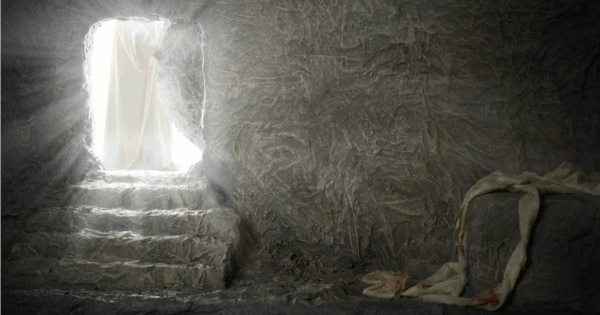
At some point, questions that we have determined to bury throughout our lives stubbornly rise up. ‘What will happen when I’m gone?’ ‘Is there any point in all my struggles?’ ‘Does life have any purpose or meaning that my death will not erase?’
We all have heard comforting answers to such questions in movies like It’s a Wonderful Life or in existential Russian novels; and harrowing answers in the mundane statistics of rising suicide rates. There is a disquieting finality to the latter answers.
These are not idle questions.
Burying the Question
It’s true that there are some atheists today who are so hostile to Christianity that they actually question whether Jesus ever lived. It is a loaded question. It is loaded by the burial of the overwhelming historical evidence about Jesus, and it covers up the growth of the church in the midst of terrible persecution – a historical fact no one has ever doubted.
I have no intent of engaging with people that simply wish to heap dirt on the real question.
The news of Easter Sunday does not hinge upon vain speculation of whether Jesus lived and died, but the vital matter of whether he died and lived.
‘Was Jesus raised from the dead?’ That is the question.
If He was, then all the claims that He makes about Himself will exert a living authority over me and the meaning of my life. The answer to this buried question will ultimately find me out however much dirt I heap upon myself.
Whatever arises from my inquiry into Jesus’ resurrection will also enliven the answers to all my personal questions. I think that the answers to that question are clear, compelling, and readily available.
Burying the Answer
What I find, however, is that even when entertaining the vital question, I still wish to bury the answer. It is because of the nature of the claims the Bible makes about Jesus. It claims that He is God, and He alone. And the Hebrew tradition out of which He speaks insists that by claiming divinity Jesus is thereby asserting that He is the Creator of all people.
He made me. He gave me life.
Now it is perennially fashionable to deny the Christian doctrine of original sin.
But there is perhaps no more blatant illustration of it than people’s inherent unwillingness to assess the claims of Jesus’ authority fairly.
Why do I say that? Because any person with a shred of honesty will admit he bridles at the very idea that Jesus should be his Creator. It repudiates my unspoken article of faith: that I am invincible. If He is God, it means I am not. His very existence undermines my culture’s dominant narrative that I am like a self-interpreting orphan who must create his own metanarrative – just like the superheroes I admire. As it says in the poem Invictus: ‘I am the master of my fate: I am the captain of my soul’.
Of course, it also relieves us from the tyrannous claim of other sinners to govern us in accordance with that same belief.
‘The government shall be upon his shoulders’
What is the effect of Jesus’ resurrection on my life?
Declaring that Jesus is the Saviour isn’t sufficient. I need to acknowledge that He is my Lord.
In a famous section of Handel’s Messiah there is a chorus echoing Isaiah’s prophesy about the invincible King of Israel:
‘For to us a child is born,
to us a son is given;
and the government shall be upon His shoulders,
and His name shall be called
Wonderful Counsellor, Mighty God,
Everlasting Father, Prince of Peace.’
The line that ‘the government shall be upon His shoulders’ refers to the authority of Jesus Christ over all things. [‘Christ’ is the Greek word for ‘annointed one’, or ‘King’]. The King reigns.
The idea isn’t Handel’s invention. The earliest Christian confession was that ‘Jesus is Lord’. It is a plain rejection of all other claims of authority, including the Roman Imperial claim over the conscience of its citizens.
The Christian declaration inflamed the Roman persecution of the church for centuries. The multicultural Roman Empire allowed for every form of diversity imaginable – so long as the supreme divinity of the state in the person of the Emperor was acknowledged.
It is no different today. If Jesus is Lord, then He prescribes a limit on the government of the state over our lives. He authors our lives’ beginning, ordains their end, and is involved in every minute in between.
On the other hand, rejecting the state’s absolute sovereignty does not mean that we are now on our own, and are going to have to be responsible for ourselves from now on. That is a crushing burden. It means we are going to benefit from His governance over our lives: ‘take my yoke upon you, and learn from me, for I am gentle and lowly in heart, and you will find rest for your souls.’
The government on Christ’s shoulders means a light burden on ours. If we put back on God what He has placed upon us, He lifts our sense of responsibility by realizing His care for us.
Easter resurrection means the Lord of Life reigns. Celebration begins by casting all your anxieties upon him because He cares for you.
Previous Post
April 13, 2017
Tolkien’s footnote to the cross in The Lord of the Rings
Next Post

June 7, 2017 Bill 89 and the legal assault on the family in Canada
Browse Our Archives
Select a Category Apologetics Culture Wars Easter Education Holidays Literature Politics; Media Questions Uncategorized Worldview
Select a Month December 2017 November 2017 October 2017 August 2017 July 2017 June 2017 April 2017 February 2017 January 2017 December 2016
Follow Us!
TAKE THE
Religious Wisdom Quiz
In the New Testament what is the last book?
Select your answer to see how you score.
Titus Luke Revelation Matthew
Related posts from Hawkeye
Matthew's Gospel: Joseph's Example to Men
Tolkien’s footnote to the cross in The Lord...

Orphans: the Superheroes of a Romantic Culture, part...

Why is the force not with Rogue One?
TRENDING AT PATHEOS Evangelical

The REST of Your Life: A Creative Wrestles...
This week I had a conversation with a good friend from church....

How the author of the world's best hymn...
I've been working with John Newton for a while now. This makes...

Long before this Lectio Divina, Psalm 130 - the song - started...

What About the Trees? Another Living Parable
After I finished writing the last article about falling leaves as a...

Why Classical Education Is a Conversation, Not a...
Come and Read: Joy in Classical Education When I was a little...

Cornell University has received a great deal of negative publicity and intense...
view all Evangelical blogs
Ad-Free & Subscriber Log-In Subscription Support
- About Us
- 2026 Calendar
- Videos
- Podcasts
- Library of World Religions
- Faith In Media Tracker
- Advertise With Us
- Write for Us
- Privacy Policy
- Terms of Service
- Do Not Sell My Data
- Contact Us
- Radiant Digital
- Manage Newsletter Subscriptions
- Unsubscribe From Notifications
- Sitemap
Copyright 2008-2026, Patheos. All rights reserved.
Subscription Support Ad-Free & Subscriber Log-In
Follow Patheos