
BuddhistCatholicContemplativeEvangelicalGeneral ChristianHinduJewishLatter-day SaintMuslimNew VisionsProgressive Christian
Beliefs
- Buddhist
- Catholic
- Contemplative
- Evangelical
- General Christian
- Hindu
- Jewish
- Latter-day Saint
- More Voices
- Muslim
- New Visions
- Pagan
- Progressive Christian
Topics
- Religion News
- Food and Religion
- Sports and Religion
- Religious Art
- Religious Music and Entertainment
- Religious Events
- History and Religion
- Style and Religion
- Politics and Religion
- Women in Religion
- Recreation Outdoors and Religion
- Business Finance and Religion
- Careers Workplace and Religion
- Education and Religion
- Family Parenting and Religion
- Health Fitness and Religion
- Home and Religion
- Relationships and Religion
- Technology and Religion
- Travel and Religion
Columnists
- Buddhist Columnists
- Business Finance and Religion Columnists
- Careers Workplace and Religion Columnists
- Catholic Columnists
- Contemplative Columnists
- Education and Religion Columnists
- Evangelists Columnists
- Family Parenting and Religion Columnists
- General Christian Columnists
- Health Fitness and Religion Columnists
- Hindu Columnists
- History and Religion Columnists
- Home and Religion Columnists
- Jewish Columnists
- More Voices Columnists
- Latter Day Columnists
- Muslim Columnists
- New Visions Columnists
- Nonreligious Columnists
- Pagan Columnists
- Politics and Religion Columnists
- Progressive Columnists
- Recreation Outdoors and Religion Columnists
- Relationships and Religion Columnists
- Religion News Columnists
- Religious Art Columnists
- Religious Events Columnists
- Religious Music and Entertainment Columnists
- Sports and Religion Columnists
- Style and Religion Columnists
- Technology and Religion Columnists
- Travel and Religion Columnists
- Women in Religion Columnists
Resource Library
- 2026 Calendar
- Library of World Religions
- The 100 Most Holy Places on Earth
- Patheos Answers
- Podcasts
- Videos
- Faith Leaders Database
- Anglican Episcopalian
- Bahai
- Baptist
- Buddhism
- Christianity
- Confucianism
- Eastern Orthodoxy
- Hinduism
- Holiness and Pentecostal
- ISKCON
- Islam
- Judaism
- Lutheran
- Methodist
- The Church of Jesus Christ of Latter-day Saints
- New Age
- Paganism
- Presbytarian and Reformed
- Protestantism
- Religion Behind the Scenes
- Roman Catholic
- Scientology
- Shia Islam
- Sikhism
- Sufism
- Sunni Islam
- Taoism
- Zen
- See all religions
Research Tools
 Ad-Free & Subscriber Log-In Subscription Support
Ad-Free & Subscriber Log-In Subscription Support
Follow Patheos 

- Trending:
- Forgiveness
- |
- Marriage
- |
- Consciousness
- |
- Death Penalty
- |
- Election
- |
- Halloween
 Hawkeye
- Home
- Evangelical
- Orphans: A Tragic State transformed into a Cultural Ideal, part 1
Orphans: A Tragic State transformed into a Cultural Ideal, part 1
Last updated on: February 21, 2017 at 5:00 pm by S.J. Masson
Orphans: A Tragic State transformed into a Cultural Ideal, part 1 2017-02-21T17:00:10-05:00 S.J. Masson
Patheos Explore the world's faith through different perspectives on religion and spirituality! Patheos has the views of the prevalent religions and spiritualities of the world.
‘Remember, O LORD, what has befallen us; Look, and see our reproach! Our inheritance has been turned over to strangers, Our houses to aliens. We have become orphans without a father, Our mothers are like widows.’ (Lamentations 5:1-3)
The Bible regularly speaks of the Lord’s particular care and concern for the plight of the widow and the orphan. The reason why is obvious: neither has a family to help them in their distress. They are vulnerable to predators. There are countless charges in the Bible for the community of God to alleviate their distress as an expression of God’s love.
It isn’t only the Bible that regards the state of the orphan as pitiable. We also see it in Classical Greek culture. For example, in Homer’s Odyssey, the story begins with a focus on the calamity that has befallen the hero Odysseus’s son, Telemachus. Telemachus has had to grow up as if he were an orphan.
Only when the gods intervene and Athena, the goddess of wisdom, appears as Mentor and provides Telemachus with his example does Telemachus make the transition to manhood. Symbolizing the encyclopedic aim of the epic itself, Mentor provides Telemachus with the paideia that only a mature man could provide.
Biblical doctrine declares that because of sin, all people, including Christians, are by nature objects of wrath. They are alienated from God. Yet by God’s unmerited grace, through adoption they are brought into the most intimate relation to Him.
So clear is this example in Scripture that one of the signal marks of the early church community was to imitate Him. Christian families rescued the abandoned babies of strangers from the elements and brought them up as their own adopted children. These orphans did not only receive food and raiment, but role models and teachers to feed their minds and hearts and souls.
The Paideia of God
That is because of the educational mandate that the synagogue and then later the church enjoined upon parents. It was to model in ‘life and doctrine‘ what their children were to imitate. They were to follow the paideia of God, and no longer to act as infants.
The centrality of the family as the means to nurture and to educate children, even those without parents, by following the moral example of fathers and mothers held all the way until the time of the Enlightenment.
The Idealization of the Orphan
Yet come the nineteenth century, it is abundantly clear although the actual state of being an orphan remained tragic, the view of orphans had changed. In fact, the estimation of the plight of the orphan had been utterly transformed. Not only were orphans no longer pitiable, they were increasingly held up as role models and cultural icons in the social fiction of the day.
This reversal is so utterly astonishing and so important that I will take a few blogs to explore it.
But briefly, instead of the Greek model of paideia, which was adopted and transformed by Christians in their education, the Western world embraced a new mode of education, with a completely different worldview and pedagogy.
The best word to describe it is the one that the Germans gave to it: Bildung, or self-cultivation. It was almost synonymous with the aims of the Enlightenment.
The appearance of the Bildungsroman was not just a new form of literature. It represented a subversion of family order and a revolt against maturity in favour of autonomy and self-realization.
The way that the Enlightenment ideal of autonomy was presented in culture and education is something I will have to explore further in the next blog.
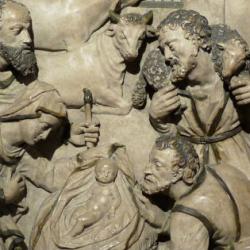
Image by https://commons.wikimedia.org/w/index.php?curid=36636135
Previous Post

February 6, 2017
The Fairly Traded Coffee Party
Next Post

February 20, 2017 Orphans: the Superheroes of a Romantic Culture, part 2
Browse Our Archives
Select a Category Apologetics Culture Wars Easter Education Holidays Literature Politics; Media Questions Uncategorized Worldview
Select a Month December 2017 November 2017 October 2017 August 2017 July 2017 June 2017 April 2017 February 2017 January 2017 December 2016
Follow Us!
TAKE THE
Religious Wisdom Quiz
Where did Elisha cure Naaman?
Select your answer to see how you score.
Jordan River Dead Sea Sea of Galilee Mediterranean Sea
Related posts from Hawkeye
Matthew's Gospel: Joseph's Example to Men

The Convenient Untruth of Al Gore's Posthumanism

What Happens to a Culture When Christianity Becomes...

Bill 89 and the legal assault on the...
TRENDING AT PATHEOS Evangelical

The REST of Your Life: A Creative Wrestles...
This week I had a conversation with a good friend from church....

How the author of the world's best hymn...
I've been working with John Newton for a while now. This makes...

Long before this Lectio Divina, Psalm 130 - the song - started...

What About the Trees? Another Living Parable
After I finished writing the last article about falling leaves as a...

Why Classical Education Is a Conversation, Not a...
Come and Read: Joy in Classical Education When I was a little...

Cornell University has received a great deal of negative publicity and intense...
view all Evangelical blogs
Ad-Free & Subscriber Log-In Subscription Support
- About Us
- 2026 Calendar
- Videos
- Podcasts
- Library of World Religions
- Faith In Media Tracker
- Advertise With Us
- Write for Us
- Privacy Policy
- Terms of Service
- Do Not Sell My Data
- Contact Us
- Radiant Digital
- Manage Newsletter Subscriptions
- Unsubscribe From Notifications
- Sitemap
Copyright 2008-2026, Patheos. All rights reserved.
Subscription Support Ad-Free & Subscriber Log-In
Follow Patheos