
BuddhistCatholicContemplativeEvangelicalGeneral ChristianHinduJewishLatter-day SaintMuslimNew VisionsProgressive Christian
Beliefs
- Buddhist
- Catholic
- Contemplative
- Evangelical
- General Christian
- Hindu
- Jewish
- Latter-day Saint
- More Voices
- Muslim
- New Visions
- Pagan
- Progressive Christian
Topics
- Religion News
- Food and Religion
- Sports and Religion
- Religious Art
- Religious Music and Entertainment
- Religious Events
- History and Religion
- Style and Religion
- Politics and Religion
- Women in Religion
- Recreation Outdoors and Religion
- Business Finance and Religion
- Careers Workplace and Religion
- Education and Religion
- Family Parenting and Religion
- Health Fitness and Religion
- Home and Religion
- Relationships and Religion
- Technology and Religion
- Travel and Religion
Columnists
- Buddhist Columnists
- Business Finance and Religion Columnists
- Careers Workplace and Religion Columnists
- Catholic Columnists
- Contemplative Columnists
- Education and Religion Columnists
- Evangelists Columnists
- Family Parenting and Religion Columnists
- General Christian Columnists
- Health Fitness and Religion Columnists
- Hindu Columnists
- History and Religion Columnists
- Home and Religion Columnists
- Jewish Columnists
- More Voices Columnists
- Latter Day Columnists
- Muslim Columnists
- New Visions Columnists
- Nonreligious Columnists
- Pagan Columnists
- Politics and Religion Columnists
- Progressive Columnists
- Recreation Outdoors and Religion Columnists
- Relationships and Religion Columnists
- Religion News Columnists
- Religious Art Columnists
- Religious Events Columnists
- Religious Music and Entertainment Columnists
- Sports and Religion Columnists
- Style and Religion Columnists
- Technology and Religion Columnists
- Travel and Religion Columnists
- Women in Religion Columnists
Resource Library
- 2026 Calendar
- Library of World Religions
- The 100 Most Holy Places on Earth
- Patheos Answers
- Podcasts
- Videos
- Faith Leaders Database
- Anglican Episcopalian
- Bahai
- Baptist
- Buddhism
- Christianity
- Confucianism
- Eastern Orthodoxy
- Hinduism
- Holiness and Pentecostal
- ISKCON
- Islam
- Judaism
- Lutheran
- Methodist
- The Church of Jesus Christ of Latter-day Saints
- New Age
- Paganism
- Presbytarian and Reformed
- Protestantism
- Religion Behind the Scenes
- Roman Catholic
- Scientology
- Shia Islam
- Sikhism
- Sufism
- Sunni Islam
- Taoism
- Zen
- See all religions
Research Tools
 Ad-Free & Subscriber Log-In Subscription Support
Ad-Free & Subscriber Log-In Subscription Support
Follow Patheos 

- Trending:
- Forgiveness
- |
- Marriage
- |
- Consciousness
- |
- Death Penalty
- |
- Election
- |
- Halloween

- Home
- Progressive Christian
- Health, Fitness and Religion
- 5 Ways to Make Your Church More Eco-Friendly
5 Ways to Make Your Church More Eco-Friendly
Last updated on: April 28, 2024 at 7:13 pm by Beth Rush
5 Ways to Make Your Church More Eco-Friendly 2024-04-28T19:13:54-06:00 Beth Rush
Patheos Explore the world's faith through different perspectives on religion and spirituality! Patheos has the views of the prevalent religions and spiritualities of the world.
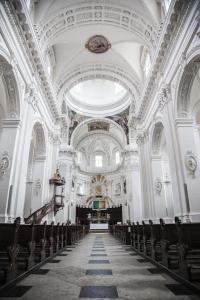
An eco-friendly church
Photo by Justin Main on Unsplash
Faith and sustainability should go hand in hand. Christians have a moral obligation to be stewards of God’s creations. How can a church be eco-friendly? How challenging is it? With these five tips, you can reduce your place of worship’s waste, water usage and carbon footprint.
“We must never forget that the natural environment is a collective good, the patrimony of all humanity and the responsibility of everyone.” – Pope Francis
1. Develop a Circular Mindset
Be an active participant in the circular economy. It lets you cut the trash you generate and help conserve virgin resources. Circularity is about replicating the biological cycle for inorganic waste. Organic material doesn’t turn into waste. Instead, it becomes a positive component of nature after serving its original purpose.
Inorganic substances don’t biodegrade. Microorganisms can’t decompose plastic and metal items — if at all. Non-biodegradable materials linger longer in the environment. They endanger various creatures while they’re around.
Making your place of worship circular doesn’t mean avoiding inorganic goods altogether. This route is infeasible because these products serve practical purposes. Instead, you can adopt a circular mindset by:
- Going minimalist to prevent unnecessary consumption.
- Using reusable things.
- Choosing biodegradable goods or products from renewable sources when possible.
- Recycling single-use items you can’t avoid.
- Sharing items to prevent duplicate ownership.
- Renting stuff instead of owning.
- Extending the service life of everything through proper maintenance.
- Giving away unwanted possessions to those who may need them.
- Repurposing broken objects.
- Get useless things refurbished, remanufactured or recycled.
Embracing circularity goes against the conventions of modern living. Slowly but surely, you can get the hang out of it by reevaluating every decision you make.
Say you want to expand the square footage of your tabernacle, chapel, shrine, monastery, cathedral or basilica. Choose building materials and decorations derived from renewable resources — such as adobe, bamboo, cork and laminated timber. Using less concrete, steel and aluminum is the key to a greener project.
2. Have Churchyard Native Plants
Save water with native shrubs and trees. These plants drink less than those not acclimated to local weather. Their thick foliage provides abundant shade to slow water evaporation. This way, your lawn can remain hydrated longer and need less upkeep.
The environmental benefits of native trees don’t stop there. They prevent flooding by absorbing rainwater runoff. Subsequently, they prevent soil erosion and keep the ground nutrient-rich. Their roots filter out pollutants and keep water sources free of contaminants.
Aside from keeping water fresh, native trees help improve air quality inside and outside the building when paired with indoor plants. They keep outdoor temperatures low, discouraging ozone formation. Their leaves temporarily catch 2.5-diameter particulate matter before it winds up in the soil or precipitation dissolves it.
Greenery mitigates the urban heat island effect, reducing the need for air conditioning. A naturally comfortable environment requires less electricity, which means fewer greenhouse gas emissions. Vegetation is a carbon sink, so it helps combat climate change.
As do indoor plants, native trees have strength in numbers. Individual seedlings have limited purifying potential but can make a difference when working as a group.
3. Go Electric
Ditch anything that runs on fossil fuels. Their greenhouse gas emissions are making the world too warm for comfort. Plus, they pollute the air within the church.
Switching to electric appliances is a giant leap to sustainability. Devices — such as a geothermal heat pump and an electric generator — release no air contaminants.
Electricity may still come from a coal or natural gas power plant. Consider investing in renewable energy to ensure your church operates with zero carbon emissions. You can buy photovoltaic panels to turn sunlight into electricity. Alternatively, get into a power purchase agreement and let someone else build and maintain your infrastructure.
Moreover, upgrade to an electric vehicle (EV). EVs release no smoke, so they keep the air fresh. Turn your parking area into charging stations to encourage members to transition to emission-free motoring.
4. Target a Green Certification
Get your church certified for being an eco-friendly building. It’s the ultimate testament to sustainability commitment.
Approval from reputable certifiers validates your green initiatives. Some sustainability certifications focus on one area while others consider various aspects of environmental responsibility. Certifications use distinct rating systems. They may undergo periodic review, so they’re subject to change.
Look for a green certification relevant to your property and sustainability goals. Study how it works to know its minimum requirements and ways to earn points to pass its audit.
Leadership in Energy and Environmental Design (LEED) is the most popular sustainability certification. If you want your existing building certified, aim for LEED for Operations and Maintenance. This certification focuses on performance-oriented sustainable strategies and outcomes. Learn what it takes to earn it before starting your church improvement project.
Getting certified offers numerous benefits. It generates free press — an opportunity to tell the public what your parish is about and promote your faith.
Sustainability is all the rage because Earth Day — an awareness campaign that started in 1970 — is now a global phenomenon. Making it the subject of your marketing strategy to attract new members, bring back old ones, increase mass attendance and boost TV viewership and online engagement is promising.
5. Plan Nature-Friendly Events
Hold your gatherings outdoors to minimize their impact on the environment. Indoor events necessitate space heating or air conditioning, which is eco-friendly some of the time because fossil fuels account for 60% of the United States’ energy mix.
Scout for beautiful natural locations instead of renting commercial venues. Fun environmentally conscious church event ideas include:
- Organizing a picnic at church grounds where members can socialize with one another’s families.
- Arranging a long-distance walking or running race through a neighborhood to raise funds for a green project.
- Turning your yard into a farmers market to drive demand for seasonal crops, rewarding local food producers for promoting agricultural diversity and good health.
- Throwing a block party in a parish open to all residents to meet non-members and spread your message.
- Conducting Bible reading sessions under a tree with children.
- Creating a community garden at your vacant land where everyone can grow produce to feel more connected to nature and be in control of what they eat.
- Launching a carnival at your premises where members can set up stalls and sell goods.
- Orchestrating a kids soccer tournament to promote camaraderie and motivate children to attend masses to see their friends.
The less travel involved, the more eco-friendly the event will be. Outdoor events may be impractical or inconvenient in some months when you experience extreme seasonal weather. Plan your church’s events calendar accordingly to keep everyone safe and comfortable.
Caring for the Environment Is God’s Work
Making your church eco-friendly is a significant win for sustainability. Preaching the merits of environmental responsibility to your congregation and doing the above five can inspire thousands, if not millions, of people across various generations to become more socially conscious in their ways.
Progressive Christian
Previous Post

March 28, 2024
The Spiritual Meaning of Eggs
Next Post

April 30, 2024 How Does the Church Define Fasting?
Browse Our Archives
Select a Category bible celebrities church health living marriage mindfulness parenting plant-based eating religious symbolism spirituality Uncategorized
Select a Month January 2025 July 2024 May 2024 April 2024 March 2024 February 2024 January 2024 December 2023 November 2023 October 2023 September 2023 August 2023 July 2023 June 2023 May 2023 April 2023 March 2023 February 2023 January 2023 December 2022
TAKE THE
Religious Wisdom Quiz
What is the main symbol of Christianity?
Select your answer to see how you score.
Rainbow Olive branch Lion The cross
Related posts from Harmonizing Body and Mind

Patheos Portals
Meditations To Help With Alcohol Dependence

Patheos Portals
How Expressing Empathy for Your Picky Eaters Can...
Patheos Portals
Religious Rituals That Praise Meat-Eating Over Vegetarianism

Patheos Portals
8 Simple Grounding Techniques for Connecting With Mother...
TRENDING AT PATHEOS Health, Fitness and Religion

Revelation's Jesus Isn't the Lamb — He's the...
In the first article in this series of three articles, "One Jesus,...

How Paul Turned a Dead Messiah Into Christianity's...
This is a continuation of our investigation into the New Testament theologies...
Christian Nationalism: Political Tool And Biased Reporting
Christian Nationalism - An Artificial Category to Label MAGA Supporters Could "Christian...

There is no Clear Definition for "Christian Nationalism"
In the first article of this series I presented a definition of...

"Play or Pray? Exploring Faith and Choice in...
September 25, 2017. The date may not stand out to most....

Bizzle Be Better: Critiquing the Christian Rapper Bizzle
Few Christian Hip Hop artists can connect the lyrical poetics of both...
view all Health, Fitness and Religion blogs
Ad-Free & Subscriber Log-In Subscription Support
- About Us
- 2026 Calendar
- Videos
- Podcasts
- Library of World Religions
- Faith In Media Tracker
- Advertise With Us
- Write for Us
- Privacy Policy
- Terms of Service
- Do Not Sell My Data
- Contact Us
- Radiant Digital
- Manage Newsletter Subscriptions
- Unsubscribe From Notifications
- Sitemap
Copyright 2008-2026, Patheos. All rights reserved.
Subscription Support Ad-Free & Subscriber Log-In
Follow Patheos