
BuddhistCatholicContemplativeEvangelicalGeneral ChristianHinduJewishLatter-day SaintMuslimNew VisionsProgressive Christian
Beliefs
- Buddhist
- Catholic
- Contemplative
- Evangelical
- General Christian
- Hindu
- Jewish
- Latter-day Saint
- More Voices
- Muslim
- New Visions
- Pagan
- Progressive Christian
Topics
- Religion News
- Food and Religion
- Sports and Religion
- Religious Art
- Religious Music and Entertainment
- Religious Events
- History and Religion
- Style and Religion
- Politics and Religion
- Women in Religion
- Recreation Outdoors and Religion
- Business Finance and Religion
- Careers Workplace and Religion
- Education and Religion
- Family Parenting and Religion
- Health Fitness and Religion
- Home and Religion
- Relationships and Religion
- Technology and Religion
- Travel and Religion
Columnists
- Buddhist Columnists
- Business Finance and Religion Columnists
- Careers Workplace and Religion Columnists
- Catholic Columnists
- Contemplative Columnists
- Education and Religion Columnists
- Evangelists Columnists
- Family Parenting and Religion Columnists
- General Christian Columnists
- Health Fitness and Religion Columnists
- Hindu Columnists
- History and Religion Columnists
- Home and Religion Columnists
- Jewish Columnists
- More Voices Columnists
- Latter Day Columnists
- Muslim Columnists
- New Visions Columnists
- Nonreligious Columnists
- Pagan Columnists
- Politics and Religion Columnists
- Progressive Columnists
- Recreation Outdoors and Religion Columnists
- Relationships and Religion Columnists
- Religion News Columnists
- Religious Art Columnists
- Religious Events Columnists
- Religious Music and Entertainment Columnists
- Sports and Religion Columnists
- Style and Religion Columnists
- Technology and Religion Columnists
- Travel and Religion Columnists
- Women in Religion Columnists
Resource Library
- 2026 Calendar
- Library of World Religions
- The 100 Most Holy Places on Earth
- Patheos Answers
- Podcasts
- Videos
- Faith Leaders Database
- Anglican Episcopalian
- Bahai
- Baptist
- Buddhism
- Christianity
- Confucianism
- Eastern Orthodoxy
- Hinduism
- Holiness and Pentecostal
- ISKCON
- Islam
- Judaism
- Lutheran
- Methodist
- The Church of Jesus Christ of Latter-day Saints
- New Age
- Paganism
- Presbytarian and Reformed
- Protestantism
- Religion Behind the Scenes
- Roman Catholic
- Scientology
- Shia Islam
- Sikhism
- Sufism
- Sunni Islam
- Taoism
- Zen
- See all religions
Research Tools
 Ad-Free & Subscriber Log-In Subscription Support
Follow Patheos 

- Trending:
- Advent
- |
- Forgiveness
- |
- Thanksgiving
- |
- Election
- |
- Seasonal Holidays
- |
- Marriage

- Home
- New Visions
- Health, Fitness and Religion
- Why Our Beauty Rituals Today Have Ancient Roots
Why Our Beauty Rituals Today Have Ancient Roots
Last updated on: February 27, 2024 at 11:28 am by Beth Rush
Why Our Beauty Rituals Today Have Ancient Roots 2024-02-27T11:28:05-07:00 Beth Rush
Patheos Explore the world's faith through different perspectives on religion and spirituality! Patheos has the views of the prevalent religions and spiritualities of the world.

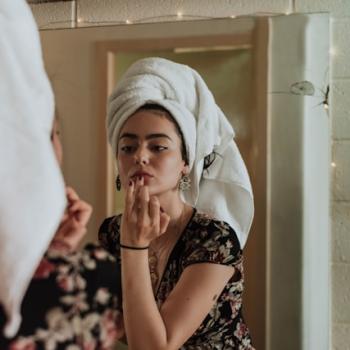
face mask
Photo by engin akyurt via Unsplash
Today’s beauty rituals draw inspiration from ancient civilizations, notably Egypt and Mesopotamia when people used natural ingredients to enhance their appearance. While both places embraced similar skin care methods, each introduced unique innovations. From donkey’s milk to clay soaps, here are the practices of the past that have revolutionized modern routines.
What Were the Beauty Practices in Ancient Egypt?
Cleopatra VII, ancient Egypt’s last pharaoh, was a significant beauty icon. Discover some products that contributed to her allure and influenced other women to mimic her regimen.
Essential Oils
Egyptians believed botanical extracts would help them achieve youthful skin, even in the afterlife. These products were integral to Cleopatra’s beauty rituals due to skin and therapeutic benefits. Locals had access to many natural elixirs, including jasmine, rose and frankincense. Many women also applied natural oils to protect their skin from the sun, wind and dry climate.
Milk Baths
Bathing was an integral part of ancient Egyptians’ daily lives, with most people taking baths in the river or at home. One of the most famous skin care rituals was milk baths. Cleopatra used sour donkey’s milk, which contains lactic acid that helped rejuvenate and exfoliate skin. Others used coffee scrubs to help enhance skin tone and texture. A mixture of milk and honey was also applied weekly for extra moisture.
Sugaring
Hair removal methods such as sugaring began centuries ago. Egyptians mixed sugar, water and lemon to remove unwanted hair. This practice is still commonly used today.
Sea Salt
Egyptians used Dead Sea salts to eliminate contaminants and smoothen the skin surface. The mineral-rich salt can also help improve circulation, ensuring a youthful glow. Many women used this exfoliation method before applying makeup, resulting in a more seamless application.
Masks
Skin care practices, including face masks, are widely implemented to this day, including using honey and milk as base products. This homemade concoction contains lactic acid and moisturizing properties that support overall skin health.
Other Egyptian Beauty Practices
Uncover other beautifying rituals of the past that are still relevant today.
Hair Oils
Botanical extracts were applied to the hair to keep locks smooth and healthy. Egyptians used combs made from fish bones for styling and applying almond and castor oils. Aside from these benefits, oils also keep lice at bay. People would shave their heads during severe infestations and to cope with the extreme heat.
For decades, many women have perceived curly hair as unclean and unwelcome. Many would diligently straighten their hair to conform to Western standards. In recent years, curls have appeared again around Egypt, proof that women are finally embracing their natural features.
Kohl
The ancient Egyptian civilization is best known for creating the primogenitor of eyeliners. Men and women used kohl to highlight their eyes and protect them from the sun and sand. They would draw lines above and below the eyes, creating slight arches at the ends. Cleopatra used this ingredient for her signature “cat’s eye.” Today, this product isn’t legal in the U.S. due to the high levels of lead and certain labeling violations.
Henna
This coloring agent is used to color nails. Many people also applied henna as a hair conditioner because of the cooling sensation that helps curb the hot weather. Today, this temporary dye is used to paint nonpermanent tattoos. In some wedding traditions, it symbolizes prosperity and good health.
Perfume
Men and women applied perfumes from fragrant flowers, seeds and plants. Their extracts are mixed with wax or fat to create a salve. Some widely used scents include cassia, cinnamon, cardamom, cedar, rosemary, aloe and almond oil.
What Were Mesopotamia’s Beauty Rituals?
Mesopotamia, often considered one of the cradles of civilization, was a melting pot of skin care practices. Discover some of its notable contributions to the beauty industry.
Plant Oils
Like Egyptians, Mesopotamians placed high importance on skin moisturizing using natural ingredients. They used sesame and olive oils and animal fats to form the base for many moisturizers.
Clay Masks
The silt from Euphrates and Tigris is a treasured beauty product. This ingredient is applied on the face to exfoliate, nourish and detoxify skin. Clay masks are essential for keeping people’s skin supple and youthful.
Soaps
Mesopotamians believed that a smelly body was a form of impurity. Many people used soaps derived from clay or ash and scented with oils to cleanse the body and leave it smelling good throughout the day.
Modern Skin Care Practices
Contemporary skin care products and rituals often find their roots in past civilizations. Here’s how historical practices have influenced modern rituals.
Applying Sunscreen
Sun exposure accounts for approximately 90% of premature skin aging, making sun protection essential in daily morning routines. In ancient times, Egyptians relied on natural oils to protect their skin from harmful UV rays. Today, people use sunscreen to prevent sunburn, aging and skin cancer. Remember to apply your product even on cloudy days since UV rays are still present.
Using Essential Oils
Nowadays, essential oils have many uses. They are used to achieve better skin, freshen up indoor space and promote hair health. For instance, tea tree oil possesses potent antimicrobial properties that help prevent acne and dandruff. Remember to dilute them with carrier oils, like coconut, argan or almond.
Moisturizing
Egyptians and Mesopotamians relied on essential oils, milk and animal fat to moisturize their skin. Now, people have much broader options. Search for products that contain ceramides if you’re looking for a moisturizer. These components protect your skin from dryness and support moisture retention. Apply your product twice daily — in the morning and at night — to achieve healthy-looking skin.
Exfoliating
Natural exfoliators like sea salts and clay are still used today. They scrub the skin to remove excess oil, impurities and dirt. Choose a chemical exfoliant if you’re looking for the benefits of exfoliation without potentially damaging your skin.
Try These Skin Care Tips Today
The beauty industry has come a long way, yet it continues to get inspiration from ancient skin care rituals that persist today. From essential oils to natural face masks, modern practices integrated ancestral wisdom because their traditions have shown their effectiveness over many years.
New Visions
Previous Post

February 27, 2024
Why Skin Care Routines Are Becoming a Spiritual Practice
Next Post

March 6, 2024 How to Create a Welcoming Space for People With ASD
Browse Our Archives
Select a Category bible celebrities church health living marriage mindfulness parenting plant-based eating religious symbolism spirituality Uncategorized
Select a Month January 2025 July 2024 May 2024 April 2024 March 2024 February 2024 January 2024 December 2023 November 2023 October 2023 September 2023 August 2023 July 2023 June 2023 May 2023 April 2023 March 2023 February 2023 January 2023 December 2022
TAKE THE
Religious Wisdom Quiz
What city did David capture and make his capital?
Select your answer to see how you score.
Jerusalem Bethlehem Gibeon Hebron
Related posts from Harmonizing Body and Mind

Patheos Portals
The Healing Power of Faith in Coping With...

Patheos Portals
Patheos Portals
Why Skin Care Routines Are Becoming a Spiritual...

Patheos Portals
What Does It Mean if You Dream of...
TRENDING AT PATHEOS Health, Fitness and Religion

Revelation's Jesus Isn't the Lamb — He's the...
In the first article in this series of three articles, "One Jesus,...

How Paul Turned a Dead Messiah Into Christianity's...
This is a continuation of our investigation into the New Testament theologies...

Christian Nationalism: Political Tool And Biased Reporting
Christian Nationalism - An Artificial Category to Label MAGA Supporters Could "Christian...

There is no Clear Definition for "Christian Nationalism"
In the first article of this series I presented a definition of...

"Play or Pray? Exploring Faith and Choice in...
September 25, 2017. The date may not stand out to most....

Bizzle Be Better: Critiquing the Christian Rapper Bizzle
Few Christian Hip Hop artists can connect the lyrical poetics of both...
view all Health, Fitness and Religion blogs
Ad-Free & Subscriber Log-In Subscription Support
- About Us
- 2026 Calendar
- Videos
- Podcasts
- Library of World Religions
- Faith In Media Tracker
- Advertise With Us
- Write for Us
- Privacy Policy
- Terms of Service
- Do Not Sell My Data
- Contact Us
- Radiant Digital
- Manage Newsletter Subscriptions
- Unsubscribe From Notifications
- Sitemap
Copyright 2008-2026, Patheos, part of the Radiant Digital network of media brands. All rights reserved.
Subscription Support Ad-Free & Subscriber Log-In
Follow Patheos