
BuddhistCatholicContemplativeEvangelicalGeneral ChristianHinduJewishLatter-day SaintMuslimNew VisionsProgressive Christian
Beliefs
- Buddhist
- Catholic
- Contemplative
- Evangelical
- General Christian
- Hindu
- Jewish
- Latter-day Saint
- More Voices
- Muslim
- New Visions
- Pagan
- Progressive Christian
Topics
- Religion News
- Food and Religion
- Sports and Religion
- Religious Art
- Religious Music and Entertainment
- Religious Events
- History and Religion
- Style and Religion
- Politics and Religion
- Women in Religion
- Recreation Outdoors and Religion
- Business Finance and Religion
- Careers Workplace and Religion
- Education and Religion
- Family Parenting and Religion
- Health Fitness and Religion
- Home and Religion
- Relationships and Religion
- Technology and Religion
- Travel and Religion
Columnists
- Buddhist Columnists
- Business Finance and Religion Columnists
- Careers Workplace and Religion Columnists
- Catholic Columnists
- Contemplative Columnists
- Education and Religion Columnists
- Evangelists Columnists
- Family Parenting and Religion Columnists
- General Christian Columnists
- Health Fitness and Religion Columnists
- Hindu Columnists
- History and Religion Columnists
- Home and Religion Columnists
- Jewish Columnists
- More Voices Columnists
- Latter Day Columnists
- Muslim Columnists
- New Visions Columnists
- Nonreligious Columnists
- Pagan Columnists
- Politics and Religion Columnists
- Progressive Columnists
- Recreation Outdoors and Religion Columnists
- Relationships and Religion Columnists
- Religion News Columnists
- Religious Art Columnists
- Religious Events Columnists
- Religious Music and Entertainment Columnists
- Sports and Religion Columnists
- Style and Religion Columnists
- Technology and Religion Columnists
- Travel and Religion Columnists
- Women in Religion Columnists
Resource Library
- 2026 Calendar
- Library of World Religions
- The 100 Most Holy Places on Earth
- Patheos Answers
- Podcasts
- Videos
- Faith Leaders Database
- Anglican Episcopalian
- Bahai
- Baptist
- Buddhism
- Christianity
- Confucianism
- Eastern Orthodoxy
- Hinduism
- Holiness and Pentecostal
- ISKCON
- Islam
- Judaism
- Lutheran
- Methodist
- The Church of Jesus Christ of Latter-day Saints
- New Age
- Paganism
- Presbytarian and Reformed
- Protestantism
- Religion Behind the Scenes
- Roman Catholic
- Scientology
- Shia Islam
- Sikhism
- Sufism
- Sunni Islam
- Taoism
- Zen
- See all religions
Research Tools
 Ad-Free & Subscriber Log-In Subscription Support
Ad-Free & Subscriber Log-In Subscription Support
Follow Patheos 

- Trending:
- Forgiveness
- |
- Marriage
- |
- Consciousness
- |
- Death Penalty
- |
- Election
- |
- Halloween

- Home
- Buddhism
- Health, Fitness and Religion
- Buddhist Diet: Foods to Eat and How to Prepare Them
Buddhist Diet: Foods to Eat and How to Prepare Them
Last updated on: January 3, 2023 at 9:30 am by Beth Rush
Buddhist Diet: Foods to Eat and How to Prepare Them 2023-01-03T09:30:15-07:00 Beth Rush
Patheos Explore the world's faith through different perspectives on religion and spirituality! Patheos has the views of the prevalent religions and spiritualities of the world.
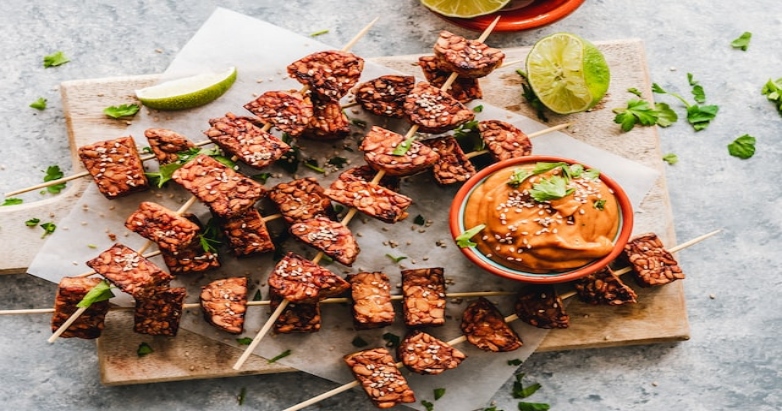
Buddhist diet Tempeh with spicy peanut sauce. Image via Ella Olsson / Unsplash
It’s no secret that diet plays a role in many religious traditions. For example, many people in the west understand that certain foods aren’t kosher and know Muslims fast during Ramadan. Adhering to these rules is an important part of showing faith for many of the devout.
However, some traditions also confer decided health benefits. It’s likely most originally did. After all, eating practices arose from indulging in locally available foods that made you feel better while shunning those that make you sick. Early people may not have known about trichinellosis, but several faiths prohibit eating pork, the meat most likely to infect you with the parasite. It’s possible early religious leaders made the connection between consuming the flesh and illness and enacted the ban to protect their people.
Many westerners don’t know much about Buddhism, but making food choices like a monk could help you improve your overall health. Here’s how to eat like a Buddhist and some traditional Buddhist food recipes to get you started on your journey.
How to Eat Like a Buddhist
Buddhists adhere largely to a plant-based diet. Such meal plans are rich in nuts, seeds, vegetables, fruits, whole grains and legumes and may include limited animal products such as dairy and eggs. Therefore, your first stop to adopting this eating plan is to start with meatless Monday and reduce your consumption of beef, pork and chicken from there.
Why do Buddhists choose such a diet? While Buddhists accept that suffering is a part of life, they also believe that the goal of dharma is to reduce the greed, anger and delusion that give rise to samsara. This belief extends to all living beings, including animals. Therefore, they don’t participate in practices like hunting or consuming the products of factory farms that cause harm to those with fins and fur. However, traveling monks may accept offerings of meat when proffered.
Health Benefits of the Buddhist Diet
While some evolutionary biologists argue that humans would never have evolved to their present state without consuming meat, modern intake increases health risks. For example, the World Health Organization considers processed meat a carcinogen and red meat a probable one. They recommend eliminating the consumption of foods like bacon or reducing them to prevent colorectal cancer in particular.
Furthermore, the Buddhist emphasis on dharma and reducing suffering leads many practitioners to reduce their reliance on ultra-processed foods, which have decided health risks for individuals — and the planet. Each step in the manufacturing chain requires energy, which increases emissions. Conversely, buying locally-grown fruits and vegetables minimizes the environmental impact of each meal.
Ultra-processed foods don’t just increase the suffering caused by global warming. They also harm human health. For example, they contribute to the soaring rates of Type 2 diabetes among Americans.
Nearly 100 million Americans have prediabetes or the condition itself, which often requires ongoing medical care. Much of the fault lies in the overconsumption of ultra-processed foods rich in added sugar and white flour.
White flour is problematic for two reasons. Manufacturers strip away the fiber-rich bran and chaff, leaving a substance that absorbs quickly and spikes blood sugar. As if that effect isn’t enough, bleaching creates a chemical byproduct called alloxan that scientists use to destroy the pancreas of laboratory animals. Your pancreas makes insulin, which your body needs to manage your glucose levels.
5 Traditional Buddhist Food Recipes
You’ve decided you want to learn how to eat like a Buddhist while mindfully observing the health effects. Good for you. Here are five traditional Buddhist food recipes to help you dig into the lifestyle.
1. Tofu-Okra Miso Soup
Western bellies may turn to chicken soup when they feel under the weather. However, folks who walk the Buddhist path often choose miso and not only because it’s free of animal products. Miso is a fermented soy product, which makes it rich in probiotics that nourish your intestinal microbiota. What does your belly have to do with a cold? It turns out the good bacteria in your gut sends signals to your immune system and boosting their levels could help you feel better.
This recipe contains only four small ingredients, making it a snap to assemble even if you feel under the weather. It also has okra, which is rich in fiber. Fiber is prebiotic, which nourishes the healthy bacteria in your intestines, keeping them running smoothly.
2. Tempeh With Spicy Peanut Sauce
What is tempeh? It’s similar to tofu, although this mixture is a slightly fermented blend of soybeans, which gives it different health benefits. You get many of the same probiotic perks of miso, and it’s high in plant-based protein. The peanuts provide yet another source of the muscle-building stuff.
Like many stir-fry meals, this recipe cooks up in less than 15 minutes once you assemble the ingredients. You can serve it over white rice, but substitute wild or brown for additional filling fiber. The sriracha gives this dinner a bit of kick if you like things spicy.
3. Butterbur and Egg-Stuffed Tofu Pockets
Butterbur may seem like an unusual ingredient. If you’re a migraine sufferer, you might know this plant better as a supplement, but it also tastes delicious.
This recipe also contains egg, so it isn’t appropriate for the vegan crowd. However, it delivers an added protein punch for lacto-ovo vegetarians. If you worry about the treatment of chickens on factory farms, why not get your stash from your local farmers market? You can chat with the folks who raise the hens, assuring yourself that their cultivation methods don’t result in unnecessary cruelty.
4. Tibetan Noodle Soup
Here’s a super healthy meal you may wish to make ahead and keep in your freezer for cold days. It’s chock-full of various veggies that are vital to good health. If you strive to eat the rainbow each day, this recipe deserves a spot on your menu.
If you don’t want to make noodles from scratch, you can substitute store-bought versions. Why not try delicate thin rice noodles added after you defrost the broth? Alternatively, make a heartier meal with chickpea noodles that stick to your ribs with a protein punch.
5. Vegetarian Lettuce Wraps
Lettuce wraps make a tasty alternative to sandwiches. You also reduce your reliance on white bread and increase your vegetable intake. Although all veggies contain carbs, those in your wrap will have far fewer net per serving than a slice of Wonder Bread.
This recipe harvests the goodness of corn and avocado. It’s a bit of a southwest twist on a traditional Asian dish.
Buddhist Diet: How to Eat Like a Buddhist and Traditional Recipes
Various religious faiths adhere to different dietary restrictions as a part of their rituals. However, many of these practices also improve your health.
Now that you know how to eat like a Buddhist, why not add some of these traditional Buddhist food recipes to your weekly menu? You’ll improve your well-being and treat your taste buds to welcome variety.
Buddhism
Food and Religion
traditional Buddhist food recipes
Previous Post

January 3, 2025
The Healing Power of Faith in Coping With Chronic Illness
Next Post

December 19, 2022 Viewing Accidents Through a Spiritual Lens
Browse Our Archives
Select a Category bible celebrities church health living marriage mindfulness parenting plant-based eating religious symbolism spirituality Uncategorized
Select a Month January 2025 July 2024 May 2024 April 2024 March 2024 February 2024 January 2024 December 2023 November 2023 October 2023 September 2023 August 2023 July 2023 June 2023 May 2023 April 2023 March 2023 February 2023 January 2023 December 2022
TAKE THE
Religious Wisdom Quiz
Who led the Israelites into the promised land after Moses?
Select your answer to see how you score.
David Joshua Solomon Samuel
Related posts from Harmonizing Body and Mind

Patheos Portals
5 Ways to Make Your Church More Eco-Friendly

Patheos Portals
Meditations To Help With Alcohol Dependence

Patheos Portals
How Expressing Empathy for Your Picky Eaters Can...
Patheos Portals
Religious Rituals That Praise Meat-Eating Over Vegetarianism
TRENDING AT PATHEOS Health, Fitness and Religion

Revelation's Jesus Isn't the Lamb — He's the...
In the first article in this series of three articles, "One Jesus,...

How Paul Turned a Dead Messiah Into Christianity's...
This is a continuation of our investigation into the New Testament theologies...

Christian Nationalism: Political Tool And Biased Reporting
Christian Nationalism - An Artificial Category to Label MAGA Supporters Could "Christian...

There is no Clear Definition for "Christian Nationalism"
In the first article of this series I presented a definition of...

"Play or Pray? Exploring Faith and Choice in...
September 25, 2017. The date may not stand out to most....

Bizzle Be Better: Critiquing the Christian Rapper Bizzle
Few Christian Hip Hop artists can connect the lyrical poetics of both...
view all Health, Fitness and Religion blogs
Ad-Free & Subscriber Log-In Subscription Support
- About Us
- 2026 Calendar
- Videos
- Podcasts
- Library of World Religions
- Faith In Media Tracker
- Advertise With Us
- Write for Us
- Privacy Policy
- Terms of Service
- Do Not Sell My Data
- Contact Us
- Radiant Digital
- Manage Newsletter Subscriptions
- Unsubscribe From Notifications
- Sitemap
Copyright 2008-2026, Patheos. All rights reserved.
Subscription Support Ad-Free & Subscriber Log-In
Follow Patheos