
BuddhistCatholicContemplativeEvangelicalGeneral ChristianHinduJewishLatter-day SaintMuslimNew VisionsProgressive Christian
Beliefs
- Buddhist
- Catholic
- Contemplative
- Evangelical
- General Christian
- Hindu
- Jewish
- Latter-day Saint
- More Voices
- Muslim
- New Visions
- Pagan
- Progressive Christian
Topics
- Religion News
- Food and Religion
- Sports and Religion
- Religious Art
- Religious Music and Entertainment
- Religious Events
- History and Religion
- Style and Religion
- Politics and Religion
- Women in Religion
- Recreation Outdoors and Religion
- Business Finance and Religion
- Careers Workplace and Religion
- Education and Religion
- Family Parenting and Religion
- Health Fitness and Religion
- Home and Religion
- Relationships and Religion
- Technology and Religion
- Travel and Religion
Columnists
- Buddhist Columnists
- Business Finance and Religion Columnists
- Careers Workplace and Religion Columnists
- Catholic Columnists
- Contemplative Columnists
- Education and Religion Columnists
- Evangelists Columnists
- Family Parenting and Religion Columnists
- General Christian Columnists
- Health Fitness and Religion Columnists
- Hindu Columnists
- History and Religion Columnists
- Home and Religion Columnists
- Jewish Columnists
- More Voices Columnists
- Latter Day Columnists
- Muslim Columnists
- New Visions Columnists
- Nonreligious Columnists
- Pagan Columnists
- Politics and Religion Columnists
- Progressive Columnists
- Recreation Outdoors and Religion Columnists
- Relationships and Religion Columnists
- Religion News Columnists
- Religious Art Columnists
- Religious Events Columnists
- Religious Music and Entertainment Columnists
- Sports and Religion Columnists
- Style and Religion Columnists
- Technology and Religion Columnists
- Travel and Religion Columnists
- Women in Religion Columnists
Resource Library
- 2026 Calendar
- Library of World Religions
- The 100 Most Holy Places on Earth
- Patheos Answers
- Podcasts
- Videos
- Faith Leaders Database
- Anglican Episcopalian
- Bahai
- Baptist
- Buddhism
- Christianity
- Confucianism
- Eastern Orthodoxy
- Hinduism
- Holiness and Pentecostal
- ISKCON
- Islam
- Judaism
- Lutheran
- Methodist
- The Church of Jesus Christ of Latter-day Saints
- New Age
- Paganism
- Presbytarian and Reformed
- Protestantism
- Religion Behind the Scenes
- Roman Catholic
- Scientology
- Shia Islam
- Sikhism
- Sufism
- Sunni Islam
- Taoism
- Zen
- See all religions
Research Tools
 Ad-Free & Subscriber Log-In Subscription Support
Ad-Free & Subscriber Log-In Subscription Support
Follow Patheos 

- Trending:
- Forgiveness
- |
- Marriage
- |
- Consciousness
- |
- Death Penalty
- |
- Election
- |
- Halloween
 Happy Catholic Bookshelf
- Home
- Catholic
- Book Review: If Aristotle’s Kid Had an iPod by Conor Gallagher
Book Review: If Aristotle’s Kid Had an iPod by Conor Gallagher
Last updated on: February 9, 2015 at 8:00 am by Joseph Reninger
Book Review: If Aristotle’s Kid Had an iPod by Conor Gallagher 2015-02-06T19:54:54-06:00 Joseph Reninger
Patheos Explore the world's faith through different perspectives on religion and spirituality! Patheos has the views of the prevalent religions and spiritualities of the world.
If Aristotle’s Kid Had an iPod: Ancient Wisdom for Modern Parents by Conor Gallagher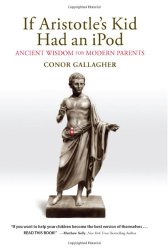
A popular internet parenting meme is “Steve Jobs didn’t let his kids have an iPad.” I’ve never taken the click-bait since I don’t have any idea whether Jobs was a good parent or not. Sure, he’s a brilliant entrepreneur and a smart guy, but that doesn’t make him a good dad. Then I saw the title of this book and knew I wanted to read it. Aristotle did have a son, Nicomacheus, for whom his Nicomachean Ethics is named. Unlike Jobs, Aristotle does have a legacy of human education and perfection. But is it relevant in today’s times?
Conor Gallagher argues that Aristotle’s legacy is relevant today. He follows the Nicomachean Ethics but uses modern scientific studies and pop culture to show the validity of Aristotle. Gallagher cites various fascinating psychological experiments from the 1960s (including Milgram’s Experiment, where people kept delivering electric shocks to strangers just because they were ordered to, and The Stanford Experiment, where students volunteered to role play a prison for two weeks and those playing guards became abusive and authoritarian while the “prisoners” broke down) showing how people can make rapid shifts in their moral behavior based on external circumstances. He explains Aristotle’s four moral characters (the virtuous, the strong-willed, the weak-willed, and the vicious) by showing how Socrates, Frodo Baggins, King David, and Darth Vader are examples of each.
Gallagher shows the relevance to parenting too. Aristotle’s system depends on developing virtues (which are good habits of acting) and fostering true friendships (where friends seek the good of the other, not their own good). Children are bundles of passions that need to be guided by reason. At first, they don’t have enough experience or education to think things out on their own, so parents need to guide them. Reason and passion should work together for the true good, not just for personal pleasure (a la Tony Robbins) or the most pleasure for the most people (a la John Stuart Mill‘s utilitarianism). A great help in achieving that good is finding friends who aren’t just useful to some end or fun to hang out with, but who really want the good for their friends. Such friendships are not frequent but are important. Parents need to keep an eye on their friends and encourage the best friendships.
The book ends with some fun quizzes and resources for further research if parents are interested. Overall, this book is a great introduction to Aristotle’s moral theory and a great help in applying that theory to raising kids today. The style of writing is more personal and less academic, making it easy to read (much easier than reading Aristotle, I assure you!).
Previous Post

February 6, 2015
Book Review: Everything That Rises Must Converge by Flannery O'Connor
Next Post
February 12, 2015 Lenten Reading: The Big List of Fiction
Browse Our Archives
Select a Category Art Bible Study Bulletin Board Catholic Church Excerpt Faith-y Stuff Funny Stuff Good Deals Listening Now Patheos Book Club Personal Reading Challenge Podcast Alert Random Bookishness Resources Review Uncategorized Well Said What I'm Reading
Select a Month January 2017 December 2016 November 2016 October 2016 September 2016 August 2016 July 2016 June 2016 May 2016 April 2016 March 2016 January 2016 December 2015 October 2015 September 2015 August 2015 July 2015 June 2015 May 2015 April 2015 March 2015 February 2015 January 2015 December 2014 November 2014 October 2014 September 2014 August 2014 July 2014 June 2014 May 2014 April 2014 March 2014 February 2014 January 2014 December 2013 November 2013 October 2013 September 2013 August 2013 July 2013 June 2013 May 2013 April 2013 March 2013 February 2013 January 2013 December 2012 November 2012 October 2012 September 2012 August 2012 July 2012 June 2012 May 2012 April 2012 March 2012 February 2012 January 2012 December 2011
TAKE THE
Religious Wisdom Quiz
What does the name "Israel" mean?
Select your answer to see how you score.
He struggles with God Mountain of God The Lord provides Father of a multitude
Related posts from Happy Catholic Bookshelf

Night's Bright Darkness - Review

Book Review - Advent with Saint Teresa of...

Book Review: Two from Jimmy Akin

Hostile Witnesses - Book Review
TRENDING AT PATHEOS Catholic

Rejecting Doom: Christian Hope And Human Action
Christianity is a religion of hope. We are to have hope and...

It’s What Comes From Within Which Matters
One of the most difficult things for us to understand is why...

Why I Choose the Eucharist Over the Sermon
Choose the Eucharist, Not the Sermon What are we supposed to get...

5 Design Elements Found in Spiritually Rooted Homes
Putting Spirituality Into Home Decor Our homes are more than our living...

Credo: A Story of God Told with the...
About 10 years ago, I began to imagine a personal "Credo" that...

The Anatomy of Divine Revelation in Catholic Thought
The claim that God has made Himself known to human beings is...
view all Catholic blogs
Ad-Free & Subscriber Log-In Subscription Support
- About Us
- 2026 Calendar
- Videos
- Podcasts
- Library of World Religions
- Faith In Media Tracker
- Advertise With Us
- Write for Us
- Privacy Policy
- Terms of Service
- Do Not Sell My Data
- Contact Us
- Radiant Digital
- Manage Newsletter Subscriptions
- Unsubscribe From Notifications
- Sitemap
Copyright 2008-2026, Patheos. All rights reserved.
Subscription Support Ad-Free & Subscriber Log-In
Follow Patheos