
BuddhistCatholicContemplativeEvangelicalGeneral ChristianHinduJewishLatter-day SaintMuslimNew VisionsProgressive Christian
Beliefs
- Buddhist
- Catholic
- Contemplative
- Evangelical
- General Christian
- Hindu
- Jewish
- Latter-day Saint
- More Voices
- Muslim
- New Visions
- Pagan
- Progressive Christian
Topics
- Religion News
- Food and Religion
- Sports and Religion
- Religious Art
- Religious Music and Entertainment
- Religious Events
- History and Religion
- Style and Religion
- Politics and Religion
- Women in Religion
- Recreation Outdoors and Religion
- Business Finance and Religion
- Careers Workplace and Religion
- Education and Religion
- Family Parenting and Religion
- Health Fitness and Religion
- Home and Religion
- Relationships and Religion
- Technology and Religion
- Travel and Religion
Columnists
- Buddhist Columnists
- Business Finance and Religion Columnists
- Careers Workplace and Religion Columnists
- Catholic Columnists
- Contemplative Columnists
- Education and Religion Columnists
- Evangelists Columnists
- Family Parenting and Religion Columnists
- General Christian Columnists
- Health Fitness and Religion Columnists
- Hindu Columnists
- History and Religion Columnists
- Home and Religion Columnists
- Jewish Columnists
- More Voices Columnists
- Latter Day Columnists
- Muslim Columnists
- New Visions Columnists
- Nonreligious Columnists
- Pagan Columnists
- Politics and Religion Columnists
- Progressive Columnists
- Recreation Outdoors and Religion Columnists
- Relationships and Religion Columnists
- Religion News Columnists
- Religious Art Columnists
- Religious Events Columnists
- Religious Music and Entertainment Columnists
- Sports and Religion Columnists
- Style and Religion Columnists
- Technology and Religion Columnists
- Travel and Religion Columnists
- Women in Religion Columnists
Resource Library
- 2026 Calendar
- Library of World Religions
- The 100 Most Holy Places on Earth
- Patheos Answers
- Podcasts
- Videos
- Faith Leaders Database
- Anglican Episcopalian
- Bahai
- Baptist
- Buddhism
- Christianity
- Confucianism
- Eastern Orthodoxy
- Hinduism
- Holiness and Pentecostal
- ISKCON
- Islam
- Judaism
- Lutheran
- Methodist
- The Church of Jesus Christ of Latter-day Saints
- New Age
- Paganism
- Presbytarian and Reformed
- Protestantism
- Religion Behind the Scenes
- Roman Catholic
- Scientology
- Shia Islam
- Sikhism
- Sufism
- Sunni Islam
- Taoism
- Zen
- See all religions
Research Tools
 Ad-Free & Subscriber Log-In Subscription Support
Ad-Free & Subscriber Log-In Subscription Support
Follow Patheos 

- Trending:
- Forgiveness
- |
- Marriage
- |
- Consciousness
- |
- Death Penalty
- |
- Election
- |
- Halloween
 Happy Catholic Bookshelf
- Home
- Catholic
- Review: Render Unto Caesar by Charles J. Chaput
Review: Render Unto Caesar by Charles J. Chaput
Last updated on: October 30, 2014 at 12:00 pm by Joseph Reninger
Review: Render Unto Caesar by Charles J. Chaput 2014-10-29T21:30:58-05:00 Joseph Reninger
Patheos Explore the world's faith through different perspectives on religion and spirituality! Patheos has the views of the prevalent religions and spiritualities of the world.
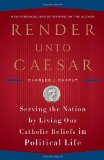 A book relevant to the impending election in the United States (and indeed all of the future elections)…
The phrase “separation of church and state” is popular in political discussions involving intense moral issues of the day. Unfortunately the phrase is often interpreted in ways that are most congenial to the user’s argument. Looking at the history, context, and intention of the original user of the phrase is generally ignored; instead, pundits assume a personally useful interpretation. “Separation of church and state” switches from a complex idea to a rhetorical sound bite.
Archbishop Charles Chaput’s Render Unto Caesar is a book that avoids the simple rhetoric often found in discussions of how churches and states should relate. He looks at the history of the Catholic church from the very beginning, under Roman rule in the first centuries A.D., through to the modern day. He considers both the good and the bad results when the Catholic church had substantial input into governments and governments into the church. He looks at the impact of the Protestant Reformation on church and state relations. He especially considers the founding fathers of America, focusing on Charles Carroll, the only Catholic signer of the Declaration of Independence. He reviews the various anti-Catholic movements in America and the rise of Catholics in society and politics, culminating in John F. Kennedy’s presidency, which again had good and bad facets to it.
Chaput also engages the arguments about the role of faith and of the faithful as citizens of a country. He compares Mario Cuomo’s approach to Robert Casey’s as ways to live faith as a high ranking politician, even quoting both of them when they spoke at Notre Dame University. Chaput’s analysis is fascinating and even-handed without being indecisive.
The role of the media’s influence on culture is another important component of Chaput’s discussion. During the Second Vatican Council, different people had different ideas on what would change in the church. The media looked for exciting stories and dramatic conflicts rather than trying to understand and analyze the council. Chaput even discusses Stephen Colbert’s use of “truthiness” as a sign (albeit a satirical commentary) of modern debates’ inability to engage in meaningful discussion, and instead focus on emotional and rhetorical sound bites.
Chaput has a heart-felt and intelligent discussion of the media’s obsession with “wafer watches,” i.e. if pro-abortion Catholic politicians would be refused communion at Mass by a priest or a bishop. The issue is not that the church is fighting with a politician, but that the integrity of the faith and the Eucharist is respected. Chaput not only discusses the varied implications of forbidding someone from communion, he gives his own opinions on how he would handle the situation.
The book is fascinating and important. Our culture is too focused on sound bites and dramatic conflict. It is great to read a well-thought out, well-researched, honest, and compassionate look at the role of the faithful in political life.
SAMPLE QUOTE: Why St. Thomas More is a man for all season:
More personifies a life lived with courage and conviction, the same virtues that each of us is called to embrace as citizens and as Catholics. More’s humanity is what draws us. He is not a plastic saint. He urgently wanted to live; but not at the cost of selling his soul. Thomas More persuades the modern heart not because he wanted to die for his beliefs, but because he didn’t[emphasis in original]. He used all his skills to avoid martyrdom, but he refused to escape it when the price came down to the integrity of his faith. In More, we see what we all instinctively hunger to believe about ourselves; namely, that we too can choose the joy and freedom that flow from loving something and Someone more than our own lives. In More, we recognize the person we secretly wish we were; the person that God created us to be. [p. 164]
Previous Post

October 29, 2014
Review: Persuasive Pro-Life by Trent Horn
Next Post
October 31, 2014 Review: The Devil Went Down to Georgia: Stories by Charlie Daniels
Browse Our Archives
Select a Category Art Bible Study Bulletin Board Catholic Church Excerpt Faith-y Stuff Funny Stuff Good Deals Listening Now Patheos Book Club Personal Reading Challenge Podcast Alert Random Bookishness Resources Review Uncategorized Well Said What I'm Reading
Select a Month January 2017 December 2016 November 2016 October 2016 September 2016 August 2016 July 2016 June 2016 May 2016 April 2016 March 2016 January 2016 December 2015 October 2015 September 2015 August 2015 July 2015 June 2015 May 2015 April 2015 March 2015 February 2015 January 2015 December 2014 November 2014 October 2014 September 2014 August 2014 July 2014 June 2014 May 2014 April 2014 March 2014 February 2014 January 2014 December 2013 November 2013 October 2013 September 2013 August 2013 July 2013 June 2013 May 2013 April 2013 March 2013 February 2013 January 2013 December 2012 November 2012 October 2012 September 2012 August 2012 July 2012 June 2012 May 2012 April 2012 March 2012 February 2012 January 2012 December 2011
TAKE THE
Religious Wisdom Quiz
Which Psalm opens and closes with "Bless the Lord, O my soul"?
Select your answer to see how you score.
Psalm 37 Psalm 22 Psalm 1 Psalm 103
Related posts from Happy Catholic Bookshelf

Night's Bright Darkness - Review

Book Review - Advent with Saint Teresa of...

Book Review: Two from Jimmy Akin

Hostile Witnesses - Book Review
TRENDING AT PATHEOS Catholic

Rejecting Doom: Christian Hope And Human Action
Christianity is a religion of hope. We are to have hope and...

It’s What Comes From Within Which Matters
One of the most difficult things for us to understand is why...

Why I Choose the Eucharist Over the Sermon
Choose the Eucharist, Not the Sermon What are we supposed to get...

5 Design Elements Found in Spiritually Rooted Homes
Putting Spirituality Into Home Decor Our homes are more than our living...

Credo: A Story of God Told with the...
About 10 years ago, I began to imagine a personal "Credo" that...

The Anatomy of Divine Revelation in Catholic Thought
The claim that God has made Himself known to human beings is...
view all Catholic blogs
Ad-Free & Subscriber Log-In Subscription Support
- About Us
- 2026 Calendar
- Videos
- Podcasts
- Library of World Religions
- Faith In Media Tracker
- Advertise With Us
- Write for Us
- Privacy Policy
- Terms of Service
- Do Not Sell My Data
- Contact Us
- Radiant Digital
- Manage Newsletter Subscriptions
- Unsubscribe From Notifications
- Sitemap
Copyright 2008-2026, Patheos. All rights reserved.
Subscription Support Ad-Free & Subscriber Log-In
Follow Patheos