
BuddhistCatholicContemplativeEvangelicalGeneral ChristianHinduJewishLatter-day SaintMuslimNew VisionsProgressive Christian
Beliefs
- Buddhist
- Catholic
- Contemplative
- Evangelical
- General Christian
- Hindu
- Jewish
- Latter-day Saint
- More Voices
- Muslim
- New Visions
- Pagan
- Progressive Christian
Topics
- Religion News
- Food and Religion
- Sports and Religion
- Religious Art
- Religious Music and Entertainment
- Religious Events
- History and Religion
- Style and Religion
- Politics and Religion
- Women in Religion
- Recreation Outdoors and Religion
- Business Finance and Religion
- Careers Workplace and Religion
- Education and Religion
- Family Parenting and Religion
- Health Fitness and Religion
- Home and Religion
- Relationships and Religion
- Technology and Religion
- Travel and Religion
Columnists
- Buddhist Columnists
- Business Finance and Religion Columnists
- Careers Workplace and Religion Columnists
- Catholic Columnists
- Contemplative Columnists
- Education and Religion Columnists
- Evangelists Columnists
- Family Parenting and Religion Columnists
- General Christian Columnists
- Health Fitness and Religion Columnists
- Hindu Columnists
- History and Religion Columnists
- Home and Religion Columnists
- Jewish Columnists
- More Voices Columnists
- Latter Day Columnists
- Muslim Columnists
- New Visions Columnists
- Nonreligious Columnists
- Pagan Columnists
- Politics and Religion Columnists
- Progressive Columnists
- Recreation Outdoors and Religion Columnists
- Relationships and Religion Columnists
- Religion News Columnists
- Religious Art Columnists
- Religious Events Columnists
- Religious Music and Entertainment Columnists
- Sports and Religion Columnists
- Style and Religion Columnists
- Technology and Religion Columnists
- Travel and Religion Columnists
- Women in Religion Columnists
Resource Library
- 2026 Calendar
- Library of World Religions
- The 100 Most Holy Places on Earth
- Patheos Answers
- Podcasts
- Videos
- Faith Leaders Database
- Anglican Episcopalian
- Bahai
- Baptist
- Buddhism
- Christianity
- Confucianism
- Eastern Orthodoxy
- Hinduism
- Holiness and Pentecostal
- ISKCON
- Islam
- Judaism
- Lutheran
- Methodist
- The Church of Jesus Christ of Latter-day Saints
- New Age
- Paganism
- Presbytarian and Reformed
- Protestantism
- Religion Behind the Scenes
- Roman Catholic
- Scientology
- Shia Islam
- Sikhism
- Sufism
- Sunni Islam
- Taoism
- Zen
- See all religions
Research Tools
 Ad-Free & Subscriber Log-In Subscription Support
Ad-Free & Subscriber Log-In Subscription Support
Follow Patheos 

- Trending:
- Forgiveness
- |
- Marriage
- |
- Consciousness
- |
- Death Penalty
- |
- Election
- |
- Halloween
 Happy Catholic Bookshelf
- Home
- Catholic
- Gospel of Mark Week: 1 – The Author and the Manuscript – UPDATED
Gospel of Mark Week: 1 – The Author and the Manuscript – UPDATED
Last updated on: March 21, 2012 at 4:40 pm by Julie Davis
Gospel of Mark Week: 1 – The Author and the Manuscript – UPDATED 2012-03-21T16:40:37-05:00 Julie Davis
Patheos Explore the world's faith through different perspectives on religion and spirituality! Patheos has the views of the prevalent religions and spiritualities of the world.
So I’m reading this really great Catholic commentary on the Gospel of Mark and I remembered that I have a ton of Bible study stuff for the Gospel of Mark. So lets go through it together.
I like the idea that the Gospel of Mark is just about as close to an eyewitness account as we can get.
The earliest manuscripts of the second Gospel are titled “According to Mark”. This heading is not part of the original work but was added by the early Christians. It summarizes the Church’s uniform tradition that Mark, a disciple of Simon Peter, wrote the second Gospel. Although Mark did not write as an eyewitness of Christ’s public ministry, he was a channel of apostolic tradition through Peter, who was his primary source of information about the life of Jesus. His association with Peter is evident in both the NT and the testimony of the early Church. Within the NT, Peter refers to his companionship with “my son Mark” in 1 Pet 5:13, and interpreters have noted that the general outline of Mark’s Gospel is similar to Peter’s presentation of the gospel in Acts 10:36-43. Outside the NT, several Church Fathers insist that Peter’s authority stands behind the second Gospel. Papias (A.D. 130) describes Mark as the “interpreter” of Peter, while Iranaeus (A.D. 180), Clement of Alexandria (A.D. 200), and Tertullian (A.D. 200) echo this tradition.
The Gospel of Mark
(The Ignatius Catholic Study Bible)
Even though Mark was writing based on Peter’s authority, he also knew Jesus himself.
We can be sure that Mark knew Jesus Christ personally, although he was not one of the twelve Apostles: most ecclesiastical writers see in Mk 14:15-52, the episode of the young man who leaves his sheet behind him as he flees from the garden when Jesus is arrested, as Mark’s own veiled signature to his Gospel, since only he refers to this episode. If this were the only reference it would be ambiguous, but it is supported by other circumstantial evidence: Mark was the son of Mary, apparently a well-to-do widow, in whose house in Jerusalem the first Christians used to gather (Acts 12:12). An early Christian text states that this was the same house as the Cenacle, where our Lord celebrated the Last Supper and instituted the Holy Eucharist. It also seems probably that the Garden of Olives belonged to this same Mary; which would explain Mark’s presence there.
More interesting, historical stuff about the book itself.
There is a very interesting thing about Mark’s gospel. In its original form it stops at Mark 16:8. We know that for two reasons. First, the verses which follow (Mark 16:9-20) are not in any of the great early manuscripts; only later and inferior manuscripts contain them. Second, the style of the Greek is so different that they cannot have been written by the same person as wrote the rest of the gospel.
But the gospel cannot have been meant to stop at Mark 16:8. What then happened? It may be that Mark died, perhaps even suffered martyrdom, before he could complete his gospel. More likely, it may be that at one time only one copy of the gospel remained, and that a copy in which the last part of the roll on which it was written had got torn off. There was a time when the church did not much use Mark, preferring Matthew and Luke. It may well be that Mark’s gospel was so neglected that all copies except for a mutilated one were lost. If that is so we were within an ace of losing the gospel which in many ways is the most important of all.
The Gospel of Mark
(The Daily Bible Series*, rev. ed.;)
** Not a Catholic source and one which can have a wonky theology at times, but Barclay was renowned for his authority on life in ancient times and that information is sound.*
UPDATE
I have been contacted by a gentleman who begs me to stop quoting Barclay’s comment that Mark 16:9-20 is not in any of the early great manuscripts. (See the comments for his full remarks on the subject.)
Therefore, I turned to Mary Healy’s excellent Catholic Commentary on Sacred Scripture to see what she said. Here we go, sports fans!
Verses 9-20, commonly called the Longer Ending, do not appear in the earliest manuscripts of the Gospel. Scholars are virtually unanimous in holding that these verses were not written by Mark but by a Christian of the late first or early second century who sought to fill out the abrupt ending of verse 8. (Footnote: a few ancient and medieval manuscripts of Mark insert other brief endings, which the Church does not accept as canonical.) Yet the Church accepts this addendum as part of the canon of inspired Scripture. The Holy Spirit’s gift of inspiration is not limited to the original writer, but encompasses each biblical book in its final edited form.
The author of the Longer Ending was apparently familiar with all four Gospels (or with the oral testimonies on which they were based), and compiled these verses from the resurrection accounts in Matthew, Luke and John. …
Previous Post

March 20, 2012
Reading Art by a Painting Nun
Browse Our Archives
Select a Category Art Bible Study Bulletin Board Catholic Church Excerpt Faith-y Stuff Funny Stuff Good Deals Listening Now Patheos Book Club Personal Reading Challenge Podcast Alert Random Bookishness Resources Review Uncategorized Well Said What I'm Reading
Select a Month January 2017 December 2016 November 2016 October 2016 September 2016 August 2016 July 2016 June 2016 May 2016 April 2016 March 2016 January 2016 December 2015 October 2015 September 2015 August 2015 July 2015 June 2015 May 2015 April 2015 March 2015 February 2015 January 2015 December 2014 November 2014 October 2014 September 2014 August 2014 July 2014 June 2014 May 2014 April 2014 March 2014 February 2014 January 2014 December 2013 November 2013 October 2013 September 2013 August 2013 July 2013 June 2013 May 2013 April 2013 March 2013 February 2013 January 2013 December 2012 November 2012 October 2012 September 2012 August 2012 July 2012 June 2012 May 2012 April 2012 March 2012 February 2012 January 2012 December 2011
TAKE THE
Religious Wisdom Quiz
Who was the wife of Isaac?
Select your answer to see how you score.
Sarah Rachel Rebekah Leah
Related posts from Happy Catholic Bookshelf

Night's Bright Darkness - Review
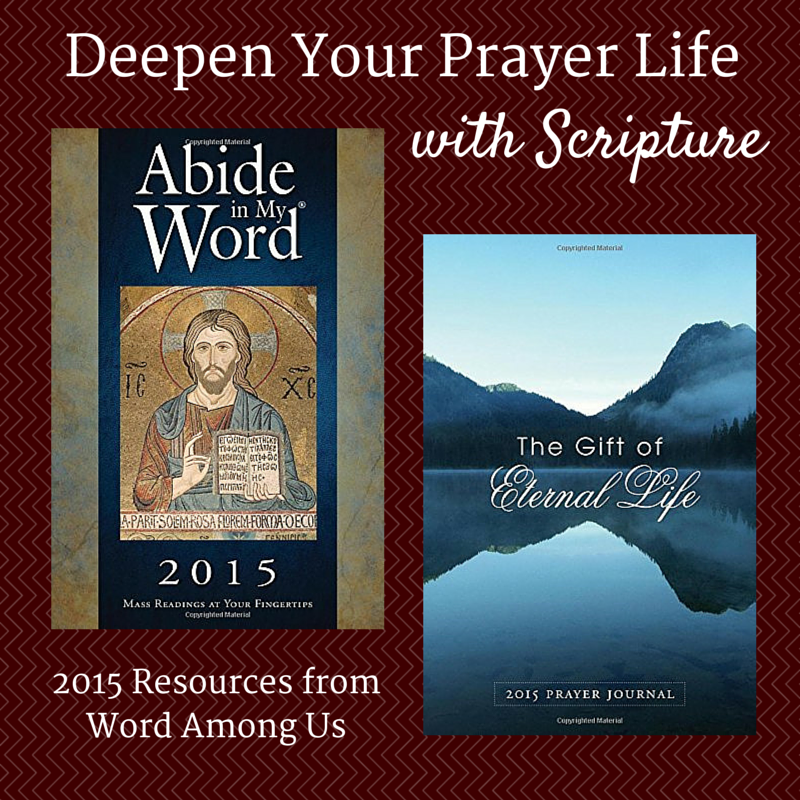
2 Great Prayer Resources from Word Among Us...
Review: The Quick Reference Guide to the Catholic...

Love the Lord with All Your Mind ....
TRENDING AT PATHEOS Catholic

Creation, Preservation, and Teleology in Catholic Theology
As I write this, it is very early Monday morning. Like millions...

The Parable Of The Sower And The Word...
One of Christ’s most famous parables is that of the sower who...

Rejecting Doom: Christian Hope And Human Action
Christianity is a religion of hope. We are to have hope and...

Why I Choose the Eucharist Over the Sermon
Choose the Eucharist, Not the Sermon What are we supposed to get...

5 Design Elements Found in Spiritually Rooted Homes
Putting Spirituality Into Home Decor Our homes are more than our living...

Credo: A Story of God Told with the...
About 10 years ago, I began to imagine a personal "Credo" that...
view all Catholic blogs
Ad-Free & Subscriber Log-In Subscription Support
- About Us
- 2026 Calendar
- Videos
- Podcasts
- Library of World Religions
- Faith In Media Tracker
- Advertise With Us
- Write for Us
- Privacy Policy
- Terms of Service
- Do Not Sell My Data
- Contact Us
- Radiant Digital
- Manage Newsletter Subscriptions
- Unsubscribe From Notifications
- Sitemap
Copyright 2008-2026, Patheos. All rights reserved.
Subscription Support Ad-Free & Subscriber Log-In
Follow Patheos