
BuddhistCatholicContemplativeEvangelicalGeneral ChristianHinduJewishLatter-day SaintMuslimNew VisionsProgressive Christian
Beliefs
- Buddhist
- Catholic
- Contemplative
- Evangelical
- General Christian
- Hindu
- Jewish
- Latter-day Saint
- More Voices
- Muslim
- New Visions
- Pagan
- Progressive Christian
Topics
- Religion News
- Food and Religion
- Sports and Religion
- Religious Art
- Religious Music and Entertainment
- Religious Events
- History and Religion
- Style and Religion
- Politics and Religion
- Women in Religion
- Recreation Outdoors and Religion
- Business Finance and Religion
- Careers Workplace and Religion
- Education and Religion
- Family Parenting and Religion
- Health Fitness and Religion
- Home and Religion
- Relationships and Religion
- Technology and Religion
- Travel and Religion
Columnists
- Buddhist Columnists
- Business Finance and Religion Columnists
- Careers Workplace and Religion Columnists
- Catholic Columnists
- Contemplative Columnists
- Education and Religion Columnists
- Evangelists Columnists
- Family Parenting and Religion Columnists
- General Christian Columnists
- Health Fitness and Religion Columnists
- Hindu Columnists
- History and Religion Columnists
- Home and Religion Columnists
- Jewish Columnists
- More Voices Columnists
- Latter Day Columnists
- Muslim Columnists
- New Visions Columnists
- Nonreligious Columnists
- Pagan Columnists
- Politics and Religion Columnists
- Progressive Columnists
- Recreation Outdoors and Religion Columnists
- Relationships and Religion Columnists
- Religion News Columnists
- Religious Art Columnists
- Religious Events Columnists
- Religious Music and Entertainment Columnists
- Sports and Religion Columnists
- Style and Religion Columnists
- Technology and Religion Columnists
- Travel and Religion Columnists
- Women in Religion Columnists
Resource Library
- 2026 Calendar
- Library of World Religions
- The 100 Most Holy Places on Earth
- Patheos Answers
- Podcasts
- Videos
- Faith Leaders Database
- Anglican Episcopalian
- Bahai
- Baptist
- Buddhism
- Christianity
- Confucianism
- Eastern Orthodoxy
- Hinduism
- Holiness and Pentecostal
- ISKCON
- Islam
- Judaism
- Lutheran
- Methodist
- The Church of Jesus Christ of Latter-day Saints
- New Age
- Paganism
- Presbytarian and Reformed
- Protestantism
- Religion Behind the Scenes
- Roman Catholic
- Scientology
- Shia Islam
- Sikhism
- Sufism
- Sunni Islam
- Taoism
- Zen
- See all religions
Research Tools
 Ad-Free & Subscriber Log-In Subscription Support
Ad-Free & Subscriber Log-In Subscription Support
Follow Patheos 

- Trending:
- Forgiveness
- |
- Marriage
- |
- Consciousness
- |
- Death Penalty
- |
- Election
- |
- Halloween

- Home
- General Christian
- Women in Religion
- A Christian’s Approach to Religious Pluralism
A Christian’s Approach to Religious Pluralism
Last updated on: November 10, 2024 at 6:00 am by Michele Gunn
A Christian’s Approach to Religious Pluralism 2024-10-30T09:30:20-05:00 Michele Gunn
Patheos Explore the world's faith through different perspectives on religion and spirituality! Patheos has the views of the prevalent religions and spiritualities of the world.
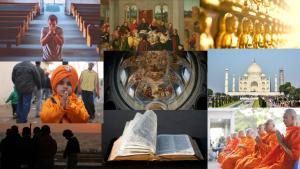
Religious pluralism: Created in Canva
Engaging in Religious Pluralism as a Christian
Our society today is based on political correctness or what I see as ‘I am always right” and “My needs are more important than yours.” That may seem like a bold statement, especially when talking about Religious Pluralism. The fact is, even though it is everywhere, I did not truly know what it was until I started researching for this article.
Religious pluralism is known as the idea that people have the right to practice their religion, or not, as they choose. It is based on “e pluribus unum”, which means “one out of many”. From the beginning of the Bible until now, you can see how new religions have started. When people did not like how something was taught, they started a new religion. Today’s society is more concerned with tolerance and acceptance than with what is right and good.
We need to remember and keep Matthew 5:9 in the forefront of our minds. “Blessed are the peacemakers, for they will be called children of God.” (usccb.org) This doesn’t mean that Christians should “give in” or “play along.” It means they should be involved in interfaith engagement. This will help you to learn about other faiths and how people are shaped by their faith. It helps to develop a mutual respect and can even deepen your own faith.
Interfaith engagement can help people work together towards common goals, combat intolerance and promote peace.
What is Religious Pluralism?
The Internet Encyclopedia of Philosophy defines Religious Pluralism as “Religious pluralism, broadly construed, is a response to the diversity of religious beliefs, practices, and traditions that exist both in the contemporary world and throughout history.”
Crosswalks.com has an article by Rick Kirby entitled, “Why Is Religious Pluralism So Dangerous?” He explains how Religious Pluralists believe there is no one right religion. This is a very politically correct attitude that is found in many areas of life. People generally start to look for answers to how the world came to be by beginning with man. We know the Bible tells us differently. Deuteronomy 6:4-5 clearly states, “Hear, O Israel! The LORD is our God, the LORD alone! Therefore, you shall love the LORD, your God, with your whole heart, and with your whole being, and with your whole strength.” (usccb.org) God is where the answers are found.
We do know that if something is fact, the opposite cannot be fact, yet many times people accept religions with differing stances as correct. They cannot all be correct if they are saying different things. Sure, at the foundation there may be one truth that they all agree on.
Acts 17:26-27 states, “He made from one the whole human race to dwell on the entire surface of the earth, and he fixed the ordered seasons and the boundaries of their regions, so that people might seek God, even perhaps grope for him and find him, though indeed he is not far from any one of us.” (usccb.org) This scripture does show that all people may seek God which is a commonality. This does not mean that every differing nuance is true.
How Christians Can Engage with Respect
In this journey called life, humility and Christ-like love are demanded of us. This is stated in John 13:34-35, “I give you a new commandment: love one another. As I have loved you, so you also should love one another. This is how all will know that you are my disciples, if you have love for one another.” (usccb.org) No matter our differences, we must engage with respect.
Two practical ways to show respect are:
- Being a good listener. James 1:19, “Know this, my dear brothers: everyone should be quick to hear, slow to speak, slow to wrath,” (usccb.org)
- Speaking with gentleness and respect. 1 Peter 3:15, “but sanctify Christ as Lord in your hearts. Always be ready to give an explanation to anyone who asks you for a reason for your hope,” (usccb.org)
Always be loving and kind in your interactions with others. It is being a good Christian to be respectful of others despite your differences. You cannot correctly engage and share if you do not truly understand what their beliefs are and where they initiated. Provoking someone causes them to become angry and shut down fruitful communications.
Finding Common Ground in Shared Values
The old saying that you catch more flies with honey than vinegar is true. Find areas where different faiths overlap in principles. These could be in justice, peace, or love. Build on those similar beliefs and values to create a foundation for relationship-building.
Oftentimes Christians start with an aggressive “conversion-first” mentality. We need to really meet people where they are at. Learn their story. Learn their struggles. Have deep conversations to understand them and where they are in their faith and in their life. Every person has or will struggle with something in their life. Make your struggle and how you used faith to overcome it your story to tell. This can provide some common ground of understanding and help to open the doors of communication.
Navigating Differences in Religious Pluralism
Today’s society makes it extremely difficult to talk about religion and politics. Everyone is so easily offended and they feel like opinions are being forced on them instead of just discussing and learning. So, how do you address theological differences without conflict?
Here are some tips for productive discussions:
- Focus on understanding rather than winning
- Ask questions about what they believe and why
- Make comparisons about similarities in the foundation of belief
- Listen to what the other person has to say
- Show respect while explaining what you believe
Balancing evangelism with respect for others’ beliefs is explained in 1 Corinthians 9:22, “To the weak I became weak, to win over the weak. I have become all things to all, to save at least some.” (usccb.org)
Keep Your Faith in a World of Religious Pluralism
Our society is diverse. Diversity is a wonderful thing until it causes us to stray from the Truth. We are obligated by our Baptism to share the Truth. We are required to do so in a loving way. Always approach interfaith relationships with love and curiosity. You must first understand the other person. Always be kind. You can evangelize by living your faith in a Christian way. Live The Ten Commandments.
Now, as Matthew 28:19 reads, “Go, therefore, and make disciples of all nations, baptizing them in the name of the Father, and of the Son, and of the holy Spirit,” (usccb.org)
Previous Post

November 3, 2024
Faith and Justice: Advocating for the Vulnerable
Next Post

November 17, 2024 Insights from 35 Years of Marriage
Recent Comments
Browse Our Archives
Select a Category Uncategorized
Select a Month October 2026 September 2026 August 2026 July 2026 June 2026 May 2026 April 2026 March 2026 February 2026 January 2026 December 2025 November 2025 October 2025 September 2025 August 2025 July 2025 June 2025 May 2025 April 2025 March 2025 February 2025 January 2025 December 2024 November 2024 October 2024 September 2024 August 2024 July 2024 June 2024
Follow Us!
TAKE THE
Religious Wisdom Quiz
How long was Israel in Egyptian bondage?
Select your answer to see how you score.
500 years 400 years 300 years 200 years
Related posts from Graceful Awakening

Personal Evangelization: Your Faith Story Matters

Do You Really Know Your Catholic Faith?

Catholic Evangelization: Sharing Your Faith Every Day

What Will You Do With What God Is...
TRENDING AT PATHEOS General Christian

The Pillar of the Boatmen: the Ancient Monument...
The Pillar of the Boatmen is a Romano-Gaulish sculpture that dates from...

In one sense walking into Westminster Abbey is like walking down the...

'Super Scam Me' Exposes AI Jon Bon Jovi...
Leslie Pickett believed she was in a relationship with Jon Bon Jovi....

The Brazilian Remake of Kendricks' 'Flywheel' Opens in...
“Flywheel,” the story that launched the Kendrick Brothers’ filmmaking career is getting...

The Dangers of Gradual Accommodation (Winking at Sin)
Recently, the “law of gradualness” resurfaced during the opening of a weeklong,...

The Iron Gates and the Lion of the...
Yesterday, I didn't finish my report about, well, yesterday. So I'll...
view all General Christian blogs
What Are Your Thoughts?leave a comment
Ad-Free & Subscriber Log-In Subscription Support
- About Us
- 2026 Calendar
- Videos
- Podcasts
- Library of World Religions
- Faith In Media Tracker
- Advertise With Us
- Write for Us
- Privacy Policy
- Terms of Service
- Do Not Sell My Data
- Contact Us
- Radiant Digital
- Manage Newsletter Subscriptions
- Unsubscribe From Notifications
- Sitemap
Copyright 2008-2026, Patheos. All rights reserved.
Subscription Support Ad-Free & Subscriber Log-In
Follow Patheos