
BuddhistCatholicContemplativeEvangelicalGeneral ChristianHinduJewishLatter-day SaintMuslimNew VisionsProgressive Christian
Beliefs
- Buddhist
- Catholic
- Contemplative
- Evangelical
- General Christian
- Hindu
- Jewish
- Latter-day Saint
- More Voices
- Muslim
- New Visions
- Pagan
- Progressive Christian
Topics
- Religion News
- Food and Religion
- Sports and Religion
- Religious Art
- Religious Music and Entertainment
- Religious Events
- History and Religion
- Style and Religion
- Politics and Religion
- Women in Religion
- Recreation Outdoors and Religion
- Business Finance and Religion
- Careers Workplace and Religion
- Education and Religion
- Family Parenting and Religion
- Health Fitness and Religion
- Home and Religion
- Relationships and Religion
- Technology and Religion
- Travel and Religion
Columnists
- Buddhist Columnists
- Business Finance and Religion Columnists
- Careers Workplace and Religion Columnists
- Catholic Columnists
- Contemplative Columnists
- Education and Religion Columnists
- Evangelists Columnists
- Family Parenting and Religion Columnists
- General Christian Columnists
- Health Fitness and Religion Columnists
- Hindu Columnists
- History and Religion Columnists
- Home and Religion Columnists
- Jewish Columnists
- More Voices Columnists
- Latter Day Columnists
- Muslim Columnists
- New Visions Columnists
- Nonreligious Columnists
- Pagan Columnists
- Politics and Religion Columnists
- Progressive Columnists
- Recreation Outdoors and Religion Columnists
- Relationships and Religion Columnists
- Religion News Columnists
- Religious Art Columnists
- Religious Events Columnists
- Religious Music and Entertainment Columnists
- Sports and Religion Columnists
- Style and Religion Columnists
- Technology and Religion Columnists
- Travel and Religion Columnists
- Women in Religion Columnists
Resource Library
- 2026 Calendar
- Library of World Religions
- The 100 Most Holy Places on Earth
- Patheos Answers
- Podcasts
- Videos
- Faith Leaders Database
- Anglican Episcopalian
- Bahai
- Baptist
- Buddhism
- Christianity
- Confucianism
- Eastern Orthodoxy
- Hinduism
- Holiness and Pentecostal
- ISKCON
- Islam
- Judaism
- Lutheran
- Methodist
- The Church of Jesus Christ of Latter-day Saints
- New Age
- Paganism
- Presbytarian and Reformed
- Protestantism
- Religion Behind the Scenes
- Roman Catholic
- Scientology
- Shia Islam
- Sikhism
- Sufism
- Sunni Islam
- Taoism
- Zen
- See all religions
Research Tools
 Ad-Free & Subscriber Log-In Subscription Support
Ad-Free & Subscriber Log-In Subscription Support
Follow Patheos 

- Trending:
- Forgiveness
- |
- Marriage
- |
- Consciousness
- |
- Death Penalty
- |
- Election
- |
- Halloween

- Home
- Progressive Christian
- Politics and Religion
- This thought experiment will make you smarter about Gaza and Israel
This thought experiment will make you smarter about Gaza and Israel
Last updated on: November 5, 2023 at 12:31 pm by Kathryn Shihadah
This thought experiment will make you smarter about Gaza and Israel 2023-11-05T12:31:45-05:00 Kathryn Shihadah
Patheos Explore the world's faith through different perspectives on religion and spirituality! Patheos has the views of the prevalent religions and spiritualities of the world.

Photo by Mohammed Ibrahim reminds us of the devastation that Israel has wrought.
We are all familiar with the October 7th surprise attack by the resistance group Hamas against unsuspecting Israelis.
We also know about Israel’s relentless bombing campaign that started the next day and continues even to this moment.
Let’s play a game.
Thought experiment #1
Imagine you’ve been in a coma for two months, and you just woke up today. You turn on the TV to see what’s going on in the world, and all the news programs are talking about the devastation in Gaza. They show film clips of hospitals and ambulances that have been bombed. Mosques, churches, and schools that have been destroyed. Entire neighborhoods that have been leveled.
You see body bags, newly-orphaned children, men digging through rubble with their bare hands, searching for family members. Doctors who haven’t slept in days, explaining how they perform surgeries on the injured by the light of their cell phone, and without the proper anesthesia.
A doctor walks into your room to see how you’re feeling. You’re horrified by everything you’ve just seen, and you tell her so.
“What is going on here? There is no excuse for this carnage. There is nothing that anyone could do to deserve this. It is absolutely unacceptable. Whoever is doing this is barbaric, savage.”
When you stop to take a breath, the the doctor tries to explain what happened a few weeks ago, that brought this war on. She tries to tell you that something really awful happened on October 7th – something you don’t know about.
But you won’t listen. You are fixated on what’s happening now. Nothing else matters. Nothing is relevant except this moment, the depravity you are witnessing.
What are you doing here? Refusing to understand context. Context matters.
Context doesn’t excuse the depravity of the moment, but it enables us to understand why people do what they do. It grants the transgressor humanity. Human beings do things – including horrific things – for a reason. Nonhumans do horrific things because they are beasts and brutes, bloodthirsty and incapable of intelligent thought.
If you want to voice an opinion about the incident, that’s your prerogative. But if you do so irresponsibly, you can do real damage. So let’s find out the context of the situation before we pass judgment on it.
Context #1
In the case of the destruction of Gaza and the killing of 10,000 Palestinians, Israel has a reason for what it is doing: it suffered a terrible massacre. Israeli people were killed, the country was traumatized, its leaders were humiliated. That’s the context we must acknowledge. Of course the government and many citizens want to take action against the perpetrators. They want to ensure that this will never happen again.
This is a good time to also recall that “Israel” is not a person to whom we can assign emotions and attitudes. The individuals who live there and who govern there have emotions and attitudes. Some of those individuals want all Palestinians to disappear, others sympathize with their plight.
Now that we have filled in some context, we have earned the right to judge whether the Israeli government’s response is appropriate.
But first, let’s do one more thought experiment.
Thought experiment #2
Imagine you were in that coma, but this time you wake up on October 7th. You see the news, and you’re naturally horrified by the images of masked men with machine guns, young people running and screaming, burnt out houses, dead bodies. Nobody knows what the death toll is yet, but it’s going to be high.
The scene makes no sense. It’s inexcusable, unacceptable.
But instead of jumping to the conclusion “whoever did this is barbaric, savage,” this time you ask for context. This time you want to understand what’s going on – not so that you can excuse what you’re seeing, but so that you can begin to understand it. You know those masked men are human beings, and human beings do things (including bad things) for a reason (sometimes a bad reason).

Photo by Gayatri Malhotra – Free Palestine
Crash course
You listen to people who have a real grasp of the situation, people who can be trusted. And you learn. A few of the things you learn are:
This was not a random attack. It only seemed that way because you just woke up. This attack was a response to decades of injustice meted out by Israel (paid for in part by aid from United States to the tune of $13 million a day).
Palestinians have been on the land for centuries. There has always been a Jewish presence too, but most of the Jews there today came from Europe and other places around the time of the Holocaust. and settled.
In 1947, the UN proposed a Partition Plan, in which part of Palestine would belong to the indigenous Palestinian Arabs, and part would belong to Jews. Palestinian Arabs objected fiercely – they were willing to share, but they refused to have part of their land taken from them.
In 1948, the Jewish residents of Palestine declared the birth of the state of Israel – on land that had until recently been 90% non-Jews. The Palestinians and neighboring Arab countries fought to get Palestinians’ homeland back, but the military arm of the new state of Israel was too strong, and ethnically cleansed 700,000 Palestinians living in the new state, sending them into exile because they were not Jewish.
Israel ordered the destruction of over 500 Palestinian villages so those exiled Palestinians wouldn’t have anything to come back to. Israeli soldiers took the valuables from the houses, harvested and kept all the crops, and shot anyone who tried to return.
The people living – and dying – in Gaza today are those ethnically cleansed people and their descendants.
Most families in Gaza live in poverty, and are food insecure and unemployed because Israel’s policies of blockade and collective punishment have destroyed the economy – and because they lost their wealth when they were exiled.
The young men in Hamas have lived through at least four wars (2008, 2012, 2014, 2021), and this experience has shaped them. Most of them likely grew up fearful, angry, hungry, malnourished, and anxious. In short, they are severely traumatized.
For years, Palestinians have tried rational, peaceful methods of achieving justice: they have petitioned the International Criminal Court and the International Court of Justice. They have held thousands of peaceful protests. In the ICC and ICJ, the United States always exercises veto power in Israel’s favor. When it comes to peaceful protests, Israeli soldiers shoot to kill.
Palestinians in Gaza have been locked in an open-air prison for sixteen years – under a brutal blockade that prevents the entrance of critical medicine and medical supplies, food, and other staples, causing rampant malnutrition in children. The Al-Aqsa mosque (one of the holiest sites in Islam) has been desecrated again and again. Illegal Israeli settlers (with assistance from the Israeli military) have been attacking Palestinians and taking over their land; Palestinians in the West Bank have endured fifty-six years of occupation and indignity; Israel is illegally holding thousands of Palestinians as political prisoners, under inhumane conditions.
If you’re still reading, you should be starting to understand what makes some Palestinians angry.
That is why Hamas initiated hostilities on October 7th. The people of Gaza have a desperate hunger for justice and dignity, and nothing left to lose.
What else did Israel expect would happen? How long should humans live, starving, in a cage, before they fight back – and fight hard?
Making those judgment calls
Now that we understand the context of that terrible incident on October 7th, we’ve earned the right to judge it.
Can we understand why Hamas fighters might be filled with rage and want to take revenge? Yes.
Can we grasp the depth of their rage? The vast majority of us have lived with enough privilege all our lives that we must answer No.
If we understand why they might do something terrible, does that mean we approve of their actions? Of course not.
But our understanding of the context should enable us to see Hamas fighters as human beings. And instead of wanting to see them annihilated (and all of Gaza with them), we should discern that Palestinian resistance will never go away – until justice begins to roll down like waters.
We have earned the right to judge Hamas’ actions, and we can do so intelligently.
And now that we understand the context of Israel’s horrific war on the people of Gaza, we’ve earned the right to judge it too.
Can we understand why Israeli leaders and many Israeli people might be filled with rage and want to take revenge? Yes.
Can we grasp its depth? Again, most of us must say No.
If we understand the context of this four-week-long (and counting) slaughter, does that mean we approve of it? Of course not. But now we have earned the right to judge Israel’s actions, and we can do so intelligently.
Knowing what you now know, I will leave it to you to judge the appropriateness of Hamas’ and Israel’s actions. I’d be interested to hear what you have to say – but only if you’ve responsibly read this article. It would be great if you would leave a comment on my Facebook page! No pressure.
I invite you to subscribe to my newsletter. I write about the Palestine-Israel issue regularly, and other issues relevant to progressives or those considering becoming progressive. If you would like to comment on this post, please pop over to my Facebook page. All of my posts are there and open to constructive comment. I welcome your thoughts.
OTHER POSTS THAT MIGHT INTEREST YOU:
- Getting real about Palestine with Spiritual Brewpub
- A Palestinian Pastor’s powerful message to us: “it’s time to stop praying”
- Christians: Why do we skimp on compassion when it comes to Palestinians?
- What People Of Faith Need To Know About Gaza And Israel Right Now
- How to make sense of the Palestinian call for freedom and justice
- Dietrich Bonhoeffer explains how to fix stupid
- Gun violence and the “politicization” of dead children
- How the Bible helps us demonize the poor
FEATURED IMAGE: by Mohammed Ibrahim, from Unsplash
Photo by Gayatri Malhotra – Free Palestine
Previous Post

November 2, 2023
Getting real about Palestine with Spiritual Brewpub
Next Post

November 8, 2023 A powerful response to Netanyahu's shameless abuse of the Bible
Recent Comments
"Comments are open at last"
Ramadan for Christians: fasting in wartime
"Comments are open"
Can Christians lead the way in ..."
Browse Our Archives
Select a Category abortion becoming progressive christmas exvangelical Gaza family injustice interfaith islam Palestine and Israel parable politics Ramadan rohr sexual orientation ten commandments Uncategorized upside-down bible women
Select a Month October 2026 July 2026 May 2026 April 2026 September 2025 August 2025 May 2025 April 2025 March 2025 September 2024 August 2024 July 2024 June 2024 May 2024 March 2024 February 2024 January 2024 December 2023 November 2023 October 2023 September 2023 August 2023 July 2023 June 2023 May 2023 April 2023 March 2023 February 2023 January 2023 August 2022 July 2022 June 2022 May 2022 April 2022 March 2022 February 2022 January 2022 December 2021 November 2021 October 2021 September 2021 August 2021 July 2021 June 2021 May 2021 April 2021 March 2021 February 2021 January 2021 December 2020 November 2020 October 2020 September 2020 August 2020
Follow Us!
TAKE THE
Religious Wisdom Quiz
Who said "as for me and my house, we will serve the Lord"?
Select your answer to see how you score.
Paul Peter Abraham Joshua
Related posts from Grace-Colored Glasses
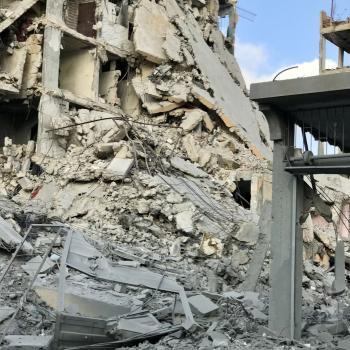
A 2-minute lesson about food in Gaza
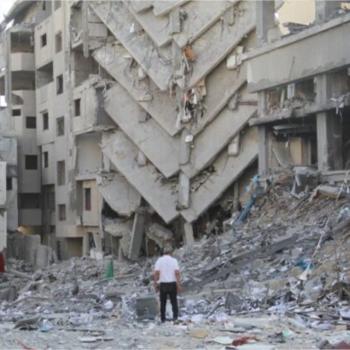
Christians should stop trying to fix Israel's "problem"
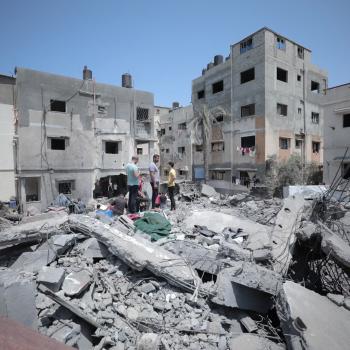
What would you do to help end a...
Need to Know Basis – Famine Edition
TRENDING AT PATHEOS Progressive Christian

A new article, written by Jeff Lindsay and Gale L. Pooley,...

Swimfan: Forgotten Aughts Pleasures
This is a recovery effort. In 2002, My Big Fat Greek Wedding...

Top Three Anti-Catholic Lies About Catholicism
This is my initial transcript for the video, "THE 3 WORST...

Pope Leo Celebrates Mass for Nurses & Docs...
I don't have any idea how he did it, but Pope Leo...

The Sermon on the Mount, Part I: Matthew...
The Sermon on the Mount, Part I (Matthew 4:12-5:12) St. Matthew moves...

What's up from Crossway: Reviewing some of their latest A few weeks...
view all Progressive Christian blogs
What Are Your Thoughts?leave a comment
Ad-Free & Subscriber Log-In Subscription Support
- About Us
- 2026 Calendar
- Videos
- Podcasts
- Library of World Religions
- Faith In Media Tracker
- Advertise With Us
- Write for Us
- Privacy Policy
- Terms of Service
- Do Not Sell My Data
- Contact Us
- Radiant Digital
- Manage Newsletter Subscriptions
- Unsubscribe From Notifications
- Sitemap
Copyright 2008-2026, Patheos. All rights reserved.
Subscription Support Ad-Free & Subscriber Log-In
Follow Patheos