
BuddhistCatholicContemplativeEvangelicalGeneral ChristianHinduJewishLatter-day SaintMuslimNew VisionsProgressive Christian
Beliefs
- Buddhist
- Catholic
- Contemplative
- Evangelical
- General Christian
- Hindu
- Jewish
- Latter-day Saint
- More Voices
- Muslim
- New Visions
- Pagan
- Progressive Christian
Topics
- Religion News
- Food and Religion
- Sports and Religion
- Religious Art
- Religious Music and Entertainment
- Religious Events
- History and Religion
- Style and Religion
- Politics and Religion
- Women in Religion
- Recreation Outdoors and Religion
- Business Finance and Religion
- Careers Workplace and Religion
- Education and Religion
- Family Parenting and Religion
- Health Fitness and Religion
- Home and Religion
- Relationships and Religion
- Technology and Religion
- Travel and Religion
Columnists
- Buddhist Columnists
- Business Finance and Religion Columnists
- Careers Workplace and Religion Columnists
- Catholic Columnists
- Contemplative Columnists
- Education and Religion Columnists
- Evangelists Columnists
- Family Parenting and Religion Columnists
- General Christian Columnists
- Health Fitness and Religion Columnists
- Hindu Columnists
- History and Religion Columnists
- Home and Religion Columnists
- Jewish Columnists
- More Voices Columnists
- Latter Day Columnists
- Muslim Columnists
- New Visions Columnists
- Nonreligious Columnists
- Pagan Columnists
- Politics and Religion Columnists
- Progressive Columnists
- Recreation Outdoors and Religion Columnists
- Relationships and Religion Columnists
- Religion News Columnists
- Religious Art Columnists
- Religious Events Columnists
- Religious Music and Entertainment Columnists
- Sports and Religion Columnists
- Style and Religion Columnists
- Technology and Religion Columnists
- Travel and Religion Columnists
- Women in Religion Columnists
Resource Library
- 2026 Calendar
- Library of World Religions
- The 100 Most Holy Places on Earth
- Patheos Answers
- Podcasts
- Videos
- Faith Leaders Database
- Anglican Episcopalian
- Bahai
- Baptist
- Buddhism
- Christianity
- Confucianism
- Eastern Orthodoxy
- Hinduism
- Holiness and Pentecostal
- ISKCON
- Islam
- Judaism
- Lutheran
- Methodist
- The Church of Jesus Christ of Latter-day Saints
- New Age
- Paganism
- Presbytarian and Reformed
- Protestantism
- Religion Behind the Scenes
- Roman Catholic
- Scientology
- Shia Islam
- Sikhism
- Sufism
- Sunni Islam
- Taoism
- Zen
- See all religions
Research Tools
 Ad-Free & Subscriber Log-In Subscription Support
Ad-Free & Subscriber Log-In Subscription Support
Follow Patheos 

- Trending:
- Forgiveness
- |
- Marriage
- |
- Consciousness
- |
- Death Penalty
- |
- Election
- |
- Halloween

- Home
- Progressive Christian
- Politics and Religion
- Christian nation series: a Christian case for gay marriage
Christian nation series: a Christian case for gay marriage
Last updated on: July 23, 2023 at 12:07 pm by Kathryn Shihadah
Christian nation series: a Christian case for gay marriage 2023-07-23T12:07:16-04:00 Kathryn Shihadah
Patheos Explore the world's faith through different perspectives on religion and spirituality! Patheos has the views of the prevalent religions and spiritualities of the world.
For the past few days, we’ve been discussing issues related to “thou shalt not commit adultery,” covering some of the more conservative beliefs and practices around marriage (here) and the question of divorce (here). Today we will look at gay marriage, a right that, much like women’s hard-earned right to choose abortion, could easily disappear if conservative Christians get their way.
Not just conservatives, but also many progressive Christians struggle with the issue of same-sex marriage, as we’ve been taught “what the Bible clearly says” about homosexuality. Today, maybe we can lessen that struggle just a bit – and have one more reason to fight the Christian nationalist movement.
(This is part of a larger series on Christian nationalism and the Ten Commandments – full series here – in which we are looking to understand the possible ramifications of the United States becoming a “Christian nation.” According to Pew Research, 60% of Christians) believe America should be a Christian nation, and 1/3 believe we already are a Christian nation.)
Mark Achtemeier is a Presbyterian minister who worked hard to “protect” his denomination from LGBTQ ministers. His efforts proved successful when in 1997, language was added to the PC-USA constitution banning their ordination.
Fourteen years later, he led the way in repealing the very resolution he had passed.
Achtemeier’s is the story of a godly man going against the flow by first thinking critically about his denomination’s theology, and then searching Scripture with an open mind. “The Bible’s Yes to Same-Sex Marriage” (Presbyterian Publishing) is the story of his journey.
(My own change of heart happened – as I’ve described before – when a dear young man, best friend of one of my children and frequent guest at my home, came out as gay. In an instant, my eyes were open to recognize that LGBTQ people are just as precious as anybody else and don’t deserve to be shunned or despised.)
As a Christian leader, Mark Achtemeier needed to be sure that his conclusions were scripturally sound, so he committed to a highly principled exploration of the Bible, wherever it took him.
He describes interactions with a number of Christian young people (including seminary students) who were struggling with same-sex attraction. Each was committed to their church teachings: they did not want to be gay. They prayed that God would take it away, and he didn’t. In their desire to be pure, they refused to give in to their impulses.
Still, they felt far outside the will of God in this aspect of their lives, with no way to change. God seemed distant, or cruel, or both.
Many of these young people had lost their faith, or were about to lose it. Some, concluding that the body of Christ – and possibly God too – had rejected them, were considering suicide.

“gay marriage protest” by sushiesque is licensed under CC BY-NC 2.0.
Asking hard questions
Achtemeier began wondering: doesn’t Scripture tell us that faithfulness brings life and light and hope? Why would people who were sacrificially faithful to God find themselves feeling condemned, alienated, and broken, even losing their faith and wanting to die?
Would God, who created sexuality and love and marriage – and designed them to reflect Christ the Bridegroom and his Church the Bride – create some of his people to never have the option of experiencing these gifts? How is this a loving God?
Rather than doubting the loving nature of God, Achtemeier began to question the human theology behind the issue (remember: all theology is human): could it be that Christians who condemn the LGBT community for their “sin,” and refuse to recognize same-sex marriage, are mistaken – that we are out of sync with God?
These are hard questions. We should not dismiss them with a shrug and a trite answer, like “God’s ways are higher than our ways; He knows what he’s doing,” or “the Bible says it, I believe it, that settles it.” Here’s why: there is something deeply wrong when God’s people, in the very act of being faithful, they find themselves far from God and wanting to die.
We should wrestle with hard questions – wrestle with God over hard questions (Genesis 32) – until we have peace that we understand God’s heart. This requires great humility and teachability. Remember that not long ago, Christians used the Bible to support the enslavement of human beings. Christians can be wrong.
Mark Achtemeier wrestled with the hard questions and sought the heart of God – and shares with us what he learned.
He describes how he meticulously studied Scripture – including the “Seven Fragment Texts” (Genesis 19:1–29; Judges 19:1–30; Leviticus 18:22; 20:13; Jude 5–7; Romand 1:18–27; 1 Corinthians 6:9–17; 1 Timothy 1:10) and their context. As a minister, he was obligated to do this right.
Here are some of his conclusions. I encourage you to read his book for the full picture (unsolicited endorsement).
What this is really about
Mark Achtemeier began by asking what purposes God had in creating marriage and sexuality: “What was God’s intention in making these gifts a part of human life? What was God trying to accomplish in giving women and men the capacity to experience one another in these ways? These questions gave me a starting point for trying to understand in a faithful and responsible way what the Bible’s teaching on sexuality was all about.”
The answer he discovered was profound: “Our loving God wants us to be able to experience faithful, loving, and satisfying marriages. God desires our intimate relationships to be a source of delight, support, and comfort that we can count on over the long term…God’s wish for our closest relationships is that they…[bring] out the very best in us and [help] us develop into the generous, compassionate, and grace-filled people God created us to be. God’s desire for our sexuality is that it becomes the joyous, comforting, and satisfying physical expression of all the love, passion, and mutual desire that connects partners who are learning to give themselves completely to each other in the image of Christ.”
Ultimately, Achtemeier reminds us, “The issue at stake isn’t some right to be sexually active, but whether they can have love in their lives.” This is something we should never forget as we grapple with the issue.
(Commercial: if you question “business as usual” in Christianity – or want to question it – subscribe to my newsletter, and we can journey together!)
Why we should be humble when dealing with this issue
Many Christians are absolutely certain they are correct in condemning same-sex attraction and marriage, and confidently state their opinions as fact. Because of this arrogance, many gay Christians have experienced bullying, shaming, and hatred from the Church.
Mark Achtemeier says of this, “People sometimes suffer from a kind of tunnel vision in how they interpret biblical Law, which causes them to miss its true purpose and significance…Jewish leaders in Jerusalem, the ‘scribes and Pharisees’…failed to recognize Jesus as the Messiah. Many of these were devout and sincere people…it wasn’t godlessness, but their devotion to biblical Law as they understood it, that led many of these religious authorities to oppose Jesus.”
“Paul had tried desperately to faithfully obey and follow God’s will using the written commands of Scripture as his guide. But contrary to all his hopes and expectations, Paul found himself unwittingly opposing God’s work as he persecuted the newly formed church. As conscientious as Paul was, his devotion to the written rules contained in the Scripture proved insufficient to align him with the will of God. Paul required something extra to set him on the path of faithfulness.”
The book reminds us that the (now defunct) organization, Exodus International, which practiced “conversion therapy,” ultimately had to “give up on all its ministries aimed at ‘curing’ gay and lesbian people of their same-sex attraction. The leadership of this group has finally concluded, after years of trying, that peoples’ sexual orientation can’t be changed and that telling them otherwise is a source of grievous psychological and spiritual harm.” Leaders of this worldwide organization, operating for decades, admitted they were wrong and apologized for the pain they had caused. They should have done it years earlier, but at least eventually they had the humility to admit their mistake.
Burden too hard to bear
Achtemeier’s book quotes a well-known Catholic and gay author, Andrew Sullivan: “You can’t ask someone to suppress what makes them whole as a human being and then to lead blameless lives. We are human beings, and we need love in our lives in order to love others, in order to be good Christians! What the church is asking gay people to do is not to be holy, but actually to be warped.”
Traditional teachings place a huge burden on LGBTQ Christians: not only must they remain celibate while they are single – they must stay single for life. They must “forever give up hope of falling in love, getting married, and building a shared life with a person [they love]. There is nothing comparable to this in the advice the church gives to [straight] single people, in fact it encourages them to find that special person they can share their life with.”
God loves plot twists
For those Christians who insist that there’s only one right way to do Christian marriage, Mark Achtemeier debunks the theory that: “the mere existence of a majority path for love and marriage automatically means that alternative paths are illegitimate or out of bounds…Over and over again the pages of Scripture witness to a God who delights in confounding standard expectations and conferring blessing outside the conventional, majority ways of doing things.”
Achtemeier offers several scriptural examples to support his statement, finishing up with the following: “it would be hard to imagine a clearer message about majority and minority patterns than the one that emerges from the circumstances of Jesus’ own birth. God specializes and delights in bringing forth blessing from situations that stand outside the bounds of traditional, majority patterns of life, including majority patterns of love and marriage.”
The seven fragment texts
Yes, the book addresses every one of the texts that mention same-sex activities. Here is some of what the author reports (and again, read the book for full exposition): “the same-sex behaviors that were prominent in the first-century world…were violent or sacrilegious or exploitative; they arose out of huge power imbalances or unbridled lusts.”
The context of these seven verses is important: at the time the Bible was being written, the idea of gay marriage did not exist. It was fully outside the writers’ experience or knowledge. Achtemeier points out: “modern social developments [have] made possible a new kind of loving, committed, egalitarian, same-sex relationship that the biblical writers never envisioned. I learned that in considering the question of today’s same-sex marriages and covenanted partnerships, I was not overturning the judgments of the fragment texts. Rather, I was using established biblical principles to think through a genuinely new situation that the fragment texts never envisioned.”
Do we have the courage to love?
This is just one overview of one book on the intersection of homosexuality and Christianity. Many more are out there.
Many gay Christians are also out there – and most (if not all) simply want to love and be loved.
We’ve been wrong before. How could Christians have ever thought that enslaving human beings was God’s plan? Someone had to be the first to say, “hey wait, this is not of God. This needs to stop.”
Do we have the courage to similarly challenge the status quo when it comes to gay marriage? Can we lead the way in saying, “love is love is love”?
(If you are energized by challenges to the evangelical status quo like this, please subscribe to my newsletter! If you would like to comment on this post, please pop over to my Facebook page. All of my posts are there and open to constructive comment! I welcome your thoughts.)
OTHER POSTS ON CHRISTIANITY AND HOMOSEXUALITY:
- My U-turn from evangelical to LGBTQ+ affirming
- Learning to love my gay neighbor, Part One: Preface
- Learning to love my gay neighbor, Part Two: Empathy
- Learning to love my gay neighbor, Part Three: Affirmation
- Should we exclude transgender athletes from competition?
- Can we learn to love our trans neighbors?
FEATURED IMAGE: “gay marriage protest” by sushiesque is licensed under CC BY-NC 2.0.

About Kathryn Shihadah
I was raised as a conservative Christian, and was perfectly content to stay that way – until the day my stable, predictable world was rocked. A curtain was pulled back on conservative Christianity, and instead of ignoring the ugliness I saw, I confronted it. I began to ask questions I never thought I’d ask, and found answers I’d never expected. Old things began to fall away, and – behold! – the new me has come. What a gift to be a new, still-evolving creation. I found out that it’s better to look at the world through Progressive Lenses, with Grace-Colored Glasses. You can read more about the author here.
Previous Post

July 20, 2023
Christian Nation series: would Jesus agree with "biblical" divorce?
Next Post

July 30, 2023 Christian nation series: "Thou Shalt Not Steal" and reparations
Recent Comments
"Comments are open at last"
Ramadan for Christians: fasting in wartime
"Comments are open"
Can Christians lead the way in ..."
Browse Our Archives
Select a Category abortion becoming progressive christmas exvangelical Gaza family injustice interfaith islam Palestine and Israel parable politics Ramadan rohr sexual orientation ten commandments Uncategorized upside-down bible women
Select a Month October 2026 July 2026 May 2026 April 2026 September 2025 August 2025 May 2025 April 2025 March 2025 September 2024 August 2024 July 2024 June 2024 May 2024 March 2024 February 2024 January 2024 December 2023 November 2023 October 2023 September 2023 August 2023 July 2023 June 2023 May 2023 April 2023 March 2023 February 2023 January 2023 August 2022 July 2022 June 2022 May 2022 April 2022 March 2022 February 2022 January 2022 December 2021 November 2021 October 2021 September 2021 August 2021 July 2021 June 2021 May 2021 April 2021 March 2021 February 2021 January 2021 December 2020 November 2020 October 2020 September 2020 August 2020
Follow Us!
TAKE THE
Religious Wisdom Quiz
Which prophet stood watch on a rampart to hear from God?
Select your answer to see how you score.
Habakkuk Amos Ezekiel Joel
Related posts from Grace-Colored Glasses

The Biblical Case For Supporting Israel is Rock...

South Africa v. Israel, and power without competence
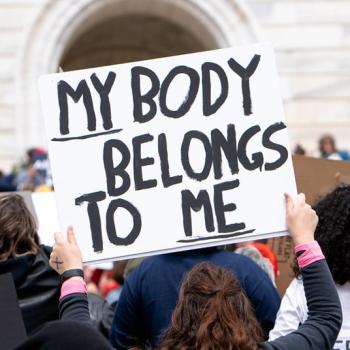
3 simple questions guaranteed to make your pro-birth...

I wanna know what love is – I...
TRENDING AT PATHEOS Progressive Christian

The Problem with False Prophets
Miller’s Station UMC| 10/18/26| Anchor Verse: Jeremiah 23: 1, 9-23 I...

Emotion in Early Christianity by Andrew Crislip
Andrew Crislip’s Emotion in Early Christianity examines an often overlooked dimension of...

16 Spiritual Touchstones for a More Grounded Life
After decades of spiritual study, here are 16 principles I try...

Catholic Evangelization: Sharing Your Faith Every Day
Welcome back to the Graceful Awakening mini-series called, “From Faith to Mission.” ...

The Pillar of the Boatmen: the Ancient Monument...
The Pillar of the Boatmen is a Romano-Gaulish sculpture that dates from...

In one sense walking into Westminster Abbey is like walking down the...
view all Progressive Christian blogs
What Are Your Thoughts?leave a comment
Ad-Free & Subscriber Log-In Subscription Support
- About Us
- 2026 Calendar
- Videos
- Podcasts
- Library of World Religions
- Faith In Media Tracker
- Advertise With Us
- Write for Us
- Privacy Policy
- Terms of Service
- Do Not Sell My Data
- Contact Us
- Radiant Digital
- Manage Newsletter Subscriptions
- Unsubscribe From Notifications
- Sitemap
Copyright 2008-2026, Patheos. All rights reserved.
Subscription Support Ad-Free & Subscriber Log-In
Follow Patheos