
BuddhistCatholicContemplativeEvangelicalGeneral ChristianHinduJewishLatter-day SaintMuslimNew VisionsProgressive Christian
Beliefs
- Buddhist
- Catholic
- Contemplative
- Evangelical
- General Christian
- Hindu
- Jewish
- Latter-day Saint
- More Voices
- Muslim
- New Visions
- Pagan
- Progressive Christian
Topics
- Religion News
- Food and Religion
- Sports and Religion
- Religious Art
- Religious Music and Entertainment
- Religious Events
- History and Religion
- Style and Religion
- Politics and Religion
- Women in Religion
- Recreation Outdoors and Religion
- Business Finance and Religion
- Careers Workplace and Religion
- Education and Religion
- Family Parenting and Religion
- Health Fitness and Religion
- Home and Religion
- Relationships and Religion
- Technology and Religion
- Travel and Religion
Columnists
- Buddhist Columnists
- Business Finance and Religion Columnists
- Careers Workplace and Religion Columnists
- Catholic Columnists
- Contemplative Columnists
- Education and Religion Columnists
- Evangelists Columnists
- Family Parenting and Religion Columnists
- General Christian Columnists
- Health Fitness and Religion Columnists
- Hindu Columnists
- History and Religion Columnists
- Home and Religion Columnists
- Jewish Columnists
- More Voices Columnists
- Latter Day Columnists
- Muslim Columnists
- New Visions Columnists
- Nonreligious Columnists
- Pagan Columnists
- Politics and Religion Columnists
- Progressive Columnists
- Recreation Outdoors and Religion Columnists
- Relationships and Religion Columnists
- Religion News Columnists
- Religious Art Columnists
- Religious Events Columnists
- Religious Music and Entertainment Columnists
- Sports and Religion Columnists
- Style and Religion Columnists
- Technology and Religion Columnists
- Travel and Religion Columnists
- Women in Religion Columnists
Resource Library
- 2026 Calendar
- Library of World Religions
- The 100 Most Holy Places on Earth
- Patheos Answers
- Podcasts
- Videos
- Faith Leaders Database
- Anglican Episcopalian
- Bahai
- Baptist
- Buddhism
- Christianity
- Confucianism
- Eastern Orthodoxy
- Hinduism
- Holiness and Pentecostal
- ISKCON
- Islam
- Judaism
- Lutheran
- Methodist
- The Church of Jesus Christ of Latter-day Saints
- New Age
- Paganism
- Presbytarian and Reformed
- Protestantism
- Religion Behind the Scenes
- Roman Catholic
- Scientology
- Shia Islam
- Sikhism
- Sufism
- Sunni Islam
- Taoism
- Zen
- See all religions
Research Tools
 Ad-Free & Subscriber Log-In Subscription Support
Ad-Free & Subscriber Log-In Subscription Support
Follow Patheos 

- Trending:
- Forgiveness
- |
- Marriage
- |
- Consciousness
- |
- Death Penalty
- |
- Election
- |
- Halloween

-
Social Media
- Home
- Evangelical
- Young Victims Remain Hidden in Pandemic’s Shadow | GFA World Special Report #1
Young Victims Remain Hidden in Pandemic’s Shadow | GFA World Special Report #1
Last updated on: January 10, 2022 at 5:00 am by GFA Staff Writer
Young Victims Remain Hidden in Pandemic’s Shadow | GFA World Special Report #1 2022-01-06T18:30:57+00:00 GFA Staff Writer
Patheos Explore the world's faith through different perspectives on religion and spirituality! Patheos has the views of the prevalent religions and spiritualities of the world.
WILLS POINT, TX – GFA World (Gospel for Asia) founded by K.P. Yohannan, whose heart to love and help the poor has inspired numerous charities like GFA World Canada, to serve the deprived and downcast worldwide, issued this first part of a Special Report update on girls facing decreased opportunity and increased violence, the young victims who remain hidden in the shadow of the COVID-19 pandemic.
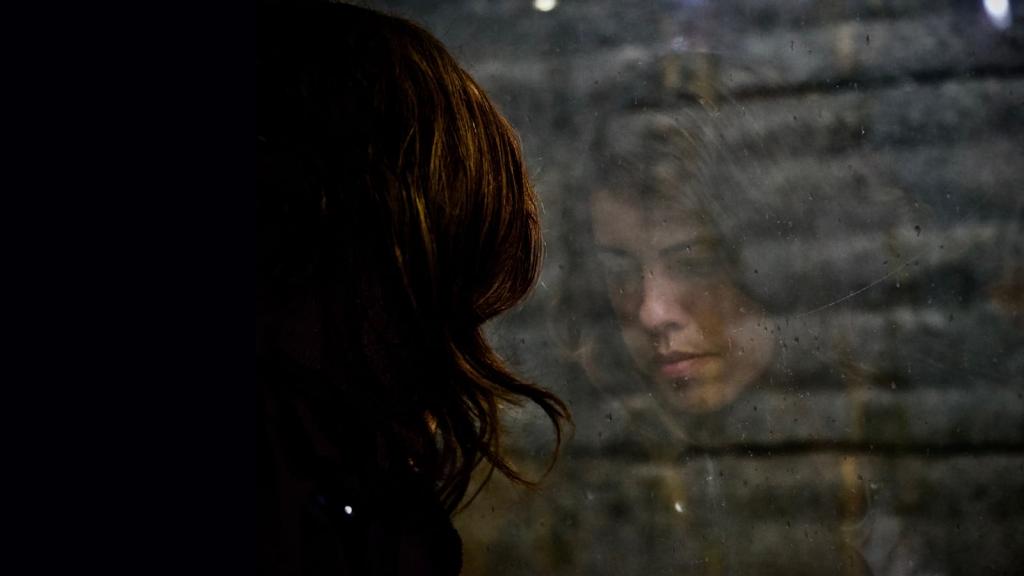

Alexis Ke’Erica Martin, a child sex trafficking survivor, was recently released from life in adult prison for the murder of her trafficker, although another person committed the fatal shooting while Ke was trying to escape from the abuse. Photo by Alexis Ke’Erica Martin Support Fund GoFundMe
In April 2020, most people around the globe were adjusting to life at home as governments instituted lockdown orders intended to curb the spread of COVID-19. To many, the limitations on normal activities, travel and socializing felt confining.
But for 22-year-old Alexis Martin, April 2020 meant a taste of freedom after more than six years in prison—and before that, sex trafficking.[1]
In an article for The Washington Post, Jessica Contrera shares how Alexis ended up in prison. By age 15, Alexis had experienced so many of the most horrific things that can happen to a girl—sexual abuse, rape, a miscarriage and sex trafficking. Her trafficker, Angelo Kerney, didn’t allow her to attend school and beat her when she threatened to run away. In Alexis’ desperation to escape, she became involved in a robbery plot that ended in the murder of Kerney. The teenage girl was then tried as an adult and sentenced to decades in prison.[2]
Then, in April 2020, the Ohio governor commuted Alexis’ sentence, allowing her to go free with parole. Even with this taste of freedom, she continues to face challenges, such as finding a job, due to the trauma she faced as a teenager and the black mark of a prison sentence.[3]

Pundits were anticipating that the pandemic’s economic strain on families and the shutting down of schools would negatively impact the general well-being of girls, including their safety, health and education.
Alexis’ story is one of many showing how the abuse and exploitation of girls can have devastating consequences. Her story happened in America, a country where girls typically have many freedoms and opportunities that girls in developing nations do not. And Alexis’ story happened before a pandemic that caused far-reaching social and economic impacts for the entire world.
In some places, such as the United States, the availability of COVID-19 vaccines and the easing of many restrictions have made the virus seem more distant. Yet lurking in its shadow is a crisis threatening the safety and health of girls. As social isolation and poverty have increased, girls have potentially become the most under-recognized victim group of the pandemic.
Globally, the pandemic has threatened girls’ education, increased their risk for the kind of abuse and trafficking that devastated Alexis’ teenage years, and made them more vulnerable to child marriage and teen pregnancy. While statistics from 2021 regarding girls’ well-being remain to be counted, in spring 2020 non-profit organizations were already predicting that the pandemic’s economic strain on families and the shutting down of schools would negatively impact the health, education, safety and general well-being of girls if communities didn’t prioritize giving girls needed attention, care and education.
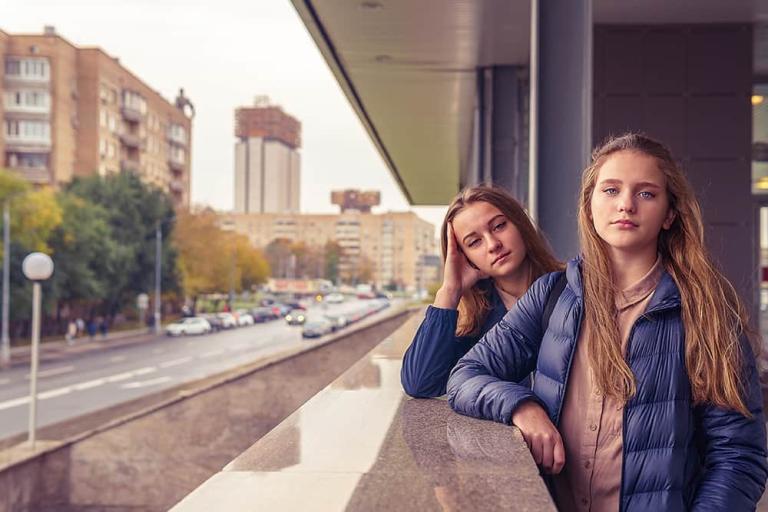
For the first time in human history, an entire generation of children globally have had their education disrupted. Now, more than a year later, many children have spent more than a year out of the classroom—and many may never return.
COVID-19: A Long-lasting Threat to Education
 As COVID-19 rapidly spread across the globe in the spring of 2020, governments around the world decided to keep people at home in hopes of slowing the pandemic. Large numbers of people could not work at all, while others lost income as business slowed or stopped due to the drop in customers. This especially hurt low-income workers who could not simply work from home, such as migrant laborers, daily wage laborers and others who lost their livelihood during the lockdowns. Gita Gopinath, an economist and director at the International Monetary Fund, suggests that the pandemic caused the greatest recession since the Great Depression.[4]
Now, with the pandemic further stretching struggling families’ resources, girls likely have faced, and will continue to face, lower chances of receiving needed nutrition and attending school.
As the pandemic curtails girls’ education by forcing them out of the classroom – a problem from which many may never recover – it is also puts them at risk for abuse and exploitation.
Being in a classroom protects girls from sexual predators, unhealthy relationships and abusive parents or relatives. But due to lockdowns, many girls no longer have the classroom as a safe space.
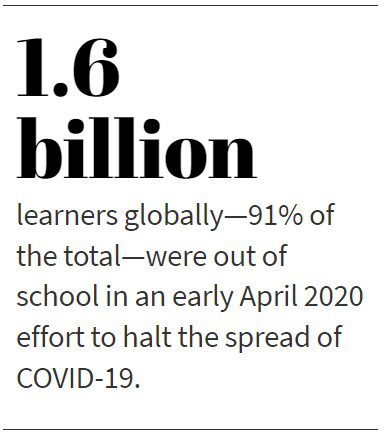
According to the global non-profit Save the Children, “In early April 2020, in an effort to halt the spread of COVID-19, an estimated 1.6 billion learners globally—91% of the total—were out of school. For the first time in human history, an entire generation of children globally have had their education disrupted.”[5]
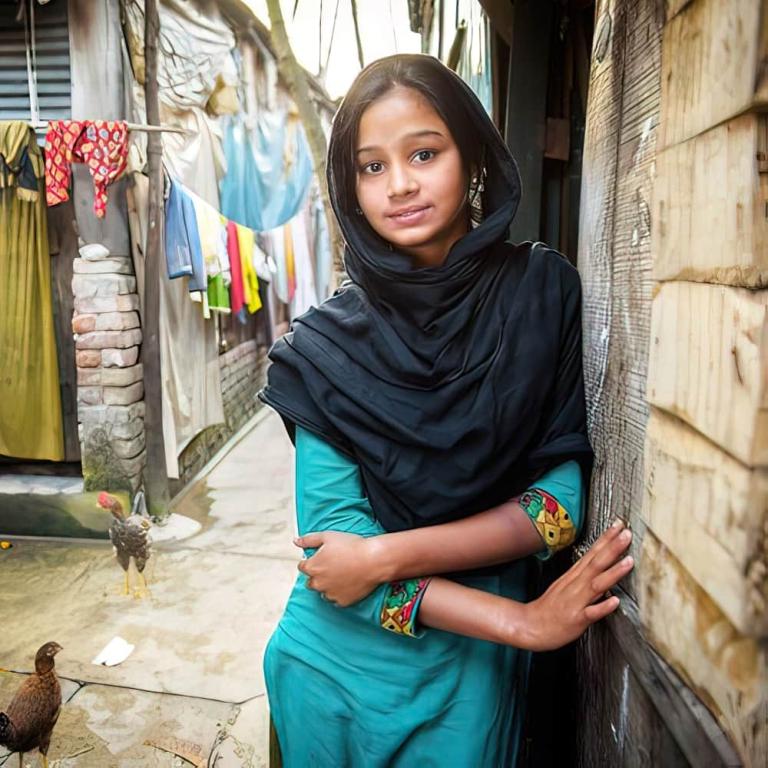
Tania’s once hard-working father was suddenly blind and unable to provide as a result of a brutal mugging and acid attack. Tania immediately dropped out of school and began working the overnight shift in a shrimp factory to support her family; while her father begged on the street. Combined, their income was still not enough to feed the family. Fortunately, peeling shrimp didn’t peel away at Tania’s dreams who has big plans to open her own tailoring business. To help her achieve this dream, World Vision provided her with a sewing machine, and fabric. After two months of training, Tania is now able to work at home, where she is safe and makes enough to afford food for her entire family. While she is still working, she now has more time to rest, watch television, play and… just be a normal 16 year old again! Photo by World Vision USA, Instagram
Now, more than a year later, many children have spent more than a year out of the classroom—and may never return.[6]
As girls stay out of school, they risk devastating consequences to their health, well-being and future opportunities. Studies from the Ebola crisis have suggested that once girls were taken out of school due to Ebola, many didn’t return, even long after schools reopened.[7]
School closures pose the greatest challenge for girls in developing nations, where families may be struggling financially and communities may not have access to the technology needed for distance learning. Sometimes girls bear a greater burden in supporting the family during challenging times. They may be given extra household responsibilities, including caring for younger siblings or sick family members; this can decrease their opportunities to do schoolwork at home—and their chances of returning to school when the pandemic subsides.[8]
As schools in some places reopen, the pandemic’s effects are starting to be seen. In Kenya, for example, only 84 percent of teen girls returned to school, while 92 percent of teen boys came back.[9] This could be just the tip of the iceberg. Malala Fund, an NGO supporting girls’ education, estimates 20 million girls in developing countries will not return to the classroom.[10]
As the pandemic is curtailing girls’ education, it is also putting them at risk for abuse, exploitation and violence. Being in the classroom can help protect girls from sexual predators, unhealthy relationships and even abusive parents or relatives. But due to lockdowns, many girls no longer have the classroom as a safe space.[11]
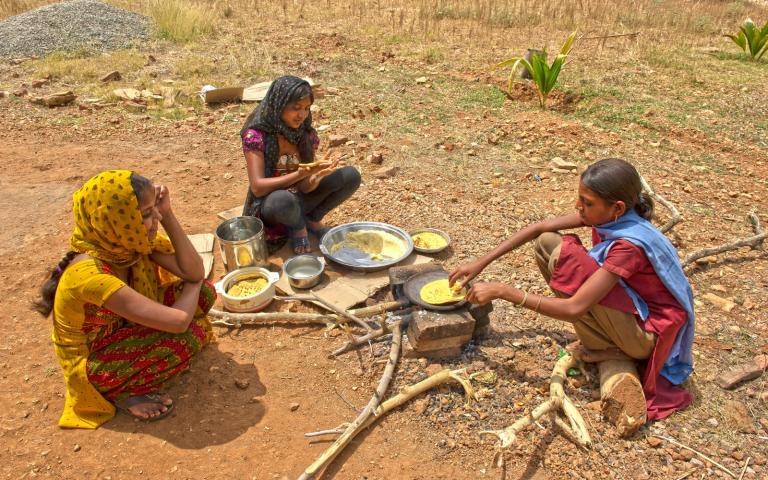
In a culture that de-emphasizes a woman’s education, many girls in South Asia leave school at an early age, often due to financial reasons. It becomes their responsibility to work at home taking care of their siblings, doing household chores, fetching water, or preparing meals, which enable their parents to go searching for work.
Girls Pushed into Adult Responsibilities
 Mayawati, a teenager in Nepal, wanted to continue school and study agriculture. “But her family’s struggles during the pandemic made her feel guilty about being a burden to her parents,” wrote Bhadra Sharma and Jeffrey Gettleman for The New York Times.[12] “She dropped out of school, then married a man who worked as a menial laborer. Her dreams … have quietly slipped away.”
Mayawati’s story reflects that of others in Nepal and around the world.[13] Because of the pandemic, parents struggling to feed their children may feel the need to marry off their daughters to reduce the number of mouths they must feed.[14] In addition, as girls spend time out of the classroom, they may spend more time with men and more unsupervised time with boys, which increases their chances for teen pregnancy and child marriage.[15][16]
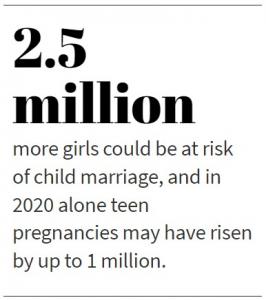
Save the Children predicts a “dramatic surge in child marriage and adolescent pregnancy”: Within a five-year span, 2.5 million more girls could be at risk of child marriage, and in 2020 alone teen pregnancies may have risen by up to 1 million.[17]
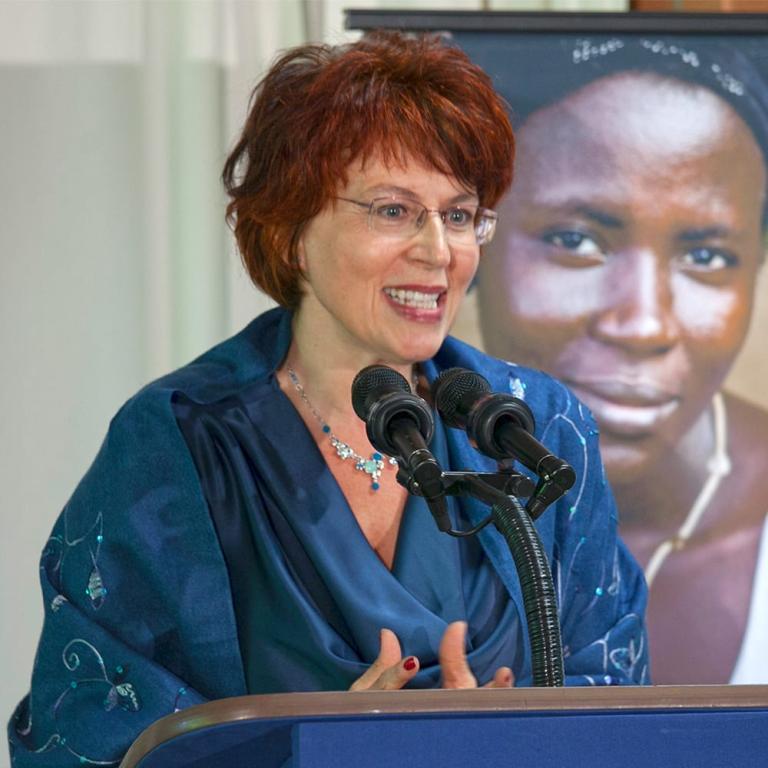
Dr. Flavia Bustreo is a leading physician, public health professional and advocate for the health and human rights of women, children, adolescents and the elderly. Photo by United States Mission Geneva, Flickr (CC BY-ND 2.0)
This means that those girls may lose the chance to ever complete their education, which will limit their chances for jobs in the future. In addition, girls who marry young are more vulnerable to sexual abuse and violence.[18] Child marriage and teen pregnancy also threaten girls’ physical health. Girls who give birth at very young ages can face a host of complications, including miscarriage, obstetric fistula—and death.[19][20]
“Complications of pregnancy and childbirth are the leading cause of death in young women aged 15–19,” says Dr. Flavia Bustreo, a leader in the World Health Organization’s Partnership for Maternal, Newborn and Child Health. “Young girls who marry later and delay pregnancy beyond their adolescence have more chances to stay healthier, to better their education and build a better life for themselves and their families.”[21]
If you want to support girls in South Asia and Africa, consider a one-time donation to help young victims who have been delivered from desperate situations in their lives, but are still struggling everyday. Your gift will provide for their pressing needs, while we locate permanent sponsors to cover their monthly needs to remain in school.
Read the rest of this Gospel for Asia – Transforming Communities (GFA World) Special Report: Young Victims Remain Hidden in Pandemic’s Shadow — Part 2, Part 3
About GFA World
GFA World (www.gfa.org) is a leading faith-based global mission agency, helping national workers bring vital assistance and spiritual hope to millions across the world, especially in Asia and Africa, and sharing the love of God. In GFA World’s latest yearly report, this included thousands of community development projects that benefit downtrodden families and their children, free medical camps conducted in more than 1,200 villages and remote communities, over 4,800 clean water wells drilled, over 12,000 water filters installed, income-generating Christmas gifts for more than 260,000 needy families, and teaching providing hope and encouragement available in 110 languages in 14 nations through radio ministry. GFA World has launched programs in Africa, starting with compassion projects in Rwanda. For all the latest news, visit our Press Room at https://gfanews.org/news/.
Read more blogs on GFA World, National Missionary Workers, World Missions and the COVID 19 Pandemic on Patheos from Gospel for Asia.
GFA’s Statement About Coronavirus
Learn more by reading this Special Report from Gospel for Asia on the Lord’s work in 2020 through GFA and the partnerships worldwide while following Him in His work in 16 nations, including Sri Lanka, Bangladesh and Nepal.
Learn more about Gospel for Asia: Facebook | YouTube | Instagram | LinkedIn | SourceWatch | Integrity | Lawsuit Update | 5 Distinctives | 6 Remarkable Facts | 10 Milestones | Media Room | Widows & Coronavirus | Endorsements | 40th Anniversary | Lawsuit Response | International Offices | Missionary and Child Sponsorship | Transforming Communities through God’s Love
Notable News about Gospel for Asia: FoxNews, ChristianPost, NYPost, MissionsBox
Read what 25 Christian Leaders are affirming about GFA World.
This Special Report originally appeared on gfa.org.
Previous Post
January 7, 2022
"I Haven't Cast You Away" Covid-19 Hardship Widows | Part 2
Browse Our Archives
Select a Category About Gospel for Asia Bishop Daniel Children's Education Clean Water Daniel Yohannan Disaster Relief GFA World Guest Writer Humanitarian Services Inspiration Leprosy Medical Ministry Mission Support Team Modern Slavery National Missions Poverty Alleviation Powerful Prayer School of Discipleship Special Report Spiritual Growth Uncategorized Women's Issues
Select a Month April 2026 March 2026 December 2025 September 2025 June 2025 May 2025 March 2025 December 2024 November 2024 October 2024 June 2024 May 2024 April 2024 December 2023 November 2023 October 2023 September 2023 May 2023 April 2023 March 2023 February 2023 January 2023 December 2022 November 2022 October 2022 September 2022 August 2022 July 2022 June 2022 May 2022 April 2022 March 2022 February 2022 January 2022 December 2021 November 2021 October 2021 September 2021 August 2021 July 2021 June 2021 May 2021 April 2021 March 2021 February 2021 December 2020 November 2020 October 2020 September 2020 August 2020 July 2020 June 2020 May 2020 April 2020 March 2020 February 2020 January 2020 December 2019 November 2019 October 2019 September 2019 August 2019 July 2019 June 2019 May 2019 April 2019 March 2019 February 2019 January 2019 December 2018 November 2018 October 2018 September 2018 August 2018 July 2018 June 2018 May 2018 April 2018 March 2018 February 2018 January 2018 December 2017 November 2017 October 2017 September 2017
Follow Us!
TAKE THE
Religious Wisdom Quiz
Who was Esther's cousin and guardian?
Select your answer to see how you score.
Haman Mordecai Nehemiah Ezra
Related posts from What Motivates Us.
Clean Drinking Water from 125 New Jesus Wells...
Water Well Campaign Helps Families Leave Unsafe Water
GFA World ‘Epicenter’ for Faith-Based Healthcare in Africa
Couple Spreads Hope and Joy: Give Farm Animals...
TRENDING AT PATHEOS Evangelical

Looking at the Largest Orthodox Cathedral on Earth
There is often a considerable amount of anger and, shall we...

The Problem with False Prophets
Miller’s Station UMC| 10/18/26| Anchor Verse: Jeremiah 23: 1, 9-23 I...

Emotion in Early Christianity by Andrew Crislip
Andrew Crislip’s Emotion in Early Christianity examines an often overlooked dimension of...

16 Spiritual Touchstones for a More Grounded Life
After decades of spiritual study, here are 16 principles I try...

Catholic Evangelization: Sharing Your Faith Every Day
Welcome back to the Graceful Awakening mini-series called, “From Faith to Mission.” ...

The Pillar of the Boatmen: the Ancient Monument...
The Pillar of the Boatmen is a Romano-Gaulish sculpture that dates from...
view all Evangelical blogs
Ad-Free & Subscriber Log-In Subscription Support
- About Us
- 2026 Calendar
- Videos
- Podcasts
- Library of World Religions
- Faith In Media Tracker
- Advertise With Us
- Write for Us
- Privacy Policy
- Terms of Service
- Do Not Sell My Data
- Contact Us
- Radiant Digital
- Manage Newsletter Subscriptions
- Unsubscribe From Notifications
- Sitemap
Copyright 2008-2026, Patheos. All rights reserved.
Subscription Support Ad-Free & Subscriber Log-In
Follow Patheos