
BuddhistCatholicContemplativeEvangelicalGeneral ChristianHinduJewishLatter-day SaintMuslimNew VisionsProgressive Christian
Beliefs
- Buddhist
- Catholic
- Contemplative
- Evangelical
- General Christian
- Hindu
- Jewish
- Latter-day Saint
- More Voices
- Muslim
- New Visions
- Pagan
- Progressive Christian
Topics
- Religion News
- Food and Religion
- Sports and Religion
- Religious Art
- Religious Music and Entertainment
- Religious Events
- History and Religion
- Style and Religion
- Politics and Religion
- Women in Religion
- Recreation Outdoors and Religion
- Business Finance and Religion
- Careers Workplace and Religion
- Education and Religion
- Family Parenting and Religion
- Health Fitness and Religion
- Home and Religion
- Relationships and Religion
- Technology and Religion
- Travel and Religion
Columnists
- Buddhist Columnists
- Business Finance and Religion Columnists
- Careers Workplace and Religion Columnists
- Catholic Columnists
- Contemplative Columnists
- Education and Religion Columnists
- Evangelists Columnists
- Family Parenting and Religion Columnists
- General Christian Columnists
- Health Fitness and Religion Columnists
- Hindu Columnists
- History and Religion Columnists
- Home and Religion Columnists
- Jewish Columnists
- More Voices Columnists
- Latter Day Columnists
- Muslim Columnists
- New Visions Columnists
- Nonreligious Columnists
- Pagan Columnists
- Politics and Religion Columnists
- Progressive Columnists
- Recreation Outdoors and Religion Columnists
- Relationships and Religion Columnists
- Religion News Columnists
- Religious Art Columnists
- Religious Events Columnists
- Religious Music and Entertainment Columnists
- Sports and Religion Columnists
- Style and Religion Columnists
- Technology and Religion Columnists
- Travel and Religion Columnists
- Women in Religion Columnists
Resource Library
- 2026 Calendar
- Library of World Religions
- The 100 Most Holy Places on Earth
- Patheos Answers
- Podcasts
- Videos
- Faith Leaders Database
- Anglican Episcopalian
- Bahai
- Baptist
- Buddhism
- Christianity
- Confucianism
- Eastern Orthodoxy
- Hinduism
- Holiness and Pentecostal
- ISKCON
- Islam
- Judaism
- Lutheran
- Methodist
- The Church of Jesus Christ of Latter-day Saints
- New Age
- Paganism
- Presbytarian and Reformed
- Protestantism
- Religion Behind the Scenes
- Roman Catholic
- Scientology
- Shia Islam
- Sikhism
- Sufism
- Sunni Islam
- Taoism
- Zen
- See all religions
Research Tools
 Ad-Free & Subscriber Log-In Subscription Support
Ad-Free & Subscriber Log-In Subscription Support
Follow Patheos 

- Trending:
- Forgiveness
- |
- Marriage
- |
- Consciousness
- |
- Death Penalty
- |
- Election
- |
- Halloween

-
Social Media
- Home
- Evangelical
- Poverty: Public Enemy #1 by Gospel for Asia (Part 1)
Poverty: Public Enemy #1 by Gospel for Asia (Part 1)
Last updated on: September 22, 2022 at 9:27 pm by GFA Staff Writer
Poverty: Public Enemy #1 by Gospel for Asia (Part 1) 2022-09-22T21:27:08+00:00 GFA Staff Writer
Patheos Explore the world's faith through different perspectives on religion and spirituality! Patheos has the views of the prevalent religions and spiritualities of the world.
WILLS POINT, TX – Gospel for Asia (GFA), founded by KP Yohannan, issues the first part of an extensive Special Report on extreme poverty worldwide, how poverty alleviation and elimination is possible, but it is not inevitable.
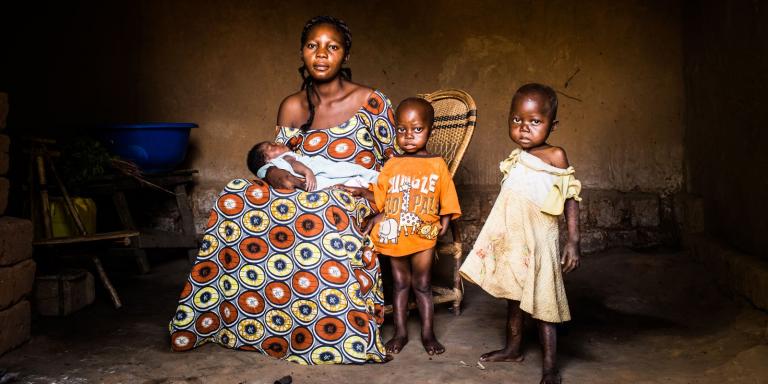
If the modern world is truly a “global village,” that means everyone on earth is our neighbor—and Jesus was very clear about how we are to treat our neighbors. We have a responsibility to help them out of difficult circumstances.
While issues such as health care, education, the environment, equality for women and protection for endangered children are all major global concerns with their own particular challenges, they are also, in part, fueled by a common force: poverty.
In the United States, $1.90 is mere pocket change—the cost of a serving of wake-up java from your favorite coffee shop. But in other parts of the world, $1.90 represents a bitter cup as the official marker of extreme poverty—the daily income line below which too many struggles to eke out an existence.
Globally, around 736 million people are in this group, many of them children. Lacking adequate housing, hygiene, health care and education because they simply don’t have enough money, they pay a high price: disease, discrimination and, often, early death.
Indeed, poverty might well be viewed as the tip of a Titanic-like iceberg. According to The Borgen Project, poverty’s hidden impacts include:
- “Almost 3 billion people with no access to toilets, and almost 1 billion lack clean drinking water.
- “The poorest 20 percent of the world’s children twice as likely as the richest 20 percent to be stunted by poor nutrition and to die before their fifth birthday.
- “2.7 million newborns worldwide die within their first month of life.
- “161 million children do not attend primary school.”
With such a far-ranging impact, it is not surprising, then, that world leaders have declared poverty to be public enemy No. 1. Indeed, they have gone so far as to set a goal of eliminating extreme poverty by 2030. “No Poverty”—which would mean just 3 percent of the world’s population still left surviving on less than $1.90 a day—heads the list of the United Nations’ 17 Sustainable Development Goals, adopted in 2015.
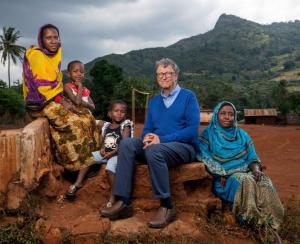
Bill Gates on a recent visit to Tanzania.
Photo by Jonathan Torgovnik for TIME
Lofty as that may seem, it’s not just wishful thinking. Software-billionaire-turned-philanthropist Bill Gates is among those who think the 2030 deadline is doable.
“We are confident that this is not only possible, but that we will see major breakthroughs along the way, which will provide unprecedented opportunities to people in poor countries,” Gates said. “Indeed, we think their lives will improve faster in the next 15 years than at any other time in history—and that their lives will improve more than anyone else’s.”
Gates’ optimism is based on some solid evidence. The good news is that the number of people below the poverty line has dropped significantly over the last three decades.
“Since 1990, nearly 1.1 billion people have lifted themselves out of extreme poverty,” says the World Bank. It notes that “in areas ranging from child survival to primary school enrollment, the improvements to people’s lives have advanced with a momentum that few could have imagined when the World Bank was founded more than 70 years ago.”
The trend is certainly going in the right direction. But that still leaves 1 in 10 of the world’s population—about the equivalent of every person living in Indianapolis—below that coffee-cup-poverty-zone indicator.
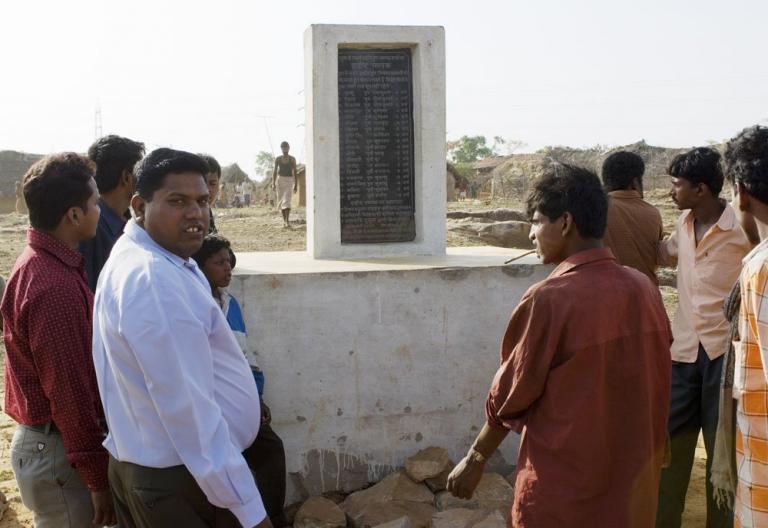
This plaque was erected in memory of 18 village children who died from starvation.
Extreme Poverty: Millions Are Still at Risk
According to the U.S. Agency for International Development, “Progress is heartening, but it is not enough.” Gates himself has cautioned that “while progress is possible, it is not inevitable. Success will require political will, global cooperation, and human ingenuity.”
Like the last stages of a marathon, finishing the task will prove the most difficult part of all. The remaining poorest of the poor will find it more difficult to help up and out of their circumstances because they are in parts of the world where extreme poverty is entrenched in an even more complex tangle of roots. Prejudice and inequality have long kept different groups economically disadvantaged, while natural disasters and wars only add to their problems.
Progress in the fight against global poverty can be tracked at the World Poverty Clock, whose graphics show the rate at which people are rising above the $1.90-a-day desperation line in different countries. Meanwhile, trackers at the Brookings Institution think tank warn that poverty is actually likely to rise in almost 30 countries over the next few years.
…While progress is possible, it is not inevitable. Success will require political will, global cooperation, and human ingenuity.
While the eradication of extreme poverty in parts of the developing world by 2030 is “ambitious, yet achievable,” according to World Bank, it is much less likely to be achieved in what a cautionary World Bank policy paper calls “fragile and conflict-affected countries (FCS)”—those wracked by war and natural disasters. Here, analysts anticipate a “32% poverty rate for fragile states by 2030 given current conditions and trends.”
They warn: “As the difference between the projected poverty rate for the FCS group as a whole and the 3 percent target suggests, most of the countries in the fragile country grouping, or at least enclaves of the poor within them, are at great risk of being ‘left behind’ with respect to the eradication target.”
These “chronically poor” are mainly found in South Asia—where Gospel for Asia (GFA) is widely active—and sub-Saharan Africa.
“Intensified efforts are required to boost the incomes, alleviate the suffering and build the resilience of those individuals still living in extreme poverty,” notes the World Bank soberly.
There may not be a more fitting time to assess what progress has been made in the war on poverty, and what still needs to be done, than now. 2018 marked the 70th anniversary of the signing of the Universal Declaration of Human Rights in Paris.
Excerpts from the
Universal Declaration of Human Rights
“the right to work, to free choice of employment, to just and favorable conditions of work…
“the right to just and favorable remuneration ensuring for himself and his family an existence worthy of human dignity…
“the right to a standard of living adequate for the health and well-being of himself and of his family, including food, clothing, housing and medical care and necessary social services, and the right to security in the event of unemployment, sickness, disability, widowhood, old age or other lack of livelihood in circumstances beyond his control.”
Achieving those goals, in part through eliminating poverty, will come at a price. Leading economist Jeffrey Sachs has calculated that ending extreme poverty worldwide would cost about $175 billion a year. Although that is certainly a hefty figure, it represents less than 1 percent of the combined income of the richest countries in the world—and it is less than a third of the nearly $700 billion spent during the 2017 Christmas holiday season in the United States alone.
Extreme Poverty: Public Enemy #1 — Eliminating Extreme Poverty Worldwide is Possible, But Not Inevitable: Part 2 | Part 3
This Special Report originally appeared on GFA.org.
Learn more about how the simple gift of an income-generating animal can be the turning point for an impoverished family—one their family has likely been desiring for generations, rescuing them from poverty.
Click here, to read more blogs on Patheos from Gospel for Asia.
Learn more about Gospel for Asia: Facebook | YouTube | Instagram | LinkedIn | SourceWatch | Integrity | Lawsuit Update | 5 Distinctives | 6 Remarkable Facts | 10 Milestones | Media Room | Poverty Solutions | Endorsements | 40th Anniversary | Lawsuit Response |
Generational Poverty Definition
Previous Post

February 23, 2020
5 More Ministry Commitments of Gospel for Asia
Browse Our Archives
Select a Category About Gospel for Asia Bishop Daniel Children's Education Clean Water Daniel Yohannan Disaster Relief GFA World Guest Writer Humanitarian Services Inspiration Leprosy Medical Ministry Mission Support Team Modern Slavery National Missions Poverty Alleviation Powerful Prayer School of Discipleship Special Report Spiritual Growth Uncategorized Women's Issues
Select a Month April 2026 March 2026 December 2025 September 2025 June 2025 May 2025 March 2025 December 2024 November 2024 October 2024 June 2024 May 2024 April 2024 December 2023 November 2023 October 2023 September 2023 May 2023 April 2023 March 2023 February 2023 January 2023 December 2022 November 2022 October 2022 September 2022 August 2022 July 2022 June 2022 May 2022 April 2022 March 2022 February 2022 January 2022 December 2021 November 2021 October 2021 September 2021 August 2021 July 2021 June 2021 May 2021 April 2021 March 2021 February 2021 December 2020 November 2020 October 2020 September 2020 August 2020 July 2020 June 2020 May 2020 April 2020 March 2020 February 2020 January 2020 December 2019 November 2019 October 2019 September 2019 August 2019 July 2019 June 2019 May 2019 April 2019 March 2019 February 2019 January 2019 December 2018 November 2018 October 2018 September 2018 August 2018 July 2018 June 2018 May 2018 April 2018 March 2018 February 2018 January 2018 December 2017 November 2017 October 2017 September 2017
Follow Us!
TAKE THE
Religious Wisdom Quiz
Who was the first king of Israel?
Select your answer to see how you score.
David Josiah Solomon Saul
Related posts from What Motivates Us.
Couple Spreads Hope and Joy: Give Farm Animals...
Christian Generosity: An Antidote to Selfishness

Animal Gifting for Christmas: Americans Give Families Hope
Christmas Chicken Challenge Helps Families Fly Poverty Coop
TRENDING AT PATHEOS Evangelical

The Problem with False Prophets
Miller’s Station UMC| 10/18/26| Anchor Verse: Jeremiah 23: 1, 9-23 I...

Emotion in Early Christianity by Andrew Crislip
Andrew Crislip’s Emotion in Early Christianity examines an often overlooked dimension of...

16 Spiritual Touchstones for a More Grounded Life
After decades of spiritual study, here are 16 principles I try...

Catholic Evangelization: Sharing Your Faith Every Day
Welcome back to the Graceful Awakening mini-series called, “From Faith to Mission.” ...

The Pillar of the Boatmen: the Ancient Monument...
The Pillar of the Boatmen is a Romano-Gaulish sculpture that dates from...

In one sense walking into Westminster Abbey is like walking down the...
view all Evangelical blogs
Ad-Free & Subscriber Log-In Subscription Support
- About Us
- 2026 Calendar
- Videos
- Podcasts
- Library of World Religions
- Faith In Media Tracker
- Advertise With Us
- Write for Us
- Privacy Policy
- Terms of Service
- Do Not Sell My Data
- Contact Us
- Radiant Digital
- Manage Newsletter Subscriptions
- Unsubscribe From Notifications
- Sitemap
Copyright 2008-2026, Patheos. All rights reserved.
Subscription Support Ad-Free & Subscriber Log-In
Follow Patheos