
BuddhistCatholicContemplativeEvangelicalGeneral ChristianHinduJewishLatter-day SaintMuslimNew VisionsProgressive Christian
Beliefs
- Buddhist
- Catholic
- Contemplative
- Evangelical
- General Christian
- Hindu
- Jewish
- Latter-day Saint
- More Voices
- Muslim
- New Visions
- Pagan
- Progressive Christian
Topics
- Religion News
- Food and Religion
- Sports and Religion
- Religious Art
- Religious Music and Entertainment
- Religious Events
- History and Religion
- Style and Religion
- Politics and Religion
- Women in Religion
- Recreation Outdoors and Religion
- Business Finance and Religion
- Careers Workplace and Religion
- Education and Religion
- Family Parenting and Religion
- Health Fitness and Religion
- Home and Religion
- Relationships and Religion
- Technology and Religion
- Travel and Religion
Columnists
- Buddhist Columnists
- Business Finance and Religion Columnists
- Careers Workplace and Religion Columnists
- Catholic Columnists
- Contemplative Columnists
- Education and Religion Columnists
- Evangelists Columnists
- Family Parenting and Religion Columnists
- General Christian Columnists
- Health Fitness and Religion Columnists
- Hindu Columnists
- History and Religion Columnists
- Home and Religion Columnists
- Jewish Columnists
- More Voices Columnists
- Latter Day Columnists
- Muslim Columnists
- New Visions Columnists
- Nonreligious Columnists
- Pagan Columnists
- Politics and Religion Columnists
- Progressive Columnists
- Recreation Outdoors and Religion Columnists
- Relationships and Religion Columnists
- Religion News Columnists
- Religious Art Columnists
- Religious Events Columnists
- Religious Music and Entertainment Columnists
- Sports and Religion Columnists
- Style and Religion Columnists
- Technology and Religion Columnists
- Travel and Religion Columnists
- Women in Religion Columnists
Resource Library
- 2026 Calendar
- Library of World Religions
- The 100 Most Holy Places on Earth
- Patheos Answers
- Podcasts
- Videos
- Faith Leaders Database
- Anglican Episcopalian
- Bahai
- Baptist
- Buddhism
- Christianity
- Confucianism
- Eastern Orthodoxy
- Hinduism
- Holiness and Pentecostal
- ISKCON
- Islam
- Judaism
- Lutheran
- Methodist
- The Church of Jesus Christ of Latter-day Saints
- New Age
- Paganism
- Presbytarian and Reformed
- Protestantism
- Religion Behind the Scenes
- Roman Catholic
- Scientology
- Shia Islam
- Sikhism
- Sufism
- Sunni Islam
- Taoism
- Zen
- See all religions
Research Tools
 Ad-Free & Subscriber Log-In Subscription Support
Ad-Free & Subscriber Log-In Subscription Support
Follow Patheos 

- Trending:
- Forgiveness
- |
- Marriage
- |
- Consciousness
- |
- Death Penalty
- |
- Election
- |
- Halloween

-
Social Media
- Home
- Evangelical
- For Victims of Slavery and Child Trafficking There is Hope
For Victims of Slavery and Child Trafficking There is Hope
Last updated on: March 2, 2023 at 10:40 am by GFA Staff Writer
For Victims of Slavery and Child Trafficking There is Hope 2023-03-02T10:40:31+00:00 GFA Staff Writer
Patheos Explore the world's faith through different perspectives on religion and spirituality! Patheos has the views of the prevalent religions and spiritualities of the world.
Proverbs 22:6 tells us to “train up a child in the way he should go, and when he is old, he will not depart from it.” This message is a sincere promise that guides the hands and hearts of parents around the world. Children are a blessing and an enormous responsibility. They are also little sponges that quickly soak up knowledge and experience to apply in their lives. A child will not forget their upbringing; God promised it. But when children—the most innocent people on Earth—are abused, neglected or pulled into a life of slavery, that “training” also stays with them for life and will shape the person they will become.
Human trafficking is not just someone else’s problem; it’s everyone’s problem. It takes place in developing countries and in cities and small towns in the Western world every day. There are numerous reasons given, but they primarily distill one thing: Profits for their owners.
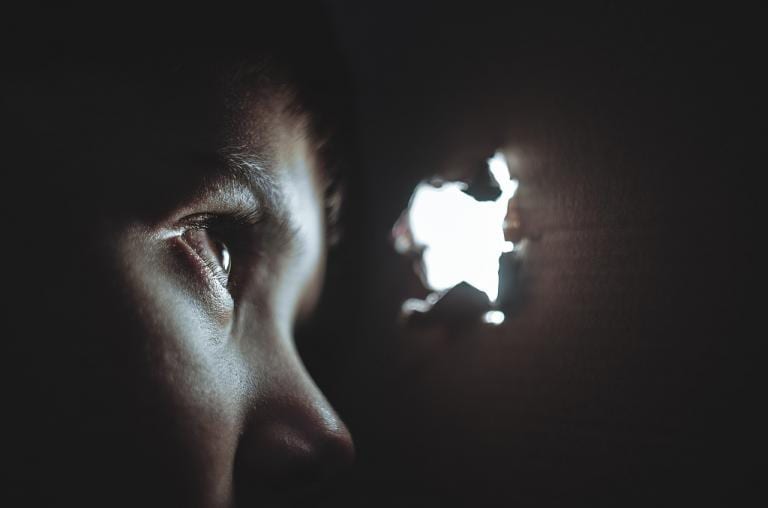
Make no mistake, human trafficking is a slightly more palatable term pasted over an age-old, ugly word: slavery. Some children are stolen away from their parents. Some are taken from the streets. And some are given away or sold by the very people who should care for them most.
The life of a child enduring slavery bears no resemblance to a child safe in the loving care of their parents or guardians. It’s filled with physical abuse, psychological abuse, sexual abuse, hunger, disease and forced labor. But in all of this darkness, there is light.
Gospel for Asia supports many selfless workers who care for and help protect children rescued from a life of slavery and abuse. Every child who enters the safety of a loving, caring environment has an opportunity to dilute the effects of the past and build a future of hope.
Slavery Isn’t a Problem Relegated to History
In America, the word “slavery” brings to mind a horrifying low point in history with no redeeming qualities. The mere idea of “selling” and “owning” another human being is beyond comprehension for most of us today.
But slavery is not a historical problem.
Right now—today—many children around the world live the realities of slavery without any hope for rescue.
The United Nations calls human trafficking a “global, multi-billion-dollar enterprise, affecting nearly every country in the world.” In that quote lies the reason why, in the 21st Century, children are still at risk. There is money to be made in human trafficking, and the amount of money is non-trivial.
“Children are, by definition, vulnerable. They rely on the adults around them to care for and protect them. Who will intervene when those adults not only let them down, but plot against them for personal gain?”
Men, women and children are all affected by human trafficking. With men, the result is usually forced labor, physical abuse and virtual imprisonment. Seeking work, men—many of them refugees—may enter a situation believed to be employment but in reality is slavery. The brutality inflicted on men in forced labor is almost beyond imagination.
According to a report by Human Rights Watch, migrant workers held captive in the Thai fishing industry face excessive work hours, forced amphetamine use, little or no safety protections, no rights, little pay, severe abuse and even torture or death for workers who complain or try to escape. Bodies found floating in waters go unidentified, and the deaths are rarely investigated by authorities.
Women and children, however, make up a greater portion of those living in slavery. The United Nations Office on Drugs and Crime explains that more than 70 percent of victims are women and children.
Children may be sold or given by parents or guardians into slavery, either as payment for a debt or in the hopes of a better life for the child. A widow with no property, no rights, no source of income and several children to feed may send a child to live with a relative. But the same child may then live a life of abuse and neglect.
Certain predatory orphanages are also emerging as a shocking perpetrator. In Nepal, for example, a veritable fortune has been given to aid orphaned children who, in reality, are only orphaned on paper. And while these orphanages are charged with caring for children, real life is not the same.
Meals and care are withheld from these paper-orphaned children. Many are at risk of sexual abuse by the very people who operate the profit-seeking orphanages. A hungry, sickly, abused and frightened child garner more sympathy and more donations for the orphanage’s coffers.
Children are, by definition, vulnerable. They rely on the adults around them to care for and protect them. Who will intervene when those adults not only let them down, but plot against them for personal gain?
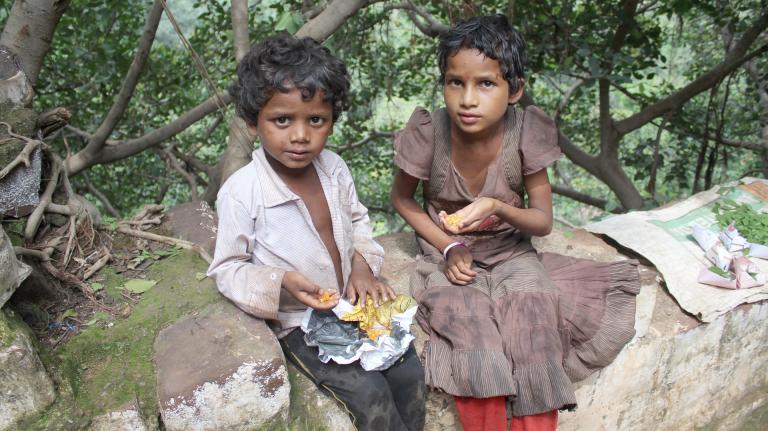
Children May Suffer Long-term Effects of Slavery
Any abuse can have lasting effects on a child. Moreover, the U.S. Department of Health and Human Services (DHHS) asserts that all types of child abuse and neglect can spill over into other areas of the child’s life.
As an example of the chain reaction, physical abuse that injures the brain can lead to psychological, cognitive and emotional problems. Those problems may lead to depression and high-risk behaviors.
Not every abused child will have the same experience throughout life. The DHHS report goes on to explain that several factors can affect the outcome. For example, the relationship of the abuser to the child, the frequency and intensity of abuse, the type of abuse and the age of the child when the abuse happened work in concert to shape the child’s future. But any type of abuse lays the groundwork for a lifetime of pain and suffering.
“Proverbs 22:6 tells us that the life experiences of a child will form who they become. Although abused children have terrible life experiences, there is still space in the garden and time to sow the seeds of God’s love and compassion.”
Even when the abuse is stopped, children have ongoing needs. For some, love and support will help them heal, both physically and emotionally. For others, the scars are deeper. The National Survey of Child and Adolescent Well-Being, Brief No. 7, shows that within three years of maltreatment, a “chronic health condition” is diagnosed in nearly 30 percent of children.
Some of the possible physical and psychological outcomes include:
- Abusive head trauma leading to impaired brain development, spinal injury and death
- Impaired language and cognitive development
- General poor health
- Isolation and fear
- Inability to trust
- Anxiety, depression and other psychiatric issues
- Poor academic achievement
- Antisocial behaviors
- High-risk behaviors
- Abusive behavior later in life
Action, Dedication and Prayer Can Save Little Lives
What would you do if you saw a little child in harm’s way? If you’re like most people, you’d try in some way to help. For scores of children around the world, even in America, there is no one to step in. Maybe no one cares. Oftentimes, no one notices. A lost or abandoned child is easy to victimize, and it happens more often than you think. A child given away or sold has suffered the ultimate betrayal.
Gospel for Asia (GFA) is dedicated to supporting those who help these little ones. The result can be transformative. Boys and girls who have lived a life of fear, hunger, hard labor and abuse can shed the past and just be children.
“Train up a child in the way that he should go, and when he is old, he will not depart from it.”
Proverbs 22:6 tells us that the life experiences of a child will form who they become. Although abused children have terrible life experiences, there is still space in the garden and time to sow the seeds of God’s love and compassion.
GFA’s field partners take care of abandoned and orphaned children, where they can learn to live in safety—and learn to trust again. GFA-supported Bridge of Hope centers also help at-risk children in many ways.
Bridge of Hope workers offer nutritious meals, tutoring, medical care, school books, uniforms, special programs and an environment that’s conducive to learning. Where a child may have no one at home to help with schoolwork and no meal to count on, Bridge of Hope helps them succeed in their studies, which helps them succeed in life.
Bridge of Hope also helps prevent child trafficking before it happens. When parents have more options and a helping hand, fewer girls may be turned over to the abusive practice of child marriage. Fewer boys and girls may be sent into bonded labor or to live with abusive relatives. With a caring, watchful Bridge of Hope staff, children are less likely to vanish unnoticed into the hands of human traffickers.
Gospel for Asia (GFA) helps devoted missionaries and workers do the jobs that God has called them to do. Your support can save a child from the abuse of slavery and give them a real chance at life.
Read more about the Stories, Statistics and Solutions of Slavery & Human Trafficking.
To read more on Patheos on the global problem of slavery, go here.
Click here, to read more blogs on Patheos from Gospel for Asia.
Go here to know more about Gospel for Asia: GFA | GFA.org | Facebook | Youtube | Twitter
Countries That Still Have Slavery
GFA-Supported Children's Ministry
Slavery in the 21st Century Facts
Previous Post
February 5, 2019
Discussing the Curse of Generational Poverty
Next Post
March 4, 2019 Leprosy: Misunderstandings and Stigma Keep it Alive (Part 1)
Browse Our Archives
Select a Category About Gospel for Asia Bishop Daniel Children's Education Clean Water Daniel Yohannan Disaster Relief GFA World Guest Writer Humanitarian Services Inspiration Leprosy Medical Ministry Mission Support Team Modern Slavery National Missions Poverty Alleviation Powerful Prayer School of Discipleship Special Report Spiritual Growth Uncategorized Women's Issues
Select a Month April 2026 March 2026 December 2025 September 2025 June 2025 May 2025 March 2025 December 2024 November 2024 October 2024 June 2024 May 2024 April 2024 December 2023 November 2023 October 2023 September 2023 May 2023 April 2023 March 2023 February 2023 January 2023 December 2022 November 2022 October 2022 September 2022 August 2022 July 2022 June 2022 May 2022 April 2022 March 2022 February 2022 January 2022 December 2021 November 2021 October 2021 September 2021 August 2021 July 2021 June 2021 May 2021 April 2021 March 2021 February 2021 December 2020 November 2020 October 2020 September 2020 August 2020 July 2020 June 2020 May 2020 April 2020 March 2020 February 2020 January 2020 December 2019 November 2019 October 2019 September 2019 August 2019 July 2019 June 2019 May 2019 April 2019 March 2019 February 2019 January 2019 December 2018 November 2018 October 2018 September 2018 August 2018 July 2018 June 2018 May 2018 April 2018 March 2018 February 2018 January 2018 December 2017 November 2017 October 2017 September 2017
Follow Us!
TAKE THE
Religious Wisdom Quiz
Who parted the Red Sea?
Select your answer to see how you score.
God Moses Joshua Aaron
Related posts from What Motivates Us.
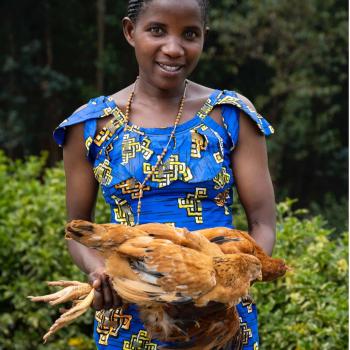
Couple Spreads Hope and Joy: Give Farm Animals...
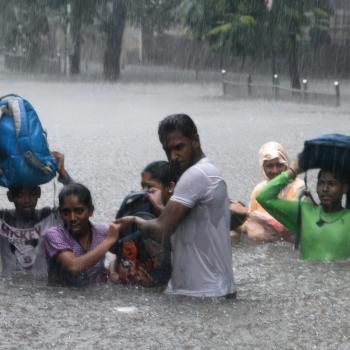
GFA World Partners with South Asia Flood Relief...

Animal Gifting for Christmas: Americans Give Families Hope
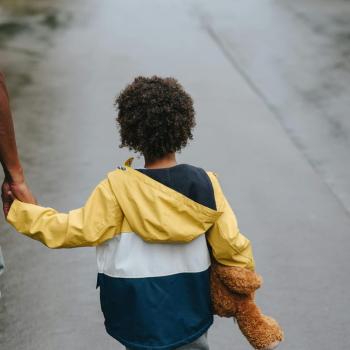
Father's Day Without My Father
TRENDING AT PATHEOS Evangelical

Jad Gillies on New Hillsong Worship Songs and...
For worship leader Jad Gillies, Hillsong Worship’s next chapter is not about...

Looking at the Largest Orthodox Cathedral on Earth
There is often a considerable amount of anger and, shall we...

The Problem with False Prophets
Miller’s Station UMC| 10/18/26| Anchor Verse: Jeremiah 23: 1, 9-23 I...

Emotion in Early Christianity by Andrew Crislip
Andrew Crislip’s Emotion in Early Christianity examines an often overlooked dimension of...

16 Spiritual Touchstones for a More Grounded Life
After decades of spiritual study, here are 16 principles I try...

Catholic Evangelization: Sharing Your Faith Every Day
Welcome back to the Graceful Awakening mini-series called, “From Faith to Mission.” ...
view all Evangelical blogs
Ad-Free & Subscriber Log-In Subscription Support
- About Us
- 2026 Calendar
- Videos
- Podcasts
- Library of World Religions
- Faith In Media Tracker
- Advertise With Us
- Write for Us
- Privacy Policy
- Terms of Service
- Do Not Sell My Data
- Contact Us
- Radiant Digital
- Manage Newsletter Subscriptions
- Unsubscribe From Notifications
- Sitemap
Copyright 2008-2026, Patheos. All rights reserved.
Subscription Support Ad-Free & Subscriber Log-In
Follow Patheos