
BuddhistCatholicContemplativeEvangelicalGeneral ChristianHinduJewishLatter-day SaintMuslimNew VisionsProgressive Christian
Beliefs
- Buddhist
- Catholic
- Contemplative
- Evangelical
- General Christian
- Hindu
- Jewish
- Latter-day Saint
- More Voices
- Muslim
- New Visions
- Pagan
- Progressive Christian
Topics
- Religion News
- Food and Religion
- Sports and Religion
- Religious Art
- Religious Music and Entertainment
- Religious Events
- History and Religion
- Style and Religion
- Politics and Religion
- Women in Religion
- Recreation Outdoors and Religion
- Business Finance and Religion
- Careers Workplace and Religion
- Education and Religion
- Family Parenting and Religion
- Health Fitness and Religion
- Home and Religion
- Relationships and Religion
- Technology and Religion
- Travel and Religion
Columnists
- Buddhist Columnists
- Business Finance and Religion Columnists
- Careers Workplace and Religion Columnists
- Catholic Columnists
- Contemplative Columnists
- Education and Religion Columnists
- Evangelists Columnists
- Family Parenting and Religion Columnists
- General Christian Columnists
- Health Fitness and Religion Columnists
- Hindu Columnists
- History and Religion Columnists
- Home and Religion Columnists
- Jewish Columnists
- More Voices Columnists
- Latter Day Columnists
- Muslim Columnists
- New Visions Columnists
- Nonreligious Columnists
- Pagan Columnists
- Politics and Religion Columnists
- Progressive Columnists
- Recreation Outdoors and Religion Columnists
- Relationships and Religion Columnists
- Religion News Columnists
- Religious Art Columnists
- Religious Events Columnists
- Religious Music and Entertainment Columnists
- Sports and Religion Columnists
- Style and Religion Columnists
- Technology and Religion Columnists
- Travel and Religion Columnists
- Women in Religion Columnists
Resource Library
- 2026 Calendar
- Library of World Religions
- The 100 Most Holy Places on Earth
- Patheos Answers
- Podcasts
- Videos
- Faith Leaders Database
- Anglican Episcopalian
- Bahai
- Baptist
- Buddhism
- Christianity
- Confucianism
- Eastern Orthodoxy
- Hinduism
- Holiness and Pentecostal
- ISKCON
- Islam
- Judaism
- Lutheran
- Methodist
- The Church of Jesus Christ of Latter-day Saints
- New Age
- Paganism
- Presbytarian and Reformed
- Protestantism
- Religion Behind the Scenes
- Roman Catholic
- Scientology
- Shia Islam
- Sikhism
- Sufism
- Sunni Islam
- Taoism
- Zen
- See all religions
Research Tools
 Ad-Free & Subscriber Log-In Subscription Support
Ad-Free & Subscriber Log-In Subscription Support
Follow Patheos 

- Trending:
- Forgiveness
- |
- Marriage
- |
- Consciousness
- |
- Death Penalty
- |
- Election
- |
- Halloween

-
Social Media
- Home
- Evangelical
- Poverty Line Problems of the Impoverished (Part 1 by Gospel for Asia)
Poverty Line Problems of the Impoverished (Part 1 by Gospel for Asia)
Last updated on: October 26, 2019 at 9:14 pm by GFA Staff Writer
Poverty Line Problems of the Impoverished (Part 1 by Gospel for Asia) 2019-10-26T21:14:51+00:00 GFA Staff Writer
Patheos Explore the world's faith through different perspectives on religion and spirituality! Patheos has the views of the prevalent religions and spiritualities of the world.
literWills Point, Texas – Gospel for Asia (GFA) Special Report Part 1 – ***Discussing the impact of education on the eradication of extreme poverty and illiteracy.***When considering the issues of poverty and lack of education, an old saying comes to mind: “Which came first, the chicken or the egg?”
Poverty and low education are each self-perpetuating: Those born into poverty (or illiterate households) often live the remainder of their lives in that same condition and have nothing more to offer their children.[1] What’s more, it is as if poverty and low education have a magnetic attraction, relentlessly pulling those who are caught in one cycle deep into the other too.
Why is that?
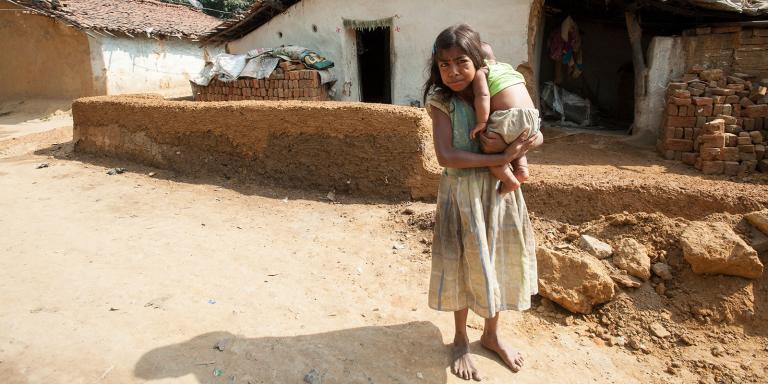
Kristina Birdsong, a writer for Scientific Learning, sums up the relationship between poverty and education by saying,
“Today more than ever, education remains the key to escaping poverty, while poverty remains the biggest obstacle to education.”[2]
Let’s look at one example:
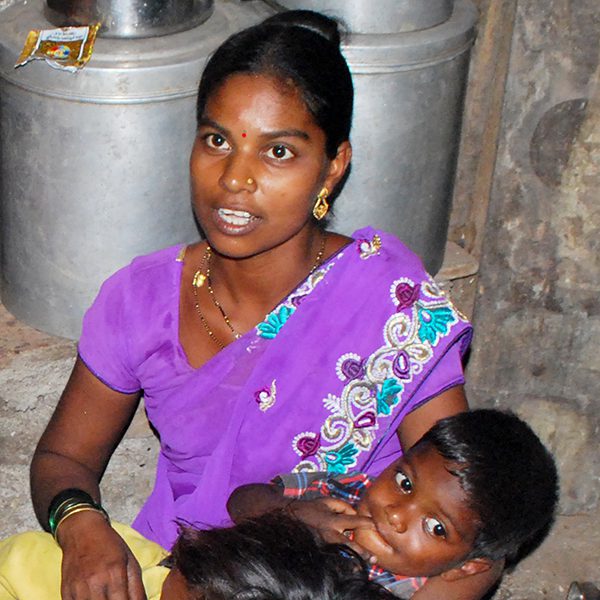
With her husband out of the picture, illiterate Dayita was forced to become the sole provider for her four children.
Dayita is a mother in Asia living with four children. Poverty and illiteracy permeated her village and her life. Dayita’s husband had consumed so much alcohol that he became too sick to work or even get out of bed, which meant Dayita had no choice but to be the family’s sole breadwinner.
But she was illiterate.
What job opportunities did she have? Manual labor. She and many other illiterate women in her area collected firewood from nearby forests and sold it to provide for their families. It was physically taxing work that kept her from being with her children and still paid very little. But it was all she could do.
Education remains the key to escaping poverty, while poverty remains the biggest obstacle to education.
Dayita’s illiteracy and poverty set the trajectory of her children’s lives, too. The fight to obtain morsels of bread for their hungry tummies consumed all her strength; sending her children to school was not even something to dream about. And Dayita couldn’t teach her children anything of the alphabet or of mathematics, knowing none herself. Instead of going to school, her four kids roamed around the village, “cared for” by the eldest child, 7-year-old Kasni.
The cycles of poverty and illiteracy were continuing in Dayita’s family, and there was nothing she could do to arrest them.
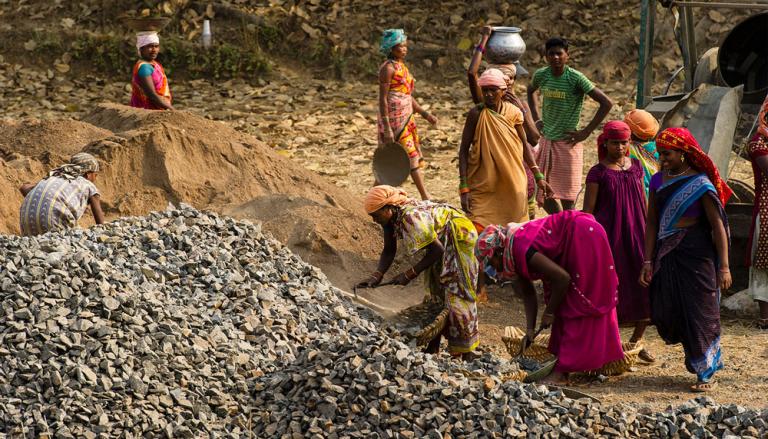
These women are working on road construction project in Asia. Around the world, women are more likely to be paid less than men and to face unemployment.
Poverty and It’s Pervasive Stranglehold
Dayita was not alone in her plight.
An estimated 767 million people lived below the poverty line of $1.90 per day in 2013, according to the UN.[3] In 2014, some 263 million children and youth were not attending school, and more than 70 percent of the out-of-school children who should have been in primary or secondary education lived in sub-Saharan Africa and Southern Asia.[4] In the United States, a report revealed that in 2014, “approximately 15 million children under the age of 18 were in families living in poverty.”[5]
Living hand to mouth
KILLS DREAMS.
Many impoverished families know education is the long-term solution to their financial troubles, but it is out of reach. A family’s financial position influences more than you might think upon initial consideration.
The father who works from sunup to sundown seven days a week will have little time to mentor his children. The same could be said of the mother who labors in the fields all day.
During their most formative and vulnerable years, millions of children are left alone during the day to wander in their villages. Many will adopt poor social habits and learn nothing of respect or self-discipline. School is out of the picture for them; all the family’s energy must be focused on providing food and shelter.

A young boy in Pakistan. One in three Pakistanis lives below the poverty line. Photo Credit Muhammad Muzamil / Unsplash
Often, a family’s financial plight is so desperate that even young children must contribute to the family income. For the roughly 150 million child laborers in the world,[6] there is no school, no delving into their nation’s history, and no adventuring to museums to learn about science and art.
No money means no food, which means malnutrition and increased health problems. No money means no doctor visits, and in the case of a medical emergency, no money may mean indenturing a child to work off the incurred debt after receiving critical treatment.
“Living hand to mouth kills dreams. For many, ambition becomes unrealistic amid the ever-present fight against starvation.”
Living hand to mouth kills dreams. For many, ambition becomes unrealistic amid the ever-present fight against starvation. How many of us have asked a young child what they want to be when they grow up? In many poverty-stricken areas, however, a child might respond to that question with a look of confusion. The only future they can see is following their parents in becoming a farmer, a daily laborer or, if they’re lucky, maybe a skilled tradesman.
For the majority of children raised in poverty-stricken communities, the fruit of their harsh childhood is more of the same. When they become parents, they will raise their children as they themselves were raised—unless they can manage to find a way out, into a new way of life.
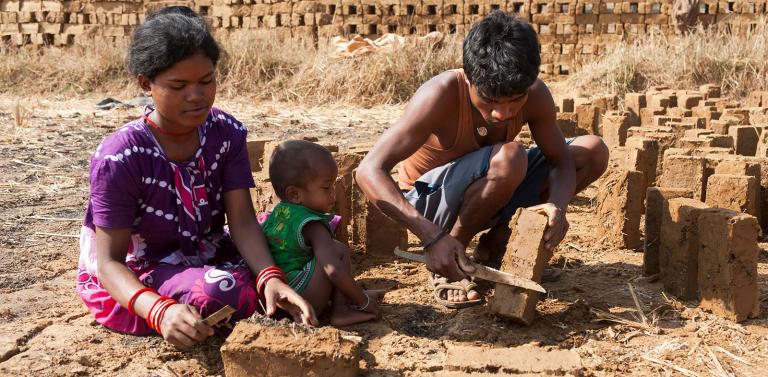
This woman works alongside her husband to make bricks, bringing her infant with her. Both men and women work hard in rural villages to try to make ends meet.
Solutions to Poverty Line Problems of the Poor & Impoverished: Part 2 | Part 3
This Special Report article originally appeared on gfa.org
To read more on the ongoing worldwide problem of Poverty on Patheos, go here.
Click here, to read more blogs on Patheos from Gospel for Asia.
Go here to know more about Gospel for Asia: Facebook | Youtube | Twitter | GFA Reports | My GFA
- [1] UNESCO. Teaching and Learning: Achieving quality for all. EFA Global Monitoring Report. 2014.
- [2] Kristina Birdsong. 10 Facts About How Poverty Impacts Education. Fast Forward. January 26, 2016.
- [3] UN Economic and Social Council. Progress towards the Sustainable Development Goals, Report of the Secretary-General. E/2017/66. May 11, 2017.
- [4] UN Department of Economic and Social Affairs. Sustainable Development Goal 4. June 2018.
- [5] National Center for Education Statistics. Indicator 4: Children Living in Poverty. July 2017.
- [6] WE Charity. Child Labor. June 2018.
How Many People Live in Poverty in India
Population Below Poverty Line in India
Poverty in Third World Countries
Previous Post

November 30, 2018
Winter Without Warmth is Tough for Those Who Minister in Asia
Next Post

December 4, 2018 Poverty Line Problems of the Impoverished (Part 2 by Gospel for Asia)
Browse Our Archives
Select a Category About Gospel for Asia Bishop Daniel Children's Education Clean Water Daniel Yohannan Disaster Relief GFA World Guest Writer Humanitarian Services Inspiration Leprosy Medical Ministry Mission Support Team Modern Slavery National Missions Poverty Alleviation Powerful Prayer School of Discipleship Special Report Spiritual Growth Uncategorized Women's Issues
Select a Month April 2026 March 2026 December 2025 September 2025 June 2025 May 2025 March 2025 December 2024 November 2024 October 2024 June 2024 May 2024 April 2024 December 2023 November 2023 October 2023 September 2023 May 2023 April 2023 March 2023 February 2023 January 2023 December 2022 November 2022 October 2022 September 2022 August 2022 July 2022 June 2022 May 2022 April 2022 March 2022 February 2022 January 2022 December 2021 November 2021 October 2021 September 2021 August 2021 July 2021 June 2021 May 2021 April 2021 March 2021 February 2021 December 2020 November 2020 October 2020 September 2020 August 2020 July 2020 June 2020 May 2020 April 2020 March 2020 February 2020 January 2020 December 2019 November 2019 October 2019 September 2019 August 2019 July 2019 June 2019 May 2019 April 2019 March 2019 February 2019 January 2019 December 2018 November 2018 October 2018 September 2018 August 2018 July 2018 June 2018 May 2018 April 2018 March 2018 February 2018 January 2018 December 2017 November 2017 October 2017 September 2017
Follow Us!
TAKE THE
Religious Wisdom Quiz
What does the Hebrew word 'Yahweh' mean?
Select your answer to see how you score.
The Almighty I AM God is Love Eternal King
Related posts from What Motivates Us.
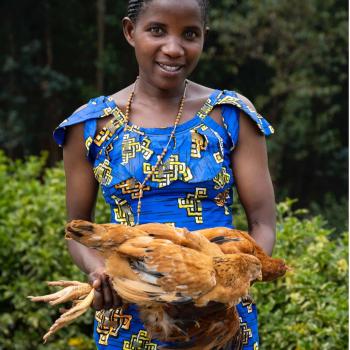
Couple Spreads Hope and Joy: Give Farm Animals...
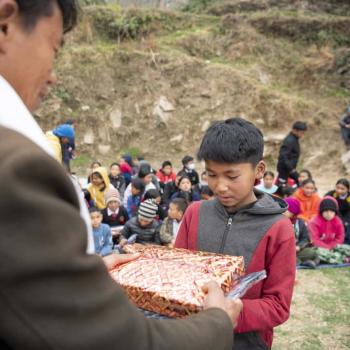
Christian Generosity: An Antidote to Selfishness

Animal Gifting for Christmas: Americans Give Families Hope

Father's Day Without My Father
TRENDING AT PATHEOS Evangelical

Emotion in Early Christianity by Andrew Crislip
Andrew Crislip’s Emotion in Early Christianity examines an often overlooked dimension of...

16 Spiritual Touchstones for a More Grounded Life
After decades of spiritual study, here are 16 principles I try...

Catholic Evangelization: Sharing Your Faith Every Day
Welcome back to the Graceful Awakening mini-series called, “From Faith to Mission.” ...

The Pillar of the Boatmen: the Ancient Monument...
The Pillar of the Boatmen is a Romano-Gaulish sculpture that dates from...

In one sense walking into Westminster Abbey is like walking down the...

'Super Scam Me' Exposes AI Jon Bon Jovi...
Leslie Pickett believed she was in a relationship with Jon Bon Jovi....
view all Evangelical blogs
Ad-Free & Subscriber Log-In Subscription Support
- About Us
- 2026 Calendar
- Videos
- Podcasts
- Library of World Religions
- Faith In Media Tracker
- Advertise With Us
- Write for Us
- Privacy Policy
- Terms of Service
- Do Not Sell My Data
- Contact Us
- Radiant Digital
- Manage Newsletter Subscriptions
- Unsubscribe From Notifications
- Sitemap
Copyright 2008-2026, Patheos. All rights reserved.
Subscription Support Ad-Free & Subscriber Log-In
Follow Patheos