
BuddhistCatholicContemplativeEvangelicalGeneral ChristianHinduJewishLatter-day SaintMuslimNew VisionsProgressive Christian
Beliefs
- Buddhist
- Catholic
- Contemplative
- Evangelical
- General Christian
- Hindu
- Jewish
- Latter-day Saint
- More Voices
- Muslim
- New Visions
- Pagan
- Progressive Christian
Topics
- Religion News
- Food and Religion
- Sports and Religion
- Religious Art
- Religious Music and Entertainment
- Religious Events
- History and Religion
- Style and Religion
- Politics and Religion
- Women in Religion
- Recreation Outdoors and Religion
- Business Finance and Religion
- Careers Workplace and Religion
- Education and Religion
- Family Parenting and Religion
- Health Fitness and Religion
- Home and Religion
- Relationships and Religion
- Technology and Religion
- Travel and Religion
Columnists
- Buddhist Columnists
- Business Finance and Religion Columnists
- Careers Workplace and Religion Columnists
- Catholic Columnists
- Contemplative Columnists
- Education and Religion Columnists
- Evangelists Columnists
- Family Parenting and Religion Columnists
- General Christian Columnists
- Health Fitness and Religion Columnists
- Hindu Columnists
- History and Religion Columnists
- Home and Religion Columnists
- Jewish Columnists
- More Voices Columnists
- Latter Day Columnists
- Muslim Columnists
- New Visions Columnists
- Nonreligious Columnists
- Pagan Columnists
- Politics and Religion Columnists
- Progressive Columnists
- Recreation Outdoors and Religion Columnists
- Relationships and Religion Columnists
- Religion News Columnists
- Religious Art Columnists
- Religious Events Columnists
- Religious Music and Entertainment Columnists
- Sports and Religion Columnists
- Style and Religion Columnists
- Technology and Religion Columnists
- Travel and Religion Columnists
- Women in Religion Columnists
Resource Library
- 2026 Calendar
- Library of World Religions
- The 100 Most Holy Places on Earth
- Patheos Answers
- Podcasts
- Videos
- Faith Leaders Database
- Anglican Episcopalian
- Bahai
- Baptist
- Buddhism
- Christianity
- Confucianism
- Eastern Orthodoxy
- Hinduism
- Holiness and Pentecostal
- ISKCON
- Islam
- Judaism
- Lutheran
- Methodist
- The Church of Jesus Christ of Latter-day Saints
- New Age
- Paganism
- Presbytarian and Reformed
- Protestantism
- Religion Behind the Scenes
- Roman Catholic
- Scientology
- Shia Islam
- Sikhism
- Sufism
- Sunni Islam
- Taoism
- Zen
- See all religions
Research Tools
 Ad-Free & Subscriber Log-In Subscription Support
Ad-Free & Subscriber Log-In Subscription Support
Follow Patheos 

- Trending:
- Forgiveness
- |
- Marriage
- |
- Consciousness
- |
- Death Penalty
- |
- Election
- |
- Halloween

-
Social Media
- Home
- Evangelical
- Seeking Justice & Defending Human Rights (Part 2 by Gospel for Asia)
Seeking Justice & Defending Human Rights (Part 2 by Gospel for Asia)
Last updated on: November 20, 2019 at 3:39 am by GFA Staff Writer
Seeking Justice & Defending Human Rights (Part 2 by Gospel for Asia) 2019-11-20T03:39:30+00:00 GFA Staff Writer
Patheos Explore the world's faith through different perspectives on religion and spirituality! Patheos has the views of the prevalent religions and spiritualities of the world.
Wills Point, Texas – GFA Special Report (Gospel for Asia) – Discussing the human rights injustice and violations, modern-day oppression, extreme poverty, that continues to exist, affecting millions of women, men and even children.
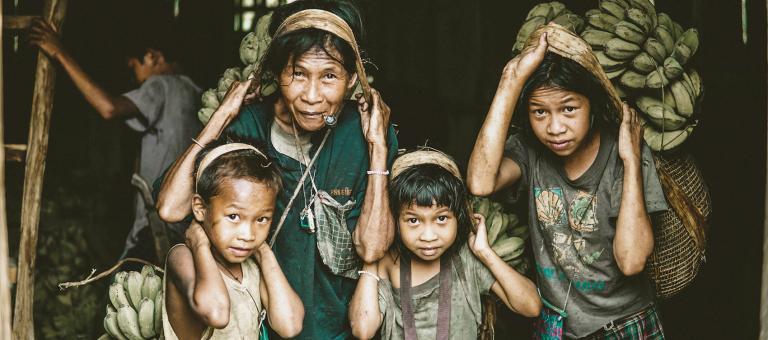
Human Rights Injustice in Social Structures
For those who are considered “Untouchables”—that’s some 300 million Dalits who fall at the bottom of the societal ladder—discrimination typically leaves them with only menial work no one else wants to do.
The Indian government took affirmative action to enforce policies about caste discrimination “reserving a certain percentage of government jobs and admission to educational institutions, as also financial support through loans and special schemes, for these castes,” reports the CRG.
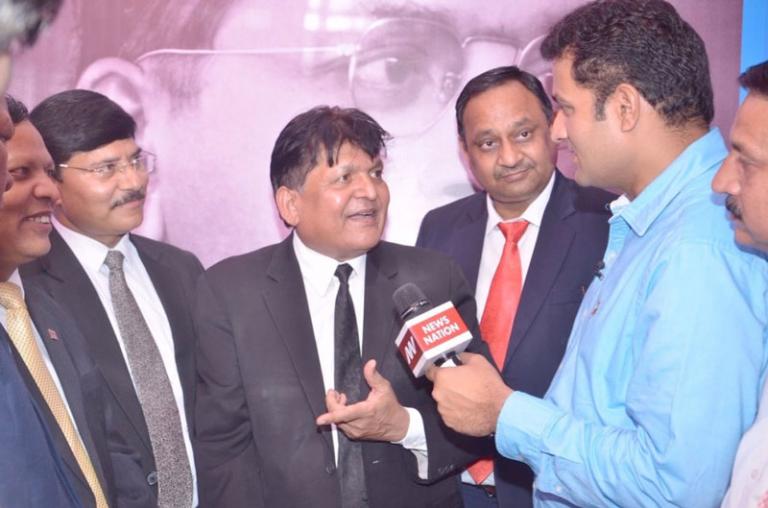
The Dalit Enterprise in India promotes inclusivity and supports Dalit entrepreneurs. (Photo credit dalitenterprise.com)
Some Dalits have managed to break out of their long-time social, religious and economic confinement. Recently launched, The Dalit Enterprise celebrates the rise of entrepreneurs from among the Dalits, among whom are around 50 billionaires.
But such successes are often the exception rather than the rule. Seven decades after the government first introduced measures to address the caste issue, CRG’s Sagar notes that “there is not a single positive indicator of social development” where lower castes feature prominently.
“Whether it is land holdings, income, literacy, nutrition or health status, it is these sections-who constitute one-third of India’s population-that are right at the bottom of the pile,” he says.
Migrant workers endure discrimination and social injustices too. In the 2018 Human Rights Watch Report on Sri Lanka, WHO reports that “The government took some steps to protect the [human rights] of more than 1 million migrant workers in the Middle East and other parts of Asia, but many continued to face long working hours with little rest, delayed or unpaid wages, confinement in the workplace, and verbal, physical, and sexual abuse.”
“There’s so much improvement and progress in this world,” she said. “But for us, nothing has changed. We’re still in the same hell.”
Cultural attitudes also often limit women’s opportunities to work; they are expected to stay home and look after their families. Female participation rates in the workforce are low in the entire region, while only one in three women in Bangladesh participates, says the World Bank.
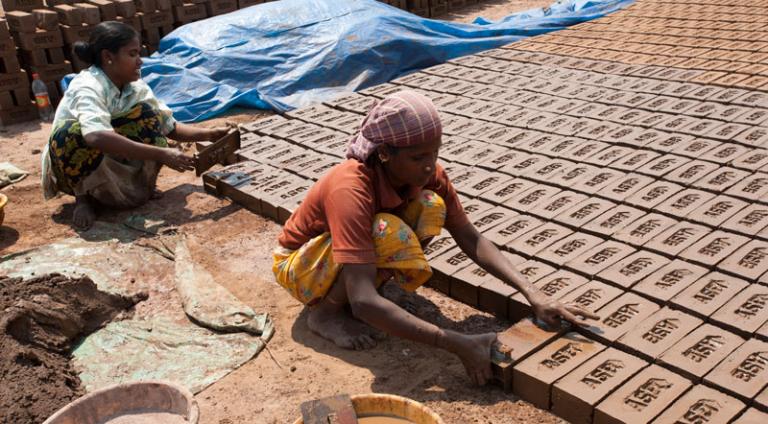
Most people in this woman’s village are laborers at a brick factory. Women are often “invisible” workers in brick kilns, vulnerable to exploitation and having little to no rights.
Women working in brick kilns as part of a bonded labor family are what ASI calls “invisible”—not even formally registered on the employment roll, with wages paid only to their husbands.
Often forced to work in what are called “vulnerable” occupations, informal employment where they have no human rights, women are more susceptible to financial exploitation.
Pushed to the fringes, women may be forced to do jobs others refuse, like Suneeta. She told Germany’s Deutsche Welle how she had been a manual scavenger—cleaning latrines by hand for 20 years to feed her family.
“There’s so much improvement and progress in this world,” she said. “But for us, nothing has changed. We’re still in the same hell.”
Widows are particularly vulnerable, often shunned because they are considered cursed and left to beg or even forced into prostitution.
Frequently involved in “cultural employment”—handcrafts and similar arts-based fields—women are more likely to have to supplement their income with more than one job, says the United Nations Educational, Scientific and Cultural Organization (UNESCO) report Precarious situation for women working in the field of culture.
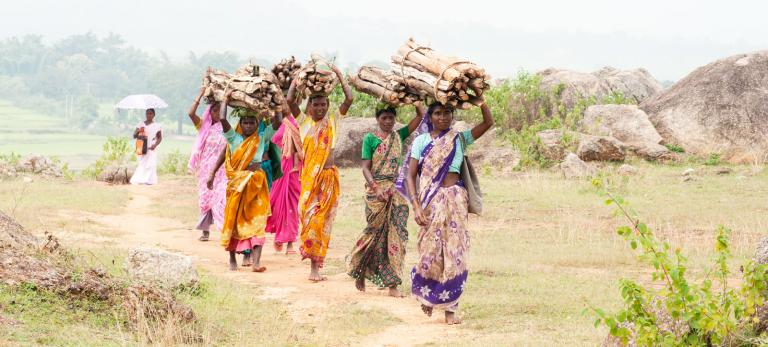
Grinding poverty in Asia often starts with the women.
Females at Risk Due to Grinding Poverty, Human Rights Violated
Illiteracy is a dangerous factor. The more than 250 million women across Asia who are unable to read are vulnerable to exploitation—unable to understand an employment contract (if they are given one) or the details of a loan they may need to take out—and at risk of being cheated when they spend their money.
There are health consequences, too. In a University of California, Berkeley paper, The Rural-Urban Divide in India, Tathagato Chakraborty writes that lack of educational opportunities for girls “increases the fertility rate, maternal and infant mortality, and malnutrition in the family.” With little education, basic hygiene practices may remain unknown. Furthermore, because the human rights of women to land and property are rarely recognized, “this increases the risk of poverty to women and their families and increases poverty overall as women and children make up two-thirds of the population.”
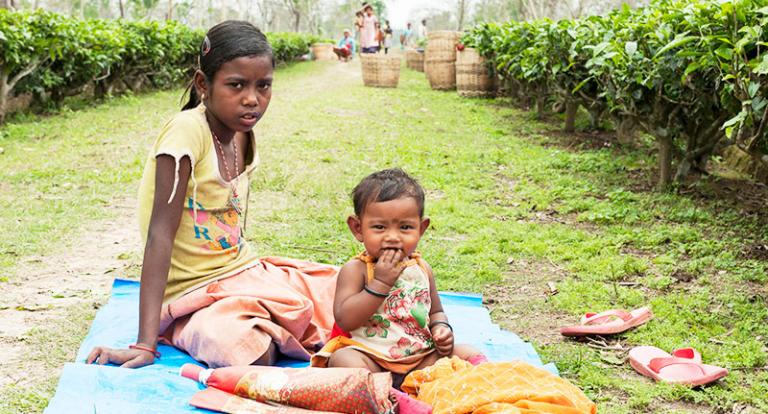
This girl takes care of her younger sister while her mother works at a tea plantation. Even when the mother is breastfeeding, she often still goes to work because she cannot miss her quota of picking tea leaves.
Then there is violence and abuse, physical and sexual. Many young girls are kept away from school not only because they are required to work, but also for fear they may be attacked on the way to school or while they are there, according to the United Nations Economic and Social Commission for Asia and the Pacific (UNESCAP).
Indeed, the World Health Organization names gender-based violence as “a significant public health concern in the South-East Asia Region,” and “one of the most pervasive human rights violations.”
Girls are “particularly vulnerable to the negative impacts of child labor,” says the ILO, comprising the bulk of children in “some of the most dangerous forms of child labor, including forced and bonded labor, commercial sexual exploitation and domestic work outside of their home.”
Part of the problem is that attitudes are slow to change, as noted last year by Dr. Poonam Khetrapal Singh, WHO regional director for South-East Asia, when he introduced the International Day for the Elimination of Violence against Women.
“Gender inequality is at the root of violence against women,” he said. “Beliefs and practices that value women less than men are normalized, excused and tolerated—a substantial proportion of adolescent girls and boys believe that a husband is justified in beating his wife for at least one reason.”
Realizing that millions of women in India have become exposed to sexual assaults each year simply because of the lack of toilets, the government of India has taken up the task of building toilets and latrines in the rural parts of the nation. The construction of toilets under Prime Minister Narendra Modi’s dream project, Swachh Bharat Abhiyan (Clean India Mission), has gained momentum, with many NGO’s (like Sulabh International) joining the initiative. Gospel for Asia helped to build and install more than 10,000 toilets in 2016.
Seeking Justice and Defending Human Rights: Part 1 | Part 3
This article originally appeared on gfa.org
To read more on Patheos on the global problem of human rights violations, go here.
Click here, to read more blogs on Patheos from Gospel for Asia.
Go here to know more about Gospel for Asia: GFA | GFA.org | Facebook | Youtube | Twitter
For more information about this, click here.
How Many People Live in Poverty in India
Population Below Poverty Line in India
Poverty in Third World Countries
What Is the Poverty Line in India
Previous Post
November 23, 2018
Seeking Justice & Defending Human Rights (Part 1 by Gospel for Asia)
Next Post
November 27, 2018 Seeking Justice & Defending Human Rights (Part 3 by Gospel for Asia)
Browse Our Archives
Select a Category About Gospel for Asia Bishop Daniel Children's Education Clean Water Daniel Yohannan Disaster Relief GFA World Guest Writer Humanitarian Services Inspiration Leprosy Medical Ministry Mission Support Team Modern Slavery National Missions Poverty Alleviation Powerful Prayer School of Discipleship Special Report Spiritual Growth Uncategorized Women's Issues
Select a Month April 2026 March 2026 December 2025 September 2025 June 2025 May 2025 March 2025 December 2024 November 2024 October 2024 June 2024 May 2024 April 2024 December 2023 November 2023 October 2023 September 2023 May 2023 April 2023 March 2023 February 2023 January 2023 December 2022 November 2022 October 2022 September 2022 August 2022 July 2022 June 2022 May 2022 April 2022 March 2022 February 2022 January 2022 December 2021 November 2021 October 2021 September 2021 August 2021 July 2021 June 2021 May 2021 April 2021 March 2021 February 2021 December 2020 November 2020 October 2020 September 2020 August 2020 July 2020 June 2020 May 2020 April 2020 March 2020 February 2020 January 2020 December 2019 November 2019 October 2019 September 2019 August 2019 July 2019 June 2019 May 2019 April 2019 March 2019 February 2019 January 2019 December 2018 November 2018 October 2018 September 2018 August 2018 July 2018 June 2018 May 2018 April 2018 March 2018 February 2018 January 2018 December 2017 November 2017 October 2017 September 2017
Follow Us!
TAKE THE
Religious Wisdom Quiz
Who was the first woman created by God?
Select your answer to see how you score.
Sarah Mary Rebekah Eve
Related posts from What Motivates Us.
Couple Spreads Hope and Joy: Give Farm Animals...

Animal Gifting for Christmas: Americans Give Families Hope
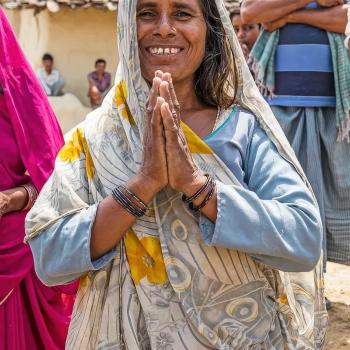
World’s Widows Endure Shame, Abandonment, Exploitation
Father's Day Without My Father
TRENDING AT PATHEOS Evangelical

Looking at the Largest Orthodox Cathedral on Earth
There is often a considerable amount of anger and, shall we...

The Problem with False Prophets
Miller’s Station UMC| 10/18/26| Anchor Verse: Jeremiah 23: 1, 9-23 I...

Emotion in Early Christianity by Andrew Crislip
Andrew Crislip’s Emotion in Early Christianity examines an often overlooked dimension of...

16 Spiritual Touchstones for a More Grounded Life
After decades of spiritual study, here are 16 principles I try...

Catholic Evangelization: Sharing Your Faith Every Day
Welcome back to the Graceful Awakening mini-series called, “From Faith to Mission.” ...

The Pillar of the Boatmen: the Ancient Monument...
The Pillar of the Boatmen is a Romano-Gaulish sculpture that dates from...
view all Evangelical blogs
Ad-Free & Subscriber Log-In Subscription Support
- About Us
- 2026 Calendar
- Videos
- Podcasts
- Library of World Religions
- Faith In Media Tracker
- Advertise With Us
- Write for Us
- Privacy Policy
- Terms of Service
- Do Not Sell My Data
- Contact Us
- Radiant Digital
- Manage Newsletter Subscriptions
- Unsubscribe From Notifications
- Sitemap
Copyright 2008-2026, Patheos. All rights reserved.
Subscription Support Ad-Free & Subscriber Log-In
Follow Patheos