
BuddhistCatholicContemplativeEvangelicalGeneral ChristianHinduJewishLatter-day SaintMuslimNew VisionsProgressive Christian
Beliefs
- Buddhist
- Catholic
- Contemplative
- Evangelical
- General Christian
- Hindu
- Jewish
- Latter-day Saint
- More Voices
- Muslim
- New Visions
- Pagan
- Progressive Christian
Topics
- Religion News
- Food and Religion
- Sports and Religion
- Religious Art
- Religious Music and Entertainment
- Religious Events
- History and Religion
- Style and Religion
- Politics and Religion
- Women in Religion
- Recreation Outdoors and Religion
- Business Finance and Religion
- Careers Workplace and Religion
- Education and Religion
- Family Parenting and Religion
- Health Fitness and Religion
- Home and Religion
- Relationships and Religion
- Technology and Religion
- Travel and Religion
Columnists
- Buddhist Columnists
- Business Finance and Religion Columnists
- Careers Workplace and Religion Columnists
- Catholic Columnists
- Contemplative Columnists
- Education and Religion Columnists
- Evangelists Columnists
- Family Parenting and Religion Columnists
- General Christian Columnists
- Health Fitness and Religion Columnists
- Hindu Columnists
- History and Religion Columnists
- Home and Religion Columnists
- Jewish Columnists
- More Voices Columnists
- Latter Day Columnists
- Muslim Columnists
- New Visions Columnists
- Nonreligious Columnists
- Pagan Columnists
- Politics and Religion Columnists
- Progressive Columnists
- Recreation Outdoors and Religion Columnists
- Relationships and Religion Columnists
- Religion News Columnists
- Religious Art Columnists
- Religious Events Columnists
- Religious Music and Entertainment Columnists
- Sports and Religion Columnists
- Style and Religion Columnists
- Technology and Religion Columnists
- Travel and Religion Columnists
- Women in Religion Columnists
Resource Library
- 2026 Calendar
- Library of World Religions
- The 100 Most Holy Places on Earth
- Patheos Answers
- Podcasts
- Videos
- Faith Leaders Database
- Anglican Episcopalian
- Bahai
- Baptist
- Buddhism
- Christianity
- Confucianism
- Eastern Orthodoxy
- Hinduism
- Holiness and Pentecostal
- ISKCON
- Islam
- Judaism
- Lutheran
- Methodist
- The Church of Jesus Christ of Latter-day Saints
- New Age
- Paganism
- Presbytarian and Reformed
- Protestantism
- Religion Behind the Scenes
- Roman Catholic
- Scientology
- Shia Islam
- Sikhism
- Sufism
- Sunni Islam
- Taoism
- Zen
- See all religions
Research Tools
 Ad-Free & Subscriber Log-In Subscription Support
Ad-Free & Subscriber Log-In Subscription Support
Follow Patheos 

- Trending:
- Forgiveness
- |
- Marriage
- |
- Consciousness
- |
- Death Penalty
- |
- Election
- |
- Halloween
 Good News, Everyone!
- Home
- Evangelical
- History and Religion
- Deconstructing Deconstruction: What’s An Evangelical, Anyway? Part 1
Deconstructing Deconstruction: What’s An Evangelical, Anyway? Part 1
Last updated on: August 24, 2023 at 4:11 pm by Steve Hoffman
Deconstructing Deconstruction: What’s An Evangelical, Anyway? Part 1 2023-08-24T16:11:07-04:00 Steve Hoffman
Patheos Explore the world's faith through different perspectives on religion and spirituality! Patheos has the views of the prevalent religions and spiritualities of the world.

Sometimes, the wrecking ball of deconstruction hits something it should. Wikimedia. Public Domain.
In order to define what an #exvangelical is, we must first define what an evangelical is. You might think that is an easy task, but it is not as clear as “a white conservative Christian who votes Republican.” Different people mean different things when they apply the term “evangelical.” Evangelicals don’t always agree on what makes someone an evangelical. So, what’s an evangelical Christian, anyway?
Good News People
The word evangelical comes from the Greek word “euangelion” which means, “good news.” The term began to be applied to Protestant Christians like Pietists or Revivalists like George Whitefield who believed that one must be “born again” or experience the “second birth.” In other words, they were conversionists, Christians who believed it wasn’t enough to be born in a Christian country or family, one must have a moment where they consciously chose to trust in Jesus Christ. This put them in stark contrast with the state churches of Europe where simply by being born and baptized one was a believer.
Because they were conversionists, they took their understanding of the Gospel to as many people as they could. They practiced evangelism and engaged in missions around the globe and hosted revival meetings. George Whitefield became one of the most famous men in the English-speaking world, hosting revivals on both sides of the Atlantic and helping to spark the first Great Awakening in America.
These Christians were labeled “evangelicals” as if they were the ones going into the world proclaiming “good news, everyone!” (Hey, that’s a great name for a blog that you should subscribe to!)
Evangelicals were Christians with a high view of Scriptures who were also conversionists. This is still true.
Modernism Happens
But then the late-19th and early 20th Centuries happened. Modernist theology coming out of Germany, which denied that the Bible was completely true and denied the supernatural aspects of the Christian faith, came to America and quickly took root in colleges and seminaries. Around the same time, Charles Darwin was doing his thing and his theories of natural selection and evolution caused quite the stir among America’s Christians. For the modernist theologians, evolution posed no problem but for those who assumed the absolute truth of the Bible in all aspects it assaulted some of their most preciously held beliefs.
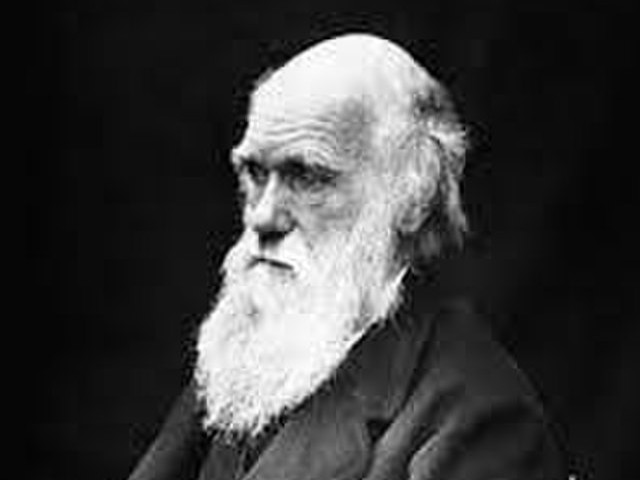
It’s all his fault. Wikimedia Common. Public Domain.
The Modernist-Fundamentalist Divide
Enter the Modernist-Fundamentalist controversies which divided denominations and fractured Protestant Americans into two camps. The Modernists accommodated their theology to take into consideration modern scientific discoveries and theories. The Fundamentalists circled the wagons around biblical inerrancy, denying that the Bible and the faith should accommodate modern science and philosophy. The lines were drawn.
After the Scopes Monkey Trial, which saw fundamentalists reviled and mocked in the national press, fundamentalists withdrew into their own subculture, leaving the world to itself. It led to a Christianity that saw the ones had a low view of Scripture out in the world serving the poor and needy while the ones who had a high view of Scripture had abandoned the world to its own devices.
Could there be a third way between these two approaches? One that held a high view of Scripture while simultaneously desiring to be in the world through Christian activism? Harold Ockenga believed there could.
Neo-Evangelicalism: A Big Tent
Ockenga, along with several other luminaries such as Carl Henry (you all know Carl Henry, of course) and Billy Graham helped launch a new movement which Ockenga called “neo-evangelicalism” as it harkened back to the Christianity of George Whitefield and others. This would be a Christianity that held a high view of Scripture, centered the work of Jesus Christ on the cross, and was engaged in the world. Scholar David Bebbington developed what is called the Bebbington Quadrilateral—four characteristics of evangelicalism:
- Conversionism—evangelicals believe that people must have a moment of decision when they accept God’s grace and decide to trust in Jesus.
- Biblicism—evangelicals believe that the Scripture is God’s word and is perfect for faith, rule, and conduct.
- Activism—evangelicals are no separatist fundamentalists. They are engaged in the world through works of charity and justice, as well as evangelism and world missions.
- Crucicentrism—Christ’s work on the cross is the emphasis of evangelical theology. Jesus’ atoning work on the cross and subsequent resurrection and ascension is the “good news” of evangelicalism.
It is important to note that these are descriptive traits, not prescriptive. Evangelicalism was a broad tent that could include Baptists and Presbyterians, Calvinists and Arminians, dispensationalists and covenant theologians. The things that they had in common aligned pretty closely with Bebbington’s descriptors.
Seeds of Its Own Demise
It is important to note that neo-evangelicalism came about in post-World War 2 America. It was the start of the Cold War, and many Americans were pushing for a more robust embrace of Christianity by the government and by society at large to help distinguish America from the godless, atheistic Communists of the USSR. While not true of ever founding evangelical, already at the start of the movement there were political motivations behind evangelicalism’s push into the broader culture.
Christians And Commies And Feminists
Billy Graham, for instance, was stridently anti-Communist, and was promoted heavily by business and media moguls like William Randolph Hearst. Bill Bright founded Campus Crusade for Christ for reaching college students but also pushing back against the evils of communism on college campuses. He also used developing advertising techniques in creating his famous “Four Spiritual Laws.” Conservative businessmen thought they could use this new movement to help push back against communism, socialism, and the New Deal. In many ways, it worked.
The 1950s was also a time of great social upheaval, though we don’t often think of it as such. The post-war economy was booming, interstate highways were built, suburbs created. For the first time in history, it was the norm for nuclear families to live in their own homes. It was now the norm for the man to go to work and the woman to stay home with the children. This had never been the case in human history. The great capitalist engine of America was in full gear to prevent communism from spreading. Consumerism became an American virtue.
Because evangelicalism came of age during this time, the culture of the 1950s became normative for evangelicals. It was the man’s Christian duty to lead his household and provide for his family, and the woman’s duty to have children and raise them. In subsequent decades, when the Sexual Revolution and Second-Wave Feminism arrived on the scene, evangelicalism fought to preserve the values of the 1950s.
Two Major Objections: Politics and Misogyny
Here we see at the beginning the seeds of evangelicalism’s own demise. Two major objections to evangelicalism espoused by those deconstructing the faith is evangelicalism’s unholy alliance with political parties and misogyny. For exvangelicals, the merging of faith with politics, especially those of the Republican Party, has seemed to them a play for power and influence in a way that may not be the way of Jesus. It is difficult for them to reconcile a Jesus who taught peace and highly regarded the poor with a political party that is stridently pro-military and often—in their minds–favors the wealthy. Evangelicals in their pursuit for power create cognitive dissonance in the minds of many who can’t square that pursuit with a Savior who humbled himself to the point of death on a cross.
The second objection is misogyny. I truly believe that the majority of evangelicals are not misogynists. Many truly believe that it is a woman’s best life to stay at home and raise children and be subservient to her husband. This applies also the church, where the leadership should be male and women should follow their lead. While the motivation might be with a woman’s good in mind, the application often seems to be antagonistic toward women, especially post-Feminism.
It is socially normative for women to pursue careers outside the home. Women are gaining more and more influence in politics and government. In this milieu, evangelical belief that a woman should stay at home and raise children strikes people as backwards and diminishing. Women do not feel empowered by evangelical theology; they feel held back. And this becomes another point of deconstruction for many.
More to the Story
I personally do not subscribe to a theology that keeps women out of the workforce and out of the pulpit. Many other evangelicals do not. The loudest voices in the movement, however, tend toward a more patriarchal view of the world and many women cannot stand to be in that kind of a system anymore.
Of course, this is only a part of the story. There is more to discuss about evangelicalism as a faith movement and as a sociological descriptor. When I look at the history of evangelicalism and look at these two reasons why people are deconstructing their evangelical faith, I do not believe that they are deconstructing anything that is essential to evangelicalism. Next time, however, we will see how these two things, along with others, have become near essentials in many parts of evangelicalism and how they are driving deconstruction.
Resources
These were helpful resources to me as I wrote this blog:
One Nation Under God by Kevin Kruse
“What is An Evangelical?” YouTube video by Phil Vischer
General Christian
History and Religion
Previous Post
August 22, 2023
God's Love: Lets us Go, but Doesn't Let Us Go
Next Post
August 27, 2023 Homecoming: When God is The Home, You Can Always Go Home
Recent Comments
Browse Our Archives
Select a Category Deconstruction Joy Ministry Parenting Uncategorized
Select a Month April 2024 March 2024 December 2023 November 2023 October 2023 September 2023 August 2023 July 2023
Follow Us!
TAKE THE
Religious Wisdom Quiz
What did Isaiah see in his vision in Isaiah 6?
Select your answer to see how you score.
A chariot of fire The Lord seated on His throne A ladder to heaven A burning bush
Related posts from Good News, Everyone!

Is It Sin to Tell Women It's Sin...

Deconstructing Deconstruction: Do Evangelicals Hate Women?

Deconstructing Deconstruction: What is an Evangelical, Anyway? Part...

Deconstructing Deconstruction: Introduction
TRENDING AT PATHEOS Evangelical

The Problem with False Prophets
Miller’s Station UMC| 10/18/26| Anchor Verse: Jeremiah 23: 1, 9-23 I...

Emotion in Early Christianity by Andrew Crislip
Andrew Crislip’s Emotion in Early Christianity examines an often overlooked dimension of...

16 Spiritual Touchstones for a More Grounded Life
After decades of spiritual study, here are 16 principles I try...

Catholic Evangelization: Sharing Your Faith Every Day
Welcome back to the Graceful Awakening mini-series called, “From Faith to Mission.” ...

The Pillar of the Boatmen: the Ancient Monument...
The Pillar of the Boatmen is a Romano-Gaulish sculpture that dates from...

In one sense walking into Westminster Abbey is like walking down the...
view all Evangelical blogs
Ad-Free & Subscriber Log-In Subscription Support
- About Us
- 2026 Calendar
- Videos
- Podcasts
- Library of World Religions
- Faith In Media Tracker
- Advertise With Us
- Write for Us
- Privacy Policy
- Terms of Service
- Do Not Sell My Data
- Contact Us
- Radiant Digital
- Manage Newsletter Subscriptions
- Unsubscribe From Notifications
- Sitemap
Copyright 2008-2026, Patheos. All rights reserved.
Subscription Support Ad-Free & Subscriber Log-In
Follow Patheos