
BuddhistCatholicContemplativeEvangelicalGeneral ChristianHinduJewishLatter-day SaintMuslimNew VisionsProgressive Christian
Beliefs
- Buddhist
- Catholic
- Contemplative
- Evangelical
- General Christian
- Hindu
- Jewish
- Latter-day Saint
- More Voices
- Muslim
- New Visions
- Pagan
- Progressive Christian
Topics
- Religion News
- Food and Religion
- Sports and Religion
- Religious Art
- Religious Music and Entertainment
- Religious Events
- History and Religion
- Style and Religion
- Politics and Religion
- Women in Religion
- Recreation Outdoors and Religion
- Business Finance and Religion
- Careers Workplace and Religion
- Education and Religion
- Family Parenting and Religion
- Health Fitness and Religion
- Home and Religion
- Relationships and Religion
- Technology and Religion
- Travel and Religion
Columnists
- Buddhist Columnists
- Business Finance and Religion Columnists
- Careers Workplace and Religion Columnists
- Catholic Columnists
- Contemplative Columnists
- Education and Religion Columnists
- Evangelists Columnists
- Family Parenting and Religion Columnists
- General Christian Columnists
- Health Fitness and Religion Columnists
- Hindu Columnists
- History and Religion Columnists
- Home and Religion Columnists
- Jewish Columnists
- More Voices Columnists
- Latter Day Columnists
- Muslim Columnists
- New Visions Columnists
- Nonreligious Columnists
- Pagan Columnists
- Politics and Religion Columnists
- Progressive Columnists
- Recreation Outdoors and Religion Columnists
- Relationships and Religion Columnists
- Religion News Columnists
- Religious Art Columnists
- Religious Events Columnists
- Religious Music and Entertainment Columnists
- Sports and Religion Columnists
- Style and Religion Columnists
- Technology and Religion Columnists
- Travel and Religion Columnists
- Women in Religion Columnists
Resource Library
- 2026 Calendar
- Library of World Religions
- The 100 Most Holy Places on Earth
- Patheos Answers
- Podcasts
- Videos
- Faith Leaders Database
- Anglican Episcopalian
- Bahai
- Baptist
- Buddhism
- Christianity
- Confucianism
- Eastern Orthodoxy
- Hinduism
- Holiness and Pentecostal
- ISKCON
- Islam
- Judaism
- Lutheran
- Methodist
- The Church of Jesus Christ of Latter-day Saints
- New Age
- Paganism
- Presbytarian and Reformed
- Protestantism
- Religion Behind the Scenes
- Roman Catholic
- Scientology
- Shia Islam
- Sikhism
- Sufism
- Sunni Islam
- Taoism
- Zen
- See all religions
Research Tools
 Ad-Free & Subscriber Log-In Subscription Support
Ad-Free & Subscriber Log-In Subscription Support
Follow Patheos 

- Trending:
- Forgiveness
- |
- Marriage
- |
- Consciousness
- |
- Death Penalty
- |
- Election
- |
- Halloween
 Good Letters
-
Contributors
- Home
- Catholic
- Leaving the Edges Wild: An Interview with Over the Rhine, Part 1
Leaving the Edges Wild: An Interview with Over the Rhine, Part 1
Last updated on: December 4, 2013 at 12:29 pm by Guest Contributor
Leaving the Edges Wild: An Interview with Over the Rhine, Part 1 2013-12-04T12:29:45-07:00 Guest Contributor
Patheos Explore the world's faith through different perspectives on religion and spirituality! Patheos has the views of the prevalent religions and spiritualities of the world.
 Guest Post
By Meredith Holladay
September 3 marked the release of Over the Rhine’s newest album Meet Me at the Edge of the World, a double album of nineteen songs*.* Karin Bergquist and Linford Detweiler have been making music together since 1989, the same year Image Journal was founded. Both have a rich identity of exploring the outskirts of art, faith, and mystery.
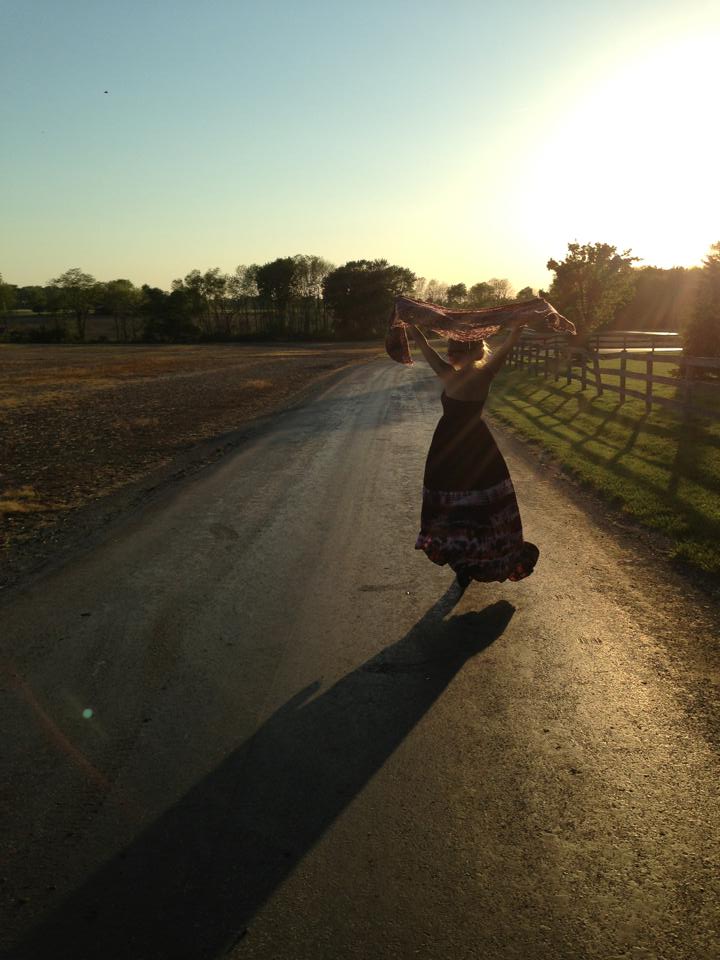
Linford and Karin crowd-sourced funding for their previous album, The Long Surrender, the new record, and with Meet Me, they even opened Nowhere Farm—their farm in southern Ohio—to contributing fans for two nights of concerts, food, and stories. Welcoming fans to their farm was important, as the place has a unique presence on the new album.
After moving to their farm, Linford’s father gave them the advice to “leave the edges wild,” an idea that has captivated them in their cultivation of both their land and their music. I spoke to Linford about place, songwriting, the sacred, and what’s next for Over the Rhine.
Meredith Holladay: Describe the experience of having your fans at Nowhere Farm?
Linford Detweiler: It was meaningful—a little nerve-wracking for Karin to contemplate having 500 folks in her back yard, but a lovely weekend. We put up a circus tent and played the songs that had grown out of the soil of Nowhere Farm for the folks that pitched in generously to help us record Meet Me at The Edge Of The World. When the tent came down, we couldn’t tell anything had happened—no trash lying around. Those that attended were very respectful. It felt like a celebration.
MH: Can you speak to the role of the audience in your songwriting and performing? You write about a sense of gratitude for folks finding your music and “giving it a good life.” To what extent do you respond to your audience?
LD: Karin, my wife and partner in crime, had the good sense to begin telling our audience that without them we’d be homeless. And it’s true. Everything we own, we bought for a song. And we try to treat our audience as extended musical family. We’ve learned a lot about our music from our listeners, and we are blessed with a ragtag company of folks who complete the circle. Songs are meant to be shared.
That being said, every writer has to have his or her own deeply held standards of perfection. We rarely hit the mark, but we keep trying. And a work of art is an offering. You never know if you’ll receive much of anything in return. So when we’re writing, we’re really not engaging much with what others might think. We’re trying to let the work show us what it will, change us, surprise us, move us. Hopefully something is revealed. And if we are changed, surprised and moved, we hope others might be too.
And yes, some songs do seem to have a life force of some kind. Music is one of those unseen, powerful gifts, or mysteries that we can’t hold in our hands, or completely quantify, or bottle, or visualize. The ancient Greeks thought of music as the opposite of astronomy. Astronomy was about discovering and mapping the furthest reaches, the stuff that was way out there. Music was all about discovering unknown places within.
MH: What do you feel your responsibilities are as songwriters—to yourselves, your craft, your audience, the universe?
LD: As far as my work as a songwriter, I think my responsibility is to make whatever personal sacrifices are necessary to commit to practicing a craft over the long haul, to surround myself with people who have something to teach me, and to grow as a writer. I heard a really profound interview with Tony Bennett. He was talking about young gifted artists/performers who are encouraged to focus on becoming famous as quickly as possible.
He said anything that a young artist does that jeopardizes his or her ability to practice a craft long term is “sinning against your talent.” Tony realized that he was sinning against his talent as a young man and wouldn’t be able to keep singing well unless he made some significant changes. And he decided he wanted to continue to sing well.
As far as the universe, I’ve always hoped my body of work, however modest, could be my token of gratitude for the gift of being alive. And I’ve always hoped that it could echo something that Frederick Buechner said: “This is the world. Beautiful and terrible things will happen. Don’t be afraid.”
MH: What are you reading these days? What is holding influence over your writing? How do you nourish your souls and your creativity?
LD: Our reading is desultory. After our recent trip to Alaska, I re-read a book called Two Against The North that my father had read to us as kids, about a couple that tried to homestead on the Kenai Peninsula in the late 1930s. At the end of the book their cabin burns down on March 15, which is the date my father passed away a little over five years ago. All that they had worked for was suddenly gone, but they felt an unexpected freedom. Some of those books that my dad read aloud to us have become so important to me.
My father was the one who encouraged us to “leave the edges wild” on our farm, and that line made it into three or four different songs on the new record.
If I discover a writer that moves me, I tend to poke around and find other things they’ve written. And I’ve read Image Journal for over two decades now, [which]…started…the same year we started Over the Rhine and somehow, we found each other. I’m sure that’s been a significant part of our ongoing education as writers.
To be continued tomorrow.
Rev. Dr. Meredith Holladay is a proud Louisvillian (Go Cards!) transplanted to Kansas by way of both New Jersey and Texas. She serves as Associate Pastor of Spiritual Formation at First Baptist Church, Lawrence, Kansas. She spent her Texas years studying religion and society at Baylor University, where she wrote a dissertation on theology and popular music, focusing on the music and work of Over the Rhine and the Indigo Girls.
Previous Post

October 9, 2013
Goy Children and Fallen Torahs
Next Post
October 11, 2013 Leaving the Edges Wild: An Interview with Over the Rhine, Part 2
Browse Our Archives
Select a Category A. G. Harmon Alissa Wilkinson Allison Backous Art Authors Brad Fruhauff Bradford Winters Bryan Bliss Caroline Langston Chad Thomas Johnston Chris Hoke Christiana N. Peterson Culture D.G. Myers D.L. Mayfield Daniel Bowman Jr. David Griffith Elizabeth Duffy Faith Film Greg Wolfe Guest Contributor Interview Jan Vallone Jeffrey Overstreet Jessica Eddings-Roeser Jessica Mesman Griffith Kelly Foster Lindsey Crittenden Morgan Meis music Natalie Vestin Nick Olson Peggy Rosenthal Personal Reflection Poetry Friday Reflection Relationships Review Richard Chess Richard Cole Sara Zarr Shannon Huffman Polson Sonya Bilocerkowycz Tania Runyan Tony Woodlief Topical Categories Uncategorized Vic Sizemore Writing
Select a Month October 2018 September 2018 August 2018 July 2018 June 2018 May 2018 April 2018 March 2018 February 2018 January 2018 December 2017 November 2017 October 2017 September 2017 August 2017 July 2017 June 2017 May 2017 April 2017 March 2017 February 2017 January 2017 December 2016 November 2016 October 2016 September 2016 August 2016 July 2016 June 2016 May 2016 April 2016 March 2016 February 2016 January 2016 December 2015 November 2015 October 2015 September 2015 August 2015 July 2015 June 2015 May 2015 April 2015 March 2015 February 2015 January 2015 December 2014 November 2014 October 2014 September 2014 August 2014 July 2014 June 2014 May 2014 April 2014 March 2014 February 2014 January 2014 December 2013 November 2013 October 2013 September 2013 August 2013 July 2013 June 2013 May 2013 April 2013 March 2013 February 2013 January 2013 December 2012 November 2012 October 2012 September 2012 August 2012 July 2012 June 2012 May 2012 February 2008
Follow Us!
TAKE THE
Religious Wisdom Quiz
What is "the beginning of knowledge," according to Proverbs?
Select your answer to see how you score.
Humility Riches Power Fear of the Lord
Related posts from Good Letters

On Writing Odes: Taking Time to Celebrate


The Stars of the Earth Cry Out

TRENDING AT PATHEOS Catholic

Creation, Preservation, and Teleology in Catholic Theology
As I write this, it is very early Monday morning. Like millions...

The Parable Of The Sower And The Word...
One of Christ’s most famous parables is that of the sower who...

Rejecting Doom: Christian Hope And Human Action
Christianity is a religion of hope. We are to have hope and...

Why I Choose the Eucharist Over the Sermon
Choose the Eucharist, Not the Sermon What are we supposed to get...

5 Design Elements Found in Spiritually Rooted Homes
Putting Spirituality Into Home Decor Our homes are more than our living...

Credo: A Story of God Told with the...
About 10 years ago, I began to imagine a personal "Credo" that...
view all Catholic blogs
Ad-Free & Subscriber Log-In Subscription Support
- About Us
- 2026 Calendar
- Videos
- Podcasts
- Library of World Religions
- Faith In Media Tracker
- Advertise With Us
- Write for Us
- Privacy Policy
- Terms of Service
- Do Not Sell My Data
- Contact Us
- Radiant Digital
- Manage Newsletter Subscriptions
- Unsubscribe From Notifications
- Sitemap
Copyright 2008-2026, Patheos. All rights reserved.
Subscription Support Ad-Free & Subscriber Log-In
Follow Patheos