
BuddhistCatholicContemplativeEvangelicalGeneral ChristianHinduJewishLatter-day SaintMuslimNew VisionsProgressive Christian
Beliefs
- Buddhist
- Catholic
- Contemplative
- Evangelical
- General Christian
- Hindu
- Jewish
- Latter-day Saint
- More Voices
- Muslim
- New Visions
- Pagan
- Progressive Christian
Topics
- Religion News
- Food and Religion
- Sports and Religion
- Religious Art
- Religious Music and Entertainment
- Religious Events
- History and Religion
- Style and Religion
- Politics and Religion
- Women in Religion
- Recreation Outdoors and Religion
- Business Finance and Religion
- Careers Workplace and Religion
- Education and Religion
- Family Parenting and Religion
- Health Fitness and Religion
- Home and Religion
- Relationships and Religion
- Technology and Religion
- Travel and Religion
Columnists
- Buddhist Columnists
- Business Finance and Religion Columnists
- Careers Workplace and Religion Columnists
- Catholic Columnists
- Contemplative Columnists
- Education and Religion Columnists
- Evangelists Columnists
- Family Parenting and Religion Columnists
- General Christian Columnists
- Health Fitness and Religion Columnists
- Hindu Columnists
- History and Religion Columnists
- Home and Religion Columnists
- Jewish Columnists
- More Voices Columnists
- Latter Day Columnists
- Muslim Columnists
- New Visions Columnists
- Nonreligious Columnists
- Pagan Columnists
- Politics and Religion Columnists
- Progressive Columnists
- Recreation Outdoors and Religion Columnists
- Relationships and Religion Columnists
- Religion News Columnists
- Religious Art Columnists
- Religious Events Columnists
- Religious Music and Entertainment Columnists
- Sports and Religion Columnists
- Style and Religion Columnists
- Technology and Religion Columnists
- Travel and Religion Columnists
- Women in Religion Columnists
Resource Library
- 2026 Calendar
- Library of World Religions
- The 100 Most Holy Places on Earth
- Patheos Answers
- Podcasts
- Videos
- Faith Leaders Database
- Anglican Episcopalian
- Bahai
- Baptist
- Buddhism
- Christianity
- Confucianism
- Eastern Orthodoxy
- Hinduism
- Holiness and Pentecostal
- ISKCON
- Islam
- Judaism
- Lutheran
- Methodist
- The Church of Jesus Christ of Latter-day Saints
- New Age
- Paganism
- Presbytarian and Reformed
- Protestantism
- Religion Behind the Scenes
- Roman Catholic
- Scientology
- Shia Islam
- Sikhism
- Sufism
- Sunni Islam
- Taoism
- Zen
- See all religions
Research Tools
 Ad-Free & Subscriber Log-In Subscription Support
Ad-Free & Subscriber Log-In Subscription Support
Follow Patheos 

- Trending:
- Forgiveness
- |
- Marriage
- |
- Consciousness
- |
- Death Penalty
- |
- Election
- |
- Halloween
 Good Letters
-
Contributors
- Home
- Catholic
- Denise Levertov: A Poet’s Life, Part One
Denise Levertov: A Poet’s Life, Part One
Last updated on: November 14, 2012 at 12:42 pm by Peggy Rosenthal
Denise Levertov: A Poet’s Life, Part One 2012-11-14T12:42:43-07:00 Peggy Rosenthal
Patheos Explore the world's faith through different perspectives on religion and spirituality! Patheos has the views of the prevalent religions and spiritualities of the world.
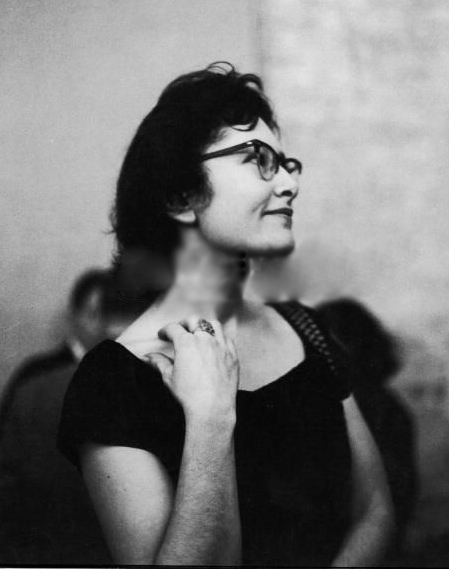 I thought I knew Denise Levertov.
In the 1970s, she and my husband were both part of the English department faculty at Tufts University. He was writing about the Beat poets, whom Denise had known well, and she graciously came to our house for my husband to interview.
I used to walk by her house, in our neighborhood, and admire the brilliant flowers in her English garden.
Yes, I thought I knew Denise Levertov. I’ve read most of her poetry many times. After 9/11, I read it through once again, in order, starting with her 1961 collection, The Jacob’s Ladder.
I needed to be with Levertov’s poems daily because I knew that she’d engaged the difficult political issues of her day: the Vietnam War, the nuclear arms race, U.S. interventions in Latin America. I thirsted for her poetic insights on how to engage the post-9/11 world.
But now I realize I scarcely knew Levertov at all until reading this first complete biography of her, Dana Greene’s Denise Levertov: A Poet’s Life.
Levertov died in 1997, and it has taken fifteen years for us to get this sensitive, probing look at her entire life. But now we have it—and what a treasure it is.
Grounded in the soundest scholarship, drawing from Denise’s diaries and letters, interviews with people who knew her, as well as her published works, Greene’s narrative is thoroughly engaging and illuminating.
I’d known a bit about Levertov’s heritage, that she was born in England, her mother Welsh, her father a Hasidic Jew from Russia who had converted to Christianity and became an Anglican priest. But of the tense texture of her family life, growing up in this home with her troubled older sister, I knew nothing until reading Greene’s account.
I’d known that Levertov married the American Mitch Goodman and came to the U.S. with him in 1948, that they had a son, and that eventually their marriage dissolved.
But of her abortion before she met Mitch, the difficulties in their marriage almost from the start, Denise’s frustration with motherhood, Mitch’s jealousy of her growing acclaim as a poet, her anxieties and moody insecurities—all this was new to me, laid out by Greene with forthrightness and tact.
I’d known that Levertov was fairly quickly acclaimed as a poet in the U.S. But I hadn’t thought at all about an important point Greene makes:
In the 1950s, well before the women’s movement, women were expected to be housewives and nothing more. Levertov chafed under this stricture (as did many creative women at the time). She hated domesticity but was offered no alternative by the culture. As a female poet, she was looked upon as something of an oddity.
I’d known, from some of Levertov’s poems about her activism during the Vietnam War, that the war and her engagement in the protest movement caused her great inner pain and turmoil. But I hadn’t a clue about how tumultuous Levertov’s friendships and psychic life were all through her early adulthood and into her fifties.
Greene is thorough and masterful in tracing this dimension of her subject. Having read all of Denise’s diaries and the letters available in archives, Greene shows us a woman who was, in Greene’s words “a difficult friend.”
Denise could be impulsive and even cruel to her friends; she always said exactly what she thought, even if it would hurt others. She had a deep need to be adored and—as she reached middle age—to feel young. This need, along with strong sexual desires, compelled her into affair after affair, mostly with men considerably younger than she.
I found it hard learning about Levertov’s emotional instability and psychic needs. Greene handles them with sensitivity and non-judgmental honesty. But, still, learning about the inner pain of another is always sad.
A wise friend of mine said recently that everyone’s story includes suffering. Yes, but hearing the story, always unique in its anguished details, is difficult.
What a relief and a joy, then, to come, with Greene, to the happier story of Levertov’s religious conversion. From Levertov’s published essays and poems about her spiritual journey, I’d known the outline:
Her poetry had always celebrated mystery, even while she considered herself an agnostic. At age fifty-eight, while writing the long poem “Mass for the Day of St. Thomas Didymus,” she experienced her first sense of the “unknown” as a God who became helpless for our sake. Eventually she was led, at age sixty-seven, to communion in the Catholic Church.
But, oh, the rich details of this long conversion process that Greene adds from the diaries!
While writing the Didymus poem, Denise notices herself “hesitantly turning” toward Christian faith. As Greene felicitously puts it: “her lifelong experience of wonder and awe was being reconfigured.”
As Levertov’s embrace of faith deepens during the early 1980s, new terms enter her diary: grace and gratitude. The neediness and psychic tensions that had plagued her earlier life gradually dissolve into a grateful calm.
She starts pondering life’s sacramentality… and begins slipping into churches for worship services. She confides to her diary: “What is sought is the experience of the love of God… to really believe that God loves you—to feel it.”
As Levertov’s spirituality matured toward the end of her life, she reflected in her diary “that faith requires imagination; not in order to deceive ourselves into believing what is not true but precisely in order to grasp what is true but is too amazing in its uniqueness to be easily believed.”
Levertov always insisted that, as Greene says, “her poems emerged from her life experience.”
Tomorrow’s post will take up Greene’s account of the poetry that emerged from this life.
Previous Post

November 2, 2012
Listening to a Stranger’s Story
Next Post
November 6, 2012 Denise Levertov: A Poet’s Life, Part Two
Browse Our Archives
Select a Category A. G. Harmon Alissa Wilkinson Allison Backous Art Authors Brad Fruhauff Bradford Winters Bryan Bliss Caroline Langston Chad Thomas Johnston Chris Hoke Christiana N. Peterson Culture D.G. Myers D.L. Mayfield Daniel Bowman Jr. David Griffith Elizabeth Duffy Faith Film Greg Wolfe Guest Contributor Interview Jan Vallone Jeffrey Overstreet Jessica Eddings-Roeser Jessica Mesman Griffith Kelly Foster Lindsey Crittenden Morgan Meis music Natalie Vestin Nick Olson Peggy Rosenthal Personal Reflection Poetry Friday Reflection Relationships Review Richard Chess Richard Cole Sara Zarr Shannon Huffman Polson Sonya Bilocerkowycz Tania Runyan Tony Woodlief Topical Categories Uncategorized Vic Sizemore Writing
Select a Month October 2018 September 2018 August 2018 July 2018 June 2018 May 2018 April 2018 March 2018 February 2018 January 2018 December 2017 November 2017 October 2017 September 2017 August 2017 July 2017 June 2017 May 2017 April 2017 March 2017 February 2017 January 2017 December 2016 November 2016 October 2016 September 2016 August 2016 July 2016 June 2016 May 2016 April 2016 March 2016 February 2016 January 2016 December 2015 November 2015 October 2015 September 2015 August 2015 July 2015 June 2015 May 2015 April 2015 March 2015 February 2015 January 2015 December 2014 November 2014 October 2014 September 2014 August 2014 July 2014 June 2014 May 2014 April 2014 March 2014 February 2014 January 2014 December 2013 November 2013 October 2013 September 2013 August 2013 July 2013 June 2013 May 2013 April 2013 March 2013 February 2013 January 2013 December 2012 November 2012 October 2012 September 2012 August 2012 July 2012 June 2012 May 2012 February 2008
Follow Us!
TAKE THE
Religious Wisdom Quiz
Which book of the Bible contains the story of Gideon?
Select your answer to see how you score.
Joshua 2 Kings Judges 1 Samuel
Related posts from Good Letters




Meditations of a Library Assistant in the BS...
TRENDING AT PATHEOS Catholic

Creation, Preservation, and Teleology in Catholic Theology
As I write this, it is very early Monday morning. Like millions...

The Parable Of The Sower And The Word...
One of Christ’s most famous parables is that of the sower who...

Rejecting Doom: Christian Hope And Human Action
Christianity is a religion of hope. We are to have hope and...

Why I Choose the Eucharist Over the Sermon
Choose the Eucharist, Not the Sermon What are we supposed to get...

5 Design Elements Found in Spiritually Rooted Homes
Putting Spirituality Into Home Decor Our homes are more than our living...

Credo: A Story of God Told with the...
About 10 years ago, I began to imagine a personal "Credo" that...
view all Catholic blogs
Ad-Free & Subscriber Log-In Subscription Support
- About Us
- 2026 Calendar
- Videos
- Podcasts
- Library of World Religions
- Faith In Media Tracker
- Advertise With Us
- Write for Us
- Privacy Policy
- Terms of Service
- Do Not Sell My Data
- Contact Us
- Radiant Digital
- Manage Newsletter Subscriptions
- Unsubscribe From Notifications
- Sitemap
Copyright 2008-2026, Patheos. All rights reserved.
Subscription Support Ad-Free & Subscriber Log-In
Follow Patheos