
BuddhistCatholicContemplativeEvangelicalGeneral ChristianHinduJewishLatter-day SaintMuslimNew VisionsProgressive Christian
Beliefs
- Buddhist
- Catholic
- Contemplative
- Evangelical
- General Christian
- Hindu
- Jewish
- Latter-day Saint
- More Voices
- Muslim
- New Visions
- Pagan
- Progressive Christian
Topics
- Religion News
- Food and Religion
- Sports and Religion
- Religious Art
- Religious Music and Entertainment
- Religious Events
- History and Religion
- Style and Religion
- Politics and Religion
- Women in Religion
- Recreation Outdoors and Religion
- Business Finance and Religion
- Careers Workplace and Religion
- Education and Religion
- Family Parenting and Religion
- Health Fitness and Religion
- Home and Religion
- Relationships and Religion
- Technology and Religion
- Travel and Religion
Columnists
- Buddhist Columnists
- Business Finance and Religion Columnists
- Careers Workplace and Religion Columnists
- Catholic Columnists
- Contemplative Columnists
- Education and Religion Columnists
- Evangelists Columnists
- Family Parenting and Religion Columnists
- General Christian Columnists
- Health Fitness and Religion Columnists
- Hindu Columnists
- History and Religion Columnists
- Home and Religion Columnists
- Jewish Columnists
- More Voices Columnists
- Latter Day Columnists
- Muslim Columnists
- New Visions Columnists
- Nonreligious Columnists
- Pagan Columnists
- Politics and Religion Columnists
- Progressive Columnists
- Recreation Outdoors and Religion Columnists
- Relationships and Religion Columnists
- Religion News Columnists
- Religious Art Columnists
- Religious Events Columnists
- Religious Music and Entertainment Columnists
- Sports and Religion Columnists
- Style and Religion Columnists
- Technology and Religion Columnists
- Travel and Religion Columnists
- Women in Religion Columnists
Resource Library
- 2026 Calendar
- Library of World Religions
- The 100 Most Holy Places on Earth
- Patheos Answers
- Podcasts
- Videos
- Faith Leaders Database
- Anglican Episcopalian
- Bahai
- Baptist
- Buddhism
- Christianity
- Confucianism
- Eastern Orthodoxy
- Hinduism
- Holiness and Pentecostal
- ISKCON
- Islam
- Judaism
- Lutheran
- Methodist
- The Church of Jesus Christ of Latter-day Saints
- New Age
- Paganism
- Presbytarian and Reformed
- Protestantism
- Religion Behind the Scenes
- Roman Catholic
- Scientology
- Shia Islam
- Sikhism
- Sufism
- Sunni Islam
- Taoism
- Zen
- See all religions
Research Tools
 Ad-Free & Subscriber Log-In Subscription Support
Follow Patheos 

- Trending:
- Advent
- |
- Forgiveness
- |
- Thanksgiving
- |
- Election
- |
- Seasonal Holidays
- |
- Marriage
 Good Letters
-
Contributors
- Home
- Catholic
- A Conversation with Alicia Ostriker: Part 2
A Conversation with Alicia Ostriker: Part 2
Last updated on: October 2, 2018 at 3:00 am by Image
A Conversation with Alicia Ostriker: Part 2 2018-09-26T10:05:42-07:00 Image
Patheos Explore the world's faith through different perspectives on religion and spirituality! Patheos has the views of the prevalent religions and spiritualities of the world.
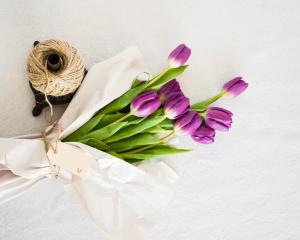 “When I write a poem, I am crawling into the dark. Or else I am an aperture. Something needs to be put into language, and it chooses me,” says critic, activist, and biblical scholar Alicia Ostriker, whose poetry appears in Image’s recently released issue #98.
We asked Ostriker, winner of the Jewish National Book Award and this year’s New York State Poet, about her poems.
Image: In several of your poems you allude to the idea that we exist in a special spiritual state before we are born in some other place where we have clearer access to the divine.
Meanwhile, other poems of yours, especially in your most recent collection, Waiting for the Light*, feel very rooted in certain places, cites in particular. Are you conscious of a tension between earthiness and mysticism in your own writing?*
Alicia Ostriker: The earthy, material world, the invisible, spiritual world—is it a tension, or is it a complementarity? Is the body the soul’s prison, or the soul’s garment?
These are all metaphors, but the idea that we are in some sense essentially spiritual beings, who have fallen into a fleshly body and yearn to return to our undifferentiated spiritual state, is not exactly new. It’s in Plato, as well as Christianity and Buddhism and Hinduism.
According to one Jewish legend, we all possess infinite knowledge before we are born, and at birth an angel taps the area between our upper lip and our nose, creating a slight dent there, and causing us to forget everything.
The version of this myth given to us by Wordsworth in his great ode “Intimations of Immortality” is well-known:
Our birth is but a sleep and a forgetting:
The Soul that rises with us, our life’s Star,
Hath had elsewhere its setting,
And cometh from afar:
Not in entire forgetfulness,
And not in utter nakedness,
But trailing clouds of glory do we come
From God, who is our home…
Wordsworth goes on to say that “heaven lies about us in our infancy,” but that the “visionary gleam” diminishes as we grow up and start caring about things of this world, and ultimately “fades into the light of common day.”
The assumption that our material world and the world of the spirit are necessarily divided underlies Wordsworth’s ode and is of a piece with the dualism inherent to most western thought.
In some strands of Judaism that boundary is a bit more porous; “as above, so below” makes the realms mirror images of each other, and the concentration of Jewish household rituals on food and mealtime carries the implication that everything in our everyday world is potentially holy.
Sparks of divinity may exist within all matter.
In one Hasidic story, the rabbi says to his son, “I’ll give you ten gold coins if you can tell me where God is.” The son replies, “I’ll give you twenty if you can tell me where he is not.”
In Orthodox interpretations of the Song of Songs, that most erotic sequence of love poems, the beloved is understood to be God, so here too the divine and the supposedly secular are fused. Of course this is a subject of huge debate.
I’ve written about the debate in my essay on the Song of Songs in my book For the Love of God: The Bible as an Open Book. For me, the divine is always present, and it is only our ability to access it that is lacking.
There is yearning, but not opposition. I like to think that my poetry is at home in the world, and at home with the yearning, too.
Image: Your collection, The Old Woman, the Tulip, and the Dog is written in the voices of those characters. Did spending time inside the mind of a plant and an animal change your relationship to the natural world?
A.O.: Writing The Old Woman, the Tulip and the Dog was just so much fun. Those three characters announced themselves to me during a spell of insomnia, and “The Blessing of the Old Woman, the Tulip, and the Dog” became the book’s opening poem.
This was a surprise, however. I was delighted with their humor, but I’d never written anything like that before and thought I never would again. Then, a couple of years later, the three of them began showing up again, and made it clear to me that they wanted to be a book.
I soon got a sense of their personalities, and could (metaphorically?) listen for what they would say. Usually, though not always, the old woman would come out with some utterance, some opinion, and the tulip and dog would respond.
Yet I don’t think my relation to dogs and flowers changed very much. Any of us who have had pets naturally try to read their minds, and I’ll bet many gardeners read the minds of their flowers—only they would be embarrassed to admit it, perhaps.
A gardener friend of mine used to sing to his flowers and tell them jokes. He was quite confident that they enjoyed the jokes.
Read part 1 of our Conversation with Alicia Ostriker here.
Previous Post
October 1, 2018
A Conversation with Alicia Ostriker: Part 1
Next Post

October 3, 2018 The Lost Goodbye
Browse Our Archives
Select a Category A. G. Harmon Alissa Wilkinson Allison Backous Art Authors Brad Fruhauff Bradford Winters Bryan Bliss Caroline Langston Chad Thomas Johnston Chris Hoke Christiana N. Peterson Culture D.G. Myers D.L. Mayfield Daniel Bowman Jr. David Griffith Elizabeth Duffy Faith Film Greg Wolfe Guest Contributor Interview Jan Vallone Jeffrey Overstreet Jessica Eddings-Roeser Jessica Mesman Griffith Kelly Foster Lindsey Crittenden Morgan Meis music Natalie Vestin Nick Olson Peggy Rosenthal Personal Reflection Poetry Friday Reflection Relationships Review Richard Chess Richard Cole Sara Zarr Shannon Huffman Polson Sonya Bilocerkowycz Tania Runyan Tony Woodlief Topical Categories Uncategorized Vic Sizemore Writing
Select a Month October 2018 September 2018 August 2018 July 2018 June 2018 May 2018 April 2018 March 2018 February 2018 January 2018 December 2017 November 2017 October 2017 September 2017 August 2017 July 2017 June 2017 May 2017 April 2017 March 2017 February 2017 January 2017 December 2016 November 2016 October 2016 September 2016 August 2016 July 2016 June 2016 May 2016 April 2016 March 2016 February 2016 January 2016 December 2015 November 2015 October 2015 September 2015 August 2015 July 2015 June 2015 May 2015 April 2015 March 2015 February 2015 January 2015 December 2014 November 2014 October 2014 September 2014 August 2014 July 2014 June 2014 May 2014 April 2014 March 2014 February 2014 January 2014 December 2013 November 2013 October 2013 September 2013 August 2013 July 2013 June 2013 May 2013 April 2013 March 2013 February 2013 January 2013 December 2012 November 2012 October 2012 September 2012 August 2012 July 2012 June 2012 May 2012 February 2008
Follow Us!
TAKE THE
Religious Wisdom Quiz
Who refused to defile himself with the king's food and wine?
Select your answer to see how you score.
Daniel Joel Ezekiel Obadiah
Related posts from Good Letters



On Writing Odes: Taking Time to Celebrate
Poetry Friday: "The Burned Butterfly"
TRENDING AT PATHEOS Catholic

The Kingdom Of God In Ordinary Life And...
The kingdom of God is all around us; it is in us...

How Discretion Guides Us Away From Extremes
Prudence is an important virtue for all of us. While we should...

If Baptism Washes Away Sin, Why Do Catholics...
The seven sacraments stand as the foundation of Catholic ecclesial life. The...

The Power of Setting a Good Example
Remember last August when the Chicago White Sox hosted a "Pope Hat...

A Catholic Critique of Biblical Unitarianism
If the statistics are to be believed, Unitarianism is rising worldwide. Although...

How Grandma Tourism Helps Grandparents Live Their Vocation
Grandma, The New Travel Influencer What started as a nostalgia-inspired social media...
view all Catholic blogs
Ad-Free & Subscriber Log-In Subscription Support
- About Us
- 2026 Calendar
- Videos
- Podcasts
- Library of World Religions
- Faith In Media Tracker
- Advertise With Us
- Write for Us
- Privacy Policy
- Terms of Service
- Do Not Sell My Data
- Contact Us
- Radiant Digital
- Manage Newsletter Subscriptions
- Unsubscribe From Notifications
- Sitemap
Copyright 2008-2026, Patheos, part of the Radiant Digital network of media brands. All rights reserved.
Subscription Support Ad-Free & Subscriber Log-In
Follow Patheos