
BuddhistCatholicContemplativeEvangelicalGeneral ChristianHinduJewishLatter-day SaintMuslimNew VisionsProgressive Christian
Beliefs
- Buddhist
- Catholic
- Contemplative
- Evangelical
- General Christian
- Hindu
- Jewish
- Latter-day Saint
- More Voices
- Muslim
- New Visions
- Pagan
- Progressive Christian
Topics
- Religion News
- Food and Religion
- Sports and Religion
- Religious Art
- Religious Music and Entertainment
- Religious Events
- History and Religion
- Style and Religion
- Politics and Religion
- Women in Religion
- Recreation Outdoors and Religion
- Business Finance and Religion
- Careers Workplace and Religion
- Education and Religion
- Family Parenting and Religion
- Health Fitness and Religion
- Home and Religion
- Relationships and Religion
- Technology and Religion
- Travel and Religion
Columnists
- Buddhist Columnists
- Business Finance and Religion Columnists
- Careers Workplace and Religion Columnists
- Catholic Columnists
- Contemplative Columnists
- Education and Religion Columnists
- Evangelists Columnists
- Family Parenting and Religion Columnists
- General Christian Columnists
- Health Fitness and Religion Columnists
- Hindu Columnists
- History and Religion Columnists
- Home and Religion Columnists
- Jewish Columnists
- More Voices Columnists
- Latter Day Columnists
- Muslim Columnists
- New Visions Columnists
- Nonreligious Columnists
- Pagan Columnists
- Politics and Religion Columnists
- Progressive Columnists
- Recreation Outdoors and Religion Columnists
- Relationships and Religion Columnists
- Religion News Columnists
- Religious Art Columnists
- Religious Events Columnists
- Religious Music and Entertainment Columnists
- Sports and Religion Columnists
- Style and Religion Columnists
- Technology and Religion Columnists
- Travel and Religion Columnists
- Women in Religion Columnists
Resource Library
- 2026 Calendar
- Library of World Religions
- The 100 Most Holy Places on Earth
- Patheos Answers
- Podcasts
- Videos
- Faith Leaders Database
- Anglican Episcopalian
- Bahai
- Baptist
- Buddhism
- Christianity
- Confucianism
- Eastern Orthodoxy
- Hinduism
- Holiness and Pentecostal
- ISKCON
- Islam
- Judaism
- Lutheran
- Methodist
- The Church of Jesus Christ of Latter-day Saints
- New Age
- Paganism
- Presbytarian and Reformed
- Protestantism
- Religion Behind the Scenes
- Roman Catholic
- Scientology
- Shia Islam
- Sikhism
- Sufism
- Sunni Islam
- Taoism
- Zen
- See all religions
Research Tools
 Ad-Free & Subscriber Log-In Subscription Support
Ad-Free & Subscriber Log-In Subscription Support
Follow Patheos 

- Trending:
- Forgiveness
- |
- Marriage
- |
- Consciousness
- |
- Death Penalty
- |
- Election
- |
- Halloween
 Good Letters
-
Contributors
- Home
- Catholic
- The World Beyond the Room
The World Beyond the Room
Last updated on: June 2, 2016 at 1:00 am by A. G. Harmon
The World Beyond the Room 2016-05-31T10:42:18-07:00 A. G. Harmon
Patheos Explore the world's faith through different perspectives on religion and spirituality! Patheos has the views of the prevalent religions and spiritualities of the world.
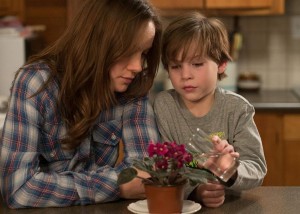 The most obvious analysis of Emma Donoghue’s Room, one of last year’s most heralded films, is on the basis of what it says about imagination.
In the film version of the novel, five-year-old Jack is provided a means by which to live his life through images, crafts, pictures, and stories. That would not be so extraordinary, nor his exceptional character so marked, if it were not for the fact that he has lived his entire existence closed up inside a small shed.
Jack’s mother, who was abducted seven years before by a sexual predator, is his co-prisoner in a world no larger than twelve feet square. But she has made the most of every inch.
A feat of maternal determination makes all of her efforts for him dual-purposed: she has him do exercises with her to stay physically strong, but also to provide him with some concept of distance and space; she has him read aloud from a book to give him an education, but also so that he can access a type of freedom that is otherwise denied; she has him mark his height upon a wall to gauge his growth, but also to give him something to look forward to—a time in which he will outgrow the room.
All of this is a tribute to the human will to live, and to how much the imaginative faculty is central to existence. But even more profound than the construction of Jack’s imagination is the construction of his reality—or rather his sense of what is not imagined.
For the flip side of wit and fancy is the ability to distinguish what is actual from what is abstracted. That skill is no less key to the boy’s humanness, nor to his survival, as the film makes clear.
The difficulty of the mother’s task in helping Jack grasp reality should be ironic, considering the stark horror of their circumstances; if anything, reality would seem all too clear. And yet, upon reflection, it also appears that the woman’s talent for giving the boy a mind that can escape his circumstances is the very thing that works against his groundedness.
Of course, she knows what it is like outside the room, but he cannot fathom it.
The real world she describes to him is as foreign as the concept of color is to the blind, or the sense of sound to the deaf.
Words are themselves only icons for reality, and however vividly she tries to communicate what the outside is like, she is confronted with the gap that only experience can provide. And experience is the one thing she cannot give with regard to the world beyond the room’s walls.
She is also hindered by the television that her captor provides for them. She has always told Jack that the flickering pictures he sees there are not “real” in the way that she is, and he is, and the bed, plant, and table are. But when it becomes important for him to know the difference, and that there is a concrete counterpart for all that shimmers on his Platonic cave’s wall, he grows angry at the leap he is asked to cross.
For what does he know of trees except the ones that aren’t real on TV? What has he known of dogs and giants and the thousand imagined things he’s heard of, except those that appear in his brain, cast by the stories he’s been told?
He is not even certain as to the reality of the man who comes into the room every night to sleep with his mother.
Jack is put into a louvered wardrobe for the night, and when the predator—his father—uses a code to unlock the door, all he can see is part of a man through the slats. The figure seems to flicker insubstantiality like the images that make their way onto the screen through bad reception.
But when the predator loses his job, and the power is turned off in the room, the woman realizes that their dependence on the man cannot be born any longer. They could starve or freeze if something happens to him, or even to his ability to pay for what he provides.
So she hatches a plan, but it depends on Jack’s ability to grasp what reality is.
Without spoiling the plot, the means that she employs to make her son comprehend the difference between image and material is a masterful achievement. For Jack, like all of us, has to know that the real is greater than his experience—that there is a world beyond the room he lives in, and a life greater than even his imagination can depict.
A. G. Harmon teaches Shakespeare, Law and Literature, Jurisprudence, and Writing at The Catholic University of America in Washington, D.C. His novel, A House All Stilled, won the 2001 Peter Taylor Prize for the Novel.

Previous Post

June 1, 2016
The Arab of the Future
Next Post
June 3, 2016 “Translation Back into Native Tongues” by Nicholas Samaras
Browse Our Archives
Select a Category A. G. Harmon Alissa Wilkinson Allison Backous Art Authors Brad Fruhauff Bradford Winters Bryan Bliss Caroline Langston Chad Thomas Johnston Chris Hoke Christiana N. Peterson Culture D.G. Myers D.L. Mayfield Daniel Bowman Jr. David Griffith Elizabeth Duffy Faith Film Greg Wolfe Guest Contributor Interview Jan Vallone Jeffrey Overstreet Jessica Eddings-Roeser Jessica Mesman Griffith Kelly Foster Lindsey Crittenden Morgan Meis music Natalie Vestin Nick Olson Peggy Rosenthal Personal Reflection Poetry Friday Reflection Relationships Review Richard Chess Richard Cole Sara Zarr Shannon Huffman Polson Sonya Bilocerkowycz Tania Runyan Tony Woodlief Topical Categories Uncategorized Vic Sizemore Writing
Select a Month October 2018 September 2018 August 2018 July 2018 June 2018 May 2018 April 2018 March 2018 February 2018 January 2018 December 2017 November 2017 October 2017 September 2017 August 2017 July 2017 June 2017 May 2017 April 2017 March 2017 February 2017 January 2017 December 2016 November 2016 October 2016 September 2016 August 2016 July 2016 June 2016 May 2016 April 2016 March 2016 February 2016 January 2016 December 2015 November 2015 October 2015 September 2015 August 2015 July 2015 June 2015 May 2015 April 2015 March 2015 February 2015 January 2015 December 2014 November 2014 October 2014 September 2014 August 2014 July 2014 June 2014 May 2014 April 2014 March 2014 February 2014 January 2014 December 2013 November 2013 October 2013 September 2013 August 2013 July 2013 June 2013 May 2013 April 2013 March 2013 February 2013 January 2013 December 2012 November 2012 October 2012 September 2012 August 2012 July 2012 June 2012 May 2012 February 2008
Follow Us!
TAKE THE
Religious Wisdom Quiz
Who was the first Nazarite?
Select your answer to see how you score.
David Samuel Eli Samson
Related posts from Good Letters

I Am Not a Mother: I’m a Human...


My Mother, My Daughter, Myself
TRENDING AT PATHEOS Catholic

Rejecting Doom: Christian Hope And Human Action
Christianity is a religion of hope. We are to have hope and...

It’s What Comes From Within Which Matters
One of the most difficult things for us to understand is why...

Why I Choose the Eucharist Over the Sermon
Choose the Eucharist, Not the Sermon What are we supposed to get...

5 Design Elements Found in Spiritually Rooted Homes
Putting Spirituality Into Home Decor Our homes are more than our living...

Credo: A Story of God Told with the...
About 10 years ago, I began to imagine a personal "Credo" that...

The Anatomy of Divine Revelation in Catholic Thought
The claim that God has made Himself known to human beings is...
view all Catholic blogs
Ad-Free & Subscriber Log-In Subscription Support
- About Us
- 2026 Calendar
- Videos
- Podcasts
- Library of World Religions
- Faith In Media Tracker
- Advertise With Us
- Write for Us
- Privacy Policy
- Terms of Service
- Do Not Sell My Data
- Contact Us
- Radiant Digital
- Manage Newsletter Subscriptions
- Unsubscribe From Notifications
- Sitemap
Copyright 2008-2026, Patheos. All rights reserved.
Subscription Support Ad-Free & Subscriber Log-In
Follow Patheos