
BuddhistCatholicContemplativeEvangelicalGeneral ChristianHinduJewishLatter-day SaintMuslimNew VisionsProgressive Christian
Beliefs
- Buddhist
- Catholic
- Contemplative
- Evangelical
- General Christian
- Hindu
- Jewish
- Latter-day Saint
- More Voices
- Muslim
- New Visions
- Pagan
- Progressive Christian
Topics
- Religion News
- Food and Religion
- Sports and Religion
- Religious Art
- Religious Music and Entertainment
- Religious Events
- History and Religion
- Style and Religion
- Politics and Religion
- Women in Religion
- Recreation Outdoors and Religion
- Business Finance and Religion
- Careers Workplace and Religion
- Education and Religion
- Family Parenting and Religion
- Health Fitness and Religion
- Home and Religion
- Relationships and Religion
- Technology and Religion
- Travel and Religion
Columnists
- Buddhist Columnists
- Business Finance and Religion Columnists
- Careers Workplace and Religion Columnists
- Catholic Columnists
- Contemplative Columnists
- Education and Religion Columnists
- Evangelists Columnists
- Family Parenting and Religion Columnists
- General Christian Columnists
- Health Fitness and Religion Columnists
- Hindu Columnists
- History and Religion Columnists
- Home and Religion Columnists
- Jewish Columnists
- More Voices Columnists
- Latter Day Columnists
- Muslim Columnists
- New Visions Columnists
- Nonreligious Columnists
- Pagan Columnists
- Politics and Religion Columnists
- Progressive Columnists
- Recreation Outdoors and Religion Columnists
- Relationships and Religion Columnists
- Religion News Columnists
- Religious Art Columnists
- Religious Events Columnists
- Religious Music and Entertainment Columnists
- Sports and Religion Columnists
- Style and Religion Columnists
- Technology and Religion Columnists
- Travel and Religion Columnists
- Women in Religion Columnists
Resource Library
- 2026 Calendar
- Library of World Religions
- The 100 Most Holy Places on Earth
- Patheos Answers
- Podcasts
- Videos
- Faith Leaders Database
- Anglican Episcopalian
- Bahai
- Baptist
- Buddhism
- Christianity
- Confucianism
- Eastern Orthodoxy
- Hinduism
- Holiness and Pentecostal
- ISKCON
- Islam
- Judaism
- Lutheran
- Methodist
- The Church of Jesus Christ of Latter-day Saints
- New Age
- Paganism
- Presbytarian and Reformed
- Protestantism
- Religion Behind the Scenes
- Roman Catholic
- Scientology
- Shia Islam
- Sikhism
- Sufism
- Sunni Islam
- Taoism
- Zen
- See all religions
Research Tools
 Ad-Free & Subscriber Log-In Subscription Support
Ad-Free & Subscriber Log-In Subscription Support
Follow Patheos 

- Trending:
- Forgiveness
- |
- Marriage
- |
- Consciousness
- |
- Death Penalty
- |
- Election
- |
- Halloween
 Good Letters
-
Contributors
- Home
- Catholic
- Thin Places, Part 1
Thin Places, Part 1
Last updated on: May 9, 2016 at 1:00 am by Alissa Wilkinson
Thin Places, Part 1 2016-05-05T12:02:18-07:00 Alissa Wilkinson
Patheos Explore the world's faith through different perspectives on religion and spirituality! Patheos has the views of the prevalent religions and spiritualities of the world.
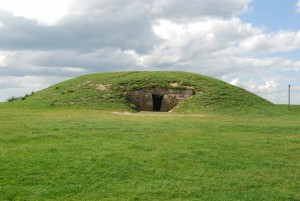 A few summers ago, my husband Tom and I were in Dublin for a week, and one day, we took a tour bus to two ancient holy places—thin places, the Celts would have called them: spots where heaven and earth are very close to one another, where the ordinary distance between the two collapses.
When I was an evangelical teenager, I thought the idea of thin places was sort of cool, another way to describe that feeling I got when I sat on the beach during vacation and saw an especially vibrant sunset, or stood on top of a mountain and spun slowly to take in the vista. The world was transformed in a moment of extraordinary beauty, and so was I, for a little while.
I felt close to God, closer than I felt singing hymns or listening to sermons. Church, in its very weekly-ness, wasn’t extraordinary like that. I’d never been one of those “on fire for Jesus” types, like my friends who raised their hands in worship, but when I felt that spark, I thought maybe for a while I was like them.
But a decade after those days, on our Dublin morning, there was no rosy sunrise. It was June, but chilly, and we wore long sleeves and pants and jackets. Tom and I yawned and clutched coffee cups. We climbed aboard the tour bus at a stop in front of a government building just north of the O’Connell Street Bridge and headed out of town, bound for the ancient sacred spots.
In the New York Times in March 2012, Eric Weiner, author of a book called Man Seeks God: My Flirtations with the Divine, wrote about his thin places. “Thin places relax us, yes,” he says, “but they also transform us—or, more accurately, unmask us. In thin places, we become our more essential selves.”
Weiner’s essential self is unmasked in an eccentric set of locations. Among them he counts Hong Kong International Airport, a bar in Tokyo, a Sikh temple in New Delhi, Jerusalem (the whole place), and Powell’s, the famous bookstore in Portland, Oregon. “You don’t plan a trip to a thin place; you stumble upon one,” exhorts Weiner. But you can do some things to game the system:
For starters, have no expectations. Nothing gets in the way of a genuine experience than expectations, which explains why so many “spiritual journeys” disappoint. And don’t count on guidebooks—or even friends—to pinpoint your thin places. To some extent, thinness, like beauty, is in the eye of the beholder. Or to put it another way: One person’s thin place is another’s thick one.
Medieval Christians believed that everything in the created order is sacred, a gift from God that we offer back to him. Some things are more sacred than others because the world is broken and things aren’t perfect, but in the holiest of sacraments, like the Eucharist, the world to come—heaven—breaks through to earth for a little while.
In class recently, attempting to explain this concept to my students, I said that this view holds that things in the world are somehow more than just what they appear to be—that reality is bigger and more than what it looks like on the surface.
“Like when you have a good meal with friends,” I said, “and the sum of the food and the drink and the conversation adds up to—well, more, somehow—than each of those things separately. And you feel holy and grateful.”
They nodded vigorously.
In the Eucharist (at least in most traditions) Christ is present, if not actually physically, at least mystically, in a way that is somehow more than in other places. And then we take him into ourselves as an act of worship. Even though the low-church evangelicalism of my youth resists this interpretation, referring to it as just the family meal of Christians, a place to remember Jesus’ sacrifice—despite that, when I think of taking communion in the church where I grew up, I remember a holy hush. It was serious business. When we celebrated communion, it was not an ordinary Sunday.
An hour outside Dublin, we parked and disembarked, headed on foot to the Hill of Tara—an archaeological complex, most of which is still buried under grass.
According to tradition, it is the seat of the High King of Ireland. Historians are endlessly fascinated with the Hill, arguing over whether it was in fact the High King’s seat, or more of a place where ancient sacrifices were made, both of which sound like something straight out of an Ursula Le Guin novel to me. There’s a number of ring-forts and tombs, and a stone that would scream at any King-to-be who failed to pass a series of tests proving his fitness for the royal position.
It was cloudy when we reached the Hill, and I had worn good sneakers, assuming that “hill” was a euphemism for mountain. But no: it was barely a euphemism for hill. It was more of a low, very wide grassy mound, bumpy in odd places because of all that’s still buried beneath, and hard to walk across, since the soft grass obscured some of the lumpier bits.
Our guide told us that on a clear day you can see the entire country from the Hill. I thought that sounded impossible, like claiming you can stand in the middle of a soccer field in suburban Long Island and see all of New York City when the weather’s good enough. I suspected it was a myth invented by bored tour guides, since the weather is never clear enough in Ireland to test it out.
We took a few pictures and walked around a little, and I tried to imagine what it was like a thousand years earlier. But all I could see was the grey clouds and the modern buildings a few ridges away.
We re-boarded the bus at the Hill and headed for Newgrange. I napped while the bus wound its way toward the next stop; as we approached the destination, Tom shook me awake and pointed to a mound of rocks on the hillside. “That’s where we’re headed,” he said.
A short walk and an informational video later, we were standing in front of the Neolithic mound—“older than the pyramids,” Tom whispered in my ear as we approached.
I was impressed by its size and preservation, until the guide told us that this was actually kind of a reconstruction; an archaeologist, after extensive research, was carefully rebuilding the mound, which had been buried and trampled a bit since it was constructed by a mysterious forgotten people around 3200 BC. Without that reconstruction, it would just be a heap of rocks, albeit one with a well-preserved interior space. And we were brought inside, a few at a time.
To be continued tomorrow.
This post originally appeared in In Earnest magazine.
Image above is by Jemartin03, licensed by Creative Commons.
Alissa Wilkinson is Christianity Today’s chief film critic and an assistant professor of English and humanities at The King’s College in New York City. She taught the “Spirituality and Food” seminar at the Glen Workshop in 2015 and tweets at @alissamarie.

Previous Post

May 6, 2016
Poetry Friday: "The Moss Method" by Pattiann Rogers
Next Post
May 10, 2016 Thin Places, Part 2
Browse Our Archives
Select a Category A. G. Harmon Alissa Wilkinson Allison Backous Art Authors Brad Fruhauff Bradford Winters Bryan Bliss Caroline Langston Chad Thomas Johnston Chris Hoke Christiana N. Peterson Culture D.G. Myers D.L. Mayfield Daniel Bowman Jr. David Griffith Elizabeth Duffy Faith Film Greg Wolfe Guest Contributor Interview Jan Vallone Jeffrey Overstreet Jessica Eddings-Roeser Jessica Mesman Griffith Kelly Foster Lindsey Crittenden Morgan Meis music Natalie Vestin Nick Olson Peggy Rosenthal Personal Reflection Poetry Friday Reflection Relationships Review Richard Chess Richard Cole Sara Zarr Shannon Huffman Polson Sonya Bilocerkowycz Tania Runyan Tony Woodlief Topical Categories Uncategorized Vic Sizemore Writing
Select a Month October 2018 September 2018 August 2018 July 2018 June 2018 May 2018 April 2018 March 2018 February 2018 January 2018 December 2017 November 2017 October 2017 September 2017 August 2017 July 2017 June 2017 May 2017 April 2017 March 2017 February 2017 January 2017 December 2016 November 2016 October 2016 September 2016 August 2016 July 2016 June 2016 May 2016 April 2016 March 2016 February 2016 January 2016 December 2015 November 2015 October 2015 September 2015 August 2015 July 2015 June 2015 May 2015 April 2015 March 2015 February 2015 January 2015 December 2014 November 2014 October 2014 September 2014 August 2014 July 2014 June 2014 May 2014 April 2014 March 2014 February 2014 January 2014 December 2013 November 2013 October 2013 September 2013 August 2013 July 2013 June 2013 May 2013 April 2013 March 2013 February 2013 January 2013 December 2012 November 2012 October 2012 September 2012 August 2012 July 2012 June 2012 May 2012 February 2008
Follow Us!
TAKE THE
Religious Wisdom Quiz
I fall like lightning from heaven. I will be bound in the Abyss for a thousand years. Who am I?
Select your answer to see how you score.
The Red Horse and Rider Satan The false prophet A fallen angel
Related posts from Good Letters


Morning in a Forgotten Neighborhood


TRENDING AT PATHEOS Catholic

Rejecting Doom: Christian Hope And Human Action
Christianity is a religion of hope. We are to have hope and...

It’s What Comes From Within Which Matters
One of the most difficult things for us to understand is why...

Why I Choose the Eucharist Over the Sermon
Choose the Eucharist, Not the Sermon What are we supposed to get...

5 Design Elements Found in Spiritually Rooted Homes
Putting Spirituality Into Home Decor Our homes are more than our living...

Credo: A Story of God Told with the...
About 10 years ago, I began to imagine a personal "Credo" that...

The Anatomy of Divine Revelation in Catholic Thought
The claim that God has made Himself known to human beings is...
view all Catholic blogs
Ad-Free & Subscriber Log-In Subscription Support
- About Us
- 2026 Calendar
- Videos
- Podcasts
- Library of World Religions
- Faith In Media Tracker
- Advertise With Us
- Write for Us
- Privacy Policy
- Terms of Service
- Do Not Sell My Data
- Contact Us
- Radiant Digital
- Manage Newsletter Subscriptions
- Unsubscribe From Notifications
- Sitemap
Copyright 2008-2026, Patheos. All rights reserved.
Subscription Support Ad-Free & Subscriber Log-In
Follow Patheos