
BuddhistCatholicContemplativeEvangelicalGeneral ChristianHinduJewishLatter-day SaintMuslimNew VisionsProgressive Christian
Beliefs
- Buddhist
- Catholic
- Contemplative
- Evangelical
- General Christian
- Hindu
- Jewish
- Latter-day Saint
- More Voices
- Muslim
- New Visions
- Pagan
- Progressive Christian
Topics
- Religion News
- Food and Religion
- Sports and Religion
- Religious Art
- Religious Music and Entertainment
- Religious Events
- History and Religion
- Style and Religion
- Politics and Religion
- Women in Religion
- Recreation Outdoors and Religion
- Business Finance and Religion
- Careers Workplace and Religion
- Education and Religion
- Family Parenting and Religion
- Health Fitness and Religion
- Home and Religion
- Relationships and Religion
- Technology and Religion
- Travel and Religion
Columnists
- Buddhist Columnists
- Business Finance and Religion Columnists
- Careers Workplace and Religion Columnists
- Catholic Columnists
- Contemplative Columnists
- Education and Religion Columnists
- Evangelists Columnists
- Family Parenting and Religion Columnists
- General Christian Columnists
- Health Fitness and Religion Columnists
- Hindu Columnists
- History and Religion Columnists
- Home and Religion Columnists
- Jewish Columnists
- More Voices Columnists
- Latter Day Columnists
- Muslim Columnists
- New Visions Columnists
- Nonreligious Columnists
- Pagan Columnists
- Politics and Religion Columnists
- Progressive Columnists
- Recreation Outdoors and Religion Columnists
- Relationships and Religion Columnists
- Religion News Columnists
- Religious Art Columnists
- Religious Events Columnists
- Religious Music and Entertainment Columnists
- Sports and Religion Columnists
- Style and Religion Columnists
- Technology and Religion Columnists
- Travel and Religion Columnists
- Women in Religion Columnists
Resource Library
- 2026 Calendar
- Library of World Religions
- The 100 Most Holy Places on Earth
- Patheos Answers
- Podcasts
- Videos
- Faith Leaders Database
- Anglican Episcopalian
- Bahai
- Baptist
- Buddhism
- Christianity
- Confucianism
- Eastern Orthodoxy
- Hinduism
- Holiness and Pentecostal
- ISKCON
- Islam
- Judaism
- Lutheran
- Methodist
- The Church of Jesus Christ of Latter-day Saints
- New Age
- Paganism
- Presbytarian and Reformed
- Protestantism
- Religion Behind the Scenes
- Roman Catholic
- Scientology
- Shia Islam
- Sikhism
- Sufism
- Sunni Islam
- Taoism
- Zen
- See all religions
Research Tools
 Ad-Free & Subscriber Log-In Subscription Support
Ad-Free & Subscriber Log-In Subscription Support
Follow Patheos 

- Trending:
- Forgiveness
- |
- Marriage
- |
- Consciousness
- |
- Death Penalty
- |
- Election
- |
- Halloween
 Good Letters
-
Contributors
- Home
- Catholic
- My Prayer Is Not Prayer
My Prayer Is Not Prayer
Last updated on: May 12, 2016 at 3:48 pm by Richard Chess
My Prayer Is Not Prayer 2016-05-12T15:48:00-07:00 Richard Chess
Patheos Explore the world's faith through different perspectives on religion and spirituality! Patheos has the views of the prevalent religions and spiritualities of the world.
 My prayer is not prayer, not exactly. It includes words. It may even begin with words: “Modeh ani l’fanecha / grateful am I in your presence; baruch atah Adonai, Eloheinu, Melech Haolam, hanotein laya-eif ko-ach / Praise to You, Adonai our God, Sovereign of the universe, who gives strength to the weary; ahavah rabbah ahavtanu / with a deep, expansive, manifold love do You love us.”
The words illuminate aspects of my experience. This morning, in the car on the way to an appointment with a urologist, I remembered that a couple of days ago I had set a quiet intention to say modeh ani at some point every morning. Tradition teaches Jews to say those words immediately upon waking: first words of the day. I’ve tried that practice and found it mostly frustrating.
Because I am a troubled sleeper, I feel alarmed when the tone called “ripples” sounds on my phone. When I hear that sound, the first words that usually come to me are, “How am I going to get through this day on almost no restorative let alone nourishing sleep?” Frustrated, embattled, defeated, afraid: that’s how I feel many mornings upon waking.
I like the idea of bringing my attention to the gift of life, another day of it, before engaging in any of the routine activities of tending to and caring for the life I’ve been given. But often I can’t do that in a way that feels authentic. So, I’m loosening the rule. My intention: say modeh ani at some point before the morning gets too far along, before, preferably, I’m fully immersed in work or medical appointments or household responsibilities.
This morning, I was on my way to the first appointment of the day when I remembered. Somewhere on Charlotte Street, maybe stopped at the light near Starbucks, Morning Edition on the radio, a high school driver in the lane to the right of me, a worker of some kind in his car visible in the rearview mirror, I said it, “modeh ani.”
“Modeh ani,” I said, and then, because I had had a relatively good night’s sleep, I remembered another morning blessing: “Baruch Atah Adonai, Eloheinu, Melech Haolam, hanotein laya-eif ko-ach / Praise to You, Adonai our God, Sovereign of the universe, who gives strength to the weary.” I did feel strong.
So, remembering how exhausted I was last night when I returned home from thirteen hours on campus—teaching, attending to details having to do with the upcoming Creating a Mindful Campus workshop I’m organizing, speaking to students and colleagues—I said the blessing and, as I continued the drive down Martin Luther King Drive, I marveled at the wonders of human biology.
A sense of wonder, yes, and a rich feeling of gratitude: that’s what I felt in the car. The blessing, which came to me spontaneously, focused my attention and enabled me to mark this moment of being alive.
“Spontaneously,” I said. But I knew the traditional blessing. I had said it many times before in a community of worshippers, and, just as many times, I had it said it in the privacy of my study.
“My prayer includes words,” I said; “it may even begin with words,” I said. This morning, as on many previous mornings—and some afternoons, and some evenings—my prayers might have begun with words, but not the words of the prayers. The first words might have been these: “I should say the modeh ani.”
And, after saying the modeh ani, the next words might have been these: “I should try to remember some of the other morning blessings and say one or two that seem relevant to where I am and how I’m feeling right now, refreshed, renewed, energized. How about hanotein laya-eif ko-ach?” My prayers begin when I remember to pray.
My prayer begins when I remember to pray. Or maybe before then. Is there something that stirs inside, that precedes and gives rise to the thought of praying? Is it biochemistry? Is it the soul? Does the soul long to touch and be touched by its source? Is there such a thing as a soul?
Can I be awake enough; can I pay close enough attention to observe the pre-linguistic impulse, the first, subtle, internal sensation that leads, eventually, to the fully developed urge to pray? My prayer begins before words.
Ahavah rabbah ahavtanu / with a deep, expansive, manifold love do You love us.
Maybe my prayer begins with love. Do I long for love? Am I loved by the divine, even when I’m not aware of it? Is it always there, love, underneath the almost ceaseless making of things-to-do lists and the fear of not getting to everything on the list that must be done today? What’s worse: ending the day without checking everything off the list or the fear of ending the day before clearing the list?
Do I pray for the strength to do the work that needs to be done, or do I pray because what’s underneath the sense of busy-ness speaks, sings even—and if I could listen deeply enough I might hear it sing—I am loved, I love. My prayer, then, is not a prayer but this: the release of love from wherever—body, heart, mind—it is confined.
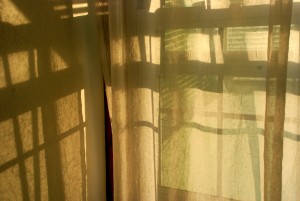
Image above is by Spencer Burrowes, licensed by Creative Commons.
Richard Chess is the author of three books of poetry, Tekiah, Chair in the Desert, and Third Temple. Poems of his have appeared in Telling and Remembering: A Century of American Jewish Poetry, Bearing the Mystery: Twenty Years of IMAGE, and Best Spiritual Writing 2005. He is the Roy Carroll Professor of Honors Arts and Sciences at the University of North Carolina at Asheville. He is also the director of UNC Asheville’s Center for Jewish Studies.

Previous Post

May 10, 2016
Thin Places, Part 2
Next Post
May 12, 2016 A Poet Walks Into a Business Networking Event
Browse Our Archives
Select a Category A. G. Harmon Alissa Wilkinson Allison Backous Art Authors Brad Fruhauff Bradford Winters Bryan Bliss Caroline Langston Chad Thomas Johnston Chris Hoke Christiana N. Peterson Culture D.G. Myers D.L. Mayfield Daniel Bowman Jr. David Griffith Elizabeth Duffy Faith Film Greg Wolfe Guest Contributor Interview Jan Vallone Jeffrey Overstreet Jessica Eddings-Roeser Jessica Mesman Griffith Kelly Foster Lindsey Crittenden Morgan Meis music Natalie Vestin Nick Olson Peggy Rosenthal Personal Reflection Poetry Friday Reflection Relationships Review Richard Chess Richard Cole Sara Zarr Shannon Huffman Polson Sonya Bilocerkowycz Tania Runyan Tony Woodlief Topical Categories Uncategorized Vic Sizemore Writing
Select a Month October 2018 September 2018 August 2018 July 2018 June 2018 May 2018 April 2018 March 2018 February 2018 January 2018 December 2017 November 2017 October 2017 September 2017 August 2017 July 2017 June 2017 May 2017 April 2017 March 2017 February 2017 January 2017 December 2016 November 2016 October 2016 September 2016 August 2016 July 2016 June 2016 May 2016 April 2016 March 2016 February 2016 January 2016 December 2015 November 2015 October 2015 September 2015 August 2015 July 2015 June 2015 May 2015 April 2015 March 2015 February 2015 January 2015 December 2014 November 2014 October 2014 September 2014 August 2014 July 2014 June 2014 May 2014 April 2014 March 2014 February 2014 January 2014 December 2013 November 2013 October 2013 September 2013 August 2013 July 2013 June 2013 May 2013 April 2013 March 2013 February 2013 January 2013 December 2012 November 2012 October 2012 September 2012 August 2012 July 2012 June 2012 May 2012 February 2008
Follow Us!
TAKE THE
Religious Wisdom Quiz
How did Jesus heal the mute and deaf man in Decapolis?
Select your answer to see how you score.
Gave bread Put fingers in ears and touched tongue Said "Go in peace" Anointed his head
Related posts from Good Letters


Morning in a Forgotten Neighborhood


Poetry Friday: "The Burned Butterfly"
TRENDING AT PATHEOS Catholic

Rejecting Doom: Christian Hope And Human Action
Christianity is a religion of hope. We are to have hope and...

It’s What Comes From Within Which Matters
One of the most difficult things for us to understand is why...

Why I Choose the Eucharist Over the Sermon
Choose the Eucharist, Not the Sermon What are we supposed to get...

5 Design Elements Found in Spiritually Rooted Homes
Putting Spirituality Into Home Decor Our homes are more than our living...

Credo: A Story of God Told with the...
About 10 years ago, I began to imagine a personal "Credo" that...

The Anatomy of Divine Revelation in Catholic Thought
The claim that God has made Himself known to human beings is...
view all Catholic blogs
Ad-Free & Subscriber Log-In Subscription Support
- About Us
- 2026 Calendar
- Videos
- Podcasts
- Library of World Religions
- Faith In Media Tracker
- Advertise With Us
- Write for Us
- Privacy Policy
- Terms of Service
- Do Not Sell My Data
- Contact Us
- Radiant Digital
- Manage Newsletter Subscriptions
- Unsubscribe From Notifications
- Sitemap
Copyright 2008-2026, Patheos. All rights reserved.
Subscription Support Ad-Free & Subscriber Log-In
Follow Patheos