
BuddhistCatholicContemplativeEvangelicalGeneral ChristianHinduJewishLatter-day SaintMuslimNew VisionsProgressive Christian
Beliefs
- Buddhist
- Catholic
- Contemplative
- Evangelical
- General Christian
- Hindu
- Jewish
- Latter-day Saint
- More Voices
- Muslim
- New Visions
- Pagan
- Progressive Christian
Topics
- Religion News
- Food and Religion
- Sports and Religion
- Religious Art
- Religious Music and Entertainment
- Religious Events
- History and Religion
- Style and Religion
- Politics and Religion
- Women in Religion
- Recreation Outdoors and Religion
- Business Finance and Religion
- Careers Workplace and Religion
- Education and Religion
- Family Parenting and Religion
- Health Fitness and Religion
- Home and Religion
- Relationships and Religion
- Technology and Religion
- Travel and Religion
Columnists
- Buddhist Columnists
- Business Finance and Religion Columnists
- Careers Workplace and Religion Columnists
- Catholic Columnists
- Contemplative Columnists
- Education and Religion Columnists
- Evangelists Columnists
- Family Parenting and Religion Columnists
- General Christian Columnists
- Health Fitness and Religion Columnists
- Hindu Columnists
- History and Religion Columnists
- Home and Religion Columnists
- Jewish Columnists
- More Voices Columnists
- Latter Day Columnists
- Muslim Columnists
- New Visions Columnists
- Nonreligious Columnists
- Pagan Columnists
- Politics and Religion Columnists
- Progressive Columnists
- Recreation Outdoors and Religion Columnists
- Relationships and Religion Columnists
- Religion News Columnists
- Religious Art Columnists
- Religious Events Columnists
- Religious Music and Entertainment Columnists
- Sports and Religion Columnists
- Style and Religion Columnists
- Technology and Religion Columnists
- Travel and Religion Columnists
- Women in Religion Columnists
Resource Library
- 2026 Calendar
- Library of World Religions
- The 100 Most Holy Places on Earth
- Patheos Answers
- Podcasts
- Videos
- Faith Leaders Database
- Anglican Episcopalian
- Bahai
- Baptist
- Buddhism
- Christianity
- Confucianism
- Eastern Orthodoxy
- Hinduism
- Holiness and Pentecostal
- ISKCON
- Islam
- Judaism
- Lutheran
- Methodist
- The Church of Jesus Christ of Latter-day Saints
- New Age
- Paganism
- Presbytarian and Reformed
- Protestantism
- Religion Behind the Scenes
- Roman Catholic
- Scientology
- Shia Islam
- Sikhism
- Sufism
- Sunni Islam
- Taoism
- Zen
- See all religions
Research Tools
 Ad-Free & Subscriber Log-In Subscription Support
Ad-Free & Subscriber Log-In Subscription Support
Follow Patheos 

- Trending:
- Forgiveness
- |
- Marriage
- |
- Consciousness
- |
- Death Penalty
- |
- Election
- |
- Halloween
 Good Letters
-
Contributors
- Home
- Catholic
- Love in the Time of Bacteria
Love in the Time of Bacteria
Last updated on: May 12, 2016 at 12:30 pm by Natalie Vestin
Love in the Time of Bacteria 2016-05-12T12:30:14-07:00 Natalie Vestin
Patheos Explore the world's faith through different perspectives on religion and spirituality! Patheos has the views of the prevalent religions and spiritualities of the world.
 Last week, I walked up Dale Street from the train station. It’s a perilous walk owing to the lack of shoulder and the speed at which people drive, a recklessness passed off to people living in poor neighborhoods. Shattered green glass, no trees to bar the bright spring sun, bits of fluttering paper garbage—anonymous love notes maybe—caught in the fence separating Interstate 94 from St. Paul’s steep hills. The Islamic Center sprawls in a field across from the freeway, looking nondescript and like a poorly advertised Walmart; sometimes you have to hide your love notes to live in peace.
In the past several years of walking almost everywhere I need to go, I’ve become accustomed to nearly being killed by drivers. Usually it’s mistake or distraction, but occasionally I see “Die, bitch” on someone’s face, and I’ve known what that looked like since I was a kid.
But, still, I take long ambling walks when I’m processing a project in which suffering from disease becomes apparent in the data.
People say you become what you study, but they rarely talk about falling in love with what you see, love from a habit acquired or a gradual taking in of information. Maybe it’s because we’re always deriding people for what they love, restricting love to direct object rather than pathway.
Someone recently told me it was terrible to love microbes when they cause so much suffering, but how can I study them or know anything about them without falling?
If I love people through learning to love non-people things, dare I speak love’s name? Maybe love is naive, absurdly feminine. Maybe we just don’t talk about it because, like prayer, it’s amorphous—function and effect difficult to document. Love often doesn’t lead to dramatic action; it’s usually just carried around, accumulating.
Last summer, I reported on findings that Yersinia pestis, the bacterium that causes plague, had been endemic for 3,000 years prior to the first recorded epidemic in 541 AD. It likely arose in the Bronze Age in what is now Armenia, evolving into its horrific bubonic form in 951 BC and spreading throughout the Middle East as people ran to or from war. When Jesus was walking about the earth, Y pestis and its accompanying destruction would have been all around.
Yersinia was my favorite bacterium to study in grad school. It has what you might call intelligence for lack of a better word. Like most bacteria, it knows how we behave and where we’re vulnerable. It doesn’t display the same level of intimacy as a virus, that prodigal cellular material that went rogue eons ago and likes to return with a decent map of the doorways. But Y pestis lives alongside us, moves when we move to kill or steal or manifest our awful destinies.
And now we know that it lived alongside Christ, wrote destruction into the people around him. I wonder what he thought, how he prayed, watching the beloved one-celled creature that once struggled into life when life was dear, while at the same time watching beloved friends suffer from its ravages as their nations’ armies yearned toward that pre-life, soupy hell of a world.
I’m not sure where any of this is going—my walking ruminations, or the status of the post-life world. I wanted to express how I can fall in love with anything the more I look at it, how I learn to love people through looking at things, even the things that hurt them. Observation accumulated over time—that steady, unwavering gaze—feels like prayer and the best way to ask for salvation.
My salvation is the staring kind, the falling-in-love kind; the kind where you beg God to look through your eyes and see the softness of all things, where you use your gaze to protect from fear and harm.
I don’t love suffering. I feel like love can be the act of carrying numbers that are bacteria and data that is people. I can accumulate many things and turn them over; I can study hard and let prayer overlap. Sometimes I think each virus and bacterium is a tarot card, reaching deep into the subconscious to tell us about our ancestral and present selves. Sometimes, I think they’re dreadful and worthy of total destruction, though destruction has been a path historically rife with unpleasant surprises for humanity.
When I walk, I notice relationships between my body and the world around me. I think of how viruses still consider our cells their long-lost homes, how without bacteria we never would have been; how parasites and hosts occasionally forget who is performing which role.
I’m being romantic again, absurdly feminine like all those silly females passing on bacteria-turned-mitochondrial-DNA and barring the return of that pre-life world. We are always taking in and bequeathing, always full of prayer for the tender world when harm is at our heels. The inheritance of mitochondrial DNA means that “Die, bitch” hath (almost) no sting.
As I reached Dale and I-94, I stopped to give a few dollars to a man asking for money. The police say you’re not supposed to, but my dad would, so here we are at inheritance again. The man responded by stepping into the street and blocking traffic so I could cross. That’s the kindness of people on foot: that recognition that you’re the two softest things around and softness makes you vulnerable to harm. Harm and salvation, always linked.
He wore a scarf down to his kneecaps, and I don’t know what that means, but it seems important. Maybe it’s just important to look at things closely. Silly things that trap themselves in my mind and turn over and over in that parasite-host performance until I can’t tell what’s prayer and what’s study, what’s me and what’s some small, soft thing I’ve managed to pick up and carry around.
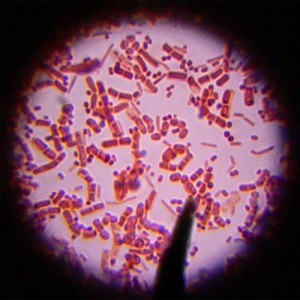
Image produced above is by Umberto Salvagnin, licensed by Creative Commons.
Natalie Vestin is a health scientist and writer from Saint Paul. Her essays have appeared in The Normal School, Iowa Review, Prairie Schooner, and elsewhere. Her chapbook Shine a Light, the Light Won’t Pass is forthcoming from Miel Books.

Previous Post

April 29, 2016
Poetry Friday: "When God Dreamed Eve through Adam" by Richard Chess
Next Post
May 3, 2016 Canada: Detroit’s Southerly Neighbor
Browse Our Archives
Select a Category A. G. Harmon Alissa Wilkinson Allison Backous Art Authors Brad Fruhauff Bradford Winters Bryan Bliss Caroline Langston Chad Thomas Johnston Chris Hoke Christiana N. Peterson Culture D.G. Myers D.L. Mayfield Daniel Bowman Jr. David Griffith Elizabeth Duffy Faith Film Greg Wolfe Guest Contributor Interview Jan Vallone Jeffrey Overstreet Jessica Eddings-Roeser Jessica Mesman Griffith Kelly Foster Lindsey Crittenden Morgan Meis music Natalie Vestin Nick Olson Peggy Rosenthal Personal Reflection Poetry Friday Reflection Relationships Review Richard Chess Richard Cole Sara Zarr Shannon Huffman Polson Sonya Bilocerkowycz Tania Runyan Tony Woodlief Topical Categories Uncategorized Vic Sizemore Writing
Select a Month October 2018 September 2018 August 2018 July 2018 June 2018 May 2018 April 2018 March 2018 February 2018 January 2018 December 2017 November 2017 October 2017 September 2017 August 2017 July 2017 June 2017 May 2017 April 2017 March 2017 February 2017 January 2017 December 2016 November 2016 October 2016 September 2016 August 2016 July 2016 June 2016 May 2016 April 2016 March 2016 February 2016 January 2016 December 2015 November 2015 October 2015 September 2015 August 2015 July 2015 June 2015 May 2015 April 2015 March 2015 February 2015 January 2015 December 2014 November 2014 October 2014 September 2014 August 2014 July 2014 June 2014 May 2014 April 2014 March 2014 February 2014 January 2014 December 2013 November 2013 October 2013 September 2013 August 2013 July 2013 June 2013 May 2013 April 2013 March 2013 February 2013 January 2013 December 2012 November 2012 October 2012 September 2012 August 2012 July 2012 June 2012 May 2012 February 2008
Follow Us!
TAKE THE
Religious Wisdom Quiz
Where was Jesus' first miracle performed?
Select your answer to see how you score.
Jerusalem Capernaum Cana Nazareth
Related posts from Good Letters


Morning in a Forgotten Neighborhood


TRENDING AT PATHEOS Catholic

Creation, Preservation, and Teleology in Catholic Theology
As I write this, it is very early Monday morning. Like millions...

The Parable Of The Sower And The Word...
One of Christ’s most famous parables is that of the sower who...

Rejecting Doom: Christian Hope And Human Action
Christianity is a religion of hope. We are to have hope and...

Why I Choose the Eucharist Over the Sermon
Choose the Eucharist, Not the Sermon What are we supposed to get...

5 Design Elements Found in Spiritually Rooted Homes
Putting Spirituality Into Home Decor Our homes are more than our living...

Credo: A Story of God Told with the...
About 10 years ago, I began to imagine a personal "Credo" that...
view all Catholic blogs
Ad-Free & Subscriber Log-In Subscription Support
- About Us
- 2026 Calendar
- Videos
- Podcasts
- Library of World Religions
- Faith In Media Tracker
- Advertise With Us
- Write for Us
- Privacy Policy
- Terms of Service
- Do Not Sell My Data
- Contact Us
- Radiant Digital
- Manage Newsletter Subscriptions
- Unsubscribe From Notifications
- Sitemap
Copyright 2008-2026, Patheos. All rights reserved.
Subscription Support Ad-Free & Subscriber Log-In
Follow Patheos