
BuddhistCatholicContemplativeEvangelicalGeneral ChristianHinduJewishLatter-day SaintMuslimNew VisionsProgressive Christian
Beliefs
- Buddhist
- Catholic
- Contemplative
- Evangelical
- General Christian
- Hindu
- Jewish
- Latter-day Saint
- More Voices
- Muslim
- New Visions
- Pagan
- Progressive Christian
Topics
- Religion News
- Food and Religion
- Sports and Religion
- Religious Art
- Religious Music and Entertainment
- Religious Events
- History and Religion
- Style and Religion
- Politics and Religion
- Women in Religion
- Recreation Outdoors and Religion
- Business Finance and Religion
- Careers Workplace and Religion
- Education and Religion
- Family Parenting and Religion
- Health Fitness and Religion
- Home and Religion
- Relationships and Religion
- Technology and Religion
- Travel and Religion
Columnists
- Buddhist Columnists
- Business Finance and Religion Columnists
- Careers Workplace and Religion Columnists
- Catholic Columnists
- Contemplative Columnists
- Education and Religion Columnists
- Evangelists Columnists
- Family Parenting and Religion Columnists
- General Christian Columnists
- Health Fitness and Religion Columnists
- Hindu Columnists
- History and Religion Columnists
- Home and Religion Columnists
- Jewish Columnists
- More Voices Columnists
- Latter Day Columnists
- Muslim Columnists
- New Visions Columnists
- Nonreligious Columnists
- Pagan Columnists
- Politics and Religion Columnists
- Progressive Columnists
- Recreation Outdoors and Religion Columnists
- Relationships and Religion Columnists
- Religion News Columnists
- Religious Art Columnists
- Religious Events Columnists
- Religious Music and Entertainment Columnists
- Sports and Religion Columnists
- Style and Religion Columnists
- Technology and Religion Columnists
- Travel and Religion Columnists
- Women in Religion Columnists
Resource Library
- 2026 Calendar
- Library of World Religions
- The 100 Most Holy Places on Earth
- Patheos Answers
- Podcasts
- Videos
- Faith Leaders Database
- Anglican Episcopalian
- Bahai
- Baptist
- Buddhism
- Christianity
- Confucianism
- Eastern Orthodoxy
- Hinduism
- Holiness and Pentecostal
- ISKCON
- Islam
- Judaism
- Lutheran
- Methodist
- The Church of Jesus Christ of Latter-day Saints
- New Age
- Paganism
- Presbytarian and Reformed
- Protestantism
- Religion Behind the Scenes
- Roman Catholic
- Scientology
- Shia Islam
- Sikhism
- Sufism
- Sunni Islam
- Taoism
- Zen
- See all religions
Research Tools
 Ad-Free & Subscriber Log-In Subscription Support
Ad-Free & Subscriber Log-In Subscription Support
Follow Patheos 

- Trending:
- Forgiveness
- |
- Marriage
- |
- Consciousness
- |
- Death Penalty
- |
- Election
- |
- Halloween
 Good Letters
-
Contributors
- Home
- Catholic
- The Cave of My Imagination
The Cave of My Imagination
Last updated on: April 25, 2016 at 1:00 am by Guest Contributor
The Cave of My Imagination 2016-04-14T13:46:49-07:00 Guest Contributor
Patheos Explore the world's faith through different perspectives on religion and spirituality! Patheos has the views of the prevalent religions and spiritualities of the world.
By Jason K. Friedman
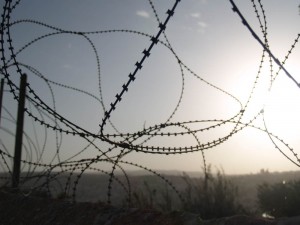
Ma’arat Ha-machpelah, the alliterative name sounded as magical to me as the lives of the people buried there: Abraham and Sarah, Isaac and Rebecca, Jacob and Leah. I learned about the so-called Cave of the Patriarchs, Judaism’s most ancient site, in Hebrew day school, and I still remembered the Hebrew name when I went to Israel for the first time, four decades later.
Since my upbringing as a yeshiva boy in southeast Georgia, I’d moved north to college and stayed, experiencing my own secular enlightenment. I’d become a progressive and a Yom Kippur Jew. But all my religious learning and feeling was still in there, easily recalled when needed to say the prayers over the Chanukah candles or sing the Shabbat Kiddush.
My first brush with the reality that someone with this biography might not be welcomed with open arms to Israel came in Ben Gurion airport. A reedy young woman in uniform plucked me from among the blue-T-shirted young American Christians I’d flown over with, and escorted me toward baggage claim.
She asked me questions in Hebrew. “A-nee lo mayveen,” I replied. I don’t understand. In English she asked how I learned Hebrew. “B’beit sefer,” I said. In Hebrew school. “B’beit sefer,” she repeated.
Unlike in every other country I’d traveled to, I wasn’t managing to charm with my game embrace of the native tongue. “This is my first trip to Israel,” I explained, somewhat desperately switching to English. “This is your first trip to Israel?” she asked.
The American Bible group, now a mirage-like blue mass in the distance, was singing, while I sang as best I could to persuade this woman to let me, a former super-Jew, into the Jewish state.
My husband (who’d arrived earlier) and I experienced the country through the eyes of our Israeli friends: their fears for their children’s future, their anguish over the racist attitudes of many of their countrymen and leaders.
Toward the end of our stay we went with one of our Israeli friends to Hebron, where Ma’arat Ha-machpelah is located. She’d organized a private tour with a guide from the human-rights group B’Tselem. We visited a Palestinian family in the area administered by Israel.
Then our guide turned us over to a counterpart to take us to the part of the city controlled by the Palestinian Authority. “Have fun,” the soldier at the checkpoint said sinisterly, in his American accent, as he handed me back my ID. We walked through the lively bazaar, bought falafel, then returned to the occupied part of town.
This was like passing through the looking glass. The former market area was scorched looking, shuttered up, deserted except for a pack of dogs and us. As we approached Ma’arat Ha-machpelah, Jewish Messianic music blared deafeningly from a gift shop. The tomb is housed in a magnificent yellow stone building, built by Herod the Great and added on over the centuries: a fortress with minarets.
At the entrance an Israeli soldier asked what group we were with. B’Tselem, our guide told him.
Lefties aren’t allowed in, our guide quoted him as replying. Our guide, who was about to take a leave from the organization to do his army reserve service, held up his phone and began filming. They’re Jews from America, our friend said. This much I got, though I couldn’t understand a word of the increasingly heated conversation between the soldier and our guide. Another soldier came up and said something into a walkie-talkie.
Our friend offered to remain outside with the guide. But the Americans aren’t part of the organization, she said, adding that we’d come a long way. The soldier was stony-faced. The sun beat down on our heads. Meanwhile, other tourists were waved through the metal detector. Our guide explained to us that what the soldier was doing was illegal.
We are Jews from San Francisco, I found myself saying in Hebrew, realizing too late that this really wasn’t going to help with the objection to lefties. Not to mention that whatever authority I tried to assert by speaking the local tongue, the language of the Bible, had already been assailed in the airport.
But whereas the security agent was just doing her job, these guys were playing cat and mouse with us. I knew how to say we were Jews from San Francisco in Hebrew. What I couldn’t say was that I’d learned about the tomb before these soldiers had been born. How moved I’d been by the lives of the people buried there, oh, how I believed! But what mattered now was that I was the guest of this group promoting rights for all: no longer one of us.
To my outburst the soldiers didn’t react with suspicion or scorn—they didn’t even turn my way. But they finally let my husband and me through. The others stayed behind. Climbing the stairs to the ancient structure, I was trembling, and not with awe.
When we reached the entrance, the soldiers and their taunts seemed very far away. It still seemed possible that what lay ahead was what I hadn’t yet found: the Ma’arat Ha-machpelah of my Jewish imagination.
Image produced above is by Susie Cagle, licensed by Creative Commons.
Jason K. Friedman’s first book of stories, Fire Year, won the Mary McCarthy Prize in Short Fiction and was runner-up for the Anne and Robert Cowan Writers Award for Bay Area Jewish fiction. The first story in that collection, “Blue,” won the Moment-Karma Short Fiction Contest and was published in Moment. Friedman’s work has also appeared in The New York Times, The Gettysburg Review, The South Carolina Review, Mission at Tenth, and Jonathan. His work has been anthologized in Best American Gay Fiction, The Queer South, and the cultural studies reader Goth, and his story “The Golem” was Storyville’s story of the month.

Previous Post

April 22, 2016
Caution: National Poetry Month
Next Post
April 26, 2016 Annie Spans the Gap, Part 1
Browse Our Archives
Select a Category A. G. Harmon Alissa Wilkinson Allison Backous Art Authors Brad Fruhauff Bradford Winters Bryan Bliss Caroline Langston Chad Thomas Johnston Chris Hoke Christiana N. Peterson Culture D.G. Myers D.L. Mayfield Daniel Bowman Jr. David Griffith Elizabeth Duffy Faith Film Greg Wolfe Guest Contributor Interview Jan Vallone Jeffrey Overstreet Jessica Eddings-Roeser Jessica Mesman Griffith Kelly Foster Lindsey Crittenden Morgan Meis music Natalie Vestin Nick Olson Peggy Rosenthal Personal Reflection Poetry Friday Reflection Relationships Review Richard Chess Richard Cole Sara Zarr Shannon Huffman Polson Sonya Bilocerkowycz Tania Runyan Tony Woodlief Topical Categories Uncategorized Vic Sizemore Writing
Select a Month October 2018 September 2018 August 2018 July 2018 June 2018 May 2018 April 2018 March 2018 February 2018 January 2018 December 2017 November 2017 October 2017 September 2017 August 2017 July 2017 June 2017 May 2017 April 2017 March 2017 February 2017 January 2017 December 2016 November 2016 October 2016 September 2016 August 2016 July 2016 June 2016 May 2016 April 2016 March 2016 February 2016 January 2016 December 2015 November 2015 October 2015 September 2015 August 2015 July 2015 June 2015 May 2015 April 2015 March 2015 February 2015 January 2015 December 2014 November 2014 October 2014 September 2014 August 2014 July 2014 June 2014 May 2014 April 2014 March 2014 February 2014 January 2014 December 2013 November 2013 October 2013 September 2013 August 2013 July 2013 June 2013 May 2013 April 2013 March 2013 February 2013 January 2013 December 2012 November 2012 October 2012 September 2012 August 2012 July 2012 June 2012 May 2012 February 2008
Follow Us!
TAKE THE
Religious Wisdom Quiz
Who spoke to the burning bush?
Select your answer to see how you score.
Moses Aaron Miriam Joseph
Related posts from Good Letters


Morning in a Forgotten Neighborhood


TRENDING AT PATHEOS Catholic

Rejecting Doom: Christian Hope And Human Action
Christianity is a religion of hope. We are to have hope and...

It’s What Comes From Within Which Matters
One of the most difficult things for us to understand is why...

Why I Choose the Eucharist Over the Sermon
Choose the Eucharist, Not the Sermon What are we supposed to get...

5 Design Elements Found in Spiritually Rooted Homes
Putting Spirituality Into Home Decor Our homes are more than our living...

Credo: A Story of God Told with the...
About 10 years ago, I began to imagine a personal "Credo" that...

The Anatomy of Divine Revelation in Catholic Thought
The claim that God has made Himself known to human beings is...
view all Catholic blogs
Ad-Free & Subscriber Log-In Subscription Support
- About Us
- 2026 Calendar
- Videos
- Podcasts
- Library of World Religions
- Faith In Media Tracker
- Advertise With Us
- Write for Us
- Privacy Policy
- Terms of Service
- Do Not Sell My Data
- Contact Us
- Radiant Digital
- Manage Newsletter Subscriptions
- Unsubscribe From Notifications
- Sitemap
Copyright 2008-2026, Patheos. All rights reserved.
Subscription Support Ad-Free & Subscriber Log-In
Follow Patheos