
BuddhistCatholicContemplativeEvangelicalGeneral ChristianHinduJewishLatter-day SaintMuslimNew VisionsProgressive Christian
Beliefs
- Buddhist
- Catholic
- Contemplative
- Evangelical
- General Christian
- Hindu
- Jewish
- Latter-day Saint
- More Voices
- Muslim
- New Visions
- Pagan
- Progressive Christian
Topics
- Religion News
- Food and Religion
- Sports and Religion
- Religious Art
- Religious Music and Entertainment
- Religious Events
- History and Religion
- Style and Religion
- Politics and Religion
- Women in Religion
- Recreation Outdoors and Religion
- Business Finance and Religion
- Careers Workplace and Religion
- Education and Religion
- Family Parenting and Religion
- Health Fitness and Religion
- Home and Religion
- Relationships and Religion
- Technology and Religion
- Travel and Religion
Columnists
- Buddhist Columnists
- Business Finance and Religion Columnists
- Careers Workplace and Religion Columnists
- Catholic Columnists
- Contemplative Columnists
- Education and Religion Columnists
- Evangelists Columnists
- Family Parenting and Religion Columnists
- General Christian Columnists
- Health Fitness and Religion Columnists
- Hindu Columnists
- History and Religion Columnists
- Home and Religion Columnists
- Jewish Columnists
- More Voices Columnists
- Latter Day Columnists
- Muslim Columnists
- New Visions Columnists
- Nonreligious Columnists
- Pagan Columnists
- Politics and Religion Columnists
- Progressive Columnists
- Recreation Outdoors and Religion Columnists
- Relationships and Religion Columnists
- Religion News Columnists
- Religious Art Columnists
- Religious Events Columnists
- Religious Music and Entertainment Columnists
- Sports and Religion Columnists
- Style and Religion Columnists
- Technology and Religion Columnists
- Travel and Religion Columnists
- Women in Religion Columnists
Resource Library
- 2026 Calendar
- Library of World Religions
- The 100 Most Holy Places on Earth
- Patheos Answers
- Podcasts
- Videos
- Faith Leaders Database
- Anglican Episcopalian
- Bahai
- Baptist
- Buddhism
- Christianity
- Confucianism
- Eastern Orthodoxy
- Hinduism
- Holiness and Pentecostal
- ISKCON
- Islam
- Judaism
- Lutheran
- Methodist
- The Church of Jesus Christ of Latter-day Saints
- New Age
- Paganism
- Presbytarian and Reformed
- Protestantism
- Religion Behind the Scenes
- Roman Catholic
- Scientology
- Shia Islam
- Sikhism
- Sufism
- Sunni Islam
- Taoism
- Zen
- See all religions
Research Tools
 Ad-Free & Subscriber Log-In Subscription Support
Ad-Free & Subscriber Log-In Subscription Support
Follow Patheos 

- Trending:
- Forgiveness
- |
- Marriage
- |
- Consciousness
- |
- Death Penalty
- |
- Election
- |
- Halloween
 Good Letters
-
Contributors
- Home
- Catholic
- Imitating the Saints
Imitating the Saints
Last updated on: April 7, 2016 at 1:00 am by Elizabeth Duffy
Imitating the Saints 2016-03-31T13:27:28-07:00 Elizabeth Duffy
Patheos Explore the world's faith through different perspectives on religion and spirituality! Patheos has the views of the prevalent religions and spiritualities of the world.
 St. Therese once wished aloud that her own mother would die. When her mother scolded her, Therese explained that then she could sooner go to heaven.
My children received this anecdote with perverse joy, telling their siblings to jump off a bridge, run out in the street, and let go of the tree branch…that you may sooner see paradise, of course.
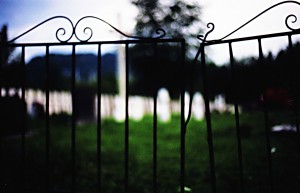
Given a choice between heaven and hell, they will gladly choose heaven. But faced with a choice between heaven and earth, they start hedging: Are there Legos in heaven? Who’s going to be there? Is the music any good? Why do they have a gate that keeps all the fun people out?
They’ve already noticed the problem that villains are usually the most interesting character in any novel or movie. It’s far more troubling to envision characters who are not completely wicked, characters who struggle with temptation but don’t succumb.
I tend to love my heroes too much to attribute them with serious flaws. Or I imagine there is a class of unsullied souls, anointed souls who somehow, magically, don’t sin. They may have sinned in the past, but no more. They meet Jesus, they fall off their horse, or maybe they’re just born with an incredible endowment of piety, and sin can’t touch them. A heaven full of such insufferable people really doesn’t sound appealing.
Sainthood, for someone like me, then, does not seem to be an option, which is not to say that I don’t want to appear to be a saint. I spend plenty of time in imitation of saints, while simultaneously not really wanting to be one.
There is always some part of me holding back—parts of my relationships, my music, what I consider to be “my art.” It seems that submitting them to God would create limitations; that I would be subject to a new and unforeseen set of boundaries that would stifle me.
I often remain a person divided inside myself—longing for God on one hand, hoarding my liberty on the other, even if I never exercise that liberty, even if I just keep it back in case one day I need it.
Nothing is more ineffective than a person divided within. She cannot stand. She cannot move with the full effect of her will. She wants, but does not want. She makes effort to move, but does not move. She seeks alternatives to her true desires. As C.S. Lewis noted in The Screwtape Letters, she does neither what she ought, nor what she likes.
No one has a calling to become someone else. I admire St. Therese in all things, but becoming her is a dead-end road for me.
Several years ago, my husband burned his legs badly when gasoline fumes caught fire near his workshop. Doctors in the ER debrided the wounds, and sent him home with instructions for me to wash them thoroughly every day. A nurse showed me how to scrub the wounds, but I couldn’t do it. I was afraid of hurting him, even though his nerves were so injured he couldn’t feel anything.
Within twenty-four hours, his burns were bright fiery patches, inflamed with infection, and my husband had to go back to the hospital for antibiotics and professional wound cleaning.
After Easter, when the Risen Christ meets Doubting Thomas, I always remember my lame attempt at weeding through my husband’s open tissue. Saint Thomas had no fear of touching Christ’s wounds, and Christ had no fear of being examined—Thomas’s hands penetrating each layer of skin; his pride and doubt giving way to humility and hope. It was indeed a body, inside and out, died and risen.
The deepest wound, the most disorienting secret of my inner life, the thing I skirt all around in the Confessional, too scared to say aloud; if I never examine it, it will never heal. My doubt, my pride, all that I withhold—my sins are intrinsically connected to Christ’s wounds, which are mercy.
I want to believe that the saints are not people who mysteriously evaded all temptation, but rather, people who have confronted and are not afraid of their own sinfulness. They are people who have examined the festering darkness in their own souls, and have allowed the pure blood of Christ to replace their own.
A heaven filled with such souls would be a happy place, I think, a place where I wouldn’t have to wear the mask of another soul, another saint who never knew the particulars of my life. It would be a place where I’m no longer stymied by the desire for opposing things, no longer a divided person—but one, whole, united within, by God, and permitted in wholeness to pursue many things.
Image above is by Kris Krüg, licensed by Creative Commons.
Elizabeth Duffy writes at Patheos: Elizabeth Duffy: Perspectives on Catholic Life, Family, and Culture and at bettyduffy.blogspot.com. She is a contributor to Living Faith/ Daily Catholic Devotions, and has work published or forthcoming from OSV, On Faith, The Catholic Educator, and Image.

Previous Post

April 6, 2016
James Tate: Finding the Ultimate in the Ordinary
Next Post
April 8, 2016 Poetry Friday: "Smokers, Sunday Morning, 1975" by Bobby C. Rogers
Browse Our Archives
Select a Category A. G. Harmon Alissa Wilkinson Allison Backous Art Authors Brad Fruhauff Bradford Winters Bryan Bliss Caroline Langston Chad Thomas Johnston Chris Hoke Christiana N. Peterson Culture D.G. Myers D.L. Mayfield Daniel Bowman Jr. David Griffith Elizabeth Duffy Faith Film Greg Wolfe Guest Contributor Interview Jan Vallone Jeffrey Overstreet Jessica Eddings-Roeser Jessica Mesman Griffith Kelly Foster Lindsey Crittenden Morgan Meis music Natalie Vestin Nick Olson Peggy Rosenthal Personal Reflection Poetry Friday Reflection Relationships Review Richard Chess Richard Cole Sara Zarr Shannon Huffman Polson Sonya Bilocerkowycz Tania Runyan Tony Woodlief Topical Categories Uncategorized Vic Sizemore Writing
Select a Month October 2018 September 2018 August 2018 July 2018 June 2018 May 2018 April 2018 March 2018 February 2018 January 2018 December 2017 November 2017 October 2017 September 2017 August 2017 July 2017 June 2017 May 2017 April 2017 March 2017 February 2017 January 2017 December 2016 November 2016 October 2016 September 2016 August 2016 July 2016 June 2016 May 2016 April 2016 March 2016 February 2016 January 2016 December 2015 November 2015 October 2015 September 2015 August 2015 July 2015 June 2015 May 2015 April 2015 March 2015 February 2015 January 2015 December 2014 November 2014 October 2014 September 2014 August 2014 July 2014 June 2014 May 2014 April 2014 March 2014 February 2014 January 2014 December 2013 November 2013 October 2013 September 2013 August 2013 July 2013 June 2013 May 2013 April 2013 March 2013 February 2013 January 2013 December 2012 November 2012 October 2012 September 2012 August 2012 July 2012 June 2012 May 2012 February 2008
Follow Us!
TAKE THE
Religious Wisdom Quiz
What did Jesus say would happen if you build your house on the rock?
Select your answer to see how you score.
It would sink It would be fancy It would get destroyed It would stand through storms
Related posts from Good Letters


Morning in a Forgotten Neighborhood


TRENDING AT PATHEOS Catholic

Rejecting Doom: Christian Hope And Human Action
Christianity is a religion of hope. We are to have hope and...

It’s What Comes From Within Which Matters
One of the most difficult things for us to understand is why...

Why I Choose the Eucharist Over the Sermon
Choose the Eucharist, Not the Sermon What are we supposed to get...

5 Design Elements Found in Spiritually Rooted Homes
Putting Spirituality Into Home Decor Our homes are more than our living...

Credo: A Story of God Told with the...
About 10 years ago, I began to imagine a personal "Credo" that...

The Anatomy of Divine Revelation in Catholic Thought
The claim that God has made Himself known to human beings is...
view all Catholic blogs
Ad-Free & Subscriber Log-In Subscription Support
- About Us
- 2026 Calendar
- Videos
- Podcasts
- Library of World Religions
- Faith In Media Tracker
- Advertise With Us
- Write for Us
- Privacy Policy
- Terms of Service
- Do Not Sell My Data
- Contact Us
- Radiant Digital
- Manage Newsletter Subscriptions
- Unsubscribe From Notifications
- Sitemap
Copyright 2008-2026, Patheos. All rights reserved.
Subscription Support Ad-Free & Subscriber Log-In
Follow Patheos