
BuddhistCatholicContemplativeEvangelicalGeneral ChristianHinduJewishLatter-day SaintMuslimNew VisionsProgressive Christian
Beliefs
- Buddhist
- Catholic
- Contemplative
- Evangelical
- General Christian
- Hindu
- Jewish
- Latter-day Saint
- More Voices
- Muslim
- New Visions
- Pagan
- Progressive Christian
Topics
- Religion News
- Food and Religion
- Sports and Religion
- Religious Art
- Religious Music and Entertainment
- Religious Events
- History and Religion
- Style and Religion
- Politics and Religion
- Women in Religion
- Recreation Outdoors and Religion
- Business Finance and Religion
- Careers Workplace and Religion
- Education and Religion
- Family Parenting and Religion
- Health Fitness and Religion
- Home and Religion
- Relationships and Religion
- Technology and Religion
- Travel and Religion
Columnists
- Buddhist Columnists
- Business Finance and Religion Columnists
- Careers Workplace and Religion Columnists
- Catholic Columnists
- Contemplative Columnists
- Education and Religion Columnists
- Evangelists Columnists
- Family Parenting and Religion Columnists
- General Christian Columnists
- Health Fitness and Religion Columnists
- Hindu Columnists
- History and Religion Columnists
- Home and Religion Columnists
- Jewish Columnists
- More Voices Columnists
- Latter Day Columnists
- Muslim Columnists
- New Visions Columnists
- Nonreligious Columnists
- Pagan Columnists
- Politics and Religion Columnists
- Progressive Columnists
- Recreation Outdoors and Religion Columnists
- Relationships and Religion Columnists
- Religion News Columnists
- Religious Art Columnists
- Religious Events Columnists
- Religious Music and Entertainment Columnists
- Sports and Religion Columnists
- Style and Religion Columnists
- Technology and Religion Columnists
- Travel and Religion Columnists
- Women in Religion Columnists
Resource Library
- 2026 Calendar
- Library of World Religions
- The 100 Most Holy Places on Earth
- Patheos Answers
- Podcasts
- Videos
- Faith Leaders Database
- Anglican Episcopalian
- Bahai
- Baptist
- Buddhism
- Christianity
- Confucianism
- Eastern Orthodoxy
- Hinduism
- Holiness and Pentecostal
- ISKCON
- Islam
- Judaism
- Lutheran
- Methodist
- The Church of Jesus Christ of Latter-day Saints
- New Age
- Paganism
- Presbytarian and Reformed
- Protestantism
- Religion Behind the Scenes
- Roman Catholic
- Scientology
- Shia Islam
- Sikhism
- Sufism
- Sunni Islam
- Taoism
- Zen
- See all religions
Research Tools
 Ad-Free & Subscriber Log-In Subscription Support
Ad-Free & Subscriber Log-In Subscription Support
Follow Patheos 

- Trending:
- Forgiveness
- |
- Marriage
- |
- Consciousness
- |
- Death Penalty
- |
- Election
- |
- Halloween
 Good Letters
-
Contributors
- Home
- Catholic
- A Dancing Christ
A Dancing Christ
Last updated on: May 12, 2016 at 12:28 pm by Natalie Vestin
A Dancing Christ 2016-05-12T12:28:16-07:00 Natalie Vestin
Patheos Explore the world's faith through different perspectives on religion and spirituality! Patheos has the views of the prevalent religions and spiritualities of the world.
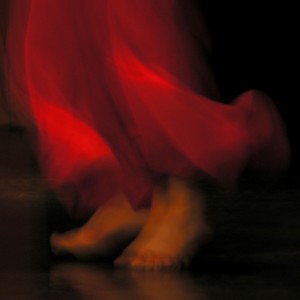
On Holy Saturday, I woke up at my sister’s house in northern Minnesota with a visual migraine, an aura with no consequent pain. They happen occasionally, and mine are always pretty textbook: wavy sparkling spirals and shimmering crystalline lamellae. The aura is technically termed a scintillating scotoma, a result of a sudden tidal wave of neurochemicals and sudden neuronal silence in the occipital cortex. It’s both a terrifying and a benign experience, due to the fact that it’s a “positive” vision: something has been added to what’s seen rather than lost to darkness, internal electrical modulation piling atop the maps of the world the occipital region is continually building.
Easter has a hint of this duality, this feeling of things being both or all at once, a discomfort in overlapping edges, things unseen, things seen and mistrusted. A whole faith turns on the one thing people desire above anything else and can’t have: a friend returned, seeking rewarded, loss reversed. Though I have to wonder: would anything have mattered, would God have changed or hope for any future been snuffed if the resurrection had not occurred, if Christ hadn’t separated himself from our fates and our greatest suffering—the loss of who we love—at the last minute?
I’ve been reading the apocryphal Acts of John in small pieces a lot lately. To call it a book would be to ignore that it is in pieces; the puzzle of its fullness can never be solved and also can be solved in multiple ways. It was likely written down in the second century and tells the story of the Apostle John’s journey to and life in Ephesus. But I’ve been reading it for the dancing Christ John gives us after the Last Supper, the moving man of flesh approaching the arch of his life’s trajectory.
The dance is a bit hard to piece together, and I’ve read scholars’ accounts of Jewish, Greek, and Syrian circle dances that played large cultural roles at the time to try and understand the context—or, at least, to better picture a dancing, expressive, graceful Christ.
I’ll be honest: I don’t understand Easter, and it makes me uncomfortable—the tacking on of a hopeful ending, inability to live with a hard truth, the resultant separation and anti-Semitism, the dumbing down of the seriousness of life and death because there’s new life, rebirth, and a sparkling hereafter. I’ve no patience for easy hope in the vanquishing of death, especially that which leads to conversion by sword.
Christ tells his friends, perhaps in reference to the upcoming long night and its horror, “Even that suffering which I showed to you and to the rest in my dance, I will that it be called a mystery.” You can hear the voice of John here or at least the people who knew him and his goofy appreciation for the mysterious bothness of the awful, wonderful world. When darkness falls during the crucifixion, John has a vision (of course he does): a shining apparition of the cross, Christ above, and the two somehow unified in a glimmering circle. Some scholars believe the dance is an acting out of consubstantiation after the first communion: divine in human, human in divine, bread in body, bodies dancing.
All I can see here is the essencing a group of dancers and I did in preparation for a performance. Essencing is an activity that makes dancers part of a whole; you are always completing one another’s movements and building on them. And, of course, always taking elements of other people on. Dancing is the best kind of parasitism, the kind where we all play the roles of parasite or host, then forget our roles and form a new organism.
Choreography becomes easy because we’re all one piece in the same cloth. There are friends I can’t see without knowing they’re the other half of a bird we once made, a hurricane we whirled into being.
The migraine aura was partially the result of a dance injury I reawakened on Good Friday while being an idiot and leaping through a swamp with my dogs. The woods and swamps are such a great reminder that death and resurrection are all around us and usually hard to distinguish: fallen trees overtaken by moss and fungi, hydrogen sulfide vapors rising from decayed organic matter, chartreuse conifer babies growing from the sides of frozen anthills.
The Gospel of John—if we’re to be a tiny bit less gnostic—portrays the resurrection as a sort of dawning memory at the end of John’s sprint to the tomb. Somehow, John and Peter understand what’s occurred without having to be told, and then they just have a look around and go home. The story holds my favorite detail: that linen head-wrap in the tomb, folded up. Jesus is all of us at the doctor’s office, treating our clothes with the tenderness we hope to meet when the door opens, the compassion we’re given only by a hurt body, and which is intended as a gift to pass on.
The Christ of the circle dance is surrounded by his friends who dance around him and respond to his odd and lovely statements: “I have no house, and I have houses,” and “He who does not dance does not know what happens.” To watch Christ dance, to fulfill the partnership by responding to his movements, is to get it.
This, to me, is the loveliness of Easter, that its gifts are partly for me, but that there are also ways of receiving understanding meant to be passed on, not by a loud mouth or a sword, but through knowledge that we’re all a part of each other. It’s the bothness: Christ on the cross and Christ as cross, suffering and the love only suffering can breed, dancing and broken body, life and death astride the place where they meet as one.
Image above is by Krisztina Konczos, licensed by Creative Commons.
Natalie Vestin is a health scientist and writer from Saint Paul. Her essays have appeared in The Normal School, Iowa Review, Prairie Schooner, and elsewhere. Her chapbook Shine a Light, the Light Won’t Pass is forthcoming from Miel Books.

Previous Post

April 4, 2016
Choose Life, North Carolina
Next Post
April 6, 2016 James Tate: Finding the Ultimate in the Ordinary
Browse Our Archives
Select a Category A. G. Harmon Alissa Wilkinson Allison Backous Art Authors Brad Fruhauff Bradford Winters Bryan Bliss Caroline Langston Chad Thomas Johnston Chris Hoke Christiana N. Peterson Culture D.G. Myers D.L. Mayfield Daniel Bowman Jr. David Griffith Elizabeth Duffy Faith Film Greg Wolfe Guest Contributor Interview Jan Vallone Jeffrey Overstreet Jessica Eddings-Roeser Jessica Mesman Griffith Kelly Foster Lindsey Crittenden Morgan Meis music Natalie Vestin Nick Olson Peggy Rosenthal Personal Reflection Poetry Friday Reflection Relationships Review Richard Chess Richard Cole Sara Zarr Shannon Huffman Polson Sonya Bilocerkowycz Tania Runyan Tony Woodlief Topical Categories Uncategorized Vic Sizemore Writing
Select a Month October 2018 September 2018 August 2018 July 2018 June 2018 May 2018 April 2018 March 2018 February 2018 January 2018 December 2017 November 2017 October 2017 September 2017 August 2017 July 2017 June 2017 May 2017 April 2017 March 2017 February 2017 January 2017 December 2016 November 2016 October 2016 September 2016 August 2016 July 2016 June 2016 May 2016 April 2016 March 2016 February 2016 January 2016 December 2015 November 2015 October 2015 September 2015 August 2015 July 2015 June 2015 May 2015 April 2015 March 2015 February 2015 January 2015 December 2014 November 2014 October 2014 September 2014 August 2014 July 2014 June 2014 May 2014 April 2014 March 2014 February 2014 January 2014 December 2013 November 2013 October 2013 September 2013 August 2013 July 2013 June 2013 May 2013 April 2013 March 2013 February 2013 January 2013 December 2012 November 2012 October 2012 September 2012 August 2012 July 2012 June 2012 May 2012 February 2008
Follow Us!
TAKE THE
Religious Wisdom Quiz
What did God make on the fourth day of creation?
Select your answer to see how you score.
Fish and birds Man Plants Sun, moon, and stars
Related posts from Good Letters


Morning in a Forgotten Neighborhood


Poetry Friday: "The Burned Butterfly"
TRENDING AT PATHEOS Catholic

Rejecting Doom: Christian Hope And Human Action
Christianity is a religion of hope. We are to have hope and...

It’s What Comes From Within Which Matters
One of the most difficult things for us to understand is why...

Why I Choose the Eucharist Over the Sermon
Choose the Eucharist, Not the Sermon What are we supposed to get...

5 Design Elements Found in Spiritually Rooted Homes
Putting Spirituality Into Home Decor Our homes are more than our living...

Credo: A Story of God Told with the...
About 10 years ago, I began to imagine a personal "Credo" that...

The Anatomy of Divine Revelation in Catholic Thought
The claim that God has made Himself known to human beings is...
view all Catholic blogs
Ad-Free & Subscriber Log-In Subscription Support
- About Us
- 2026 Calendar
- Videos
- Podcasts
- Library of World Religions
- Faith In Media Tracker
- Advertise With Us
- Write for Us
- Privacy Policy
- Terms of Service
- Do Not Sell My Data
- Contact Us
- Radiant Digital
- Manage Newsletter Subscriptions
- Unsubscribe From Notifications
- Sitemap
Copyright 2008-2026, Patheos. All rights reserved.
Subscription Support Ad-Free & Subscriber Log-In
Follow Patheos