
BuddhistCatholicContemplativeEvangelicalGeneral ChristianHinduJewishLatter-day SaintMuslimNew VisionsProgressive Christian
Beliefs
- Buddhist
- Catholic
- Contemplative
- Evangelical
- General Christian
- Hindu
- Jewish
- Latter-day Saint
- More Voices
- Muslim
- New Visions
- Pagan
- Progressive Christian
Topics
- Religion News
- Food and Religion
- Sports and Religion
- Religious Art
- Religious Music and Entertainment
- Religious Events
- History and Religion
- Style and Religion
- Politics and Religion
- Women in Religion
- Recreation Outdoors and Religion
- Business Finance and Religion
- Careers Workplace and Religion
- Education and Religion
- Family Parenting and Religion
- Health Fitness and Religion
- Home and Religion
- Relationships and Religion
- Technology and Religion
- Travel and Religion
Columnists
- Buddhist Columnists
- Business Finance and Religion Columnists
- Careers Workplace and Religion Columnists
- Catholic Columnists
- Contemplative Columnists
- Education and Religion Columnists
- Evangelists Columnists
- Family Parenting and Religion Columnists
- General Christian Columnists
- Health Fitness and Religion Columnists
- Hindu Columnists
- History and Religion Columnists
- Home and Religion Columnists
- Jewish Columnists
- More Voices Columnists
- Latter Day Columnists
- Muslim Columnists
- New Visions Columnists
- Nonreligious Columnists
- Pagan Columnists
- Politics and Religion Columnists
- Progressive Columnists
- Recreation Outdoors and Religion Columnists
- Relationships and Religion Columnists
- Religion News Columnists
- Religious Art Columnists
- Religious Events Columnists
- Religious Music and Entertainment Columnists
- Sports and Religion Columnists
- Style and Religion Columnists
- Technology and Religion Columnists
- Travel and Religion Columnists
- Women in Religion Columnists
Resource Library
- 2026 Calendar
- Library of World Religions
- The 100 Most Holy Places on Earth
- Patheos Answers
- Podcasts
- Videos
- Faith Leaders Database
- Anglican Episcopalian
- Bahai
- Baptist
- Buddhism
- Christianity
- Confucianism
- Eastern Orthodoxy
- Hinduism
- Holiness and Pentecostal
- ISKCON
- Islam
- Judaism
- Lutheran
- Methodist
- The Church of Jesus Christ of Latter-day Saints
- New Age
- Paganism
- Presbytarian and Reformed
- Protestantism
- Religion Behind the Scenes
- Roman Catholic
- Scientology
- Shia Islam
- Sikhism
- Sufism
- Sunni Islam
- Taoism
- Zen
- See all religions
Research Tools
 Ad-Free & Subscriber Log-In Subscription Support
Ad-Free & Subscriber Log-In Subscription Support
Follow Patheos 

- Trending:
- Forgiveness
- |
- Marriage
- |
- Consciousness
- |
- Death Penalty
- |
- Election
- |
- Halloween
 Good Letters
-
Contributors
- Home
- Catholic
- Learning Poetry, Unlearning God
Learning Poetry, Unlearning God
Last updated on: March 4, 2016 at 1:00 am by Guest Contributor
Learning Poetry, Unlearning God 2016-02-24T15:28:37-07:00 Guest Contributor
Patheos Explore the world's faith through different perspectives on religion and spirituality! Patheos has the views of the prevalent religions and spiritualities of the world.
By Natasha Oladokun
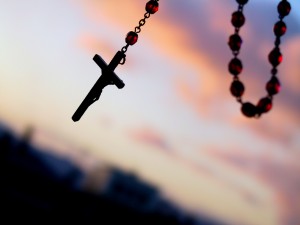 In my sophomore year of college, I wrote a poem. Though I had no idea how to go about doing this, I composed a page and half of hifalutin mumbo jumbo that I was quite proud of and eager to show one of my teachers. He asked me to read the poem out loud to him.
He said some kind things. Then, after a few moments of quiet, he asked, “Would you talk like this to God?”
I shook my head.
He smiled. “Well, if you wouldn’t say it in a prayer, don’t put it in a poem.”
What my professor did not know is that he’d touched a raw nerve in my view of the sacred. The truth is, my prayers often were stock, mechanical laundry lists, dusted with a few O Lords and Father Gods to remind me of whom I was addressing.
I believed—or intellectually assented, at least—to the concept of God being near and ever-present. There is a saying that out of the abundance of the heart the mouth speaks. But in prayer I spoke to God with more distance than I would toward a stranger.
And yet, with study, poetry has become my rickety bridge from desolation to the divine. As it is for many others, I am sure, my default setting is often that of detachment: a proclivity for thinking of God as distant, obstructed—intensified when I’m feeling lonely and anxious or condemned by my own failings.
There is some degree of reality in this perception of obstruction: brokenness is a wall that both contains and deflects, while that which once seemed intimate and knowable becomes closed off, wholly unfamiliar.
I once heard poet Li-Young Lee, when addressing a group of graduate students, say: “Language is not the thing. Language is the means toward getting at the thing.”
Whether in writing or in prayer, trust remains intertwined in the creative movement: There is the vehicle, there is the destination, and there is a force that pushes the one to the other. And in it all, a kind of faith that one is heading toward something of consequence.
Attempting to write creatively—by opening the self to the beguiling terror of possibility—seems counterintuitive as a spiritual practice. I still don’t know what poetry is, or isn’t—only that the craft of it is unpredictably alluring, frustrating, and sustaining.
It is difficult not to worship what one adores. But however analogous spiritual searching and the creative process may be, poetry is a poor substitute for the divine. Still, I wonder if our tendency to worship idols is often less a matter of defiance and more a kind of impatience, coupled with a blinding ache for something authentic.
There’s an old cliché that makes its way onto billboards and church marquees: “FEELING FAR FROM GOD? GUESS WHO MOVED?”
I find the taunt here unsettling, an oddly uncompassionate approach toward those who are at best questioning, and at worst, truly in agony and desperate for a sacred presence.
Even Christ, in death, felt far from his Father. “My God, my God*”* he cried, “why have you forsaken me?” In his agony, Jesus chose to borrow language, quoting the poet-king David who began a psalm of anguished inquiry with those very same words.
And here lies the question of whether or not God actually abandoned his son—or if, in his son’s absorption of the world’s brokenness, Jesus could not (for a time) know the presence of the Father.
I’m inclined to believe the latter.
As poetry has caused me to reevaluate the way I think about language, so has Christ caused me to reevaluate how I think about God. I understand God even less than I understand poetry. Still, I’ve often found myself thinking of faith in terms of what I know, as though whatever convictions I hold spring entirely from the strength of my own conjured abilities or intellectual posturing.
I try to be more cautious now. Not out of a belief that God is unknowable, but because I am daily coming to see faith as a way of actively recalibrating—un-learning—if you will—my humanly skewed view of him: a reductive view, a view that exalts my own belief instead of the source of it.
“[I want] not my idea of God, but God,” C.S. Lewis writes.
Here, again, we may think of Christ. There is John the Apostle’s rhapsodic—dare I say, poetic—prelude in the New Testament: The Word was God…and the Word became flesh. His gospel and the three others in concert with it render a composite portrait of someone profoundly baffling, unpredictable, compassionate, witty, provoking, and powerful—the embodiment of God, a living ekphrasis.
What we are offered is a moving portrait of the divine disclosed: God known not merely by human imagination or preconceived expectation, but by embodiment and recorded language.
The Word became flesh and dwelt among us…full of grace and truth. Here God’s character is revealed, God beyond our circumscribed conceptions: a plain-as-day imparting, yet full of mystery. And it is this mysterious nature of grace—and of writing—that continues to challenge my assumptions about the divine.
Over time, my prayers have become less poetic, while poetry—however I encounter it—has come to feel more and more like urgent prayer: whether in invocation, heartache, or ecstatic praise.
Yes, words will often fail. They will fail to do justice to our deepest longings, betrayals, and wounds. And yet, in that faltering, may we seek mercy for what language cannot touch.
May we yet seek the strength to pursue the Word, full of grace and truth.
Natasha Oladokun is an MFA candidate and teaching fellow at Hollins University, where she studies poetry. She also writes essays for the Indie Film Minute Blog. Oladokun currently lives in Roanoke, Virginia.

Previous Post

March 3, 2016
My Sh’ma
Next Post
March 7, 2016 The Abandoned, Broken, and Burned
Browse Our Archives
Select a Category A. G. Harmon Alissa Wilkinson Allison Backous Art Authors Brad Fruhauff Bradford Winters Bryan Bliss Caroline Langston Chad Thomas Johnston Chris Hoke Christiana N. Peterson Culture D.G. Myers D.L. Mayfield Daniel Bowman Jr. David Griffith Elizabeth Duffy Faith Film Greg Wolfe Guest Contributor Interview Jan Vallone Jeffrey Overstreet Jessica Eddings-Roeser Jessica Mesman Griffith Kelly Foster Lindsey Crittenden Morgan Meis music Natalie Vestin Nick Olson Peggy Rosenthal Personal Reflection Poetry Friday Reflection Relationships Review Richard Chess Richard Cole Sara Zarr Shannon Huffman Polson Sonya Bilocerkowycz Tania Runyan Tony Woodlief Topical Categories Uncategorized Vic Sizemore Writing
Select a Month October 2018 September 2018 August 2018 July 2018 June 2018 May 2018 April 2018 March 2018 February 2018 January 2018 December 2017 November 2017 October 2017 September 2017 August 2017 July 2017 June 2017 May 2017 April 2017 March 2017 February 2017 January 2017 December 2016 November 2016 October 2016 September 2016 August 2016 July 2016 June 2016 May 2016 April 2016 March 2016 February 2016 January 2016 December 2015 November 2015 October 2015 September 2015 August 2015 July 2015 June 2015 May 2015 April 2015 March 2015 February 2015 January 2015 December 2014 November 2014 October 2014 September 2014 August 2014 July 2014 June 2014 May 2014 April 2014 March 2014 February 2014 January 2014 December 2013 November 2013 October 2013 September 2013 August 2013 July 2013 June 2013 May 2013 April 2013 March 2013 February 2013 January 2013 December 2012 November 2012 October 2012 September 2012 August 2012 July 2012 June 2012 May 2012 February 2008
Follow Us!
TAKE THE
Religious Wisdom Quiz
Who was the first Christian martyr?
Select your answer to see how you score.
Peter Paul Stephen James
Related posts from Good Letters


On Writing Odes: Taking Time to Celebrate

Poetry Friday: "The Burned Butterfly"

A Conversation with Alicia Ostriker: Part 1
TRENDING AT PATHEOS Catholic

Rejecting Doom: Christian Hope And Human Action
Christianity is a religion of hope. We are to have hope and...

It’s What Comes From Within Which Matters
One of the most difficult things for us to understand is why...

Why I Choose the Eucharist Over the Sermon
Choose the Eucharist, Not the Sermon What are we supposed to get...

5 Design Elements Found in Spiritually Rooted Homes
Putting Spirituality Into Home Decor Our homes are more than our living...

Credo: A Story of God Told with the...
About 10 years ago, I began to imagine a personal "Credo" that...

The Anatomy of Divine Revelation in Catholic Thought
The claim that God has made Himself known to human beings is...
view all Catholic blogs
Ad-Free & Subscriber Log-In Subscription Support
- About Us
- 2026 Calendar
- Videos
- Podcasts
- Library of World Religions
- Faith In Media Tracker
- Advertise With Us
- Write for Us
- Privacy Policy
- Terms of Service
- Do Not Sell My Data
- Contact Us
- Radiant Digital
- Manage Newsletter Subscriptions
- Unsubscribe From Notifications
- Sitemap
Copyright 2008-2026, Patheos. All rights reserved.
Subscription Support Ad-Free & Subscriber Log-In
Follow Patheos