
BuddhistCatholicContemplativeEvangelicalGeneral ChristianHinduJewishLatter-day SaintMuslimNew VisionsProgressive Christian
Beliefs
- Buddhist
- Catholic
- Contemplative
- Evangelical
- General Christian
- Hindu
- Jewish
- Latter-day Saint
- More Voices
- Muslim
- New Visions
- Pagan
- Progressive Christian
Topics
- Religion News
- Food and Religion
- Sports and Religion
- Religious Art
- Religious Music and Entertainment
- Religious Events
- History and Religion
- Style and Religion
- Politics and Religion
- Women in Religion
- Recreation Outdoors and Religion
- Business Finance and Religion
- Careers Workplace and Religion
- Education and Religion
- Family Parenting and Religion
- Health Fitness and Religion
- Home and Religion
- Relationships and Religion
- Technology and Religion
- Travel and Religion
Columnists
- Buddhist Columnists
- Business Finance and Religion Columnists
- Careers Workplace and Religion Columnists
- Catholic Columnists
- Contemplative Columnists
- Education and Religion Columnists
- Evangelists Columnists
- Family Parenting and Religion Columnists
- General Christian Columnists
- Health Fitness and Religion Columnists
- Hindu Columnists
- History and Religion Columnists
- Home and Religion Columnists
- Jewish Columnists
- More Voices Columnists
- Latter Day Columnists
- Muslim Columnists
- New Visions Columnists
- Nonreligious Columnists
- Pagan Columnists
- Politics and Religion Columnists
- Progressive Columnists
- Recreation Outdoors and Religion Columnists
- Relationships and Religion Columnists
- Religion News Columnists
- Religious Art Columnists
- Religious Events Columnists
- Religious Music and Entertainment Columnists
- Sports and Religion Columnists
- Style and Religion Columnists
- Technology and Religion Columnists
- Travel and Religion Columnists
- Women in Religion Columnists
Resource Library
- 2026 Calendar
- Library of World Religions
- The 100 Most Holy Places on Earth
- Patheos Answers
- Podcasts
- Videos
- Faith Leaders Database
- Anglican Episcopalian
- Bahai
- Baptist
- Buddhism
- Christianity
- Confucianism
- Eastern Orthodoxy
- Hinduism
- Holiness and Pentecostal
- ISKCON
- Islam
- Judaism
- Lutheran
- Methodist
- The Church of Jesus Christ of Latter-day Saints
- New Age
- Paganism
- Presbytarian and Reformed
- Protestantism
- Religion Behind the Scenes
- Roman Catholic
- Scientology
- Shia Islam
- Sikhism
- Sufism
- Sunni Islam
- Taoism
- Zen
- See all religions
Research Tools
 Ad-Free & Subscriber Log-In Subscription Support
Ad-Free & Subscriber Log-In Subscription Support
Follow Patheos 

- Trending:
- Forgiveness
- |
- Marriage
- |
- Consciousness
- |
- Death Penalty
- |
- Election
- |
- Halloween
 Good Letters
-
Contributors
- Home
- Catholic
- Better Call Saul
Better Call Saul
Last updated on: March 23, 2016 at 1:00 am by A. G. Harmon
Better Call Saul 2016-03-21T11:10:42-07:00 A. G. Harmon
Patheos Explore the world's faith through different perspectives on religion and spirituality! Patheos has the views of the prevalent religions and spiritualities of the world.
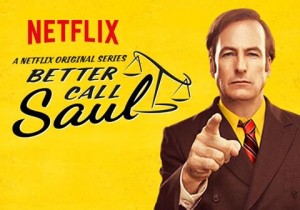 Better Call Saul, a prequel to AMC’s milestone series, Breaking Bad, further establishes co-creators Vince Gilligan and Peter Gould to be among the most intricate moral thinkers working in the dramatic arts. Whereas the first series rendered the ethical decline of a dying man who makes something of a noble bargain with his conscience—attempting to provide for his struggling family by entering the methamphetamine trade—the second series focuses on an altogether different landscape of principles.
Instead of depicting the inch-by-inch, then mile-by-mile, depravity that follows a dubious but not wholly dishonorable decision, Better Call Saul illustrates the confluence of causes that can make a man see himself in a certain way. If Breaking Bad’s Walter White is “Mr. Chips turned Scarface,” as Gilligan described him, Better Call Saul’s Jimmy McGill/Saul Goodman is Willie Stark turned strip-mall consigliere.
The series, now beginning its second season, is set in 2002, some six years before the action of Breaking Bad. As such, it gives the backstory on how Walter White’s outlandish shyster lawyer, Saul Goodman, becomes the man that he is. Goodman is the epitome of the ambulance-chasing, tasteless advertising (“Better Call Saul”) attorney, complete with a debased clientele and a shameless talent for truth perversion.
But it was not always thus; at least it was not always completely thus. And that is the brilliance of the Gilligan-Gould conception of the character. How Irish good-timer Jimmy McGill from Chicago becomes faux-Jew Saul Goodman in Albuquerque is a study in how a man is both the makings of himself and the product of what others have made him.
From the series’ outset, Jimmy McGill, played masterfully by Bob Odenkirk, is one of those people that you can’t help but like, even if you know you shouldn’t. He’s a troublemaker and a fun-lover to a pitiful degree, the kind of black sheep in a family that despite all of the trouble he causes, holds first place in everyone’s heart. But the lovable side of the man is complicated by a penchant he has for running scams.
Back in Chicago, he and his sidekick Marco are confidence men, and as good as they come. “Slippin’ Jimmy” is a scheme that they use to fake accidents in order to exploit payment, the proceeds of which they blow on wine, women, and song. Of course, at some point the hijinks of scofflaws always become serious trouble, and Jimmy ultimately finds himself in jail.
To the rescue comes his good-guy brother, Chuck, played by Michael McKean. Chuck is everything Jimmy is not—a responsible adult who’s made a big name for himself as an attorney out west. The prodigal Jimmy, bailed out and packed up, moves with Chuck to New Mexico, where he starts a new life working in the mailroom of Chuck’s prestigious law firm.
Jimmy is not only resolved to make a new life, but is also a man with an intellect, one that’s every bit as keen as Chuck’s. He may have used his smarts in distasteful ways and underhanded tricks, but once he sets his mind to it, his penetrating insightfulness and infectious energy get results. Then, unbeknownst to Chuck, Jimmy obtains a correspondence law degree from American Samoa. Everyone is overjoyed.
But Chuck knows the other side to Jimmy. As his brother, he’s experienced a long history of embarrassing behavior and cringe-worthy acts. While everybody loves charming scalawags, only their families have to clean up after them, and the cost and ugliness of the job is not quite so endearing. Jimmy sees himself as a man new-made, someone who’s sloughed off his past by means of a go-West mentality, a plane ticket, and a mail order degree; he looks in the mirror and sees something new and future-directed.
Chuck, on the other hand, sees both the new and the old, and fears what the past means for the future. When Jimmy starts his law practice, everything that he is—the cunning-minded genius and the corruption-prone con—converges. You see the compassionate, good soul of a man who takes care of his brother (Chuck develops a neurosis that makes him hypersensitive to electromagnetic fields, imprisoning him inside his house), and also the swindler who is so good at what he does that you fall for his tricks every time; blink, and your wallet is missing.
What unfolds in the episodes that follow is an involved portrait of a man who needs others to believe in him, who asks for a fresh chance, and also a man who is unworthy of belief and who squanders the chances given him. The question of what made Jimmy become Saul is not a simple one, and whether or not Saul can become Jimmy again—indeed, can become the Jimmy that Jimmy wanted to be when he came west—is yet to be seen. It’s worth watching to find out.
A.G. Harmon teaches Shakespeare, Law and Literature, Jurisprudence, and Writing at The Catholic University of America in Washington, D.C. His novel, A House All Stilled, won the 2001 Peter Taylor Prize for the Novel.

Previous Post

March 22, 2016
Refugees Are People, Not a Crisis
Next Post
March 24, 2016 I Am a Digital Man
Browse Our Archives
Select a Category A. G. Harmon Alissa Wilkinson Allison Backous Art Authors Brad Fruhauff Bradford Winters Bryan Bliss Caroline Langston Chad Thomas Johnston Chris Hoke Christiana N. Peterson Culture D.G. Myers D.L. Mayfield Daniel Bowman Jr. David Griffith Elizabeth Duffy Faith Film Greg Wolfe Guest Contributor Interview Jan Vallone Jeffrey Overstreet Jessica Eddings-Roeser Jessica Mesman Griffith Kelly Foster Lindsey Crittenden Morgan Meis music Natalie Vestin Nick Olson Peggy Rosenthal Personal Reflection Poetry Friday Reflection Relationships Review Richard Chess Richard Cole Sara Zarr Shannon Huffman Polson Sonya Bilocerkowycz Tania Runyan Tony Woodlief Topical Categories Uncategorized Vic Sizemore Writing
Select a Month October 2018 September 2018 August 2018 July 2018 June 2018 May 2018 April 2018 March 2018 February 2018 January 2018 December 2017 November 2017 October 2017 September 2017 August 2017 July 2017 June 2017 May 2017 April 2017 March 2017 February 2017 January 2017 December 2016 November 2016 October 2016 September 2016 August 2016 July 2016 June 2016 May 2016 April 2016 March 2016 February 2016 January 2016 December 2015 November 2015 October 2015 September 2015 August 2015 July 2015 June 2015 May 2015 April 2015 March 2015 February 2015 January 2015 December 2014 November 2014 October 2014 September 2014 August 2014 July 2014 June 2014 May 2014 April 2014 March 2014 February 2014 January 2014 December 2013 November 2013 October 2013 September 2013 August 2013 July 2013 June 2013 May 2013 April 2013 March 2013 February 2013 January 2013 December 2012 November 2012 October 2012 September 2012 August 2012 July 2012 June 2012 May 2012 February 2008
Follow Us!
TAKE THE
Religious Wisdom Quiz
What was rolled away from Jesus’ tomb?
Select your answer to see how you score.
A wall A stone A door A fence
Related posts from Good Letters



Emmy Watch: The Marvelous Mrs. Maisel
TRENDING AT PATHEOS Catholic

Rejecting Doom: Christian Hope And Human Action
Christianity is a religion of hope. We are to have hope and...

It’s What Comes From Within Which Matters
One of the most difficult things for us to understand is why...

Why I Choose the Eucharist Over the Sermon
Choose the Eucharist, Not the Sermon What are we supposed to get...

5 Design Elements Found in Spiritually Rooted Homes
Putting Spirituality Into Home Decor Our homes are more than our living...

Credo: A Story of God Told with the...
About 10 years ago, I began to imagine a personal "Credo" that...

The Anatomy of Divine Revelation in Catholic Thought
The claim that God has made Himself known to human beings is...
view all Catholic blogs
Ad-Free & Subscriber Log-In Subscription Support
- About Us
- 2026 Calendar
- Videos
- Podcasts
- Library of World Religions
- Faith In Media Tracker
- Advertise With Us
- Write for Us
- Privacy Policy
- Terms of Service
- Do Not Sell My Data
- Contact Us
- Radiant Digital
- Manage Newsletter Subscriptions
- Unsubscribe From Notifications
- Sitemap
Copyright 2008-2026, Patheos. All rights reserved.
Subscription Support Ad-Free & Subscriber Log-In
Follow Patheos