
BuddhistCatholicContemplativeEvangelicalGeneral ChristianHinduJewishLatter-day SaintMuslimNew VisionsProgressive Christian
Beliefs
- Buddhist
- Catholic
- Contemplative
- Evangelical
- General Christian
- Hindu
- Jewish
- Latter-day Saint
- More Voices
- Muslim
- New Visions
- Pagan
- Progressive Christian
Topics
- Religion News
- Food and Religion
- Sports and Religion
- Religious Art
- Religious Music and Entertainment
- Religious Events
- History and Religion
- Style and Religion
- Politics and Religion
- Women in Religion
- Recreation Outdoors and Religion
- Business Finance and Religion
- Careers Workplace and Religion
- Education and Religion
- Family Parenting and Religion
- Health Fitness and Religion
- Home and Religion
- Relationships and Religion
- Technology and Religion
- Travel and Religion
Columnists
- Buddhist Columnists
- Business Finance and Religion Columnists
- Careers Workplace and Religion Columnists
- Catholic Columnists
- Contemplative Columnists
- Education and Religion Columnists
- Evangelists Columnists
- Family Parenting and Religion Columnists
- General Christian Columnists
- Health Fitness and Religion Columnists
- Hindu Columnists
- History and Religion Columnists
- Home and Religion Columnists
- Jewish Columnists
- More Voices Columnists
- Latter Day Columnists
- Muslim Columnists
- New Visions Columnists
- Nonreligious Columnists
- Pagan Columnists
- Politics and Religion Columnists
- Progressive Columnists
- Recreation Outdoors and Religion Columnists
- Relationships and Religion Columnists
- Religion News Columnists
- Religious Art Columnists
- Religious Events Columnists
- Religious Music and Entertainment Columnists
- Sports and Religion Columnists
- Style and Religion Columnists
- Technology and Religion Columnists
- Travel and Religion Columnists
- Women in Religion Columnists
Resource Library
- 2026 Calendar
- Library of World Religions
- The 100 Most Holy Places on Earth
- Patheos Answers
- Podcasts
- Videos
- Faith Leaders Database
- Anglican Episcopalian
- Bahai
- Baptist
- Buddhism
- Christianity
- Confucianism
- Eastern Orthodoxy
- Hinduism
- Holiness and Pentecostal
- ISKCON
- Islam
- Judaism
- Lutheran
- Methodist
- The Church of Jesus Christ of Latter-day Saints
- New Age
- Paganism
- Presbytarian and Reformed
- Protestantism
- Religion Behind the Scenes
- Roman Catholic
- Scientology
- Shia Islam
- Sikhism
- Sufism
- Sunni Islam
- Taoism
- Zen
- See all religions
Research Tools
 Ad-Free & Subscriber Log-In Subscription Support
Ad-Free & Subscriber Log-In Subscription Support
Follow Patheos 

- Trending:
- Forgiveness
- |
- Marriage
- |
- Consciousness
- |
- Death Penalty
- |
- Election
- |
- Halloween
 Good Letters
-
Contributors
- Home
- Catholic
- Creating Sacred Literature
Creating Sacred Literature
Last updated on: February 3, 2016 at 1:00 am by Morgan Meis
Creating Sacred Literature 2016-02-01T11:57:29-07:00 Morgan Meis
Patheos Explore the world's faith through different perspectives on religion and spirituality! Patheos has the views of the prevalent religions and spiritualities of the world.
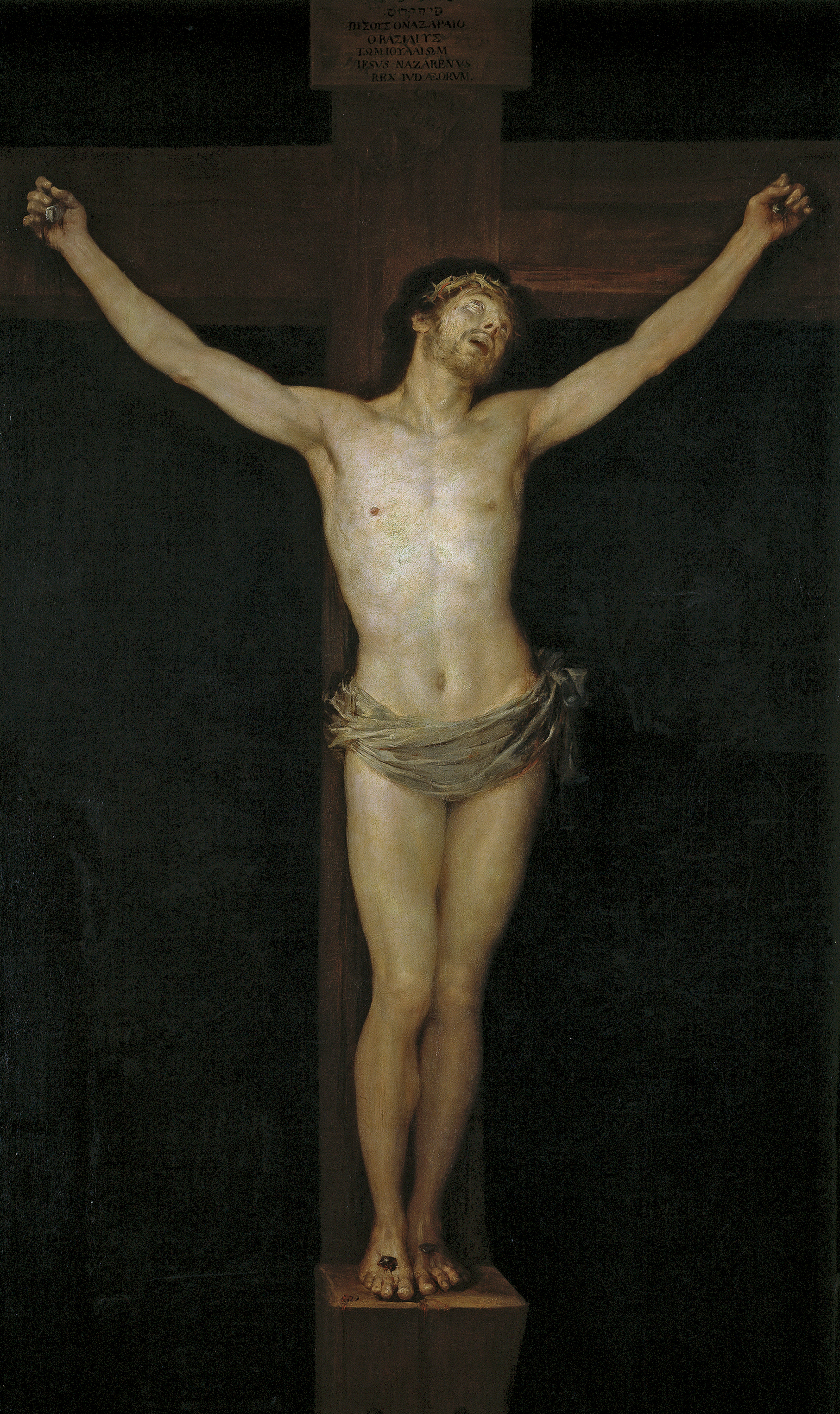 “We are just at the beginning,” Charles Taylor wrote in his lumpy but essential tome, A Secular Age, “of a new age of religious searching, whose outcome no one can foresee.” If we are just at the beginning of a new age, it stands to reason that we are also at the ending of an old age.
The old age was, at least in the West, the mostly European Christian civilization that lasted more or less from Constantine to Darwin. That thing is dead. We live amongst its fragments and tatters, which is hardly news to anyone roaming this earth in the early decades of the twenty-first century.
One of the interesting things about living in a “between age” is that you have two essential choices on any given day. You can spend your time looking forward to what will come. Or, you can spend the day sifting around in the ruins of what was.
To my mind, some of the most interesting and provocative literature produced in the twentieth century was created in the mood of the latter choice. It is a literature you would not call religious. But you’d be hard pressed to call it completely secular, either.
Let me give you an example.
Jorge Luis Borges wrote a short story in 1970. He gave it the title “The Gospel According to Mark.” The story takes place in the countryside of Argentina in the year 1928.
The central character in the story is a young man named Baltasar Espinosa. Borges wrote, “We may describe him, for now, as one of the common run of young men from Buenos Aires, with nothing more noteworthy about him than an almost unlimited kindness and a capacity for public speaking that had earned him several prizes at the English school in Ramos Mejía.”
The young man has something of a split consciousness, endemic to the age. His father instructs him in “freethinking.” His mother teaches him the Lord’s Prayer.
One summer, Espinosa is invited by a cousin to spend a few months at a ranch in the provinces. He lives with a family by the name of Gutres: a couple and their daughter. The Gutres are provincial folk in every sense of the term, good and bad.
Espinosa finds an old Bible lying around the Gutres ranch. He decides it might be interesting to read passages from the Bible aloud after dinner. The Gutres have no literature in their lives and not much formal religion.
The family is transfixed by the young man’s readings. They look forward all day to the stories from Mark’s Gospel. During the day, Espinosa does work around the ranch and the family becomes quite dependent upon him.
They begin, almost, to worship him. They want him to read from Mark’s Gospel again and again. They start to ask him many questions, especially about the Crucifixion and how it brought about the salvation of mankind.
One day after heavy rains, the members of the Gutres family bend their knees and ask Espinosa to bless them. Then, “they mocked at him, spat at him, and shoved him toward the back part of the house.” That’s where they crucify the young man.
End of story.
This story is heavy with a biting irony. The Gutres family has completely misunderstood Espinosa’s nighttime reading. They don’t see Mark’s Gospel as a narrative from which we can extract moral principles. They see it as a guidebook.
Since the members of the Gutres family love and revere the young man Baltasar Espinosa, they decide that they must crucify him. In essence, they are merely following his instructions. He showed them, by reading Mark’s Gospel, what to do.
This particular tragedy occurs because of the disjunctions peculiar to Modernity: The young man caught between the freethinking of his father and the piety of his mother; the family out in the provinces that has lost touch with the grounding stories of their own civilization; the misunderstandings and incongruities that crop up when shared context has been lost.
Borges’ story is a brilliant and startling and troubling thought experiment about the sorts of things that can happen when a civilization breaks into fragments. The survivors muck about in the broken pieces, putting them together in odd and unexpected ways. Sometimes, terrible ways.
But there is an even more unnerving way to read Borges’ story. On this reading, the Gutres do exactly what they are supposed to do. Espinosa is, in fact, a kind of Christ figure. Remember that he was described in the beginning of the story as being possessed of an almost “unlimited kindness.”
Borges downplays that description by prefacing it with the comment that Espinosa has “nothing more noteworthy about him” than this kindness. But to have “unlimited kindness” is, in fact, to be extraordinarily noteworthy. According to the Gospel, trying to live in unlimited kindness means to live under the burdens, sacrifices, and joys of the Cross.
The world, in short, does not always favor unlimited kindness. Such radical kindness isn’t tolerated for long. So, to live in unlimited kindness is to place oneself in danger. The same danger about which Christ warned his disciples, even as he egged them on.
Whether you are Jesus Christ or Baltasar Espinosa, the result of living in unlimited kindness is to be misunderstood by the world and then finally destroyed by it.
In a sense, then, Borges’ odd and discomfiting story takes Mark’s Gospel more seriously than millions of sermons delivered in its name. So many of those sermons kill the story of the Gospel, smoothing the shocks and bumps into platitudes that have long ago lost their vitality. Borges’ story, by contrast, electrifies the narrative.
So, in a sense, our fragmented tatter of a civilization provides just as many opportunities to renew sacred literature as any other age. The opportunity for creating sacred literature today is in the fragments, in the broken parts, in the impossible disjunctions. It means walking down a ruined and rubble-filled path the end of which, as Charles Taylor notes, “No one can foresee.”
Morgan Meis is a contributor to Page Turner at The New Yorker. He has a PhD in Philosophy and has written for The Smart Set, n+1, The Believer, Harper’s Magazine, and The Virginia Quarterly Review. He won the Whiting Award in 2013. Morgan is also an editor at 3 Quarks Daily, and a winner of a Creative Capital | Warhol Foundation Arts Writers grant. A book of Morgan’s selected essays can be found here. He can be reached at [email protected].

Previous Post

February 2, 2016
The Erotic Powers of the Holy Spirit
Next Post
February 4, 2016 Kolam: The Beauty of Uselessness
Browse Our Archives
Select a Category A. G. Harmon Alissa Wilkinson Allison Backous Art Authors Brad Fruhauff Bradford Winters Bryan Bliss Caroline Langston Chad Thomas Johnston Chris Hoke Christiana N. Peterson Culture D.G. Myers D.L. Mayfield Daniel Bowman Jr. David Griffith Elizabeth Duffy Faith Film Greg Wolfe Guest Contributor Interview Jan Vallone Jeffrey Overstreet Jessica Eddings-Roeser Jessica Mesman Griffith Kelly Foster Lindsey Crittenden Morgan Meis music Natalie Vestin Nick Olson Peggy Rosenthal Personal Reflection Poetry Friday Reflection Relationships Review Richard Chess Richard Cole Sara Zarr Shannon Huffman Polson Sonya Bilocerkowycz Tania Runyan Tony Woodlief Topical Categories Uncategorized Vic Sizemore Writing
Select a Month October 2018 September 2018 August 2018 July 2018 June 2018 May 2018 April 2018 March 2018 February 2018 January 2018 December 2017 November 2017 October 2017 September 2017 August 2017 July 2017 June 2017 May 2017 April 2017 March 2017 February 2017 January 2017 December 2016 November 2016 October 2016 September 2016 August 2016 July 2016 June 2016 May 2016 April 2016 March 2016 February 2016 January 2016 December 2015 November 2015 October 2015 September 2015 August 2015 July 2015 June 2015 May 2015 April 2015 March 2015 February 2015 January 2015 December 2014 November 2014 October 2014 September 2014 August 2014 July 2014 June 2014 May 2014 April 2014 March 2014 February 2014 January 2014 December 2013 November 2013 October 2013 September 2013 August 2013 July 2013 June 2013 May 2013 April 2013 March 2013 February 2013 January 2013 December 2012 November 2012 October 2012 September 2012 August 2012 July 2012 June 2012 May 2012 February 2008
Follow Us!
TAKE THE
Religious Wisdom Quiz
Why was Jesus' eating with tax collectors controversial?
Select your answer to see how you score.
They were famous They were wealthy They were healthy They were viewed as sinners
Related posts from Good Letters


Morning in a Forgotten Neighborhood


TRENDING AT PATHEOS Catholic

Rejecting Doom: Christian Hope And Human Action
Christianity is a religion of hope. We are to have hope and...

It’s What Comes From Within Which Matters
One of the most difficult things for us to understand is why...

Why I Choose the Eucharist Over the Sermon
Choose the Eucharist, Not the Sermon What are we supposed to get...

5 Design Elements Found in Spiritually Rooted Homes
Putting Spirituality Into Home Decor Our homes are more than our living...

Credo: A Story of God Told with the...
About 10 years ago, I began to imagine a personal "Credo" that...

The Anatomy of Divine Revelation in Catholic Thought
The claim that God has made Himself known to human beings is...
view all Catholic blogs
Ad-Free & Subscriber Log-In Subscription Support
- About Us
- 2026 Calendar
- Videos
- Podcasts
- Library of World Religions
- Faith In Media Tracker
- Advertise With Us
- Write for Us
- Privacy Policy
- Terms of Service
- Do Not Sell My Data
- Contact Us
- Radiant Digital
- Manage Newsletter Subscriptions
- Unsubscribe From Notifications
- Sitemap
Copyright 2008-2026, Patheos. All rights reserved.
Subscription Support Ad-Free & Subscriber Log-In
Follow Patheos