
BuddhistCatholicContemplativeEvangelicalGeneral ChristianHinduJewishLatter-day SaintMuslimNew VisionsProgressive Christian
Beliefs
- Buddhist
- Catholic
- Contemplative
- Evangelical
- General Christian
- Hindu
- Jewish
- Latter-day Saint
- More Voices
- Muslim
- New Visions
- Pagan
- Progressive Christian
Topics
- Religion News
- Food and Religion
- Sports and Religion
- Religious Art
- Religious Music and Entertainment
- Religious Events
- History and Religion
- Style and Religion
- Politics and Religion
- Women in Religion
- Recreation Outdoors and Religion
- Business Finance and Religion
- Careers Workplace and Religion
- Education and Religion
- Family Parenting and Religion
- Health Fitness and Religion
- Home and Religion
- Relationships and Religion
- Technology and Religion
- Travel and Religion
Columnists
- Buddhist Columnists
- Business Finance and Religion Columnists
- Careers Workplace and Religion Columnists
- Catholic Columnists
- Contemplative Columnists
- Education and Religion Columnists
- Evangelists Columnists
- Family Parenting and Religion Columnists
- General Christian Columnists
- Health Fitness and Religion Columnists
- Hindu Columnists
- History and Religion Columnists
- Home and Religion Columnists
- Jewish Columnists
- More Voices Columnists
- Latter Day Columnists
- Muslim Columnists
- New Visions Columnists
- Nonreligious Columnists
- Pagan Columnists
- Politics and Religion Columnists
- Progressive Columnists
- Recreation Outdoors and Religion Columnists
- Relationships and Religion Columnists
- Religion News Columnists
- Religious Art Columnists
- Religious Events Columnists
- Religious Music and Entertainment Columnists
- Sports and Religion Columnists
- Style and Religion Columnists
- Technology and Religion Columnists
- Travel and Religion Columnists
- Women in Religion Columnists
Resource Library
- 2026 Calendar
- Library of World Religions
- The 100 Most Holy Places on Earth
- Patheos Answers
- Podcasts
- Videos
- Faith Leaders Database
- Anglican Episcopalian
- Bahai
- Baptist
- Buddhism
- Christianity
- Confucianism
- Eastern Orthodoxy
- Hinduism
- Holiness and Pentecostal
- ISKCON
- Islam
- Judaism
- Lutheran
- Methodist
- The Church of Jesus Christ of Latter-day Saints
- New Age
- Paganism
- Presbytarian and Reformed
- Protestantism
- Religion Behind the Scenes
- Roman Catholic
- Scientology
- Shia Islam
- Sikhism
- Sufism
- Sunni Islam
- Taoism
- Zen
- See all religions
Research Tools
 Ad-Free & Subscriber Log-In Subscription Support
Ad-Free & Subscriber Log-In Subscription Support
Follow Patheos 

- Trending:
- Forgiveness
- |
- Marriage
- |
- Consciousness
- |
- Death Penalty
- |
- Election
- |
- Halloween
 Good Letters
-
Contributors
- Home
- Catholic
- Where to Hang Your Grief
Where to Hang Your Grief
Last updated on: January 27, 2016 at 1:00 am by Tania Runyan
Where to Hang Your Grief 2016-01-24T13:48:18-07:00 Tania Runyan
Patheos Explore the world's faith through different perspectives on religion and spirituality! Patheos has the views of the prevalent religions and spiritualities of the world.
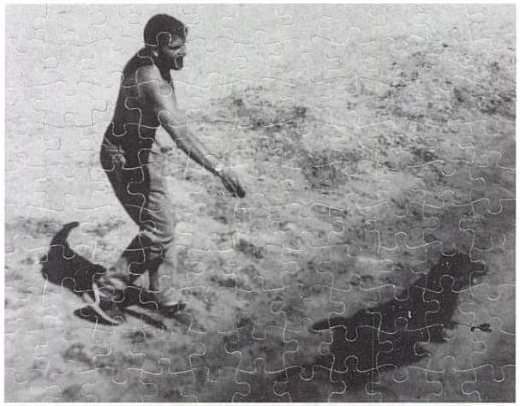 My daughters Lydia and Becca, ages 12 and 10, are thoroughly delighted by the contemporary art collection at the Milwaukee Art Museum. They hurry to the Warhol soup cans and Lichtenstein comics they recognize from art class, a large sculpture made entirely of clear plastic buttons, and plenty of outrageously “simple” pieces they insist they can paint themselves and henceforth make millions of dollars.
During our last visit this December, however, we encountered a work we’d never seen. On the floor sat a large stack of sheets approximately two by three feet in size. Terrified that my kids would touch the art, I half-dove in front of them as a bodyguard of sorts. Then a ponytailed security woman stepped over.
“You may take one if you like,” she said.
I stared at her for a moment. “Like, to keep?”
“Yes. That’s what this art is for.”
Still only partly believing her, my girls and I each lifted a sheet printed with gray scale light seeping through clouds and a small silhouette of a flying bird.
The security guard explained that the artist, Felix Gonzales-Torres, made the untitled piece as a tribute to his partner, Ross Laycock, who died from complications from AIDS in 1991. “It was his way of grieving,” she said, “giving others a chance to carry a piece of Ross’s memory with them.”
I noticed that the artist himself died in 1997. But the stack of sheets continues to be replenished almost two decades later, sending the memory of both men into a limitless future.
The sacredness of the moment stilled me. How did I deserve my own share of love and loss between two people I never knew? And my daughters—would they understand the difference between this work of beauty and other “free stuff,” like Frisbees tossed to them from parade floats and sample bites of frozen pizza at Costco?
We rolled the sheets slowly, gently patting the ends to keep them neat and even, and entered the next gallery. Without rubber bands, we had to hold the papers securely without wrinkling them, allowing the birds to soar peacefully until we got them safely home.
That lasted about five minutes.
As soon as one daughter had to go to the bathroom, so did the other, and I was left juggling three clumsy rolls as I waited outside. When the girls came out, it was unclear which sheet belonged to which girl, and, of course, neither wanted to claim the one already starting to rip at the edges. Then we had to leave the—shall I dare repeat the word that came to our lips—posters on a bench while entering an enclosed installation piece, and I accidentally smashed one with my purse.
The tribute to Ross was gripped in sweaty hands through several centuries of pottery and textiles, knocked on the floor in the lobby cafe, and, eventually, after we trudged back out to the minivan in the underground parking lot, tossed in the back with the laundry detergent I hadn’t taken in from the weekend’s shopping trip.
And the utter depths of our pathetic-ness, which, I’m assuming by now, will surprise no one? When we piled out of the van, distracted by our hats and gloves and excited dogs clawing at the back door, we forgot to bring the art inside.
The wrinkled sheets languished in the car for weeks. I’d see them next to the groceries but tell myself “next time,” since they were so awkward to carry. I’d remember the dark, lonely bird at odd times, like while standing in the shower waiting for the conditioner to work, and feel a stab of guilt, as if I had somehow left a person to freeze to death in the garage. And then I would forget again.
Last weekend, Becca was assigned the chore of cleaning out and vacuuming the car. When I saw the pile of overdue books and stray socks she’d gathered from the backseat, I remembered.
“Did you find those sheets from the museum?”
“Yeah. I threw mine away. I didn’t know where to put it. Lydia grabbed hers.”
“Did you find mine?”
“Nope.”
I couldn’t blame Becca, really. She has a room full of stuffed animals and Harry Potter posters. At ten years old, she possesses no understanding yet—thank God—of suffering and loss. And where does one put grief, anyway? What was Gonzalez-Torres envisioning as he printed these reams of sheets, including several other stacks of images in museums across the country?
These days, as I undergo therapy for earlier traumas and process the past through writing, I find little room to hang all the memories among my daily to-do files. I get a flash of my fourth-grade classroom—the desks in two L formations, the young teacher who looked like Olivia Newton-John—then remember I have to reschedule my daughter’s missed orthodontist appointment.
The face of a deceased friend pops up, and I want to stay there for a moment, take in his smile and voice. But the phone rings, or the dog whimpers to be left out, and I’m back to living in the tyrannical moment. How do I hold on to the memory of important people and events, let alone those of a stranger-artist almost twenty years gone?
Where do we put it all?
Because I’m writing this piece, I went to Lydia’s room this morning and rummaged among dirty clothes and dishes until I found the paper under her bed. I had to army-crawl to get it, most likely because the Roomba had shoved it toward the wall.
I unrolled it, or, rather, unbent it. The sheet was now closer to accordion-folded, webbed with creases. But I smoothed the paper out the best I could on her unmade bed and stepped back.
The bird—is it a tern?—doesn’t fly near the corner of the paper, as I remembered it, but closer to the center. And it’s not a solid black silhouette but a dark gray with lighter shades on the wings, as if the feathers are catching the last bits of sun.
I said a prayer for Felix. For Ross. Or, rather, for the ones they left behind 19 and 25 years ago. I looked at the collection of granola bar wrappers on my daughter’s floor—the sight of which usually drives me to a mild rage. And I breathed a prayer of thanks. Those wrappers will be gone soon enough when my daughter leaves for college in a handful of years.
It was a rushed, sure, even forced minute or two of devotion. But it was devotion nonetheless, a holding of memory up to the light.
Maybe Felix would be okay with this. Perhaps, even, it’s just what he wanted.
Tania Runyan is the author of the poetry collections Second Sky (Cascade Poiema Series), A Thousand Vessels, Simple Weight, and Delicious Air, which was awarded Book of the Year by the Conference on Christianity and Literature in 2007. Her book How to Read a Poem, an instructional guide based on Billy Collins’s “Introduction to Poetry,” was recently released by T.S. Poetry Press. Her poems have appeared in many publications, including Poetry, Image, Books & Culture, Harvard Divinity Bulletin, The Christian Century, Atlanta Review, Indiana Review, and the anthology In a Fine Frenzy: Poets Respond to Shakespeare. Tania was awarded an NEA Literature Fellowship in 2011.

Previous Post

January 26, 2016
What Shall I Know at the End of My Days?
Next Post
January 28, 2016 The Confessions of X: An Interview with Suzanne M. Wolfe, Part 1
Browse Our Archives
Select a Category A. G. Harmon Alissa Wilkinson Allison Backous Art Authors Brad Fruhauff Bradford Winters Bryan Bliss Caroline Langston Chad Thomas Johnston Chris Hoke Christiana N. Peterson Culture D.G. Myers D.L. Mayfield Daniel Bowman Jr. David Griffith Elizabeth Duffy Faith Film Greg Wolfe Guest Contributor Interview Jan Vallone Jeffrey Overstreet Jessica Eddings-Roeser Jessica Mesman Griffith Kelly Foster Lindsey Crittenden Morgan Meis music Natalie Vestin Nick Olson Peggy Rosenthal Personal Reflection Poetry Friday Reflection Relationships Review Richard Chess Richard Cole Sara Zarr Shannon Huffman Polson Sonya Bilocerkowycz Tania Runyan Tony Woodlief Topical Categories Uncategorized Vic Sizemore Writing
Select a Month October 2018 September 2018 August 2018 July 2018 June 2018 May 2018 April 2018 March 2018 February 2018 January 2018 December 2017 November 2017 October 2017 September 2017 August 2017 July 2017 June 2017 May 2017 April 2017 March 2017 February 2017 January 2017 December 2016 November 2016 October 2016 September 2016 August 2016 July 2016 June 2016 May 2016 April 2016 March 2016 February 2016 January 2016 December 2015 November 2015 October 2015 September 2015 August 2015 July 2015 June 2015 May 2015 April 2015 March 2015 February 2015 January 2015 December 2014 November 2014 October 2014 September 2014 August 2014 July 2014 June 2014 May 2014 April 2014 March 2014 February 2014 January 2014 December 2013 November 2013 October 2013 September 2013 August 2013 July 2013 June 2013 May 2013 April 2013 March 2013 February 2013 January 2013 December 2012 November 2012 October 2012 September 2012 August 2012 July 2012 June 2012 May 2012 February 2008
Follow Us!
TAKE THE
Religious Wisdom Quiz
What were the first man and woman’s names in the Bible?
Select your answer to see how you score.
Joseph and Mary Jacob and Rachel Samson and Delilah Adam and Eve
Related posts from Good Letters


Morning in a Forgotten Neighborhood


On Writing Odes: Taking Time to Celebrate
TRENDING AT PATHEOS Catholic

Rejecting Doom: Christian Hope And Human Action
Christianity is a religion of hope. We are to have hope and...

It’s What Comes From Within Which Matters
One of the most difficult things for us to understand is why...

Why I Choose the Eucharist Over the Sermon
Choose the Eucharist, Not the Sermon What are we supposed to get...

5 Design Elements Found in Spiritually Rooted Homes
Putting Spirituality Into Home Decor Our homes are more than our living...

Credo: A Story of God Told with the...
About 10 years ago, I began to imagine a personal "Credo" that...

The Anatomy of Divine Revelation in Catholic Thought
The claim that God has made Himself known to human beings is...
view all Catholic blogs
Ad-Free & Subscriber Log-In Subscription Support
- About Us
- 2026 Calendar
- Videos
- Podcasts
- Library of World Religions
- Faith In Media Tracker
- Advertise With Us
- Write for Us
- Privacy Policy
- Terms of Service
- Do Not Sell My Data
- Contact Us
- Radiant Digital
- Manage Newsletter Subscriptions
- Unsubscribe From Notifications
- Sitemap
Copyright 2008-2026, Patheos. All rights reserved.
Subscription Support Ad-Free & Subscriber Log-In
Follow Patheos