
BuddhistCatholicContemplativeEvangelicalGeneral ChristianHinduJewishLatter-day SaintMuslimNew VisionsProgressive Christian
Beliefs
- Buddhist
- Catholic
- Contemplative
- Evangelical
- General Christian
- Hindu
- Jewish
- Latter-day Saint
- More Voices
- Muslim
- New Visions
- Pagan
- Progressive Christian
Topics
- Religion News
- Food and Religion
- Sports and Religion
- Religious Art
- Religious Music and Entertainment
- Religious Events
- History and Religion
- Style and Religion
- Politics and Religion
- Women in Religion
- Recreation Outdoors and Religion
- Business Finance and Religion
- Careers Workplace and Religion
- Education and Religion
- Family Parenting and Religion
- Health Fitness and Religion
- Home and Religion
- Relationships and Religion
- Technology and Religion
- Travel and Religion
Columnists
- Buddhist Columnists
- Business Finance and Religion Columnists
- Careers Workplace and Religion Columnists
- Catholic Columnists
- Contemplative Columnists
- Education and Religion Columnists
- Evangelists Columnists
- Family Parenting and Religion Columnists
- General Christian Columnists
- Health Fitness and Religion Columnists
- Hindu Columnists
- History and Religion Columnists
- Home and Religion Columnists
- Jewish Columnists
- More Voices Columnists
- Latter Day Columnists
- Muslim Columnists
- New Visions Columnists
- Nonreligious Columnists
- Pagan Columnists
- Politics and Religion Columnists
- Progressive Columnists
- Recreation Outdoors and Religion Columnists
- Relationships and Religion Columnists
- Religion News Columnists
- Religious Art Columnists
- Religious Events Columnists
- Religious Music and Entertainment Columnists
- Sports and Religion Columnists
- Style and Religion Columnists
- Technology and Religion Columnists
- Travel and Religion Columnists
- Women in Religion Columnists
Resource Library
- 2026 Calendar
- Library of World Religions
- The 100 Most Holy Places on Earth
- Patheos Answers
- Podcasts
- Videos
- Faith Leaders Database
- Anglican Episcopalian
- Bahai
- Baptist
- Buddhism
- Christianity
- Confucianism
- Eastern Orthodoxy
- Hinduism
- Holiness and Pentecostal
- ISKCON
- Islam
- Judaism
- Lutheran
- Methodist
- The Church of Jesus Christ of Latter-day Saints
- New Age
- Paganism
- Presbytarian and Reformed
- Protestantism
- Religion Behind the Scenes
- Roman Catholic
- Scientology
- Shia Islam
- Sikhism
- Sufism
- Sunni Islam
- Taoism
- Zen
- See all religions
Research Tools
 Ad-Free & Subscriber Log-In Subscription Support
Ad-Free & Subscriber Log-In Subscription Support
Follow Patheos 

- Trending:
- Forgiveness
- |
- Marriage
- |
- Consciousness
- |
- Death Penalty
- |
- Election
- |
- Halloween
 Good Letters
-
Contributors
- Home
- Catholic
- Sign-Seeking in the Dark
Sign-Seeking in the Dark
Last updated on: May 12, 2016 at 1:09 pm by Natalie Vestin
Sign-Seeking in the Dark 2016-05-12T13:09:15-07:00 Natalie Vestin
Patheos Explore the world's faith through different perspectives on religion and spirituality! Patheos has the views of the prevalent religions and spiritualities of the world.
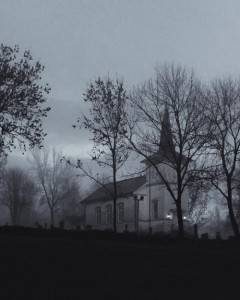 January is for sleeplessness. Maybe its cause is the temperature inversion that presses pollution down on the city of Saint Paul and holds the river still, pours itch into my throat and eyes as I walk. Maybe it’s the cold and the very real possibility that we would die if left outside long enough. I enjoy the hyper-awake feeling of freezing though: live-wire optic nerve and chunks of ice that shear streaks of sparkling light into my vision, pain settling in kneecaps, lungs burning from all that work to keep warm.
I take long walks in the dark to hide the exhaustion of not sleeping for days. Despite how difficult winter can be, the early darkness makes this my favorite part of the year. I like the silence and mystery and romance of it. Anything could happen, and the air feels rife with messages for people who dare to brave the cold and the uncaring headlights. I like the bruised purple and blue skies, Orion rising in the east, Gemini’s clear line.
My dad told me that at around six pm in the summer, things start to change shape. It’s a trick of the light bending through high ice prisms or scattering its spectrum through particles. In the evening hours, light creates a different world, and things become not as they have been.
In the winter, things don’t change shape in the same way. The dark falls suddenly as shape, as heavy cotton in your ears. Winter darkness is intimate; it gets in you, around you, makes you complicit in the tristesse of it if you’re willing to take a walk.
Some early Christian sects forbade meteorology, decrying it as a gift of forbidden knowledge from fallen angels. It was viewed as fortunetelling; one had to read the sky for signs in order to predict what the future would bring. This always makes me wonder what other signs the air contains, how much we’re missing or taking in unawares.
The old churches, wonderful and creepy and one to a block, are my favorite part of the four miles I like to walk. Right now, many of them are for sale: abandoned, too expensive to heat, or simply ghosting into a past where they were useful and loved.
The Episcopal church at Summit and Saratoga—its dark stone, its stained glass windows so narrow you’d mistake them for tunnels, its steeple that seems to pierce storm clouds mounting along the western horizon—is now for sale. I search online for the ritual used to deconsecrate a church, make the interior a different type of room for a different shape of God. I don’t find anything terribly exciting. Deconsecration mostly seems to involve saying thank you and walking away.
January can be terrifying because it starts that long slog through a winter bereft of celebration, lights, and sugar once the holidays have ended. It was tradition during the English reign of King James I to believe that the days between Christmas and the Feast of Epiphany were an open window between the spirit and corporeal world (if we can talk about those worlds being separate in the first place).
Spirits could come back and whisper in your ear, hand you a nightmare, or otherwise fill the air thick with messages just for your wayward self. And then, Epiphany. And no epiphany—scientific, philosophical, or Messianic—happens without the building up of signs, the open windows that let the ghosts in, the darkness that contains something extra you can’t quite identify. Nothing comes from nowhere, but some things do arise from thin air.
In this confluence of insomnia, darkness, and walking, there’s something of sign-seeking. After walking, I go to Compline services at an Episcopal church near my apartment. The building looks like a Game of Thrones set; this is mostly why I love it.
We sing chants and psalms from the seventh and eighth centuries. So many of them are about fear of the dark and the amorphous, but almost palpable, terror of night. Many beg God not to go to sleep. It feels like only partly metaphor, though metaphors don’t arise from nowhere: dark as potential for harm, as a closing in and reaching in, as that which changes the shapes of things as it descends.
At Compline, I fixate on the stained glass, still somehow luminous and crystalline in the dark, before the bell rings and the thurifer enters with incense to ease the Spirit’s presence. Everything that enters needs a door.
Last week, I watched a woman paint an icon representing the Trinity as persons. God the Father and the Son were beneficent, glorious, exactly as you’d think. The Holy Spirit was noticeably uncomfortable, seeming to wonder why it was there, and asking that eternally mystifying question humans ask themselves when they’re still: What on earth do I do with my hands?
It’s uncomfortable for me to be inside a church when I’m used to being outside as worship. I’ve started going to prayer in the evenings though because part of me wonders if God is discomfort—that something extra in the air. I want to experience this sleepless way of being aware and open and awkward; I want to see what it has to tell me.
Outside the church, I see white birds flying down from the eaves, but when I turn to look, it’s only sheets of snow, breaking. When we’ve received our final cloud of incense and our final amen, we exit to the icy sidewalks. You can catch the gleam of the ice only from the corner of your eye, and you’d be mistaken to think we sight it to avoid it. We wrap the night around us, God unsleeping as he promised, and we glide down the Saint Paul hills in the fullness of the dark.
Natalie Vestin is a health scientist and writer from Saint Paul. Her essays have appeared in The Normal School, Iowa Review, Prairie Schooner, and elsewhere. Her chapbook Shine a Light, the Light Won’t Pass is forthcoming from Miel Books.

Previous Post

January 8, 2016
George Scialabba and the Problem of Critical Distance
Next Post
January 12, 2016 Winners: Arts & Faith Ecumenical Jury Film Awards for 2015, Part 1
Browse Our Archives
Select a Category A. G. Harmon Alissa Wilkinson Allison Backous Art Authors Brad Fruhauff Bradford Winters Bryan Bliss Caroline Langston Chad Thomas Johnston Chris Hoke Christiana N. Peterson Culture D.G. Myers D.L. Mayfield Daniel Bowman Jr. David Griffith Elizabeth Duffy Faith Film Greg Wolfe Guest Contributor Interview Jan Vallone Jeffrey Overstreet Jessica Eddings-Roeser Jessica Mesman Griffith Kelly Foster Lindsey Crittenden Morgan Meis music Natalie Vestin Nick Olson Peggy Rosenthal Personal Reflection Poetry Friday Reflection Relationships Review Richard Chess Richard Cole Sara Zarr Shannon Huffman Polson Sonya Bilocerkowycz Tania Runyan Tony Woodlief Topical Categories Uncategorized Vic Sizemore Writing
Select a Month October 2018 September 2018 August 2018 July 2018 June 2018 May 2018 April 2018 March 2018 February 2018 January 2018 December 2017 November 2017 October 2017 September 2017 August 2017 July 2017 June 2017 May 2017 April 2017 March 2017 February 2017 January 2017 December 2016 November 2016 October 2016 September 2016 August 2016 July 2016 June 2016 May 2016 April 2016 March 2016 February 2016 January 2016 December 2015 November 2015 October 2015 September 2015 August 2015 July 2015 June 2015 May 2015 April 2015 March 2015 February 2015 January 2015 December 2014 November 2014 October 2014 September 2014 August 2014 July 2014 June 2014 May 2014 April 2014 March 2014 February 2014 January 2014 December 2013 November 2013 October 2013 September 2013 August 2013 July 2013 June 2013 May 2013 April 2013 March 2013 February 2013 January 2013 December 2012 November 2012 October 2012 September 2012 August 2012 July 2012 June 2012 May 2012 February 2008
Follow Us!
TAKE THE
Religious Wisdom Quiz
Which Gospel is written by a doctor?
Select your answer to see how you score.
Mark Matthew Luke John
Related posts from Good Letters


Morning in a Forgotten Neighborhood


TRENDING AT PATHEOS Catholic

Rejecting Doom: Christian Hope And Human Action
Christianity is a religion of hope. We are to have hope and...

It’s What Comes From Within Which Matters
One of the most difficult things for us to understand is why...

Why I Choose the Eucharist Over the Sermon
Choose the Eucharist, Not the Sermon What are we supposed to get...

5 Design Elements Found in Spiritually Rooted Homes
Putting Spirituality Into Home Decor Our homes are more than our living...

Credo: A Story of God Told with the...
About 10 years ago, I began to imagine a personal "Credo" that...

The Anatomy of Divine Revelation in Catholic Thought
The claim that God has made Himself known to human beings is...
view all Catholic blogs
Ad-Free & Subscriber Log-In Subscription Support
- About Us
- 2026 Calendar
- Videos
- Podcasts
- Library of World Religions
- Faith In Media Tracker
- Advertise With Us
- Write for Us
- Privacy Policy
- Terms of Service
- Do Not Sell My Data
- Contact Us
- Radiant Digital
- Manage Newsletter Subscriptions
- Unsubscribe From Notifications
- Sitemap
Copyright 2008-2026, Patheos. All rights reserved.
Subscription Support Ad-Free & Subscriber Log-In
Follow Patheos