
BuddhistCatholicContemplativeEvangelicalGeneral ChristianHinduJewishLatter-day SaintMuslimNew VisionsProgressive Christian
Beliefs
- Buddhist
- Catholic
- Contemplative
- Evangelical
- General Christian
- Hindu
- Jewish
- Latter-day Saint
- More Voices
- Muslim
- New Visions
- Pagan
- Progressive Christian
Topics
- Religion News
- Food and Religion
- Sports and Religion
- Religious Art
- Religious Music and Entertainment
- Religious Events
- History and Religion
- Style and Religion
- Politics and Religion
- Women in Religion
- Recreation Outdoors and Religion
- Business Finance and Religion
- Careers Workplace and Religion
- Education and Religion
- Family Parenting and Religion
- Health Fitness and Religion
- Home and Religion
- Relationships and Religion
- Technology and Religion
- Travel and Religion
Columnists
- Buddhist Columnists
- Business Finance and Religion Columnists
- Careers Workplace and Religion Columnists
- Catholic Columnists
- Contemplative Columnists
- Education and Religion Columnists
- Evangelists Columnists
- Family Parenting and Religion Columnists
- General Christian Columnists
- Health Fitness and Religion Columnists
- Hindu Columnists
- History and Religion Columnists
- Home and Religion Columnists
- Jewish Columnists
- More Voices Columnists
- Latter Day Columnists
- Muslim Columnists
- New Visions Columnists
- Nonreligious Columnists
- Pagan Columnists
- Politics and Religion Columnists
- Progressive Columnists
- Recreation Outdoors and Religion Columnists
- Relationships and Religion Columnists
- Religion News Columnists
- Religious Art Columnists
- Religious Events Columnists
- Religious Music and Entertainment Columnists
- Sports and Religion Columnists
- Style and Religion Columnists
- Technology and Religion Columnists
- Travel and Religion Columnists
- Women in Religion Columnists
Resource Library
- 2026 Calendar
- Library of World Religions
- The 100 Most Holy Places on Earth
- Patheos Answers
- Podcasts
- Videos
- Faith Leaders Database
- Anglican Episcopalian
- Bahai
- Baptist
- Buddhism
- Christianity
- Confucianism
- Eastern Orthodoxy
- Hinduism
- Holiness and Pentecostal
- ISKCON
- Islam
- Judaism
- Lutheran
- Methodist
- The Church of Jesus Christ of Latter-day Saints
- New Age
- Paganism
- Presbytarian and Reformed
- Protestantism
- Religion Behind the Scenes
- Roman Catholic
- Scientology
- Shia Islam
- Sikhism
- Sufism
- Sunni Islam
- Taoism
- Zen
- See all religions
Research Tools
 Ad-Free & Subscriber Log-In Subscription Support
Ad-Free & Subscriber Log-In Subscription Support
Follow Patheos 

- Trending:
- Forgiveness
- |
- Marriage
- |
- Consciousness
- |
- Death Penalty
- |
- Election
- |
- Halloween
 Good Letters
-
Contributors
- Home
- Catholic
- George Scialabba and the Problem of Critical Distance
George Scialabba and the Problem of Critical Distance
Last updated on: January 8, 2016 at 1:00 am by Morgan Meis
George Scialabba and the Problem of Critical Distance 2016-01-07T19:55:24-07:00 Morgan Meis
Patheos Explore the world's faith through different perspectives on religion and spirituality! Patheos has the views of the prevalent religions and spiritualities of the world.
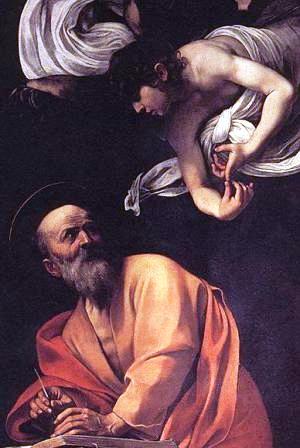 George Scialabba retired from his job this October. He had worked at Harvard University for thirty-five years. But not as a professor. Scialabba was a clerical worker and building manager. A piece in the Chronicle Review about Scialabba’s career as a writer and book critic described his day job as “low level.”
Scialabba has, more even than most writers, kept to the sidelines of public life. He worked at the very margins of academia. He has written critical essays and book reviews from a position that is self-consciously “unaffiliated.”
Why?
Because Scialabba wanted to be free, of course. He wanted to think and write freely. This, Scialabba thought, has gotten harder and harder to do.
That’s because (as he put it in an essay entitled “What Are Intellectuals Good for?”) we are facing, in the late twentieth and early twenty-first century, a general truth:
Intellectuals have indeed been incorporated en masse into the power elite, making the “transparent social relations” Merleau-Ponty looked forward to that much more difficult and distant.
Scialabba’s heroes are the men and women who have, as intellectuals, managed to keep themselves from being coopted by the “power elite.” These are people like the aforementioned Merleau-Ponty. Or, more recently, Noam Chomsky.
But George Scialabba’s true obsession has always been the so-called New York Intellectuals. Diana and Lionel Trilling. Irving Howe. Irving Kristol, the group around Partisan Review, a Leftist quarterly synonymous with New York intellectualism in its heyday, the 1930s to the 1960s.
Scialabba has, on many occasions, quoted the following passage from Irving Howe about what made the essays of the New York Intellectuals so special:
It is a kind of writing highly self-conscious, with an unashamed vibration of bravura and display. Nervous, strewn with knotty or flashy phrases, impatient with transitions and other concessions to dullness, willfully calling attention to itself as a form or at least an outcry, fond of rapid twists, taking pleasure in dispute, dialectic, dazzle—such, at its best or most noticeable, was the essay cultivated by New York writers.
The trick in producing this kind of writing, this kind of thinking, is in getting the stance right. The New York Intellectuals, people like Howe and Trilling, had a kind of confidence and self-assurance such that they could speak boldly about anything they liked. This confidence came from feeling they knew and understood the society in which they lived.
But they never let themselves get too close to that society. They stood within it. And, at the same time, they also stood outside.
How to get that balance? It is a serious question, best asked with spatial metaphors. We use words like “distance,” as in the phrase “critical distance.”
To write an essay as exciting as something written by Irving Howe, you’ve got to find just enough distance to create that sense of sparkle and surprise. Yet, not so much distance that the voice becomes alienated or alienating. Scialabba once wrote about this tightrope act in an essay about Michael Walzer:
In normal times, for ordinary purposes, the temperate, scrupulously nuanced, moderately forceful criticism of the typical connected critic—of Walzer himself—is appropriate. But sometimes maximum intensity—an axe, a charge of verbal explosives, a burst of white heat—is required, whether for immediate effect or in helpless, furious witness. A sense of the simultaneous urgency and futility of much social criticism—i.e., the tragic sense—is a necessary part of the critical temperament. To resist this sense is the critic’s everyday responsibility. To give in to it, to risk excess, loss of dignity, disconnection, may also, on occasion, be his duty.
You could say, then, that the New York Intellectuals were in a constant struggle, bouncing back and forth between what Scialabba calls the “everyday responsibility” and the “occasional duty.” To be able to do that requires something almost like a split personality, or a consciousness that hovers just on the cusp of belonging and not-belonging to the culture in which one lives. For Scialabba, it meant being at Harvard University, amongst the best and brightest, for thirty-five years…but as a clerical worker.
In discussing George Scialabba, it is sometimes mentioned that he was, as a young man, an ardent Catholic and a member of Opus Dei. He quit that business early on. He turned to the secular Leftism of the New York Intellectuals and never looked back.
Except that I think he has been looking back all along. Not to religion or theology in any explicit way. But to the fundamental problem of the prophet, the biblical prophet as we find him in scripture.
For the problem of critical distance, the problem that Scialabba has been wrangling with all his life, is the problem of Isaiah and Jeremiah and Ezekiel. I don’t mean this in a metaphorical sense. I mean it literally.
The prophets were always trying to figure out just how far to stand from their fellow Israelites. They were trying to get the distance right. They were trying to figure out when was the time for “temperate, scrupulously nuanced, moderately forceful criticism” and when for “an axe, a charge of verbal explosives, a burst of white heat.”
“Sing unto the Lord; for he hath done excellent things: this is known in all the earth,” intoned Isaiah, speaking moderately. But then in a burst of white heat, “Therefore is the anger of the Lord kindled against his people, and he hath stretched forth his hand against them, and hath smitten them: and the hills did tremble, and their carcasses were torn in the midst of the streets. For all this his anger is not turned away, but his hand is stretched out still.”
Doesn’t Irving Howe’s description of the writing of the New York Intellectuals apply just as well to Isaiah? “Nervous, strewn with knotty or flashy phrases, impatient with transitions and other concessions to dullness, willfully calling attention to itself as a form or at least an outcry, fond of rapid twists, taking pleasure in dispute, dialectic, dazzle.” George Scialabba knows better than most: That little bit of distance, that crucial slice of real estate is necessary to prophets and critics alike.
Morgan Meis is a contributor to Page Turner at The New Yorker. He has a PhD in Philosophy and has written for The Smart Set, n+1, The Believer, Harper’s Magazine, and The Virginia Quarterly Review. He won the Whiting Award in 2013. Morgan is also an editor at 3 Quarks Daily, and a winner of a Creative Capital | Warhol Foundation Arts Writers grant. A book of Morgan’s selected essays can be found here. He can be reached at [email protected].

Previous Post

January 7, 2016
My Luxury, My Privilege
Next Post
January 11, 2016 Sign-Seeking in the Dark
Browse Our Archives
Select a Category A. G. Harmon Alissa Wilkinson Allison Backous Art Authors Brad Fruhauff Bradford Winters Bryan Bliss Caroline Langston Chad Thomas Johnston Chris Hoke Christiana N. Peterson Culture D.G. Myers D.L. Mayfield Daniel Bowman Jr. David Griffith Elizabeth Duffy Faith Film Greg Wolfe Guest Contributor Interview Jan Vallone Jeffrey Overstreet Jessica Eddings-Roeser Jessica Mesman Griffith Kelly Foster Lindsey Crittenden Morgan Meis music Natalie Vestin Nick Olson Peggy Rosenthal Personal Reflection Poetry Friday Reflection Relationships Review Richard Chess Richard Cole Sara Zarr Shannon Huffman Polson Sonya Bilocerkowycz Tania Runyan Tony Woodlief Topical Categories Uncategorized Vic Sizemore Writing
Select a Month October 2018 September 2018 August 2018 July 2018 June 2018 May 2018 April 2018 March 2018 February 2018 January 2018 December 2017 November 2017 October 2017 September 2017 August 2017 July 2017 June 2017 May 2017 April 2017 March 2017 February 2017 January 2017 December 2016 November 2016 October 2016 September 2016 August 2016 July 2016 June 2016 May 2016 April 2016 March 2016 February 2016 January 2016 December 2015 November 2015 October 2015 September 2015 August 2015 July 2015 June 2015 May 2015 April 2015 March 2015 February 2015 January 2015 December 2014 November 2014 October 2014 September 2014 August 2014 July 2014 June 2014 May 2014 April 2014 March 2014 February 2014 January 2014 December 2013 November 2013 October 2013 September 2013 August 2013 July 2013 June 2013 May 2013 April 2013 March 2013 February 2013 January 2013 December 2012 November 2012 October 2012 September 2012 August 2012 July 2012 June 2012 May 2012 February 2008
Follow Us!
TAKE THE
Religious Wisdom Quiz
What was the capacity of a bath?
Select your answer to see how you score.
22 liters 10 liters 15 liters 30 liters
Related posts from Good Letters

Morning in a Forgotten Neighborhood

On Writing Odes: Taking Time to Celebrate


TRENDING AT PATHEOS Catholic

Rejecting Doom: Christian Hope And Human Action
Christianity is a religion of hope. We are to have hope and...

It’s What Comes From Within Which Matters
One of the most difficult things for us to understand is why...

Why I Choose the Eucharist Over the Sermon
Choose the Eucharist, Not the Sermon What are we supposed to get...

5 Design Elements Found in Spiritually Rooted Homes
Putting Spirituality Into Home Decor Our homes are more than our living...

Credo: A Story of God Told with the...
About 10 years ago, I began to imagine a personal "Credo" that...

The Anatomy of Divine Revelation in Catholic Thought
The claim that God has made Himself known to human beings is...
view all Catholic blogs
Ad-Free & Subscriber Log-In Subscription Support
- About Us
- 2026 Calendar
- Videos
- Podcasts
- Library of World Religions
- Faith In Media Tracker
- Advertise With Us
- Write for Us
- Privacy Policy
- Terms of Service
- Do Not Sell My Data
- Contact Us
- Radiant Digital
- Manage Newsletter Subscriptions
- Unsubscribe From Notifications
- Sitemap
Copyright 2008-2026, Patheos. All rights reserved.
Subscription Support Ad-Free & Subscriber Log-In
Follow Patheos