
BuddhistCatholicContemplativeEvangelicalGeneral ChristianHinduJewishLatter-day SaintMuslimNew VisionsProgressive Christian
Beliefs
- Buddhist
- Catholic
- Contemplative
- Evangelical
- General Christian
- Hindu
- Jewish
- Latter-day Saint
- More Voices
- Muslim
- New Visions
- Pagan
- Progressive Christian
Topics
- Religion News
- Food and Religion
- Sports and Religion
- Religious Art
- Religious Music and Entertainment
- Religious Events
- History and Religion
- Style and Religion
- Politics and Religion
- Women in Religion
- Recreation Outdoors and Religion
- Business Finance and Religion
- Careers Workplace and Religion
- Education and Religion
- Family Parenting and Religion
- Health Fitness and Religion
- Home and Religion
- Relationships and Religion
- Technology and Religion
- Travel and Religion
Columnists
- Buddhist Columnists
- Business Finance and Religion Columnists
- Careers Workplace and Religion Columnists
- Catholic Columnists
- Contemplative Columnists
- Education and Religion Columnists
- Evangelists Columnists
- Family Parenting and Religion Columnists
- General Christian Columnists
- Health Fitness and Religion Columnists
- Hindu Columnists
- History and Religion Columnists
- Home and Religion Columnists
- Jewish Columnists
- More Voices Columnists
- Latter Day Columnists
- Muslim Columnists
- New Visions Columnists
- Nonreligious Columnists
- Pagan Columnists
- Politics and Religion Columnists
- Progressive Columnists
- Recreation Outdoors and Religion Columnists
- Relationships and Religion Columnists
- Religion News Columnists
- Religious Art Columnists
- Religious Events Columnists
- Religious Music and Entertainment Columnists
- Sports and Religion Columnists
- Style and Religion Columnists
- Technology and Religion Columnists
- Travel and Religion Columnists
- Women in Religion Columnists
Resource Library
- 2026 Calendar
- Library of World Religions
- The 100 Most Holy Places on Earth
- Patheos Answers
- Podcasts
- Videos
- Faith Leaders Database
- Anglican Episcopalian
- Bahai
- Baptist
- Buddhism
- Christianity
- Confucianism
- Eastern Orthodoxy
- Hinduism
- Holiness and Pentecostal
- ISKCON
- Islam
- Judaism
- Lutheran
- Methodist
- The Church of Jesus Christ of Latter-day Saints
- New Age
- Paganism
- Presbytarian and Reformed
- Protestantism
- Religion Behind the Scenes
- Roman Catholic
- Scientology
- Shia Islam
- Sikhism
- Sufism
- Sunni Islam
- Taoism
- Zen
- See all religions
Research Tools
 Ad-Free & Subscriber Log-In Subscription Support
Ad-Free & Subscriber Log-In Subscription Support
Follow Patheos 

- Trending:
- Forgiveness
- |
- Marriage
- |
- Consciousness
- |
- Death Penalty
- |
- Election
- |
- Halloween
 Good Letters
-
Contributors
- Home
- Catholic
- Snow on Snow
Snow on Snow
Last updated on: December 25, 2015 at 12:12 am by Guest Contributor
Snow on Snow 2015-12-25T00:12:09-07:00 Guest Contributor
Patheos Explore the world's faith through different perspectives on religion and spirituality! Patheos has the views of the prevalent religions and spiritualities of the world.
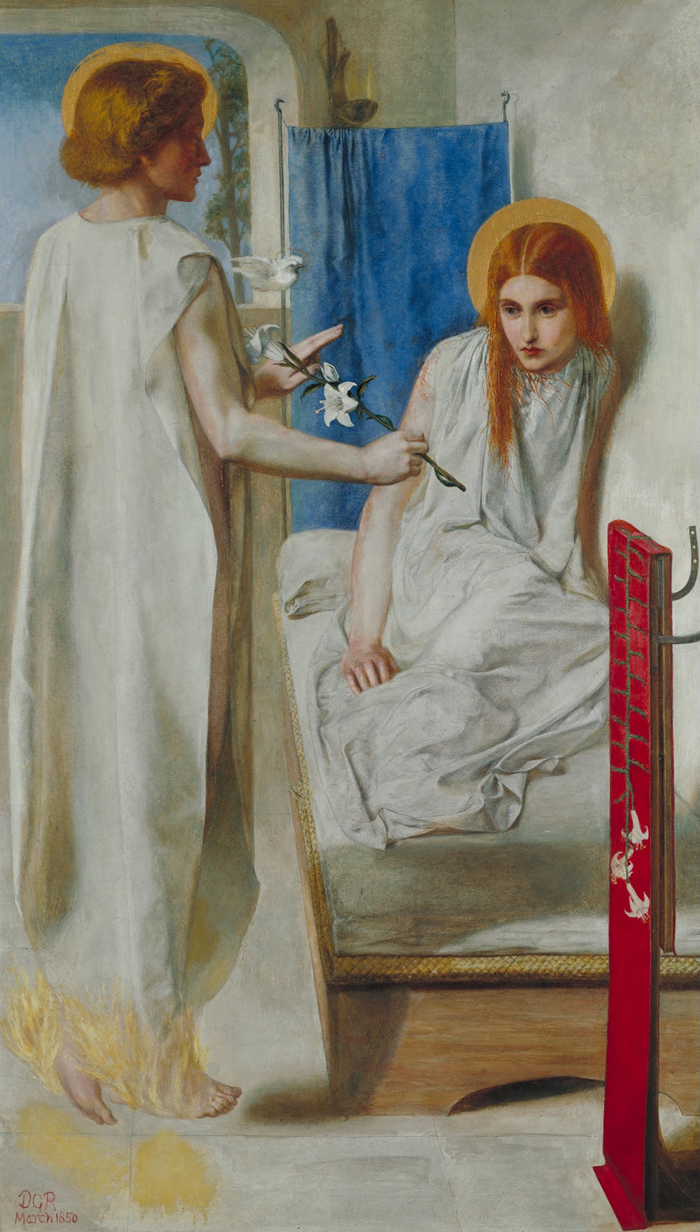 Snow had fallen, snow on snow,
Snow on snow,
In the bleak mid-winter
Long ago.
You probably know these lines, either from Christina Rossetti’s poem of 1871 or, more likely, Holst’s setting of them as a carol.
I know them. I used one of them as title of a book, “bleak” altered to “deep” by the publisher, who thought the former too gloomy.
Which it might indeed be. Rossetti was melancholic, iced-up with unversed emotion; with passions gone gelid which, reticent, gob-stopped, couldn’t quite state their names.
But she was a devout Anglo-Catholic. Her worship at Christ Church in London fumed with incense and candles, ardent for the Eucharist. Ever virgin, dazzled and expectant, she posed for Annunciations by her brother Gabriel and his Pre-Raphaelite cohort.
Critics say her prosody had its roots in nursery rhymes, the tick-tock of fortunes and unravelings, of goblins vanquished, of witches made meek, of children saved and of children saving all—of things coming round upon themselves.
Still, I say it was snow. She might have been cold; and then she must have been misunderstood. Isn’t that what children always and everywhere are—misunderstood?
When I see snow fall I hear a clock ticking; the clock next to the bed upon which your mother holds you, her heart its counterpoint; and the snow unwinds, sheathes and coils like drapery, like the shade that, as she leaves, cascades down the window sash.
The clock gets lost in your own heartbeat and outside—you know this; you hear it ticking, swinging on its pendulum—the snow falls and will fall for ever as long as it takes to cover everything.
A car will drive by, headlights tunneling, the tires a whir and then a rustle compressed to a sigh.
There is a great clock-work above you in heaven, geared and laboring, and it will spin all night until there is nothing but snow. It will do the work. You may rest. Angels will watch over your bed. They descend upon you like snow. Like a bell in the night, it tolls until it’s put the world to sleep, rung it into silence.
I will wake in the morning and it will be like Christmas: I will race to see what great thing has been accomplished, what thing—vouchsafed in the night—I’ve been given.
And what I have is a world erased, whited-out, veiled and muffled; snow on snow and then, for good measure (as Rossetti has it in the poem), snow on snow again.
There’s no time, only space. I am sub specie aeternitatis. There will be no more suffering. It has been laid down and covered over, swaddled in boundless white. Peace: that’s how it is for me, swaddled too. I have the snow to keep me warm.
Rossetti did not see it this way. In another poem she finds a bird dead of cold and says “Dig him a grave where the soft mosses grow / Raise him a tombstone of snow.”
And then, chillingly indeed, she writes in “Wife to Husband”: “Pardon the faults in me, / For the love of years ago: / Good bye. / I must drift across the sea, / I must sink into the snow, / I must die.” She was never a wife: her one intended ran away to become a Catholic and then a priest. So I must imagine who this husband might be.
But perhaps I am misunderstanding her; perhaps you are misunderstanding me. You are thinking, all that snow is another word for obliteration, for the world wished away, for a kind of death.
And perhaps you are right. It is I who misunderstands, and what I misunderstand is me.
But where I grew up, the first snow fell in mid-November and piled up, snow on snow (none of it melting, only clotting, becoming denser, withdrawing deeper to make room for more of itself) until March.
And then the ticking would begin again, in droplets of meltwater, from eaves and tree branches, along gutters and downspouts, from the rust-gutted fenders and rocker panels of cars.
Time tolls again, drip by drip, telling its beads. Hail Mary, Annunciated. Spring.
But her child will be born in the snow. And that, I think, is what I saw from my window: Him everywhere, snow on snow, snow on snow.
I was cold and misunderstood and afraid to suffer, and as often as not that is how I seem to myself every December, sometimes every day.
Yet today is demonstrably cold, and I am somehow—for reasons I must misunderstand; on account of things I do not see—safe and warm. But for all that—just to be sure—I would like a bleak day, something to hope for, a promise to be fulfilled.
I am praying for snow.
This post was originally published on Good Letters on December 26, 2011.
Robert Clark teaches in the Seattle Pacific University Master of Fine Arts program in creative writing. He is the author ofis the author of four books of nonfiction and four novels, most recently the nonfiction book Dark Water: Flood and Redemption in the City of Masterpieces and the novel Lives of the Artists. His other novels include Love Among the Ruins, Mr. White’s Confession (which won the Edgar Award), and In the Deep Midwinter. A memoir, My Grandfather’s House: A Genealogy of Doubt and Faith, was published in 1999. He was recently a Guggenheim Fellow working on a collection of essays on art and belief.
Previous Post

December 23, 2015
Repression, Oppression, Suppression: A Life of Domestic Routine
Next Post

December 28, 2015 Precious Things Come from Staying
Browse Our Archives
Select a Category A. G. Harmon Alissa Wilkinson Allison Backous Art Authors Brad Fruhauff Bradford Winters Bryan Bliss Caroline Langston Chad Thomas Johnston Chris Hoke Christiana N. Peterson Culture D.G. Myers D.L. Mayfield Daniel Bowman Jr. David Griffith Elizabeth Duffy Faith Film Greg Wolfe Guest Contributor Interview Jan Vallone Jeffrey Overstreet Jessica Eddings-Roeser Jessica Mesman Griffith Kelly Foster Lindsey Crittenden Morgan Meis music Natalie Vestin Nick Olson Peggy Rosenthal Personal Reflection Poetry Friday Reflection Relationships Review Richard Chess Richard Cole Sara Zarr Shannon Huffman Polson Sonya Bilocerkowycz Tania Runyan Tony Woodlief Topical Categories Uncategorized Vic Sizemore Writing
Select a Month October 2018 September 2018 August 2018 July 2018 June 2018 May 2018 April 2018 March 2018 February 2018 January 2018 December 2017 November 2017 October 2017 September 2017 August 2017 July 2017 June 2017 May 2017 April 2017 March 2017 February 2017 January 2017 December 2016 November 2016 October 2016 September 2016 August 2016 July 2016 June 2016 May 2016 April 2016 March 2016 February 2016 January 2016 December 2015 November 2015 October 2015 September 2015 August 2015 July 2015 June 2015 May 2015 April 2015 March 2015 February 2015 January 2015 December 2014 November 2014 October 2014 September 2014 August 2014 July 2014 June 2014 May 2014 April 2014 March 2014 February 2014 January 2014 December 2013 November 2013 October 2013 September 2013 August 2013 July 2013 June 2013 May 2013 April 2013 March 2013 February 2013 January 2013 December 2012 November 2012 October 2012 September 2012 August 2012 July 2012 June 2012 May 2012 February 2008
Follow Us!
TAKE THE
Religious Wisdom Quiz
How did Moses' mother save him as a baby?
Select your answer to see how you score.
Sent him to another city Dressed him as a girl Placed him in a basket on the river Hid him in a cave
Related posts from Good Letters

On Writing Odes: Taking Time to Celebrate

Poetry Friday: "The Burned Butterfly"


The Stars of the Earth Cry Out
TRENDING AT PATHEOS Catholic

Rejecting Doom: Christian Hope And Human Action
Christianity is a religion of hope. We are to have hope and...

It’s What Comes From Within Which Matters
One of the most difficult things for us to understand is why...

Why I Choose the Eucharist Over the Sermon
Choose the Eucharist, Not the Sermon What are we supposed to get...

5 Design Elements Found in Spiritually Rooted Homes
Putting Spirituality Into Home Decor Our homes are more than our living...

Credo: A Story of God Told with the...
About 10 years ago, I began to imagine a personal "Credo" that...

The Anatomy of Divine Revelation in Catholic Thought
The claim that God has made Himself known to human beings is...
view all Catholic blogs
Ad-Free & Subscriber Log-In Subscription Support
- About Us
- 2026 Calendar
- Videos
- Podcasts
- Library of World Religions
- Faith In Media Tracker
- Advertise With Us
- Write for Us
- Privacy Policy
- Terms of Service
- Do Not Sell My Data
- Contact Us
- Radiant Digital
- Manage Newsletter Subscriptions
- Unsubscribe From Notifications
- Sitemap
Copyright 2008-2026, Patheos. All rights reserved.
Subscription Support Ad-Free & Subscriber Log-In
Follow Patheos