
BuddhistCatholicContemplativeEvangelicalGeneral ChristianHinduJewishLatter-day SaintMuslimNew VisionsProgressive Christian
Beliefs
- Buddhist
- Catholic
- Contemplative
- Evangelical
- General Christian
- Hindu
- Jewish
- Latter-day Saint
- More Voices
- Muslim
- New Visions
- Pagan
- Progressive Christian
Topics
- Religion News
- Food and Religion
- Sports and Religion
- Religious Art
- Religious Music and Entertainment
- Religious Events
- History and Religion
- Style and Religion
- Politics and Religion
- Women in Religion
- Recreation Outdoors and Religion
- Business Finance and Religion
- Careers Workplace and Religion
- Education and Religion
- Family Parenting and Religion
- Health Fitness and Religion
- Home and Religion
- Relationships and Religion
- Technology and Religion
- Travel and Religion
Columnists
- Buddhist Columnists
- Business Finance and Religion Columnists
- Careers Workplace and Religion Columnists
- Catholic Columnists
- Contemplative Columnists
- Education and Religion Columnists
- Evangelists Columnists
- Family Parenting and Religion Columnists
- General Christian Columnists
- Health Fitness and Religion Columnists
- Hindu Columnists
- History and Religion Columnists
- Home and Religion Columnists
- Jewish Columnists
- More Voices Columnists
- Latter Day Columnists
- Muslim Columnists
- New Visions Columnists
- Nonreligious Columnists
- Pagan Columnists
- Politics and Religion Columnists
- Progressive Columnists
- Recreation Outdoors and Religion Columnists
- Relationships and Religion Columnists
- Religion News Columnists
- Religious Art Columnists
- Religious Events Columnists
- Religious Music and Entertainment Columnists
- Sports and Religion Columnists
- Style and Religion Columnists
- Technology and Religion Columnists
- Travel and Religion Columnists
- Women in Religion Columnists
Resource Library
- 2026 Calendar
- Library of World Religions
- The 100 Most Holy Places on Earth
- Patheos Answers
- Podcasts
- Videos
- Faith Leaders Database
- Anglican Episcopalian
- Bahai
- Baptist
- Buddhism
- Christianity
- Confucianism
- Eastern Orthodoxy
- Hinduism
- Holiness and Pentecostal
- ISKCON
- Islam
- Judaism
- Lutheran
- Methodist
- The Church of Jesus Christ of Latter-day Saints
- New Age
- Paganism
- Presbytarian and Reformed
- Protestantism
- Religion Behind the Scenes
- Roman Catholic
- Scientology
- Shia Islam
- Sikhism
- Sufism
- Sunni Islam
- Taoism
- Zen
- See all religions
Research Tools
 Ad-Free & Subscriber Log-In Subscription Support
Ad-Free & Subscriber Log-In Subscription Support
Follow Patheos 

- Trending:
- Forgiveness
- |
- Marriage
- |
- Consciousness
- |
- Death Penalty
- |
- Election
- |
- Halloween
 Good Letters
-
Contributors
- Home
- Catholic
- Prayer: When You Can’t Find the Words, Make Them Up
Prayer: When You Can’t Find the Words, Make Them Up
Last updated on: May 12, 2016 at 1:13 pm by Natalie Vestin
Prayer: When You Can’t Find the Words, Make Them Up 2016-05-12T13:13:13-07:00 Natalie Vestin
Patheos Explore the world's faith through different perspectives on religion and spirituality! Patheos has the views of the prevalent religions and spiritualities of the world.
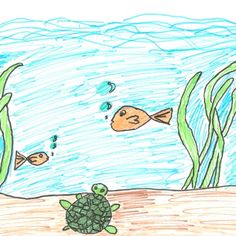
I spent much of this past summer watching my friend’s three-year-old girl, Mia, as my friend prepared for the birth of her son. I’d met Mia last year in Boston before her family had all moved back home to Beijing. Now, Mia was in Minnesota, living in an old Saint Paul house where she could watch birds and bunnies from the porch.
The first time I visited, Mia yelled at me and her mom because we were speaking English and she couldn’t understand us. So we agreed that Mia would teach me Chinese and I’d teach her English. We drew sea creatures together and learned their names. When I said something in English that Mia found odd, she yelled the Chinese version of it back to me, putting the long diphthongal vowels of the upper Midwest into the word and then collapsing in giggles.
I don’t understand children very well and am a little scared of them. When Mia moved to the US, I thought of her as something helpless to be carried along by her mom, as if the new culture and the buzz of a befuddling language wouldn’t bother her at all.
Early after she and her mom moved in, Mia started positioning her toys on the floor in ways that were meaningful to her. Sometimes, she told her mom to stand in one position until it was okay to move. Once, Mia and I were making up stories about the octopi and crabs we’d drawn when her mom moved a book Mia had placed on the floor, and Mia screamed and sobbed for an hour.
Of course, this all sounds a bit odd and troubled, because it is, but to me, it was also pretty familiar. A touch of obsessive compulsion is a necessary part of brain development as children form emotional cause-and-effect associations between disparate things.
But I remember doing this when scared, when my mom was getting sicker and my family was changing and self-destructing: placing objects on my dresser in eastward-facing positions, doing things a certain number of times before I could stop. It wasn’t a bribe or a ritual; it felt more like a responsibility I was born with and had to fulfill.
Mia was soaking wet after the tantrum, and when she could finally speak, she said she’d screamed because she couldn’t find the words to say what she wanted to say.
A dance instructor once told me that sometimes in a movement, something in the body will scream or draw attention to itself. When this happens, she said, look for the quiet thing behind the loud thing; look for what’s trying to be invisible, and you’ll find your problem, your real hurt.
So many things happened to my family this past summer and fall, things I can’t control or talk about, other than to say that it feels like I’ve been dragging my heart around behind me. I want to pray, but prayer feels like throwing up, so I’m trying to find new ways to pray. The classic helphelphelphelp is reliable, and lately, I love repeating “I have poured out my soul above myself” from St. Augustine’s exposition on Psalm 42.
It’s easy to underestimate kids. Three years is not a long time to be on the planet, and there’s a particular beauty and horror to this newness. Everything’s a surprise, and every surprise is a little incomprehensible. When you don’t understand something, it’s easy to grow confused or scared; when you grow confused or scared, it’s tempting to want to own the fearful thing.
Mia’s very aware of what is hers, and she monitors her flock at all times. When I’m with her, I’m Nata-ayi (Aunt Nata), and if I stray out of her vision, I can expect to hear her counting her people and yelling for the missing one.
The things children love are so simple: the lilt of a word repeated over and over, a color, cut paper, a stuffed animal thrown back and forth. It’s easy (at least for me) to think that because of their simple loves, children are stupid or boring. But the things they love are so full of meaning, almost unbearably full. I think a lot of the time they love because they’re so full of the responsibility of salvation, the burden of making sure the world doesn’t end on their watch.
I don’t know where this sense comes from or if it’s universal. I know I had it (and probably still do, in that sense of unexplained dread that creeps up more than occasionally), and Mia has it. Horror movies seem to rely on it: the kid being the only one to know the monster is there, needing to save her family while never being quite able to express what’s wrong.
Mia and her family went back to Beijing a few weeks ago. I found out on the last week she was here that all the Chinese words she’d taught me were made up—words that relied on Mandarin sounds but had no meaning other than what she’d given them. It’s a language spoken by only two people in the world.
I love that she did this: countered her lack of understanding not by learning or teaching, but by inventing something that reflected what we needed to draw, play with our food, and look at neighborhood dogs together.
I’ve started to think of prayer this way, as a language I have to make up. I love words, and I know language can help us suffer responsibility, even when that responsibility is inflated or false or comes in the guise of a dragged-around heart. I like that prayer is navigation, that it always feels both difficult and childlike, that it’s a way of sharing some responsibility for pretending to save the world.
Natalie Vestin is a health scientist and writer from Saint Paul. Her essays have appeared in The Normal School, Iowa Review, Prairie Schooner, and elsewhere. Her chapbook Shine a Light, the Light Won’t Pass is forthcoming from Miel Books.
Previous Post

December 21, 2015
Come, Lord Jesus
Next Post
December 23, 2015 Repression, Oppression, Suppression: A Life of Domestic Routine
Browse Our Archives
Select a Category A. G. Harmon Alissa Wilkinson Allison Backous Art Authors Brad Fruhauff Bradford Winters Bryan Bliss Caroline Langston Chad Thomas Johnston Chris Hoke Christiana N. Peterson Culture D.G. Myers D.L. Mayfield Daniel Bowman Jr. David Griffith Elizabeth Duffy Faith Film Greg Wolfe Guest Contributor Interview Jan Vallone Jeffrey Overstreet Jessica Eddings-Roeser Jessica Mesman Griffith Kelly Foster Lindsey Crittenden Morgan Meis music Natalie Vestin Nick Olson Peggy Rosenthal Personal Reflection Poetry Friday Reflection Relationships Review Richard Chess Richard Cole Sara Zarr Shannon Huffman Polson Sonya Bilocerkowycz Tania Runyan Tony Woodlief Topical Categories Uncategorized Vic Sizemore Writing
Select a Month October 2018 September 2018 August 2018 July 2018 June 2018 May 2018 April 2018 March 2018 February 2018 January 2018 December 2017 November 2017 October 2017 September 2017 August 2017 July 2017 June 2017 May 2017 April 2017 March 2017 February 2017 January 2017 December 2016 November 2016 October 2016 September 2016 August 2016 July 2016 June 2016 May 2016 April 2016 March 2016 February 2016 January 2016 December 2015 November 2015 October 2015 September 2015 August 2015 July 2015 June 2015 May 2015 April 2015 March 2015 February 2015 January 2015 December 2014 November 2014 October 2014 September 2014 August 2014 July 2014 June 2014 May 2014 April 2014 March 2014 February 2014 January 2014 December 2013 November 2013 October 2013 September 2013 August 2013 July 2013 June 2013 May 2013 April 2013 March 2013 February 2013 January 2013 December 2012 November 2012 October 2012 September 2012 August 2012 July 2012 June 2012 May 2012 February 2008
Follow Us!
TAKE THE
Religious Wisdom Quiz
Who does Paul describe as his true son in the faith?
Select your answer to see how you score.
Titus Timothy Philemon Onesimus
Related posts from Good Letters


Morning in a Forgotten Neighborhood

Poetry Friday: "The Burned Butterfly"

TRENDING AT PATHEOS Catholic

Rejecting Doom: Christian Hope And Human Action
Christianity is a religion of hope. We are to have hope and...

It’s What Comes From Within Which Matters
One of the most difficult things for us to understand is why...

Why I Choose the Eucharist Over the Sermon
Choose the Eucharist, Not the Sermon What are we supposed to get...

5 Design Elements Found in Spiritually Rooted Homes
Putting Spirituality Into Home Decor Our homes are more than our living...

Credo: A Story of God Told with the...
About 10 years ago, I began to imagine a personal "Credo" that...

The Anatomy of Divine Revelation in Catholic Thought
The claim that God has made Himself known to human beings is...
view all Catholic blogs
Ad-Free & Subscriber Log-In Subscription Support
- About Us
- 2026 Calendar
- Videos
- Podcasts
- Library of World Religions
- Faith In Media Tracker
- Advertise With Us
- Write for Us
- Privacy Policy
- Terms of Service
- Do Not Sell My Data
- Contact Us
- Radiant Digital
- Manage Newsletter Subscriptions
- Unsubscribe From Notifications
- Sitemap
Copyright 2008-2026, Patheos. All rights reserved.
Subscription Support Ad-Free & Subscriber Log-In
Follow Patheos