
BuddhistCatholicContemplativeEvangelicalGeneral ChristianHinduJewishLatter-day SaintMuslimNew VisionsProgressive Christian
Beliefs
- Buddhist
- Catholic
- Contemplative
- Evangelical
- General Christian
- Hindu
- Jewish
- Latter-day Saint
- More Voices
- Muslim
- New Visions
- Pagan
- Progressive Christian
Topics
- Religion News
- Food and Religion
- Sports and Religion
- Religious Art
- Religious Music and Entertainment
- Religious Events
- History and Religion
- Style and Religion
- Politics and Religion
- Women in Religion
- Recreation Outdoors and Religion
- Business Finance and Religion
- Careers Workplace and Religion
- Education and Religion
- Family Parenting and Religion
- Health Fitness and Religion
- Home and Religion
- Relationships and Religion
- Technology and Religion
- Travel and Religion
Columnists
- Buddhist Columnists
- Business Finance and Religion Columnists
- Careers Workplace and Religion Columnists
- Catholic Columnists
- Contemplative Columnists
- Education and Religion Columnists
- Evangelists Columnists
- Family Parenting and Religion Columnists
- General Christian Columnists
- Health Fitness and Religion Columnists
- Hindu Columnists
- History and Religion Columnists
- Home and Religion Columnists
- Jewish Columnists
- More Voices Columnists
- Latter Day Columnists
- Muslim Columnists
- New Visions Columnists
- Nonreligious Columnists
- Pagan Columnists
- Politics and Religion Columnists
- Progressive Columnists
- Recreation Outdoors and Religion Columnists
- Relationships and Religion Columnists
- Religion News Columnists
- Religious Art Columnists
- Religious Events Columnists
- Religious Music and Entertainment Columnists
- Sports and Religion Columnists
- Style and Religion Columnists
- Technology and Religion Columnists
- Travel and Religion Columnists
- Women in Religion Columnists
Resource Library
- 2026 Calendar
- Library of World Religions
- The 100 Most Holy Places on Earth
- Patheos Answers
- Podcasts
- Videos
- Faith Leaders Database
- Anglican Episcopalian
- Bahai
- Baptist
- Buddhism
- Christianity
- Confucianism
- Eastern Orthodoxy
- Hinduism
- Holiness and Pentecostal
- ISKCON
- Islam
- Judaism
- Lutheran
- Methodist
- The Church of Jesus Christ of Latter-day Saints
- New Age
- Paganism
- Presbytarian and Reformed
- Protestantism
- Religion Behind the Scenes
- Roman Catholic
- Scientology
- Shia Islam
- Sikhism
- Sufism
- Sunni Islam
- Taoism
- Zen
- See all religions
Research Tools
 Ad-Free & Subscriber Log-In Subscription Support
Ad-Free & Subscriber Log-In Subscription Support
Follow Patheos 

- Trending:
- Forgiveness
- |
- Marriage
- |
- Consciousness
- |
- Death Penalty
- |
- Election
- |
- Halloween
 Good Letters
-
Contributors
- Home
- Catholic
- Here is Where We Wait
Here is Where We Wait
Last updated on: May 12, 2016 at 1:20 pm by Natalie Vestin
Here is Where We Wait 2016-05-12T13:20:17-07:00 Natalie Vestin
Patheos Explore the world's faith through different perspectives on religion and spirituality! Patheos has the views of the prevalent religions and spiritualities of the world.
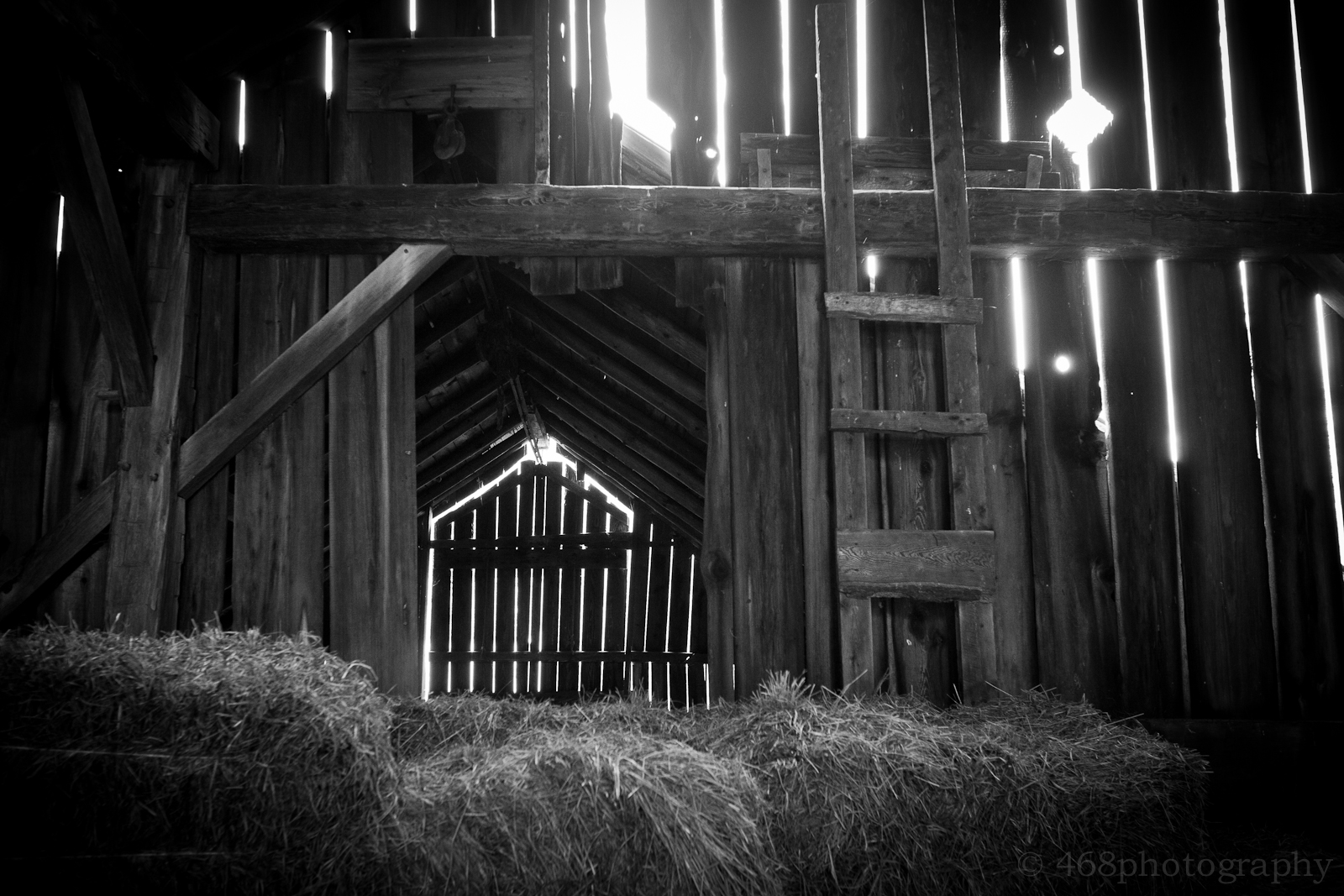 This summer, I climbed the rotting steps to the hayloft of my family’s barn to look for a plaque honoring the use of emergent DNA technology in solving the Brown’s Chicken Massacre case. The floor was soft, dipping a little as I walked, and I looked in slow motion through my great-aunt’s things: frosted glassware, ceramic roosters, romance novels, and Bible after Swedish Bible.
The plaque hung in my great-aunt’s home after her daughter, Barbara, received it from the Chicago Police Department; after my great-aunt died, it was stuffed in a box and moved to the hayloft.
When I’m in the hayloft, I remember God, who is easy to forget. At least this is true for me; I’ve always believed in God but also feel the reminder of him to be jarring. I needed set places to pray as a child, places that were solitary and fixed and haunted by God in ways recognizable and palpable.
The air hung in the loft, suspending small sharp pieces of broken straw in mid-flight. Light beamed in a small opening where the massive sliding front of the barn strained to meet the eaves. Thresher blades hung like a wide pendulum over stacked bales of straw, where my cat and I would gaze up at the light and its sharp world as if the sharp world was God.
I met Barbara in 1995, when she visited from Chicago. I was 15, obsessed with DNA after having seen Jurassic Park, and excited to talk to someone who used it to solve crimes. I didn’t know that she was carrying around the memory of the Brown’s Chicken Massacre, or that she was frustrated by the fact that she couldn’t solve it. The answer was right in front of her eyes, but the tools wouldn’t be available for another decade.
Barbara was a forensic scientist with the Chicago Police in 1993 when two men killed the owners of a Brown’s Chicken restaurant along with five people eating dinner. As Fargo‘s Marge Gunderson would say, all for a little bit of money.
The men ate dinner before killing everyone, and it’s this that always gets me, the something sacred and lovely that exists in the words “chicken” and “dinner.” Of course people should always be safe, but they should be especially safe when they’re eating their dinner, and I think this is what affected Chicago most strongly about the massacre, what made the crime snag in Barbara’s brain. I recently read an article about the murders in which it was clear that people still remember, still say that the building is haunted, still won’t go near the place.
When I prayed in the hayloft, I’d stare at oak leaves through the eaves, knowing that there was far more to them under their surface, that active code writing and deleting and selecting under the surface. The more I learned about DNA, the more I saw the world as the Eucharistic “accidents”—a bit of surface fakery with more underneath than I could know. The essence of things as unknown and secretive. I learned I could look at the world not only to see and understand God, but to love God, and isn’t love always a little accidental?
One of the Brown’s Chicken killers ate a chicken breast before he ended the lives of seven people, and Barbara kept the breast in a Chicago PD freezer for nine years. There were buccal and a few white blood cells from saliva on the chicken, but no technology to say whose cells.
I want to say that Barbara had faith, but really, she just waited. Waited for the technology to catch up, waited for her ability to see what she knew was there the whole time. Waited while the suffering of those all those people eating their dinners piled themselves inside her, all her hope latched onto a frozen piece of chicken.
In Kelly Grey Carlisle’s essay “A Goodly Heritage,” she writes, “Sometimes I think that when God said, ‘Let the earth bring forth the living creature after his kind,’ and when he said, ‘Let us make man in our image,’ what slipped from his mouth were not words as we understand them but, instead, that ancient, inscrutable language. Adenine, cytosine, guanine, thymine, swirled together in their double-helix, slipping like a silver chain from His mouth to the earth into the cells of whatever primal form evolved into us.”
The more I write and think about God, the greater distance from God I feel. Sometimes I think it’s just my inability to recognize him, or to have a space sufficiently haunted enough to pray. So I look at things—all the accidents covering the essences—and that creates love, and that creates haunted space.
A good scientist knows that if she can’t find a solution, the problem lies with her—her inability, her lack of tools—and she waits, and she gazes, and she carries the problem around with her.
A few months after Barbara and I sat around my great-aunt’s table eating herring and talking about DNA, she called with a request: She wanted cheek swabs from me, my sister, and our dad. We didn’t know why she wanted them at the time, but she likely wanted to see if she could do it: get enough genetic evidence from saliva to, if not identify, at least provide some information about its source.
Barbara responded weeks later to say that we shared a mutation, but one that she couldn’t identify. My dad, sister, and I occasionally point to our forearms, to a place so small its architecture can be mapped only by the wet of our cheeks smothered into a vial. We grin and say, “Here is where we are the same. Here is where we watch and wait to see what will happen.”
Natalie Vestin is a health scientist and writer from Saint Paul. Her essays have appeared in The Normal School, Iowa Review, Prairie Schooner, and elsewhere. Her chapbook Shine a Light, the Light Won’t Pass is forthcoming from Miel Books.

Previous Post

December 1, 2015
Going to the Manger as She Is
Next Post
December 3, 2015 Above Calcutta
Browse Our Archives
Select a Category A. G. Harmon Alissa Wilkinson Allison Backous Art Authors Brad Fruhauff Bradford Winters Bryan Bliss Caroline Langston Chad Thomas Johnston Chris Hoke Christiana N. Peterson Culture D.G. Myers D.L. Mayfield Daniel Bowman Jr. David Griffith Elizabeth Duffy Faith Film Greg Wolfe Guest Contributor Interview Jan Vallone Jeffrey Overstreet Jessica Eddings-Roeser Jessica Mesman Griffith Kelly Foster Lindsey Crittenden Morgan Meis music Natalie Vestin Nick Olson Peggy Rosenthal Personal Reflection Poetry Friday Reflection Relationships Review Richard Chess Richard Cole Sara Zarr Shannon Huffman Polson Sonya Bilocerkowycz Tania Runyan Tony Woodlief Topical Categories Uncategorized Vic Sizemore Writing
Select a Month October 2018 September 2018 August 2018 July 2018 June 2018 May 2018 April 2018 March 2018 February 2018 January 2018 December 2017 November 2017 October 2017 September 2017 August 2017 July 2017 June 2017 May 2017 April 2017 March 2017 February 2017 January 2017 December 2016 November 2016 October 2016 September 2016 August 2016 July 2016 June 2016 May 2016 April 2016 March 2016 February 2016 January 2016 December 2015 November 2015 October 2015 September 2015 August 2015 July 2015 June 2015 May 2015 April 2015 March 2015 February 2015 January 2015 December 2014 November 2014 October 2014 September 2014 August 2014 July 2014 June 2014 May 2014 April 2014 March 2014 February 2014 January 2014 December 2013 November 2013 October 2013 September 2013 August 2013 July 2013 June 2013 May 2013 April 2013 March 2013 February 2013 January 2013 December 2012 November 2012 October 2012 September 2012 August 2012 July 2012 June 2012 May 2012 February 2008
Follow Us!
TAKE THE
Religious Wisdom Quiz
Who saw a vision of a flying scroll with curses written on it?
Select your answer to see how you score.
Daniel Zechariah Ezekiel Micah
Related posts from Good Letters

Poetry Friday: "The Burned Butterfly"

Wabi-Sabi: Living with Beauty and Ugliness
TRENDING AT PATHEOS Catholic

Rejecting Doom: Christian Hope And Human Action
Christianity is a religion of hope. We are to have hope and...

It’s What Comes From Within Which Matters
One of the most difficult things for us to understand is why...

Why I Choose the Eucharist Over the Sermon
Choose the Eucharist, Not the Sermon What are we supposed to get...

5 Design Elements Found in Spiritually Rooted Homes
Putting Spirituality Into Home Decor Our homes are more than our living...

Credo: A Story of God Told with the...
About 10 years ago, I began to imagine a personal "Credo" that...

The Anatomy of Divine Revelation in Catholic Thought
The claim that God has made Himself known to human beings is...
view all Catholic blogs
Ad-Free & Subscriber Log-In Subscription Support
- About Us
- 2026 Calendar
- Videos
- Podcasts
- Library of World Religions
- Faith In Media Tracker
- Advertise With Us
- Write for Us
- Privacy Policy
- Terms of Service
- Do Not Sell My Data
- Contact Us
- Radiant Digital
- Manage Newsletter Subscriptions
- Unsubscribe From Notifications
- Sitemap
Copyright 2008-2026, Patheos. All rights reserved.
Subscription Support Ad-Free & Subscriber Log-In
Follow Patheos