
BuddhistCatholicContemplativeEvangelicalGeneral ChristianHinduJewishLatter-day SaintMuslimNew VisionsProgressive Christian
Beliefs
- Buddhist
- Catholic
- Contemplative
- Evangelical
- General Christian
- Hindu
- Jewish
- Latter-day Saint
- More Voices
- Muslim
- New Visions
- Pagan
- Progressive Christian
Topics
- Religion News
- Food and Religion
- Sports and Religion
- Religious Art
- Religious Music and Entertainment
- Religious Events
- History and Religion
- Style and Religion
- Politics and Religion
- Women in Religion
- Recreation Outdoors and Religion
- Business Finance and Religion
- Careers Workplace and Religion
- Education and Religion
- Family Parenting and Religion
- Health Fitness and Religion
- Home and Religion
- Relationships and Religion
- Technology and Religion
- Travel and Religion
Columnists
- Buddhist Columnists
- Business Finance and Religion Columnists
- Careers Workplace and Religion Columnists
- Catholic Columnists
- Contemplative Columnists
- Education and Religion Columnists
- Evangelists Columnists
- Family Parenting and Religion Columnists
- General Christian Columnists
- Health Fitness and Religion Columnists
- Hindu Columnists
- History and Religion Columnists
- Home and Religion Columnists
- Jewish Columnists
- More Voices Columnists
- Latter Day Columnists
- Muslim Columnists
- New Visions Columnists
- Nonreligious Columnists
- Pagan Columnists
- Politics and Religion Columnists
- Progressive Columnists
- Recreation Outdoors and Religion Columnists
- Relationships and Religion Columnists
- Religion News Columnists
- Religious Art Columnists
- Religious Events Columnists
- Religious Music and Entertainment Columnists
- Sports and Religion Columnists
- Style and Religion Columnists
- Technology and Religion Columnists
- Travel and Religion Columnists
- Women in Religion Columnists
Resource Library
- 2026 Calendar
- Library of World Religions
- The 100 Most Holy Places on Earth
- Patheos Answers
- Podcasts
- Videos
- Faith Leaders Database
- Anglican Episcopalian
- Bahai
- Baptist
- Buddhism
- Christianity
- Confucianism
- Eastern Orthodoxy
- Hinduism
- Holiness and Pentecostal
- ISKCON
- Islam
- Judaism
- Lutheran
- Methodist
- The Church of Jesus Christ of Latter-day Saints
- New Age
- Paganism
- Presbytarian and Reformed
- Protestantism
- Religion Behind the Scenes
- Roman Catholic
- Scientology
- Shia Islam
- Sikhism
- Sufism
- Sunni Islam
- Taoism
- Zen
- See all religions
Research Tools
 Ad-Free & Subscriber Log-In Subscription Support
Ad-Free & Subscriber Log-In Subscription Support
Follow Patheos 

- Trending:
- Forgiveness
- |
- Marriage
- |
- Consciousness
- |
- Death Penalty
- |
- Election
- |
- Halloween
 Good Letters
-
Contributors
- Home
- Catholic
- Talk to Me in Letters
Talk to Me in Letters
Last updated on: May 12, 2016 at 1:24 pm by Alissa Wilkinson
Talk to Me in Letters 2016-05-12T13:24:10-07:00 Alissa Wilkinson
Patheos Explore the world's faith through different perspectives on religion and spirituality! Patheos has the views of the prevalent religions and spiritualities of the world.
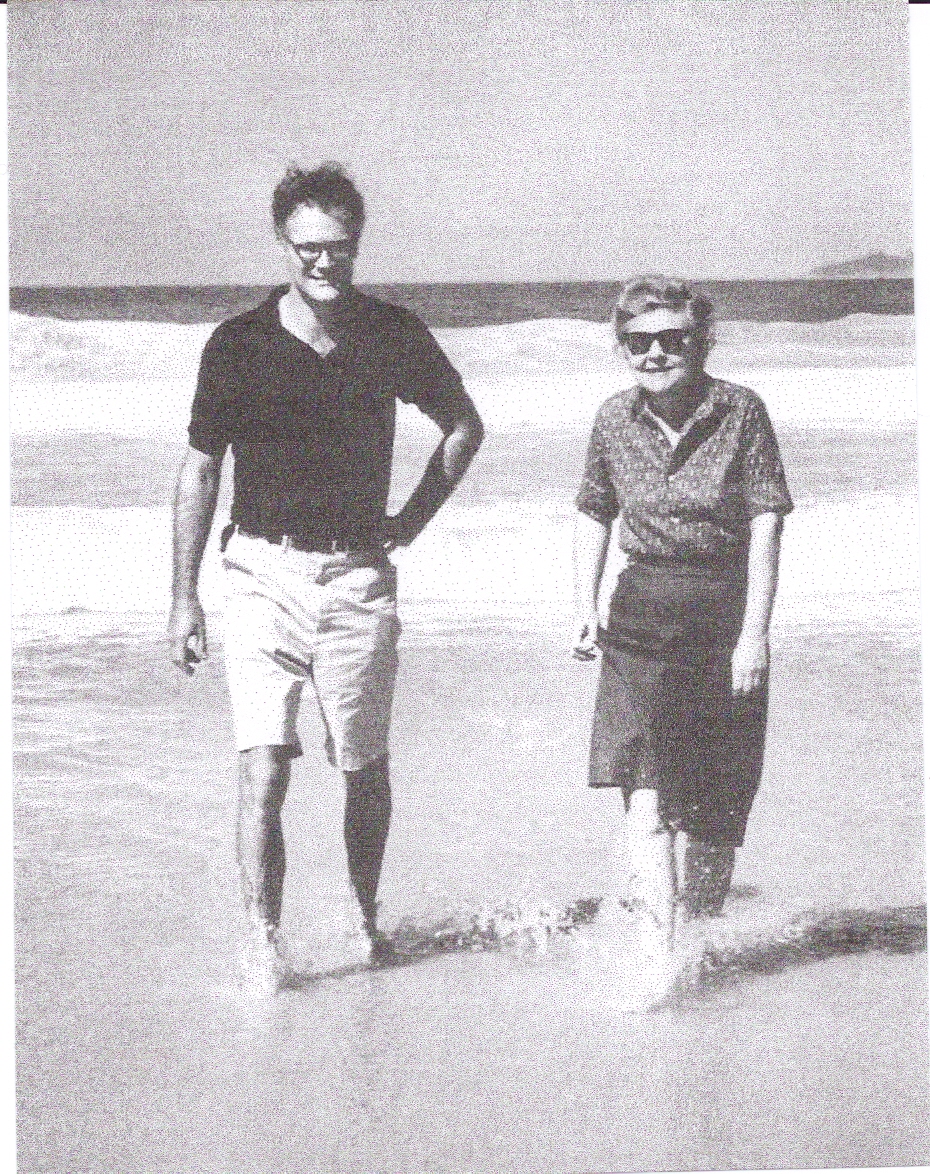
Dearest Cal: Please never stop writing me letters—they always manage to make me feel like my higher self (I’ve been re-reading Emerson) for several days.
— Elizabeth Bishop to Robert Lowell, July 27, 1960
Dearest Elizabeth: I think of you daily and feel anxious lest we lose our old backward and forward flow that always seems to open me up and bring color and peace.
— Robert Lowell to Elizabeth Bishop, March 10, 1963
My office bookshelves are segregated topically, and one entire shelf is devoted to books of letters between writers. Most are towering mid-century literary figures about whose lives I obsess like one might Facebook-stalk a crush, looking for new bits of information or examining the edges of pictures for other famous people lurking in the blurry background.
There’s the correspondence of Elizabeth Bishop and Robert Lowell, the missives Simone de Beauvoir sent Jean-Paul Sartre, decades of letters between Mary McCarthy and Hannah Arendt, others between Eudora Welty and William Maxwell, the love letters Vladimir Nabokov sent his wife Vera, stacks more.
Obviously I’m not alone in this: Carlene Bauer wrote Frances and Bernard, a fictionalized correspondence (and entirely fictional romance) between characters modeled on Lowell and Flannery O’Connor, who met at Yaddo in 1948. I have my students review the book every term, purely for my grading pleasure.
And the playwright Sarah Ruhl seems to share my fixation. Bishop and Lowell’s complete correspondence was published in 2008 in a volume entitled Words in Air, and Ruhl adapted it into a play called Dear Elizabeth that’s currently running off Broadway (at the Women’s Project Theater in New York) after premiering at Yale Repertory Theatre in November 2012.
Dear Elizabeth is a simple and lovely play: Bishop and Lowell (played by a rotating cast) sit at two desks, facing the audience, reading aloud their letters to one another. Once in a while, they get up and meet between the desks. But they spent most of their lives apart, and most of the play, too.
I have thought a lot about why this play, and these letters, move me so much. The answer is elusive. I can think of the obvious: historical interest, a remnant of a lost time, nostalgia for a form that isn’t practiced much anymore. But these seem too easy.
Once in a while, I have been given the gift of a friendship conducted partly through letters—by email, of course. Not everyone likes to write letters, not even writers, so when the gift strikes it’s like lightning. The experience is wholly unlike publishing, which creates a relationship between one writer and (ideally) a lot of readers, a horde of blank faces, all of whom, in our honest moments, we writers suspect are judging us.
The joy of correspondence, then! It is direct, a specific audience, one you can imagine, one you can know. A voice you find fascinating, and a mind that finds your voice pleasing, too. “Will you talk to me in letters?” writes Bauer’s Bernard to Frances in his first letter. In the books, one writer invariably contacts the other with congratulations on some award or publication, and then—off you go, and decades later they’re still at it.
It’s accurate, but insufficient, to say that letter writing is essentially disembodied communication. That is why Dear Elizabeth is an effective companion to the book: I couldn’t stop watching Robert Lowell’s face, as played that night by Peter Scolari. As Bishop breezily narrated her reasons for not coming to Yaddo or for sailing to Brazil instead of Italy, Lowell’s face registered disappointment, hurt, resignation—filling in the blanks that he would not always write down. “I seem to spend my life missing you,” he finally wrote, years into their friendship.
But to say it’s disembodied does the letter-writing relationship some harm. Phenomenologically, it’s simply not true. To strike up a correspondence is to have the other person living in your head. The world takes on another cast. Writers walk around turning everything into a story or a poem or an essay mentally, but a writer with an ongoing correspondence has an ear to the ground for a specific purpose: to find things that will delight or intrigue or surprise the other.
Certainly we do that for our friends and spouses all the time, but the added benefit for the letter writer is anticipating how you’ll construct the sentence, what metaphor or turn of phrase or allusion will surface, and how you’ll know they appreciate it.
That leads to an element of virtuosity about the letters. The writers aren’t performing for the public—they’re performing for one another. Of course, they are, because who wouldn’t? It’s one thing to write a letter home from camp to your cousin, but another to write to someone whose work you admire, or whose intelligence, you suspect, outpaces your own. “I think I read you with more interest than anyone now writing,” Lowell wrote to Bishop in 1957. “I know I do, but I think I would even if it weren’t for personal reasons.”
In a review of a 1994 collection of Bishop’s letters, the poet Tom Paulin notes that one of her sentences in a letter to Lowell “leaps out as if she is an actor or a dancer, inspired by the intelligence and attention of her audience of one.” Bishop writes to Lowell from Maine about “having just digested all the New York Times and some pretty awful clam chowder,” and Lowell writes to her about how he gets “fantastic and uncivilized.”
When you maintain a correspondence, you begin reading your own letters with your reader’s eyes: McCarthy opens a 1954 letter to Arendt by saying that “this is the second letter I’ve written you; the first I discarded as too boring.”
But put aside the book now, and imagine the pleasure of immediacy. These letters are filled with references to the ongoing public work they’re doing, and you can imagine the real pleasure that came in opening the latest issue of Partisan Review or The New Yorker or a new book by your friend and finding bits that are already familiar, the public work getting woven into a private friendship.
Friendship—that is what we’re after, here. The introduction to Welty and Maxwell’s letters calls it the “autobiography of a friendship.” That is, in the end, what we are reading for. We’re less interested in some fading form of communication than in friendships sustained over time and space, inflected and touched with beauty and wit.
Despite what Facebook naysayers proclaim, friendship is not going away. It’s too fundamental to human society to disappear. But today we often conduct the distance part of our friendships via public broadcast—updates and Tweets—and while I’m first in line to defend Twitter, there’s a part of your intelligence that starts to get soft when you’re always engaging in a one-to-many relationship.
The beauty and fun of a letter is that it’s just for you. When you get a letter from someone whose vocation is writing, you’re reading work tailored specifically to your mind. When you write one, you’re engaging in the discipline of attention directed at one other soul, one other intellect, and you in turn find your senses heightened and your daily life sharpened, full of the “color and peace” Lowell wrote about. You perform, but for one other person. You become Bishop’s “higher self.”
Friendship is a mystery, one with many shades, and books of letters have something to teach us about expending some of your talent out of the public eye.
As Eudora Welty put it, “Friendship might have been the first, as well as the best, teacher of communication.”
Alissa Wilkinson is Christianity Today’s chief film critic and an assistant professor of English and humanities at The King’s College in New York City. She taught the “Spirituality and Food” seminar at the Glen Workshop in 2015 and tweets at @alissamarie.

Previous Post

November 24, 2015
The Tyrannical Self-Gaze
Next Post
November 30, 2015 Saying the Name of God
Browse Our Archives
Select a Category A. G. Harmon Alissa Wilkinson Allison Backous Art Authors Brad Fruhauff Bradford Winters Bryan Bliss Caroline Langston Chad Thomas Johnston Chris Hoke Christiana N. Peterson Culture D.G. Myers D.L. Mayfield Daniel Bowman Jr. David Griffith Elizabeth Duffy Faith Film Greg Wolfe Guest Contributor Interview Jan Vallone Jeffrey Overstreet Jessica Eddings-Roeser Jessica Mesman Griffith Kelly Foster Lindsey Crittenden Morgan Meis music Natalie Vestin Nick Olson Peggy Rosenthal Personal Reflection Poetry Friday Reflection Relationships Review Richard Chess Richard Cole Sara Zarr Shannon Huffman Polson Sonya Bilocerkowycz Tania Runyan Tony Woodlief Topical Categories Uncategorized Vic Sizemore Writing
Select a Month October 2018 September 2018 August 2018 July 2018 June 2018 May 2018 April 2018 March 2018 February 2018 January 2018 December 2017 November 2017 October 2017 September 2017 August 2017 July 2017 June 2017 May 2017 April 2017 March 2017 February 2017 January 2017 December 2016 November 2016 October 2016 September 2016 August 2016 July 2016 June 2016 May 2016 April 2016 March 2016 February 2016 January 2016 December 2015 November 2015 October 2015 September 2015 August 2015 July 2015 June 2015 May 2015 April 2015 March 2015 February 2015 January 2015 December 2014 November 2014 October 2014 September 2014 August 2014 July 2014 June 2014 May 2014 April 2014 March 2014 February 2014 January 2014 December 2013 November 2013 October 2013 September 2013 August 2013 July 2013 June 2013 May 2013 April 2013 March 2013 February 2013 January 2013 December 2012 November 2012 October 2012 September 2012 August 2012 July 2012 June 2012 May 2012 February 2008
Follow Us!
TAKE THE
Religious Wisdom Quiz
What was a "phylactery" used by Jews during prayer?
Select your answer to see how you score.
A lamp A musical instrument A festival garment A small leather box with scripture
Related posts from Good Letters

On Writing Odes: Taking Time to Celebrate


A Conversation with Barbara Brown Taylor

Sonnets in the Prime of My Life
TRENDING AT PATHEOS Catholic

The Parable Of The Sower And The Word...
One of Christ’s most famous parables is that of the sower who...

Rejecting Doom: Christian Hope And Human Action
Christianity is a religion of hope. We are to have hope and...

Why I Choose the Eucharist Over the Sermon
Choose the Eucharist, Not the Sermon What are we supposed to get...

5 Design Elements Found in Spiritually Rooted Homes
Putting Spirituality Into Home Decor Our homes are more than our living...

Credo: A Story of God Told with the...
About 10 years ago, I began to imagine a personal "Credo" that...

The Anatomy of Divine Revelation in Catholic Thought
The claim that God has made Himself known to human beings is...
view all Catholic blogs
Ad-Free & Subscriber Log-In Subscription Support
- About Us
- 2026 Calendar
- Videos
- Podcasts
- Library of World Religions
- Faith In Media Tracker
- Advertise With Us
- Write for Us
- Privacy Policy
- Terms of Service
- Do Not Sell My Data
- Contact Us
- Radiant Digital
- Manage Newsletter Subscriptions
- Unsubscribe From Notifications
- Sitemap
Copyright 2008-2026, Patheos. All rights reserved.
Subscription Support Ad-Free & Subscriber Log-In
Follow Patheos