
BuddhistCatholicContemplativeEvangelicalGeneral ChristianHinduJewishLatter-day SaintMuslimNew VisionsProgressive Christian
Beliefs
- Buddhist
- Catholic
- Contemplative
- Evangelical
- General Christian
- Hindu
- Jewish
- Latter-day Saint
- More Voices
- Muslim
- New Visions
- Pagan
- Progressive Christian
Topics
- Religion News
- Food and Religion
- Sports and Religion
- Religious Art
- Religious Music and Entertainment
- Religious Events
- History and Religion
- Style and Religion
- Politics and Religion
- Women in Religion
- Recreation Outdoors and Religion
- Business Finance and Religion
- Careers Workplace and Religion
- Education and Religion
- Family Parenting and Religion
- Health Fitness and Religion
- Home and Religion
- Relationships and Religion
- Technology and Religion
- Travel and Religion
Columnists
- Buddhist Columnists
- Business Finance and Religion Columnists
- Careers Workplace and Religion Columnists
- Catholic Columnists
- Contemplative Columnists
- Education and Religion Columnists
- Evangelists Columnists
- Family Parenting and Religion Columnists
- General Christian Columnists
- Health Fitness and Religion Columnists
- Hindu Columnists
- History and Religion Columnists
- Home and Religion Columnists
- Jewish Columnists
- More Voices Columnists
- Latter Day Columnists
- Muslim Columnists
- New Visions Columnists
- Nonreligious Columnists
- Pagan Columnists
- Politics and Religion Columnists
- Progressive Columnists
- Recreation Outdoors and Religion Columnists
- Relationships and Religion Columnists
- Religion News Columnists
- Religious Art Columnists
- Religious Events Columnists
- Religious Music and Entertainment Columnists
- Sports and Religion Columnists
- Style and Religion Columnists
- Technology and Religion Columnists
- Travel and Religion Columnists
- Women in Religion Columnists
Resource Library
- 2026 Calendar
- Library of World Religions
- The 100 Most Holy Places on Earth
- Patheos Answers
- Podcasts
- Videos
- Faith Leaders Database
- Anglican Episcopalian
- Bahai
- Baptist
- Buddhism
- Christianity
- Confucianism
- Eastern Orthodoxy
- Hinduism
- Holiness and Pentecostal
- ISKCON
- Islam
- Judaism
- Lutheran
- Methodist
- The Church of Jesus Christ of Latter-day Saints
- New Age
- Paganism
- Presbytarian and Reformed
- Protestantism
- Religion Behind the Scenes
- Roman Catholic
- Scientology
- Shia Islam
- Sikhism
- Sufism
- Sunni Islam
- Taoism
- Zen
- See all religions
Research Tools
 Ad-Free & Subscriber Log-In Subscription Support
Ad-Free & Subscriber Log-In Subscription Support
Follow Patheos 

- Trending:
- Forgiveness
- |
- Marriage
- |
- Consciousness
- |
- Death Penalty
- |
- Election
- |
- Halloween
 Good Letters
-
Contributors
- Home
- Catholic
- Saying the Name of God
Saying the Name of God
Last updated on: November 30, 2015 at 1:00 am by Peggy Rosenthal
Saying the Name of God 2015-11-24T13:57:40-07:00 Peggy Rosenthal
Patheos Explore the world's faith through different perspectives on religion and spirituality! Patheos has the views of the prevalent religions and spiritualities of the world.
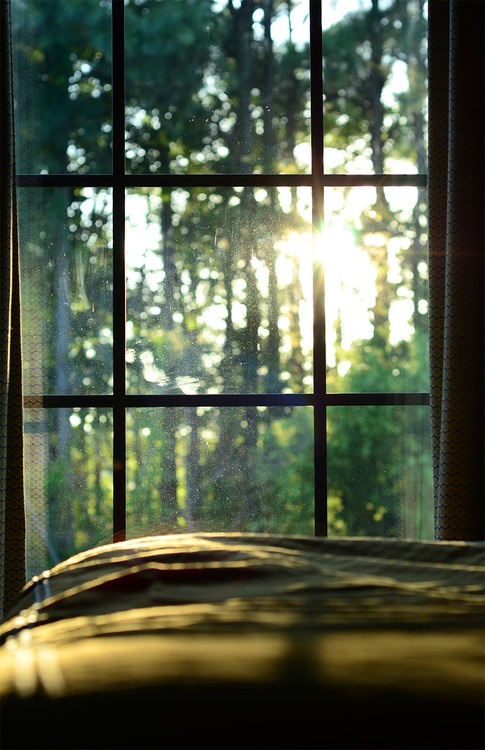 Recently, I spent a good part of three weeks promoting an event that my parish was sponsoring: sending out email blasts, networking, posting the event on Facebook. I’m on the committee that arranged the event, and I volunteered to do the advertising. As I did this tedious task, I tried to remind myself: Every moment is lived in God’s love. Somehow these moments are God’s moments.
“I keep sensing…that the whole world is every moment saying the name of God,” said poet Li-Young Lee, interviewed in the current Image, #86.
Once a week, my husband and I spend an afternoon helping a young friend care for her newborn twins. We treasure these privileged moments, having the health to help her a bit, enjoying the developmental changes in the babies each week. It’s easy to feel that these afternoons are lived in God’s love.
“I keep sensing…that the whole world is every moment saying the name of God.”
On Friday mornings, my husband and I head out for our knitting group. It’s run by my friend Tina, who has created a small business offering knitting lessons, help clinics, sit-and-knits.
We hadn’t known any of the other members of the group before we joined, but by now we’ve all become good friends. There’s something about chatting while doing creative work with your hands: There’s a camaraderie, lots of laughter, teasing; and Tina is always there if we drop a stitch or can’t figure out a pattern instruction. Though I don’t consciously think about God during these mornings, it’s easy to feel that they’re lived in God’s love.
“I keep sensing…that the whole world is every moment saying the name of God.”
Living with a chronic form of leukemia that has squashed my immune system, I know that at any moment, any microbe could take over my body and carry me off. Plus I often don’t sleep well, and some days are dragged through like molasses—no, more like just-poured cement. I try to turn these days into days of prayer, but it’s not easy to be conscious of God’s love through a haze of exhaustion. Yet:
“I keep sensing…that the whole world is every moment saying the name of God.”
My husband and I have a little evening ritual. After dinner, we pray Evening Prayer, then move to the TV room and watch a 1950s episode of The Lone Ranger on DVD. Each episode is completely ridiculous. But it makes us laugh, and takes us out of ourselves. No matter how sleep-deprived I am, or no matter how much George’s chronic chest pain is bothering him, for twenty-five minutes we don’t notice our discomforts. Of course, we’re not thinking of God’s love during those twenty-five minutes: We’re gripped by the silly plot. But these moments are unquestionably lived in God’s love.
“I keep sensing…that the whole world is every moment saying the name of God.”
Yes, I believe that everything at every moment is saying the name of God. But I wouldn’t risk trying to listen for God’s name while on my daily (internal and external weather permitting) bike ride. I have to focus all my attention on the cars: Is this car that’s racing from behind me going to swing left a bit to avoid swiping me? Is that car backing out of a driveway as I coast toward it going to pause to let me pass? If I let up my attention on drivers, I’m a goner.
But when I reach my own driveway, brake, and put both feet on the ground, I always (well, nearly always) say aloud, “Thank you.” Because truly:
“I keep sensing… that the whole world is every moment saying the name of God.”
Nor am I consciously listening for God’s name as I write at my computer on energetic mornings. Like right now, this very instant. The writing process so engages me—Which word will work best here? What image do I want to develop, to play with? What ordering is most effective?—that the process happily consumes my whole being. I feel most alive when I’m writing: a post, an essay, a book.
And when the morning’s work is done and I’m free to hear the world saying God’s name: do I stop to listen? Do I say “Thank you”? Not as often as I should. Because I do want to keep sensing…
“that the whole world is every moment saying the name of God.”
And this, I’m sure, is why I read poetry. As Li-Young Lee puts it in this interview: Poetry is “the condition of language when it is influenced by the sacred experience.”
He has some marvelous terms for poetry’s link to the sacred: “Everything is saturated with God. So the sacred condition of meaning in a poem seems to me a perfect paradigm of mind and world. The saturation of meaning and being in a poem exactly mirrors the saturation of meaning and being in the cosmos.” It’s a “condition of embeddedness in God.”
Saturation. Embeddedness. I do sense this in Lee’s own poetry. As in these lines from one of his poems in this same issue of Image, “Folding a Five-Cornered Star So the Corners Meet” (ellipses are mine):
This sadness I feel tonight is not my sadness…
This loneliness is Nobody’s. Nobody’s lonely
because Nobody was never born
and will never die…
For so many years, I answered to a name,
and I can’t say who answered…
This sleeplessness is not my sleeplessness.
It must be the stars’ insomnia.
And I am their earthbound descendent.
Someone, Anyone, No One, me, and Someone Else.
Five in a bed, and none of us can sleep.
Five in one body, begotten, not made.
And the sorrow we bear together is none of ours.
Maybe it’s Yours, God.
Peggy Rosenthal is director of Poetry Retreats and writes widely on poetry as a spiritual resource. Her books include Praying through Poetry: Hope for Violent Times (Franciscan Media), and The Poets’ Jesus (Oxford). See Amazon for a full list. She also teaches an online course, “Poetry as a Spiritual Practice,” through Image’s Glen Online program.

Previous Post

November 25, 2015
Talk to Me in Letters
Next Post
December 1, 2015 Going to the Manger as She Is
Browse Our Archives
Select a Category A. G. Harmon Alissa Wilkinson Allison Backous Art Authors Brad Fruhauff Bradford Winters Bryan Bliss Caroline Langston Chad Thomas Johnston Chris Hoke Christiana N. Peterson Culture D.G. Myers D.L. Mayfield Daniel Bowman Jr. David Griffith Elizabeth Duffy Faith Film Greg Wolfe Guest Contributor Interview Jan Vallone Jeffrey Overstreet Jessica Eddings-Roeser Jessica Mesman Griffith Kelly Foster Lindsey Crittenden Morgan Meis music Natalie Vestin Nick Olson Peggy Rosenthal Personal Reflection Poetry Friday Reflection Relationships Review Richard Chess Richard Cole Sara Zarr Shannon Huffman Polson Sonya Bilocerkowycz Tania Runyan Tony Woodlief Topical Categories Uncategorized Vic Sizemore Writing
Select a Month October 2018 September 2018 August 2018 July 2018 June 2018 May 2018 April 2018 March 2018 February 2018 January 2018 December 2017 November 2017 October 2017 September 2017 August 2017 July 2017 June 2017 May 2017 April 2017 March 2017 February 2017 January 2017 December 2016 November 2016 October 2016 September 2016 August 2016 July 2016 June 2016 May 2016 April 2016 March 2016 February 2016 January 2016 December 2015 November 2015 October 2015 September 2015 August 2015 July 2015 June 2015 May 2015 April 2015 March 2015 February 2015 January 2015 December 2014 November 2014 October 2014 September 2014 August 2014 July 2014 June 2014 May 2014 April 2014 March 2014 February 2014 January 2014 December 2013 November 2013 October 2013 September 2013 August 2013 July 2013 June 2013 May 2013 April 2013 March 2013 February 2013 January 2013 December 2012 November 2012 October 2012 September 2012 August 2012 July 2012 June 2012 May 2012 February 2008
Follow Us!
TAKE THE
Religious Wisdom Quiz
Who was the first person to see Jesus after His resurrection?
Select your answer to see how you score.
Peter Mary Magdalene Thomas John
Related posts from Good Letters


Morning in a Forgotten Neighborhood


On Writing Odes: Taking Time to Celebrate
TRENDING AT PATHEOS Catholic

Rejecting Doom: Christian Hope And Human Action
Christianity is a religion of hope. We are to have hope and...

It’s What Comes From Within Which Matters
One of the most difficult things for us to understand is why...

Why I Choose the Eucharist Over the Sermon
Choose the Eucharist, Not the Sermon What are we supposed to get...

5 Design Elements Found in Spiritually Rooted Homes
Putting Spirituality Into Home Decor Our homes are more than our living...

Credo: A Story of God Told with the...
About 10 years ago, I began to imagine a personal "Credo" that...

The Anatomy of Divine Revelation in Catholic Thought
The claim that God has made Himself known to human beings is...
view all Catholic blogs
Ad-Free & Subscriber Log-In Subscription Support
- About Us
- 2026 Calendar
- Videos
- Podcasts
- Library of World Religions
- Faith In Media Tracker
- Advertise With Us
- Write for Us
- Privacy Policy
- Terms of Service
- Do Not Sell My Data
- Contact Us
- Radiant Digital
- Manage Newsletter Subscriptions
- Unsubscribe From Notifications
- Sitemap
Copyright 2008-2026, Patheos. All rights reserved.
Subscription Support Ad-Free & Subscriber Log-In
Follow Patheos