
BuddhistCatholicContemplativeEvangelicalGeneral ChristianHinduJewishLatter-day SaintMuslimNew VisionsProgressive Christian
Beliefs
- Buddhist
- Catholic
- Contemplative
- Evangelical
- General Christian
- Hindu
- Jewish
- Latter-day Saint
- More Voices
- Muslim
- New Visions
- Pagan
- Progressive Christian
Topics
- Religion News
- Food and Religion
- Sports and Religion
- Religious Art
- Religious Music and Entertainment
- Religious Events
- History and Religion
- Style and Religion
- Politics and Religion
- Women in Religion
- Recreation Outdoors and Religion
- Business Finance and Religion
- Careers Workplace and Religion
- Education and Religion
- Family Parenting and Religion
- Health Fitness and Religion
- Home and Religion
- Relationships and Religion
- Technology and Religion
- Travel and Religion
Columnists
- Buddhist Columnists
- Business Finance and Religion Columnists
- Careers Workplace and Religion Columnists
- Catholic Columnists
- Contemplative Columnists
- Education and Religion Columnists
- Evangelists Columnists
- Family Parenting and Religion Columnists
- General Christian Columnists
- Health Fitness and Religion Columnists
- Hindu Columnists
- History and Religion Columnists
- Home and Religion Columnists
- Jewish Columnists
- More Voices Columnists
- Latter Day Columnists
- Muslim Columnists
- New Visions Columnists
- Nonreligious Columnists
- Pagan Columnists
- Politics and Religion Columnists
- Progressive Columnists
- Recreation Outdoors and Religion Columnists
- Relationships and Religion Columnists
- Religion News Columnists
- Religious Art Columnists
- Religious Events Columnists
- Religious Music and Entertainment Columnists
- Sports and Religion Columnists
- Style and Religion Columnists
- Technology and Religion Columnists
- Travel and Religion Columnists
- Women in Religion Columnists
Resource Library
- 2026 Calendar
- Library of World Religions
- The 100 Most Holy Places on Earth
- Patheos Answers
- Podcasts
- Videos
- Faith Leaders Database
- Anglican Episcopalian
- Bahai
- Baptist
- Buddhism
- Christianity
- Confucianism
- Eastern Orthodoxy
- Hinduism
- Holiness and Pentecostal
- ISKCON
- Islam
- Judaism
- Lutheran
- Methodist
- The Church of Jesus Christ of Latter-day Saints
- New Age
- Paganism
- Presbytarian and Reformed
- Protestantism
- Religion Behind the Scenes
- Roman Catholic
- Scientology
- Shia Islam
- Sikhism
- Sufism
- Sunni Islam
- Taoism
- Zen
- See all religions
Research Tools
 Ad-Free & Subscriber Log-In Subscription Support
Ad-Free & Subscriber Log-In Subscription Support
Follow Patheos 

- Trending:
- Forgiveness
- |
- Marriage
- |
- Consciousness
- |
- Death Penalty
- |
- Election
- |
- Halloween
 Good Letters
-
Contributors
- Home
- Catholic
- The Rothko Chapel: The Dark Before the Dawn
The Rothko Chapel: The Dark Before the Dawn
Last updated on: October 21, 2015 at 1:00 am by Guest Contributor
The Rothko Chapel: The Dark Before the Dawn 2015-10-19T19:08:32-07:00 Guest Contributor
Patheos Explore the world's faith through different perspectives on religion and spirituality! Patheos has the views of the prevalent religions and spiritualities of the world.
By Rebecca A. Spears
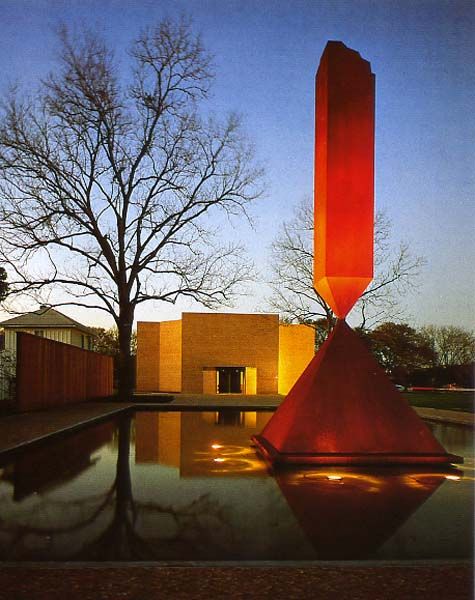 The few years I lived in Houston’s Menil neighborhood, right behind the University of St. Thomas, I felt like I’d been invited to live in a sacred garden, a nearly prelapsarian environment.
It is a beautiful space, near the art museum known as the Menil Collection and its park, and bordered by several streets of Craftsman-style houses.
Yet while I lived in my “Menil house,” I was forced to learn more about darkness and my faith and how it might endure. Both my daughters, in their early twenties, were in trouble. They’d become entangled in bad relationships with jealous, controlling men. They’d begun abusing drugs.
During that time, I saw my daughters less and less; they seemed to be disappearing right before my eyes. I’d invite them to the house every couple of weeks or try to meet with one or both of them for coffee. Often they’d say yes, only to cancel at the last minute or forget to show up. Or when they did show up, they’d arrive with their drugged, unpredictable partners.
On a positive note, my friends loved my new space and were happy to stop by or spend the whole day with me there. In the fall, we could walk to the Greek or Italian festivals. Or we’d visit the Menil Collection or just sit on my front porch, enjoying the view—the park, the massive live oaks, and directly across the street, the Rothko Chapel.
A happy accident, since I’d done nothing to deserve such good fortune. But the chapel and its setting would sustain me over the next two years as I tried to find peace for myself or, if I dared hope, a miracle for my daughters.
The Rothko Chapel, completed in 1971, presents itself as a small octagonal brick building, designed by Philip Johnson for Dominique and John de Menil. It contains fourteen unusual Rothko canvases—unusual because they aren’t the bright, colorful canvases typical of Rothko’s most famous works. These canvases, completed between 1964 and 1967, are dark-hued rectangles in purples and blacks.
According to the chapel website, Rothko never mentioned why he chose these colors for his canvases. Yet there are some theories out there. Suna Umari, who has worked at the chapel many years, says that being in the presence of these canvases offers windows “to the beyond.”
Dominique de Menil explained that the dark paintings “have startled many visitors who associate darkness with gloom.” Many people, she wrote, “are unprepared for the monumental gravity of these vertical panels…They feel plunged into the night. Indeed it is the night—but not quite. Even in the dim light, purplish color slowly emerges from the darkness…it is predawn.”
While I could write you a book about the worry and dread I felt for my daughters during that period of my life, I eventually learned that I couldn’t rush in and save them, that I could only use my good sense and my prayers and my influence as someone who loved them dearly.
And in the early mornings before work, I could sit on my porch, the yard shaded by huge trees. From that angle, I could see the Rothko Chapel and Barnett Newman’s Broken Obelisk sculpture, which appeared to defy gravity and float on the reflecting pool. A few steps across the street and I could stand in front of the chapel and the pool, watching a pair of blue heron in the water.
Another few steps, through a gap in the bamboo, and I could find a fig tree spread out across the lawn. If I arrived early on an August morning, I could find some ripe figs, leaving plenty for my neighbors, who also enjoyed the bounty. While I inhabited this space, sometimes I could quiet my incessant fear about my daughters’ complicated, risky lives.
Often while I walked in my neighborhood, I passed one of the Franciscan nuns from St. Thomas, who was running (for exercise), her brown habit kicking up above her ankles. She’d smile and wave; I’d do the same, knowing nothing of her life, but wishing that my life were as simple as hers appeared to be. Still, she had made me smile.
Some days after work, I’d hurry to change into my jeans and a tee shirt. Then I would walk across the street and sit calmly in the chapel, enjoying the silence and the huge canvases that projected “nothing.” Instead as my eyes focused in the dim light, I could feel myself looking into a calm ocean or into deep space. The colors seemed to announce themselves to me, as if, yes, night would pass us into pre-dawn.
Living there by the Rothko Chapel helped me rise each day after sleeping, when I only wanted to sleep. While I might attend a reading or a lecture in the chapel some evenings, it provided me a safe place to sit in silence on other evenings, trying not to plead with God too much about my daughters. This was a place where in the dim light, unrecognized and undisturbed, I might be pulled into the paintings, where I could grieve for my daughters’ innocence lost in ways I’d never imagined. I would be comforted by the enveloping walls of the chapel’s murals.
To say that I was saved and that my daughters were eventually saved sounds too simple. There are many threads to their stories. I went to the chapel faithfully, though, and practiced patience and meditation; I often left with great hope, or just enough to get through another day.
Susan Barnes, who wrote The Rothko Chapel: An Act of Faith, says that “you walk into this chapel and you know, now, that it has been sanctified by the prayers of people.”
I felt that sanctity, those prayers, and added my own. Now I hope that others, who find themselves in the chapel’s quiet, can experience the same sanctity and leave with the faith in all the prayers that have been uttered there.
Rebecca A. Spears, a poet and essayist, is the author of The Bright Obvious. Her poems and essays are included in If These Walls Could Speak: The Blanton Museum Poetry Project (University of Texas, Austin), TriQuarterly, Crazyhorse, Calyx, Verse Daily, Ars Medica, Birmingham Poetry Review, Nimrod, Relief, and other journals and anthologies. In Houston, she is a board member of Mutabilis Press and English Department Chair at an Orthodox Jewish high school, an experience that has made her look more deeply at her own faith.

Previous Post

October 20, 2015
The Beast Without
Next Post
October 22, 2015 Blessed Are the Tentmakers
Browse Our Archives
Select a Category A. G. Harmon Alissa Wilkinson Allison Backous Art Authors Brad Fruhauff Bradford Winters Bryan Bliss Caroline Langston Chad Thomas Johnston Chris Hoke Christiana N. Peterson Culture D.G. Myers D.L. Mayfield Daniel Bowman Jr. David Griffith Elizabeth Duffy Faith Film Greg Wolfe Guest Contributor Interview Jan Vallone Jeffrey Overstreet Jessica Eddings-Roeser Jessica Mesman Griffith Kelly Foster Lindsey Crittenden Morgan Meis music Natalie Vestin Nick Olson Peggy Rosenthal Personal Reflection Poetry Friday Reflection Relationships Review Richard Chess Richard Cole Sara Zarr Shannon Huffman Polson Sonya Bilocerkowycz Tania Runyan Tony Woodlief Topical Categories Uncategorized Vic Sizemore Writing
Select a Month October 2018 September 2018 August 2018 July 2018 June 2018 May 2018 April 2018 March 2018 February 2018 January 2018 December 2017 November 2017 October 2017 September 2017 August 2017 July 2017 June 2017 May 2017 April 2017 March 2017 February 2017 January 2017 December 2016 November 2016 October 2016 September 2016 August 2016 July 2016 June 2016 May 2016 April 2016 March 2016 February 2016 January 2016 December 2015 November 2015 October 2015 September 2015 August 2015 July 2015 June 2015 May 2015 April 2015 March 2015 February 2015 January 2015 December 2014 November 2014 October 2014 September 2014 August 2014 July 2014 June 2014 May 2014 April 2014 March 2014 February 2014 January 2014 December 2013 November 2013 October 2013 September 2013 August 2013 July 2013 June 2013 May 2013 April 2013 March 2013 February 2013 January 2013 December 2012 November 2012 October 2012 September 2012 August 2012 July 2012 June 2012 May 2012 February 2008
Follow Us!
TAKE THE
Religious Wisdom Quiz
I am a coat of many colors that sparked jealousy among brothers. What am I?
Select your answer to see how you score.
The priests robe Joseph's coat Jacob's robe A royal garment
Related posts from Good Letters

Poetry Friday: "The Burned Butterfly"

The Stars of the Earth Cry Out


TRENDING AT PATHEOS Catholic

The Parable Of The Sower And The Word...
One of Christ’s most famous parables is that of the sower who...

Rejecting Doom: Christian Hope And Human Action
Christianity is a religion of hope. We are to have hope and...

Why I Choose the Eucharist Over the Sermon
Choose the Eucharist, Not the Sermon What are we supposed to get...

5 Design Elements Found in Spiritually Rooted Homes
Putting Spirituality Into Home Decor Our homes are more than our living...

Credo: A Story of God Told with the...
About 10 years ago, I began to imagine a personal "Credo" that...

The Anatomy of Divine Revelation in Catholic Thought
The claim that God has made Himself known to human beings is...
view all Catholic blogs
Ad-Free & Subscriber Log-In Subscription Support
- About Us
- 2026 Calendar
- Videos
- Podcasts
- Library of World Religions
- Faith In Media Tracker
- Advertise With Us
- Write for Us
- Privacy Policy
- Terms of Service
- Do Not Sell My Data
- Contact Us
- Radiant Digital
- Manage Newsletter Subscriptions
- Unsubscribe From Notifications
- Sitemap
Copyright 2008-2026, Patheos. All rights reserved.
Subscription Support Ad-Free & Subscriber Log-In
Follow Patheos