
BuddhistCatholicContemplativeEvangelicalGeneral ChristianHinduJewishLatter-day SaintMuslimNew VisionsProgressive Christian
Beliefs
- Buddhist
- Catholic
- Contemplative
- Evangelical
- General Christian
- Hindu
- Jewish
- Latter-day Saint
- More Voices
- Muslim
- New Visions
- Pagan
- Progressive Christian
Topics
- Religion News
- Food and Religion
- Sports and Religion
- Religious Art
- Religious Music and Entertainment
- Religious Events
- History and Religion
- Style and Religion
- Politics and Religion
- Women in Religion
- Recreation Outdoors and Religion
- Business Finance and Religion
- Careers Workplace and Religion
- Education and Religion
- Family Parenting and Religion
- Health Fitness and Religion
- Home and Religion
- Relationships and Religion
- Technology and Religion
- Travel and Religion
Columnists
- Buddhist Columnists
- Business Finance and Religion Columnists
- Careers Workplace and Religion Columnists
- Catholic Columnists
- Contemplative Columnists
- Education and Religion Columnists
- Evangelists Columnists
- Family Parenting and Religion Columnists
- General Christian Columnists
- Health Fitness and Religion Columnists
- Hindu Columnists
- History and Religion Columnists
- Home and Religion Columnists
- Jewish Columnists
- More Voices Columnists
- Latter Day Columnists
- Muslim Columnists
- New Visions Columnists
- Nonreligious Columnists
- Pagan Columnists
- Politics and Religion Columnists
- Progressive Columnists
- Recreation Outdoors and Religion Columnists
- Relationships and Religion Columnists
- Religion News Columnists
- Religious Art Columnists
- Religious Events Columnists
- Religious Music and Entertainment Columnists
- Sports and Religion Columnists
- Style and Religion Columnists
- Technology and Religion Columnists
- Travel and Religion Columnists
- Women in Religion Columnists
Resource Library
- 2026 Calendar
- Library of World Religions
- The 100 Most Holy Places on Earth
- Patheos Answers
- Podcasts
- Videos
- Faith Leaders Database
- Anglican Episcopalian
- Bahai
- Baptist
- Buddhism
- Christianity
- Confucianism
- Eastern Orthodoxy
- Hinduism
- Holiness and Pentecostal
- ISKCON
- Islam
- Judaism
- Lutheran
- Methodist
- The Church of Jesus Christ of Latter-day Saints
- New Age
- Paganism
- Presbytarian and Reformed
- Protestantism
- Religion Behind the Scenes
- Roman Catholic
- Scientology
- Shia Islam
- Sikhism
- Sufism
- Sunni Islam
- Taoism
- Zen
- See all religions
Research Tools
 Ad-Free & Subscriber Log-In Subscription Support
Ad-Free & Subscriber Log-In Subscription Support
Follow Patheos 

- Trending:
- Forgiveness
- |
- Marriage
- |
- Consciousness
- |
- Death Penalty
- |
- Election
- |
- Halloween
 Good Letters
-
Contributors
- Home
- Catholic
- Lucia Berlin: A Master of Catholic Fiction, Part 2
Lucia Berlin: A Master of Catholic Fiction, Part 2
Last updated on: October 14, 2015 at 1:00 pm by Guest Contributor
Lucia Berlin: A Master of Catholic Fiction, Part 2 2015-10-14T13:00:07-07:00 Guest Contributor
Patheos Explore the world's faith through different perspectives on religion and spirituality! Patheos has the views of the prevalent religions and spiritualities of the world.
By Jenny Shank
 Continued from yesterday.
Catholic imagery appears throughout Lucia Berlin’s A Manual for Cleaning Women, the posthumous selected stories that has brought her singular fiction out of obscurity.
The magnificent “El Tim,” a story about a charismatic adolescent Mexican-American boy who disrupts a Catholic school with his sly behavior, begins: “A nun stood in each classroom door, black robes floating into the hall with the wind.” The grade school nuns keep perfect order, but the middle school ones have a harder time: “They could not use awe or love like the grade school nuns. Their recourse was impregnability, indifference to the students who were their duty and their life.”
In this story, Berlin contrasts the nuns’ garb and demeanor with that of the young men they teach. They may share a religion, but the boys display its symbols to different ends: “They wore open black shirts or V-neck sweaters with nothing under them, so that their crucifixes gleamed against their smooth brown chests…the crucifix of the pachuco, which was also tattooed on the back of their hand.”
In “Good and Bad,” set in Chile, where Berlin lived like a debutante during her teen years while her father worked a lucrative mining job, she again evokes the grace of nuns: “[The school] was run by French nuns, lovely old nuns, with fleur-de-lis coifs and blue-gray habits. They floated through the dark rooms, above the stone floors, flew down the passages by the flowered courtyard, popped open wooden shutters, calling out in birdlike voices.”
Berlin didn’t care for the way contemporary nuns dressed. The “Stars and Saints” narrator says: “I had of course decided to become a nun by then, because they never looked nervous but mostly because of the black habits and the white coifs, the headdresses like giant starched white fleur-de-lis. I’ll bet the Catholic Church lost out on a lot of would-be nuns when they started dressing like ordinary meter maids.”
Berlin loved the trappings of the Catholic Church, from the nuns’ crisp habits to gory depictions of Christ, especially in Mexican churches she saw when visiting her sister, who married a Mexican man and lived in Mexico City. In “Fool to Cry,” inspired by the weeks Berlin lived with her sister as she was dying of cancer, the narrator says of visiting a church in Coyoacán:
“I knelt at the back, near the bloodiest Christ, and watched the ceremony.” She recalls, “In Mexican villages, when my sons were infants, Indians would sometimes make the sign of the cross on their brows. Pobrecito! They would say. That such a lovely creature should have to suffer this life!”
In “Panteon de Dolores,” the narrator makes an ofrenda for her sister: “Offerings to the dead. You make them as pretty as you can. Cascading and brilliant with marigolds and magenta velvets, a flower that looks like brains, and tiny purple sempiternas. The main idea about death here is to make it beautiful and festive. Sultry bleeding Christs, the elegance, the ultimate beautiful deadliness of bullfights, elaborately carved tombs, headstones for the graves.”
Clearly the look and symbols of Catholicism appealed to Berlin. But more than that, the themes of her stories are the most deeply Catholic I have come across in writing by a non-Catholic. Time and again, Berlin creates dignified portraits of the downtrodden: alcoholics, the poor, the blind, the ill, people who hold jobs others disdain. Berlin would have rolled her eyes to hear me say it, but she ventured where Jesus would have gone and came back with beauty.
In “A Manual for Cleaning Women,” the narrator says, “Rich people in cars never look at people on the street, at all. Poor ones always do…in fact it sometimes seems they’re just driving around, looking at people on the street. I’ve done that. Poor people wait a lot. Welfare, unemployment lines, Laundromats, phone booths, emergency rooms, jails, etc.”
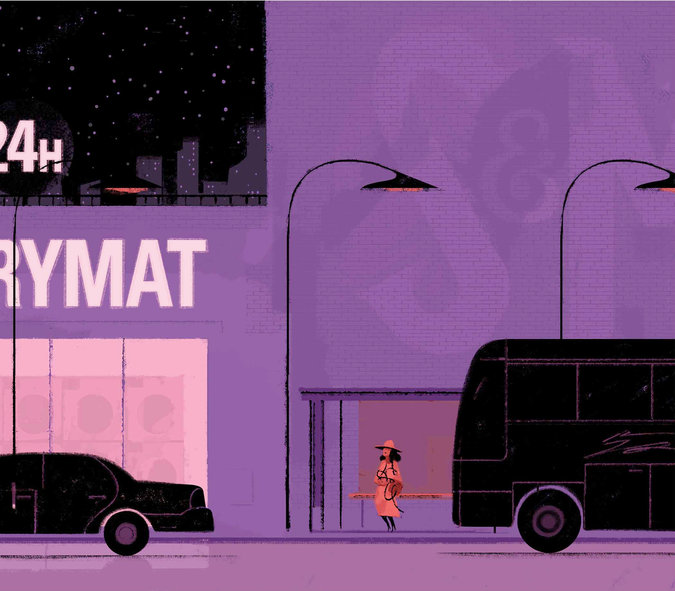
In “Angel’s Laundromat,” the narrator comes to an understanding with a Jicarilla Apache Indian man who is frequently at the Laundromat the same time she is: “One day I hadn’t seen him but I knew it was his fine hand on my shoulder. He gave me three dimes. I didn’t understand, almost said thanks, but then I saw that he was shaky–sick and couldn’t work the dryers. Sober, it’s hard. You have to turn the arrow with one hand, put the dime in with the other, push down the plunger, then turn the arrow back for the next dime.”
But perhaps my favorite example of the absolute empathy, humor, and grace that characterized Berlin as a person and a writer is in “Emergency Room Notebook, 1977.” In the story, a woman who works as an assistant in an emergency room has gotten to know a blind man whose wife died there. Later she spots him on the bus and sits beside him:
“He was very funny, describing his new, messy roommate at the Hill Top House for the Blind. I couldn’t imagine how he could know his roommate was messy, but then I could and told him my Marx Brothers idea of two blind roommates—shaving cream on the spaghetti, slipping on spilled stuffaroni, etc. We laughed and were silent, holding hands…from Pleasant Valley to Alcatraz Avenue. He cried, softly. My tears were for my own loneliness, my own blindness.”
The last time I saw Berlin, she was living in a trailer park in Boulder, struggling with poor health. “In terrible pain,” she wrote me in one of the last emails she sent me. “Can barely walk around. Making oatmeal a huge project.”
How ecstatic Berlin would be that her book is now a finalist for the $50,000 Kirkus Prize. It kills me that I can’t share the good news with her. I think this makes her an honorary Catholic: in life she experienced all of the suffering but almost none of the glory.
Jenny Shank is a novelist whose first novel, The Ringer, won the High Plains Book Award.

Previous Post

October 12, 2015
Lucia Berlin: A Master of Catholic Fiction, Part 1
Next Post
October 14, 2015 Driving the Dark Roads
Browse Our Archives
Select a Category A. G. Harmon Alissa Wilkinson Allison Backous Art Authors Brad Fruhauff Bradford Winters Bryan Bliss Caroline Langston Chad Thomas Johnston Chris Hoke Christiana N. Peterson Culture D.G. Myers D.L. Mayfield Daniel Bowman Jr. David Griffith Elizabeth Duffy Faith Film Greg Wolfe Guest Contributor Interview Jan Vallone Jeffrey Overstreet Jessica Eddings-Roeser Jessica Mesman Griffith Kelly Foster Lindsey Crittenden Morgan Meis music Natalie Vestin Nick Olson Peggy Rosenthal Personal Reflection Poetry Friday Reflection Relationships Review Richard Chess Richard Cole Sara Zarr Shannon Huffman Polson Sonya Bilocerkowycz Tania Runyan Tony Woodlief Topical Categories Uncategorized Vic Sizemore Writing
Select a Month October 2018 September 2018 August 2018 July 2018 June 2018 May 2018 April 2018 March 2018 February 2018 January 2018 December 2017 November 2017 October 2017 September 2017 August 2017 July 2017 June 2017 May 2017 April 2017 March 2017 February 2017 January 2017 December 2016 November 2016 October 2016 September 2016 August 2016 July 2016 June 2016 May 2016 April 2016 March 2016 February 2016 January 2016 December 2015 November 2015 October 2015 September 2015 August 2015 July 2015 June 2015 May 2015 April 2015 March 2015 February 2015 January 2015 December 2014 November 2014 October 2014 September 2014 August 2014 July 2014 June 2014 May 2014 April 2014 March 2014 February 2014 January 2014 December 2013 November 2013 October 2013 September 2013 August 2013 July 2013 June 2013 May 2013 April 2013 March 2013 February 2013 January 2013 December 2012 November 2012 October 2012 September 2012 August 2012 July 2012 June 2012 May 2012 February 2008
Follow Us!
TAKE THE
Religious Wisdom Quiz
Who is the author of the Book of Revelation?
Select your answer to see how you score.
Ezekiel Paul Peter John
Related posts from Good Letters

On Writing Odes: Taking Time to Celebrate

The Stars of the Earth Cry Out


TRENDING AT PATHEOS Catholic

Rejecting Doom: Christian Hope And Human Action
Christianity is a religion of hope. We are to have hope and...

It’s What Comes From Within Which Matters
One of the most difficult things for us to understand is why...

Why I Choose the Eucharist Over the Sermon
Choose the Eucharist, Not the Sermon What are we supposed to get...

5 Design Elements Found in Spiritually Rooted Homes
Putting Spirituality Into Home Decor Our homes are more than our living...

Credo: A Story of God Told with the...
About 10 years ago, I began to imagine a personal "Credo" that...

The Anatomy of Divine Revelation in Catholic Thought
The claim that God has made Himself known to human beings is...
view all Catholic blogs
Ad-Free & Subscriber Log-In Subscription Support
- About Us
- 2026 Calendar
- Videos
- Podcasts
- Library of World Religions
- Faith In Media Tracker
- Advertise With Us
- Write for Us
- Privacy Policy
- Terms of Service
- Do Not Sell My Data
- Contact Us
- Radiant Digital
- Manage Newsletter Subscriptions
- Unsubscribe From Notifications
- Sitemap
Copyright 2008-2026, Patheos. All rights reserved.
Subscription Support Ad-Free & Subscriber Log-In
Follow Patheos