
BuddhistCatholicContemplativeEvangelicalGeneral ChristianHinduJewishLatter-day SaintMuslimNew VisionsProgressive Christian
Beliefs
- Buddhist
- Catholic
- Contemplative
- Evangelical
- General Christian
- Hindu
- Jewish
- Latter-day Saint
- More Voices
- Muslim
- New Visions
- Pagan
- Progressive Christian
Topics
- Religion News
- Food and Religion
- Sports and Religion
- Religious Art
- Religious Music and Entertainment
- Religious Events
- History and Religion
- Style and Religion
- Politics and Religion
- Women in Religion
- Recreation Outdoors and Religion
- Business Finance and Religion
- Careers Workplace and Religion
- Education and Religion
- Family Parenting and Religion
- Health Fitness and Religion
- Home and Religion
- Relationships and Religion
- Technology and Religion
- Travel and Religion
Columnists
- Buddhist Columnists
- Business Finance and Religion Columnists
- Careers Workplace and Religion Columnists
- Catholic Columnists
- Contemplative Columnists
- Education and Religion Columnists
- Evangelists Columnists
- Family Parenting and Religion Columnists
- General Christian Columnists
- Health Fitness and Religion Columnists
- Hindu Columnists
- History and Religion Columnists
- Home and Religion Columnists
- Jewish Columnists
- More Voices Columnists
- Latter Day Columnists
- Muslim Columnists
- New Visions Columnists
- Nonreligious Columnists
- Pagan Columnists
- Politics and Religion Columnists
- Progressive Columnists
- Recreation Outdoors and Religion Columnists
- Relationships and Religion Columnists
- Religion News Columnists
- Religious Art Columnists
- Religious Events Columnists
- Religious Music and Entertainment Columnists
- Sports and Religion Columnists
- Style and Religion Columnists
- Technology and Religion Columnists
- Travel and Religion Columnists
- Women in Religion Columnists
Resource Library
- 2026 Calendar
- Library of World Religions
- The 100 Most Holy Places on Earth
- Patheos Answers
- Podcasts
- Videos
- Faith Leaders Database
- Anglican Episcopalian
- Bahai
- Baptist
- Buddhism
- Christianity
- Confucianism
- Eastern Orthodoxy
- Hinduism
- Holiness and Pentecostal
- ISKCON
- Islam
- Judaism
- Lutheran
- Methodist
- The Church of Jesus Christ of Latter-day Saints
- New Age
- Paganism
- Presbytarian and Reformed
- Protestantism
- Religion Behind the Scenes
- Roman Catholic
- Scientology
- Shia Islam
- Sikhism
- Sufism
- Sunni Islam
- Taoism
- Zen
- See all religions
Research Tools
 Ad-Free & Subscriber Log-In Subscription Support
Ad-Free & Subscriber Log-In Subscription Support
Follow Patheos 

- Trending:
- Forgiveness
- |
- Marriage
- |
- Consciousness
- |
- Death Penalty
- |
- Election
- |
- Halloween
 Good Letters
-
Contributors
- Home
- Catholic
- Lucia Berlin: A Master of Catholic Fiction, Part 1
Lucia Berlin: A Master of Catholic Fiction, Part 1
Last updated on: October 14, 2015 at 12:59 pm by Guest Contributor
Lucia Berlin: A Master of Catholic Fiction, Part 1 2015-10-14T12:59:37-07:00 Guest Contributor
Patheos Explore the world's faith through different perspectives on religion and spirituality! Patheos has the views of the prevalent religions and spiritualities of the world.
By Jenny Shank
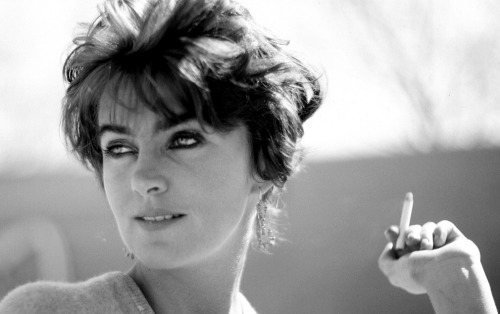
In September, Lucia Berlin’s posthumous collection of selected short stories A Manual for Cleaning Women hit the New York Times Best Seller list for hardcover fiction.
Vice called Lucia Berlin “the greatest American writer you’ve never heard of.”
Marie Claire predicted that this “highly semiautobiographical collection will catapult [Berlin] into a household name.”
And John Williams wrote in the New York Times, “She put much of her roving, rowdy life onto the page in vivid stories that garnered the respect of a modest audience and now could be on the verge of making her posthumously famous.”
I count myself as part of that “modest audience” who was lucky to know Berlin and her work before her death in 2004. I met Berlin when she was my teacher in the graduate creative writing program at the University of Colorado, and I was immediately taken by her as a writer and as a person.
I wanted to hear all Berlin’s stories: About how she and her jazz musician husband used to hang out in New York with Amiri Baraka back when he was LeRoi Jones.
Or about how she took a class taught by Edward Abbey at the University of New Mexico where he said “the Renaissance rushed into Europe like waters flooding a desert arroyo during a sudden storm” and all the girls swooned.
Or about how she was a close friend of the mother of Black Panther leader Huey P. Newton in Oakland, was the only white person invited to his funeral, and declined when Newton’s mom asked her to write Newton’s biography because, as she told me, “A white person shouldn’t write that book.”
Sure, I also loved Berlin in part because she was effusive with her praise. I just found a copy of a story I wrote in 1998, with Berlin’s delicate script ringing the text on the first page: “Jenny—you can write about anything and it is full of love & promise & grace. I don’t think one story yet has passed by without bringing tears to my eyes and you are NOT sentimental even; or even sweet.”
Yes, I know she sweet-talked all my classmates in her fiction workshop, not just me; she showered love and praise on fellow writers like an old-fashioned lawn sprinkler that distributes water over parched ground and then goes back and does it again. It was just this sort of praise that saw me through the decade-long slog of failure and rejection that I experienced after I left her classroom that eventually resulted in my publishing my first novel.
But Berlin’s own fiction amazed me even more than the stories she told about her life and the encouragement she lavished on students. Any time I made new friends who could appreciate her work, I’d foist one of her story collections, published by Black Sparrow Press, on them, and whenever I taught a fiction-writing workshop, I’d include some of her stories as well.
I’m so pleased that forces in the literary world with much more power than mine have at last taken over my mission to keep Berlin’s important words alive. Now that I don’t have to persuade others to read her writing, I can dip in and discuss the wonders to be found in her stories, such as her uncommon sensibility for writing about Catholicism even though she wasn’t Catholic.
I once gave Berlin a copy of Kathleen Norris’s The Cloister Walk for her birthday. She looked at me with her crystalline blue eyes and said, “Thank you for knowing that I would like this.”
I think she thought of herself as a sinner, or at least imagined others saw her that way. She married and divorced three times, raised four boys mostly on her own, worked blue collar jobs to make ends meet, and struggled with alcoholism for years. She was over all that by the time I met her, when she was sixty-two. She suffered from double scoliosis that caused a rib to puncture one of her lungs, leaving her tethered to an oxygen tank, which disconnected her oxygen tank for the occasional forbidden cigarette.
And Berlin relished gossiping and appreciated men. “If only I were twenty years younger,” she told me about one writer she was corresponding with whose work and other qualities she admired.
But although she enjoyed being a little bit “bad,” by far her dominant trait was her generosity, evidenced by the reams of letters of recommendation she wrote, the complimentary critiques she gave of students’ work even after they had graduated, and the blueberry blintzes she prepared for me despite the constant pain she was in when I used to visit her in her trailer in Boulder a few years before she died.
Also, she had a thing for nuns. In the story “Stars and Saints,” she writes of a Catholic school she attended as a girl in Texas: “Whenever a siren sounded outside in the streets, near or far, Sister Cecilia had us stop whatever we were doing, lay our heads down on our desks, and say a Hail Mary. I still do that. Say a Hail Mary, I mean. Well, also I lay my head down on wooden desks, to listen to them, because they do make sounds, like branches in the wind, as if they were still trees.”
Berlin wrote autobiographically almost exclusively, though of course she embellished and changed things around in her fiction. The narrator of “Stars and Saints” is too awkward to make friends with the other girls—she’s always the new kid, moving wherever her father’s job in the mining industry takes her, and has to wear a back brace for her scoliosis besides.
So when she figures out that one of the nuns can’t bear to remove dead mice from the traps in the kitchen, she volunteers for the job, and then lingers there every recess rather than face the other kids in the schoolyard: “The nuns were so pleased they didn’t say anything about me being in the kitchen, except one of them did whisper ‘Protestant’ to another one.”
The child finds comfort in the rituals of the Catholic Church, though her mother forbids her to convert. She sneaks inside a confessional one day anyway: “I’m not sure how long it was before I found myself inside, my heart pounding. It was more exquisite inside than I could have imagined. Smoky with myrrh, a velvet cushion to kneel on, a blessed virgin looking down upon me with infinite pity and compassion.”
To be continued tomorrow.
Jenny Shank is a novelist whose first novel, The Ringer, won the High Plains Book Award.

Previous Post

October 9, 2015
Our Lady’s Football Team
Next Post
October 13, 2015 Lucia Berlin: A Master of Catholic Fiction, Part 2
Browse Our Archives
Select a Category A. G. Harmon Alissa Wilkinson Allison Backous Art Authors Brad Fruhauff Bradford Winters Bryan Bliss Caroline Langston Chad Thomas Johnston Chris Hoke Christiana N. Peterson Culture D.G. Myers D.L. Mayfield Daniel Bowman Jr. David Griffith Elizabeth Duffy Faith Film Greg Wolfe Guest Contributor Interview Jan Vallone Jeffrey Overstreet Jessica Eddings-Roeser Jessica Mesman Griffith Kelly Foster Lindsey Crittenden Morgan Meis music Natalie Vestin Nick Olson Peggy Rosenthal Personal Reflection Poetry Friday Reflection Relationships Review Richard Chess Richard Cole Sara Zarr Shannon Huffman Polson Sonya Bilocerkowycz Tania Runyan Tony Woodlief Topical Categories Uncategorized Vic Sizemore Writing
Select a Month October 2018 September 2018 August 2018 July 2018 June 2018 May 2018 April 2018 March 2018 February 2018 January 2018 December 2017 November 2017 October 2017 September 2017 August 2017 July 2017 June 2017 May 2017 April 2017 March 2017 February 2017 January 2017 December 2016 November 2016 October 2016 September 2016 August 2016 July 2016 June 2016 May 2016 April 2016 March 2016 February 2016 January 2016 December 2015 November 2015 October 2015 September 2015 August 2015 July 2015 June 2015 May 2015 April 2015 March 2015 February 2015 January 2015 December 2014 November 2014 October 2014 September 2014 August 2014 July 2014 June 2014 May 2014 April 2014 March 2014 February 2014 January 2014 December 2013 November 2013 October 2013 September 2013 August 2013 July 2013 June 2013 May 2013 April 2013 March 2013 February 2013 January 2013 December 2012 November 2012 October 2012 September 2012 August 2012 July 2012 June 2012 May 2012 February 2008
Follow Us!
TAKE THE
Religious Wisdom Quiz
According to James, what does the prayer offered in faith do for the sick person?
Select your answer to see how you score.
Ease their pain Comfort their spirit Make them well, and the Lord will raise them up Shorten their suffering
Related posts from Good Letters

On Writing Odes: Taking Time to Celebrate

The Stars of the Earth Cry Out


TRENDING AT PATHEOS Catholic

Creation, Preservation, and Teleology in Catholic Theology
As I write this, it is very early Monday morning. Like millions...

The Parable Of The Sower And The Word...
One of Christ’s most famous parables is that of the sower who...

Rejecting Doom: Christian Hope And Human Action
Christianity is a religion of hope. We are to have hope and...

Why I Choose the Eucharist Over the Sermon
Choose the Eucharist, Not the Sermon What are we supposed to get...

5 Design Elements Found in Spiritually Rooted Homes
Putting Spirituality Into Home Decor Our homes are more than our living...

Credo: A Story of God Told with the...
About 10 years ago, I began to imagine a personal "Credo" that...
view all Catholic blogs
Ad-Free & Subscriber Log-In Subscription Support
- About Us
- 2026 Calendar
- Videos
- Podcasts
- Library of World Religions
- Faith In Media Tracker
- Advertise With Us
- Write for Us
- Privacy Policy
- Terms of Service
- Do Not Sell My Data
- Contact Us
- Radiant Digital
- Manage Newsletter Subscriptions
- Unsubscribe From Notifications
- Sitemap
Copyright 2008-2026, Patheos. All rights reserved.
Subscription Support Ad-Free & Subscriber Log-In
Follow Patheos