
BuddhistCatholicContemplativeEvangelicalGeneral ChristianHinduJewishLatter-day SaintMuslimNew VisionsProgressive Christian
Beliefs
- Buddhist
- Catholic
- Contemplative
- Evangelical
- General Christian
- Hindu
- Jewish
- Latter-day Saint
- More Voices
- Muslim
- New Visions
- Pagan
- Progressive Christian
Topics
- Religion News
- Food and Religion
- Sports and Religion
- Religious Art
- Religious Music and Entertainment
- Religious Events
- History and Religion
- Style and Religion
- Politics and Religion
- Women in Religion
- Recreation Outdoors and Religion
- Business Finance and Religion
- Careers Workplace and Religion
- Education and Religion
- Family Parenting and Religion
- Health Fitness and Religion
- Home and Religion
- Relationships and Religion
- Technology and Religion
- Travel and Religion
Columnists
- Buddhist Columnists
- Business Finance and Religion Columnists
- Careers Workplace and Religion Columnists
- Catholic Columnists
- Contemplative Columnists
- Education and Religion Columnists
- Evangelists Columnists
- Family Parenting and Religion Columnists
- General Christian Columnists
- Health Fitness and Religion Columnists
- Hindu Columnists
- History and Religion Columnists
- Home and Religion Columnists
- Jewish Columnists
- More Voices Columnists
- Latter Day Columnists
- Muslim Columnists
- New Visions Columnists
- Nonreligious Columnists
- Pagan Columnists
- Politics and Religion Columnists
- Progressive Columnists
- Recreation Outdoors and Religion Columnists
- Relationships and Religion Columnists
- Religion News Columnists
- Religious Art Columnists
- Religious Events Columnists
- Religious Music and Entertainment Columnists
- Sports and Religion Columnists
- Style and Religion Columnists
- Technology and Religion Columnists
- Travel and Religion Columnists
- Women in Religion Columnists
Resource Library
- 2026 Calendar
- Library of World Religions
- The 100 Most Holy Places on Earth
- Patheos Answers
- Podcasts
- Videos
- Faith Leaders Database
- Anglican Episcopalian
- Bahai
- Baptist
- Buddhism
- Christianity
- Confucianism
- Eastern Orthodoxy
- Hinduism
- Holiness and Pentecostal
- ISKCON
- Islam
- Judaism
- Lutheran
- Methodist
- The Church of Jesus Christ of Latter-day Saints
- New Age
- Paganism
- Presbytarian and Reformed
- Protestantism
- Religion Behind the Scenes
- Roman Catholic
- Scientology
- Shia Islam
- Sikhism
- Sufism
- Sunni Islam
- Taoism
- Zen
- See all religions
Research Tools
 Ad-Free & Subscriber Log-In Subscription Support
Ad-Free & Subscriber Log-In Subscription Support
Follow Patheos 

- Trending:
- Forgiveness
- |
- Marriage
- |
- Consciousness
- |
- Death Penalty
- |
- Election
- |
- Halloween
 Good Letters
-
Contributors
- Home
- Catholic
- Seeking Refuge
Seeking Refuge
Last updated on: May 12, 2016 at 1:42 pm by Guest Contributor
Seeking Refuge 2016-05-12T13:42:15-07:00 Guest Contributor
Patheos Explore the world's faith through different perspectives on religion and spirituality! Patheos has the views of the prevalent religions and spiritualities of the world.
By Shannon Huffman Polson
 I’d just put my two young sons to bed when I opened the computer to see the picture of Aylan. My sons are two and five, and the youngest has round soft legs, like Aylan, and little shoes, like Aylan. I saw the picture of Aylan and felt my blood go cold.
That day I had been humming through hymns in some music planning for our small startup Episcopal community in rural Washington. “We are one in the spirit, we are one in the Lord,” came to mind, an old camp song. Good energy for coming back together at the end of a summer. Now the music stopped.
One in the spirit and one in the Lord? I couldn’t get the picture out of my mind. How blind I was to God’s people struggling each day just to live? Aylan must have tussled and played with his older brother just like my little one, but his brother drowned too. Aylan’s mother must have tucked them both in the same way I tuck in my sons, until she drowned that same day. I started to feel desperate. “They’ll know we are Christians by our love,” the hymn goes. How was I showing Christ’s love?
My feeling of discomfort grew. I emailed a friend who does overseas mission work, but she didn’t know a way to plug in directly. What if my family flew somewhere, worked in a camp? There were places to give, but that didn’t seem enough. We could take a family into our home, but the US has only permitted immigration to 1,500 Syrian refugees.
I learned about refugees when I was ten years old and my family took in two Laotian refugees through a program at our church in Anchorage, Alaska. They were brothers in their early twenties who had fled Laos, swimming across the Mekong River under cover of darkness to a refugee camp in Thailand. One had been a Buddhist priest, captured in the fighting and imprisoned in a small bamboo box. He escaped, though lost a finger to gunfire in the attempt.
Each of us was required to get a full battery of shots before Phoumy and Bounchanh could come live in our home. My mother worried the brothers might make a fire in the middle of the floor. The unknown can make otherness much bigger than it is. And then they arrived, gentle and quiet and grateful, and our family began a long relationship with the Lao and Thai community growing in our unlikely northern city.
We taught them some English, and we kids learned to count to ten and say hello and goodbye with a bow (sabadee, sabadee-ba). We went to gatherings and ate balls of sticky rice and smiled and laughed with other children even when we couldn’t understand each other’s words. One photo shows all of us on skis sliding around in the neighborhood snow. I can’t imagine what Phoumy and Bounchanh thought coming from the jungle environment of Asia to our cold dry Alaskan air.
Even after Phoumy and Bounchanh found their own homes, my dad stayed involved with the refugees helping to set up small gardening and janitorial businesses for those needing work. Phoumy brought his wife over from Laos, and they started a family and had four beautiful children. Bounchanh married and moved to the southeast US. Every Christmas after leaving our family’s home, Phoumy has come by with a large plate of food to share. When my parents divorced, he visited both homes. He still comes, thirty-three years later.
When my father died, I saw Phoumy through the crowd at the funeral. I had not been home for his Christmas visits for many years. “Be strong, Shannon, be strong,” he said, and I looked into eyes and I felt his strength. This man from the mountain country of Laos came to my father’s funeral and offered me strength because once we had offered it to him, and because the deepest parts of our humanity were the same and we needed that from each other.
I imagine how strange and significant it must have been for my parents, both born and raised in small Midwestern towns, to take in these men, but their example made it seem natural for us kids. For our church to sponsor them and for our family to know them was natural and good, and though the war in Laos might be an ocean away, the need and the humanity were a part of us, too. Any sense of otherness dissolved in the practice of love.
But my family cannot take in another if the US is not letting in Syrian refugees. Becoming better informed and giving to organizations assisting them is a start, but it does not feel like enough. How can I do better at showing Christ’s love? Then I thought (perhaps I heard?): maybe I cannot go to Syria, but I can expand my understanding of refugee.
A refugee is a person who has been forced to leave their country because of war, persecution, or natural disaster. It comes from the seventeenth century French: one who has gone in search of refuge, refugia. These are not only people who are oceans away.
Most in our small mountain community of just a few thousand year-round residents were temporary refugees from the devastating wildfires of the past two summers. Most were able to return home. Some, though, do not have homes, and others are seeking refuge in other ways. I call around. Our family can pray, our new church community, too, but I want to know how my older child and I might do something together.
The local food bank stocks shelves on Thursdays. There is kindergarten during those hours, but this is another kind of learning, a deeper one. My son and I can do this together, even once a month. Maybe this can be a start to feeding mouths and growing hearts, to recognizing refugees among us, and ourselves in the refugees.
Stocking food in our small valley does not help the nine million displaced in this crisis. Aylan was only one of so many more. How will they know that we are Christians? Where is our love? Until policy changes, we can send support abroad, and show our love at home to those displaced within our own borders and by our own system. We can remember that fear is a prompt to open our hearts even if it feels easier to close them.
“We are one in the spirit, we are one in the Lord.” It’s a wonderful song to sing, and a harder one to live, though more wonderful in the living. Our world—each of us—failed young Aylan because we were not willing to see. Now we can go looking for him.
Shannon Huffman Polson is the author of North of Hope: A Daughter’s Arctic Journey as well as essays in Cirque Journal, High Country News, Alaska and Seattle magazines, Huffington Post and Ruminate Magazine, where her work was given honorable mention in the 2015 VanderMey Prize for Nonfiction. Her work is forthcoming in River Teeth Journal. Her current project about mythology, community and pathfinding is based on her experience as one of the Army’s first women attack helicopter pilots. Polson is a graduate of SPU’s Master of Fine Arts program. She can be found writing or with her family in the mountains of Washington state or Alaska and always at her website, Facebook, and Twitter.
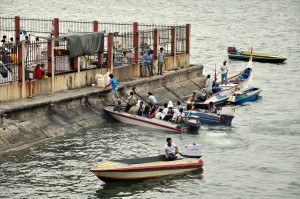
The image above is used through Wikimedia Commons, and is credited to Dcubillas.
Previous Post

September 10, 2015
A Lottery for Barbarians
Next Post

September 14, 2015 Thou Shalt Not Kill Time: The Ethics of Storytelling
Browse Our Archives
Select a Category A. G. Harmon Alissa Wilkinson Allison Backous Art Authors Brad Fruhauff Bradford Winters Bryan Bliss Caroline Langston Chad Thomas Johnston Chris Hoke Christiana N. Peterson Culture D.G. Myers D.L. Mayfield Daniel Bowman Jr. David Griffith Elizabeth Duffy Faith Film Greg Wolfe Guest Contributor Interview Jan Vallone Jeffrey Overstreet Jessica Eddings-Roeser Jessica Mesman Griffith Kelly Foster Lindsey Crittenden Morgan Meis music Natalie Vestin Nick Olson Peggy Rosenthal Personal Reflection Poetry Friday Reflection Relationships Review Richard Chess Richard Cole Sara Zarr Shannon Huffman Polson Sonya Bilocerkowycz Tania Runyan Tony Woodlief Topical Categories Uncategorized Vic Sizemore Writing
Select a Month October 2018 September 2018 August 2018 July 2018 June 2018 May 2018 April 2018 March 2018 February 2018 January 2018 December 2017 November 2017 October 2017 September 2017 August 2017 July 2017 June 2017 May 2017 April 2017 March 2017 February 2017 January 2017 December 2016 November 2016 October 2016 September 2016 August 2016 July 2016 June 2016 May 2016 April 2016 March 2016 February 2016 January 2016 December 2015 November 2015 October 2015 September 2015 August 2015 July 2015 June 2015 May 2015 April 2015 March 2015 February 2015 January 2015 December 2014 November 2014 October 2014 September 2014 August 2014 July 2014 June 2014 May 2014 April 2014 March 2014 February 2014 January 2014 December 2013 November 2013 October 2013 September 2013 August 2013 July 2013 June 2013 May 2013 April 2013 March 2013 February 2013 January 2013 December 2012 November 2012 October 2012 September 2012 August 2012 July 2012 June 2012 May 2012 February 2008
Follow Us!
TAKE THE
Religious Wisdom Quiz
Which king prayed and saw the shadow go backward as a sign from God?
Select your answer to see how you score.
Solomon Uzziah Hezekiah Ahab
Related posts from Good Letters



The Stars of the Earth Cry Out

TRENDING AT PATHEOS Catholic

Rejecting Doom: Christian Hope And Human Action
Christianity is a religion of hope. We are to have hope and...

It’s What Comes From Within Which Matters
One of the most difficult things for us to understand is why...

Why I Choose the Eucharist Over the Sermon
Choose the Eucharist, Not the Sermon What are we supposed to get...

5 Design Elements Found in Spiritually Rooted Homes
Putting Spirituality Into Home Decor Our homes are more than our living...

Credo: A Story of God Told with the...
About 10 years ago, I began to imagine a personal "Credo" that...

The Anatomy of Divine Revelation in Catholic Thought
The claim that God has made Himself known to human beings is...
view all Catholic blogs
Ad-Free & Subscriber Log-In Subscription Support
- About Us
- 2026 Calendar
- Videos
- Podcasts
- Library of World Religions
- Faith In Media Tracker
- Advertise With Us
- Write for Us
- Privacy Policy
- Terms of Service
- Do Not Sell My Data
- Contact Us
- Radiant Digital
- Manage Newsletter Subscriptions
- Unsubscribe From Notifications
- Sitemap
Copyright 2008-2026, Patheos. All rights reserved.
Subscription Support Ad-Free & Subscriber Log-In
Follow Patheos