
BuddhistCatholicContemplativeEvangelicalGeneral ChristianHinduJewishLatter-day SaintMuslimNew VisionsProgressive Christian
Beliefs
- Buddhist
- Catholic
- Contemplative
- Evangelical
- General Christian
- Hindu
- Jewish
- Latter-day Saint
- More Voices
- Muslim
- New Visions
- Pagan
- Progressive Christian
Topics
- Religion News
- Food and Religion
- Sports and Religion
- Religious Art
- Religious Music and Entertainment
- Religious Events
- History and Religion
- Style and Religion
- Politics and Religion
- Women in Religion
- Recreation Outdoors and Religion
- Business Finance and Religion
- Careers Workplace and Religion
- Education and Religion
- Family Parenting and Religion
- Health Fitness and Religion
- Home and Religion
- Relationships and Religion
- Technology and Religion
- Travel and Religion
Columnists
- Buddhist Columnists
- Business Finance and Religion Columnists
- Careers Workplace and Religion Columnists
- Catholic Columnists
- Contemplative Columnists
- Education and Religion Columnists
- Evangelists Columnists
- Family Parenting and Religion Columnists
- General Christian Columnists
- Health Fitness and Religion Columnists
- Hindu Columnists
- History and Religion Columnists
- Home and Religion Columnists
- Jewish Columnists
- More Voices Columnists
- Latter Day Columnists
- Muslim Columnists
- New Visions Columnists
- Nonreligious Columnists
- Pagan Columnists
- Politics and Religion Columnists
- Progressive Columnists
- Recreation Outdoors and Religion Columnists
- Relationships and Religion Columnists
- Religion News Columnists
- Religious Art Columnists
- Religious Events Columnists
- Religious Music and Entertainment Columnists
- Sports and Religion Columnists
- Style and Religion Columnists
- Technology and Religion Columnists
- Travel and Religion Columnists
- Women in Religion Columnists
Resource Library
- 2026 Calendar
- Library of World Religions
- The 100 Most Holy Places on Earth
- Patheos Answers
- Podcasts
- Videos
- Faith Leaders Database
- Anglican Episcopalian
- Bahai
- Baptist
- Buddhism
- Christianity
- Confucianism
- Eastern Orthodoxy
- Hinduism
- Holiness and Pentecostal
- ISKCON
- Islam
- Judaism
- Lutheran
- Methodist
- The Church of Jesus Christ of Latter-day Saints
- New Age
- Paganism
- Presbytarian and Reformed
- Protestantism
- Religion Behind the Scenes
- Roman Catholic
- Scientology
- Shia Islam
- Sikhism
- Sufism
- Sunni Islam
- Taoism
- Zen
- See all religions
Research Tools
 Ad-Free & Subscriber Log-In Subscription Support
Ad-Free & Subscriber Log-In Subscription Support
Follow Patheos 

- Trending:
- Forgiveness
- |
- Marriage
- |
- Consciousness
- |
- Death Penalty
- |
- Election
- |
- Halloween
 Good Letters
-
Contributors
- Home
- Catholic
- A Lottery for Barbarians
A Lottery for Barbarians
Last updated on: September 10, 2015 at 1:00 am by A. G. Harmon
A Lottery for Barbarians 2015-09-09T13:07:13-07:00 A. G. Harmon
Patheos Explore the world's faith through different perspectives on religion and spirituality! Patheos has the views of the prevalent religions and spiritualities of the world.
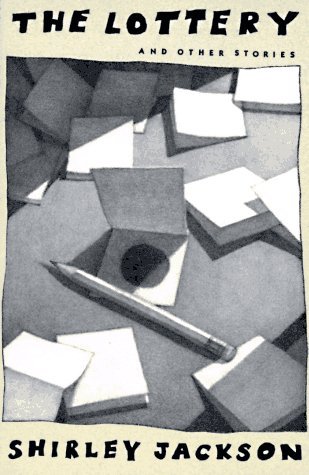 From time to time in my unorthodox career, I’ve found myself teaching a class—be it in ethics or literature or law—which includes a reading of Shirley Jackson’s horror story, The Lottery, first introduced in eighth grade English (or it was back in the day) and having the singular distinction of being the one story most retain memory of—even those who despise fiction.
I can’t possibly spoil the story by telling the ending, as everyone must’ve read it. So it is only memory that I prod when I relate that the denouement involves a contemporary American village’s annual custom of stoning a lottery winner—this time, a housewife and mother—all in order to make the corn crop grow. At least that’s the implied reason, as the purpose is left vague. The power of the story lies in the chilling nonchalance with which the ordinary townspeople conduct this yearly slaughter.
My students react with predictable disgust at the characters’ ignorance—“doing something for which they have no good reason,” it is often expressed.
But surely those are the wrong objections, I say.
“You’re faulting them because they’re illogical? Because there’s no real correlation between human sacrifice and corn growth?”
If so, what if there was a “good” reason? What if blood spill were actually to make corn grow, and science said that it did. Would that make the townspeople right? What if hunger could be eliminated, lives saved, etc., with the shedding of this particular character’s plasma?
And so the questioning goes, with the old utilitarian argument for the good set up against the old natural law one: A larger good justifies the dubious means that accomplish it vs. a good, no matter how large, cannot change the nature of, nor sanction the commission of, an evil meant to bring it about.
Yada. Yada. Yada.
The exercise is useful because it flushes out the uneasy peace, willful complicity, and deliberate ignorance that so often stand in place of moral judgments now. But it’s also useful because pointing to real-world correlatives is so chillingly easy.
To wit, these headlines and news stories:
Planned Parenthood Has Been Selling Body Parts from Aborted Babies for at least 15 years.
Planned Parenthood kept aborted babies alive to harvest organs, ex-technician says.
More Planned Parenthood videos coming.
For the squeamish, the links above take you to stories and videos involving accusations that Planned Parenthood, an abortion provider, has been selling the parts of aborted infants. Some of the charges suggest that babies are born alive, and even being kept alive, in order to harvest their organs and sell them for stem-cell research.
“A lot of people want intact hearts these days,” says senior director of Planned Parenthood’s medical services, Dr. Deborah Nucatola, in one video. “We’ve been very good at getting heart, lung, liver because we know that, so I’m not gonna crush that part. I’m gonna basically crush below. I’m gonna crush above and I’m gonna see if I can get it all intact.”
In another video, Mary Gatter, medical director of the PP Pasadena offices, is shown discussing abortion procedures with a supposed biotech salesman. Gatter offers to use “less crunchy” methods to abort babies so as to better obtain intact body parts.
And in yet another, a former technician describes the glee with which her supervisor tapped the heart of a child on the operating table, jumpstarting it into a beat, then told her to cut open the face in order to better access the brain.
The Congressional subcommittee on Oversight and Planning is looking into it all, as Planned Parenthood is taxpayer funded. Among the laws potentially broken is the Born Alive Infants Protection Act, which requires infants born during the process of abortion to be provided with medical care.
There is a fine context for this scandal. You can’t sell fetal tissue, regardless, under federal law. But you can donate fetal tissue from aborted babies. Planned Parenthood argues that the undercover videos show only efforts to reimburse the costs they undergo in the harvesting of the parts that they donate—i.e., that there is no profit involved.
So I return to my original objection made in my “Lottery” classes: is that really the point? Whether this is a commercial thing or not? What if it was the law that a baby’s parts could be harvested, regardless of whether she were alive or dead, if the intention were to donate the parts to stem cell research? Is it only a matter of legislative fiat and beneficent intent?
In the Nucatola video, the doctor explains how a baby can be positioned so as to allow for delivery up to the neck before killing and dissecting. This is of course a violation of the partial-birth abortion ban—but again, what if the purpose is to donate the parts to science?
Extract her up to the neck, then tweeze out her heart, kidneys, liver—and just use the verb “bequeath” or “give” or “contribute” when you do. You’ll get your tax deduction, just like you do at Goodwill or St. Vinny’s when you drop off your old overcoat and microwave.
In all the turnings of this macabre carousel, the law and science and commerce converge, dancing upon a set of semantic fictions too preposterous even for a child to believe in.
But there are plenty who play the game nonetheless. They spin the wheel. Cue the defenders of this practice, who scream that even to investigate this matter is to “wage a war on women and healthcare.”
Well, that doesn’t bother me a bit. Because I’m not playing. I do indeed set myself against any woman or man alike who does this abominable thing. Opposition to such inhumanity is justified in both its means and end. And if I am an exile to the scientific, legal, or cultural community for doing so, that’s just fine. I’ll happily play the outcast. Stone me.
A.G. Harmon teaches Shakespeare, Law and Literature, Jurisprudence, and Writing at The Catholic University of America in Washington, D.C. His novel, *A House All Stilled,*won the 2001 Peter Taylor Prize for the Novel.
Previous Post

September 9, 2015
What's Wrong with this Picture?
Next Post

September 11, 2015 Seeking Refuge
Browse Our Archives
Select a Category A. G. Harmon Alissa Wilkinson Allison Backous Art Authors Brad Fruhauff Bradford Winters Bryan Bliss Caroline Langston Chad Thomas Johnston Chris Hoke Christiana N. Peterson Culture D.G. Myers D.L. Mayfield Daniel Bowman Jr. David Griffith Elizabeth Duffy Faith Film Greg Wolfe Guest Contributor Interview Jan Vallone Jeffrey Overstreet Jessica Eddings-Roeser Jessica Mesman Griffith Kelly Foster Lindsey Crittenden Morgan Meis music Natalie Vestin Nick Olson Peggy Rosenthal Personal Reflection Poetry Friday Reflection Relationships Review Richard Chess Richard Cole Sara Zarr Shannon Huffman Polson Sonya Bilocerkowycz Tania Runyan Tony Woodlief Topical Categories Uncategorized Vic Sizemore Writing
Select a Month October 2018 September 2018 August 2018 July 2018 June 2018 May 2018 April 2018 March 2018 February 2018 January 2018 December 2017 November 2017 October 2017 September 2017 August 2017 July 2017 June 2017 May 2017 April 2017 March 2017 February 2017 January 2017 December 2016 November 2016 October 2016 September 2016 August 2016 July 2016 June 2016 May 2016 April 2016 March 2016 February 2016 January 2016 December 2015 November 2015 October 2015 September 2015 August 2015 July 2015 June 2015 May 2015 April 2015 March 2015 February 2015 January 2015 December 2014 November 2014 October 2014 September 2014 August 2014 July 2014 June 2014 May 2014 April 2014 March 2014 February 2014 January 2014 December 2013 November 2013 October 2013 September 2013 August 2013 July 2013 June 2013 May 2013 April 2013 March 2013 February 2013 January 2013 December 2012 November 2012 October 2012 September 2012 August 2012 July 2012 June 2012 May 2012 February 2008
Follow Us!
TAKE THE
Religious Wisdom Quiz
Who built an ark to survive a great flood?
Select your answer to see how you score.
Moses David Noah Abraham
Related posts from Good Letters



Can a Racist Drive a Prius? Stereotypes and...

TRENDING AT PATHEOS Catholic

Rejecting Doom: Christian Hope And Human Action
Christianity is a religion of hope. We are to have hope and...

It’s What Comes From Within Which Matters
One of the most difficult things for us to understand is why...

Why I Choose the Eucharist Over the Sermon
Choose the Eucharist, Not the Sermon What are we supposed to get...

5 Design Elements Found in Spiritually Rooted Homes
Putting Spirituality Into Home Decor Our homes are more than our living...

Credo: A Story of God Told with the...
About 10 years ago, I began to imagine a personal "Credo" that...

The Anatomy of Divine Revelation in Catholic Thought
The claim that God has made Himself known to human beings is...
view all Catholic blogs
Ad-Free & Subscriber Log-In Subscription Support
- About Us
- 2026 Calendar
- Videos
- Podcasts
- Library of World Religions
- Faith In Media Tracker
- Advertise With Us
- Write for Us
- Privacy Policy
- Terms of Service
- Do Not Sell My Data
- Contact Us
- Radiant Digital
- Manage Newsletter Subscriptions
- Unsubscribe From Notifications
- Sitemap
Copyright 2008-2026, Patheos. All rights reserved.
Subscription Support Ad-Free & Subscriber Log-In
Follow Patheos