
BuddhistCatholicContemplativeEvangelicalGeneral ChristianHinduJewishLatter-day SaintMuslimNew VisionsProgressive Christian
Beliefs
- Buddhist
- Catholic
- Contemplative
- Evangelical
- General Christian
- Hindu
- Jewish
- Latter-day Saint
- More Voices
- Muslim
- New Visions
- Pagan
- Progressive Christian
Topics
- Religion News
- Food and Religion
- Sports and Religion
- Religious Art
- Religious Music and Entertainment
- Religious Events
- History and Religion
- Style and Religion
- Politics and Religion
- Women in Religion
- Recreation Outdoors and Religion
- Business Finance and Religion
- Careers Workplace and Religion
- Education and Religion
- Family Parenting and Religion
- Health Fitness and Religion
- Home and Religion
- Relationships and Religion
- Technology and Religion
- Travel and Religion
Columnists
- Buddhist Columnists
- Business Finance and Religion Columnists
- Careers Workplace and Religion Columnists
- Catholic Columnists
- Contemplative Columnists
- Education and Religion Columnists
- Evangelists Columnists
- Family Parenting and Religion Columnists
- General Christian Columnists
- Health Fitness and Religion Columnists
- Hindu Columnists
- History and Religion Columnists
- Home and Religion Columnists
- Jewish Columnists
- More Voices Columnists
- Latter Day Columnists
- Muslim Columnists
- New Visions Columnists
- Nonreligious Columnists
- Pagan Columnists
- Politics and Religion Columnists
- Progressive Columnists
- Recreation Outdoors and Religion Columnists
- Relationships and Religion Columnists
- Religion News Columnists
- Religious Art Columnists
- Religious Events Columnists
- Religious Music and Entertainment Columnists
- Sports and Religion Columnists
- Style and Religion Columnists
- Technology and Religion Columnists
- Travel and Religion Columnists
- Women in Religion Columnists
Resource Library
- 2026 Calendar
- Library of World Religions
- The 100 Most Holy Places on Earth
- Patheos Answers
- Podcasts
- Videos
- Faith Leaders Database
- Anglican Episcopalian
- Bahai
- Baptist
- Buddhism
- Christianity
- Confucianism
- Eastern Orthodoxy
- Hinduism
- Holiness and Pentecostal
- ISKCON
- Islam
- Judaism
- Lutheran
- Methodist
- The Church of Jesus Christ of Latter-day Saints
- New Age
- Paganism
- Presbytarian and Reformed
- Protestantism
- Religion Behind the Scenes
- Roman Catholic
- Scientology
- Shia Islam
- Sikhism
- Sufism
- Sunni Islam
- Taoism
- Zen
- See all religions
Research Tools
 Ad-Free & Subscriber Log-In Subscription Support
Ad-Free & Subscriber Log-In Subscription Support
Follow Patheos 

- Trending:
- Forgiveness
- |
- Marriage
- |
- Consciousness
- |
- Death Penalty
- |
- Election
- |
- Halloween
 Good Letters
-
Contributors
- Home
- Catholic
- The Fear of God, Texas-Style
The Fear of God, Texas-Style
Last updated on: August 31, 2015 at 1:00 am by Morgan Meis
The Fear of God, Texas-Style 2015-08-25T10:10:25-07:00 Morgan Meis
Patheos Explore the world's faith through different perspectives on religion and spirituality! Patheos has the views of the prevalent religions and spiritualities of the world.
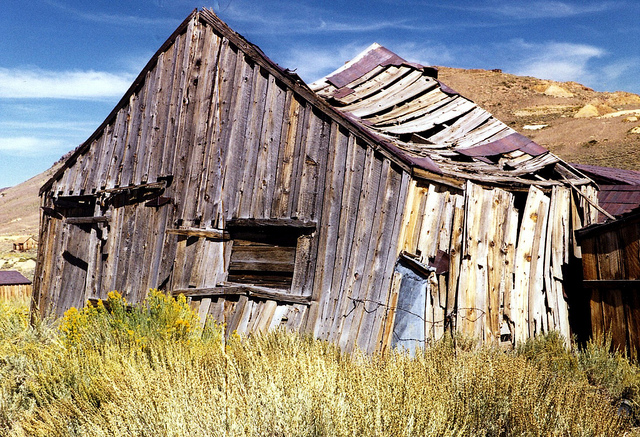 Recently, I found myself in Texas. Driving mostly. Stopping here and there to eat, put more gas in the automobile, urinate.
When you step out of an air-conditioned car in the middle of West Texas you aren’t just making a transition from inside the car to outside. You are stepping into a new atmosphere, like a spaceman emerging from a capsule onto the moon.
Air, when it gets hot enough, has a flavor. It has a smell and a taste. It is metallic on the tongue, like aluminum. Hot aluminum.
Perhaps it was just being in the dead lands of West Texas in early August, with daily highs that never dipped below three digits, but those of us in the car started to think about hell. Hell, the shittiness of the world, and the existence of the state of Texas.
This was a conversation among friends, friends with no great love for the bleaker side of Texas. There was a great deal of laughter. You must laugh, passing through the emptiness, the forgotten towns, and the vast oil fields with their thousands of tubes shooting out flames that burn off the excess natural gas.
One night, a storm came from across the plain. We could see it coming for what seemed hundreds of miles.
The rain started coming down so hard it mattered not whether the wipers were on or off. The rain wasn’t falling but being thrown. The lightning was coming so fast that the sky was fire. And the ground was fire.
Another, different vision of hell. Empty, dry hell during the day. Burning, screaming, rain-soaked hell at night.
There are no towns for hundreds of miles in West Texas. When you do pass a town, it is cold, and hard, and beaten down. The town says with every fiber of its being: There is no solace to be found here. Move on; go away.
It’s like a scene from one of Robert Frank’s early photographs. America as a place where experience gets stretched out so thin it threatens to break, so thin you can practically touch the alienation percolating on the surface, exposed for everyone to see.
Suddenly, one of our car companions said something. She said, “But we don’t know these people. We don’t know what their experience is really like, or why God put them in Texas.”
It is not natural for me to think of God in this way. My God tends to be the God of Pascal more than the God of benevolent interventions. All you need to know about Pascal’s God is the title of the great Polish philosopher Leszek Kolakowski’s book on Pascal. The title of that book is God Owes Us Nothing.
Here is the final sentence: “All [Pascal’s] protestations about the happiness of those who ‘have found God’ notwithstanding, it was a religion for unhappy people and it was designed to make them more unhappy.” This sentence indicts me more fully than I generally like to be indicted.
Pushing through from West Texas finally into Austin, I watched the happy people roaming the streets and passing in and out of the sophisticated dining and drinking establishments. I watched the young people, being young, trying to suppress the thought that they will die, that they are almost already dead.
Somewhere near Houston, a thought came to me. Texas scares me in the exact same way that I am scared of the concept of God’s unlimited sovereignty. Unlimited sovereignty. The implication of this infinite and ever-applicable sovereignty is crushing if you allow yourself to think about it.
It means that there is no way to outthink God. Ever. It means that God does not need an excuse for West Texas and will never give one. It means that the divine will does not justify itself, because it is the very condition and ground of all other justifications.
I could drown in that thought, get lost in it, just as I could imagine myself getting lost wandering the dead lands of Texas, like the Harry Dean Stanton character in Wim Wender’s Paris, Texas, who became one with the dust when his soul was pulverized by the unforgiving nature of God’s sovereignty.
One more quote from Leszek Kolakowski. A lifesaver of sorts to those about to drown:
God’s unlimited sovereignty does not run counter to his being the God of love. On the contrary, since the New Covenant abrogated Judaic law we, as Christians, are under grace. This means that we must trust our Father and not bargain with him, not demand our due from him, not impudently make him accountable before a human court, not try to outsmart him.
This is what my friend, who has had her share of sorrow, was, I believe, trying to say in the car in West Texas. That we must trust God, and not bargain, not demand. That we must go to the towns of West Texas, whenever we must go to the towns of West Texas. That we must pass through the burning oil wells on the empty plains and believe, somehow, that this does not contravene God being the God of love.
Morgan Meis is the critic-at-large for The Smart Set (thesmartset.com). He has a PhD in Philosophy and has written for n+1, The Believer, Harper’s Magazine, and The Virginia Quarterly Review. He won the Whiting Award in 2013. Morgan is also an editor at 3 Quarks Daily, and a winner of a Creative Capital | Warhol Foundation Arts Writers grant. A book of Morgan’s selected essays can be found here. He can be reached at [email protected].
The above royalty free image is attributed to Don Graham on Flickr.
Previous Post

August 28, 2015
When It Comes to Love, We’re Beginners
Next Post
September 1, 2015 In Praise of the Amateur
Browse Our Archives
Select a Category A. G. Harmon Alissa Wilkinson Allison Backous Art Authors Brad Fruhauff Bradford Winters Bryan Bliss Caroline Langston Chad Thomas Johnston Chris Hoke Christiana N. Peterson Culture D.G. Myers D.L. Mayfield Daniel Bowman Jr. David Griffith Elizabeth Duffy Faith Film Greg Wolfe Guest Contributor Interview Jan Vallone Jeffrey Overstreet Jessica Eddings-Roeser Jessica Mesman Griffith Kelly Foster Lindsey Crittenden Morgan Meis music Natalie Vestin Nick Olson Peggy Rosenthal Personal Reflection Poetry Friday Reflection Relationships Review Richard Chess Richard Cole Sara Zarr Shannon Huffman Polson Sonya Bilocerkowycz Tania Runyan Tony Woodlief Topical Categories Uncategorized Vic Sizemore Writing
Select a Month October 2018 September 2018 August 2018 July 2018 June 2018 May 2018 April 2018 March 2018 February 2018 January 2018 December 2017 November 2017 October 2017 September 2017 August 2017 July 2017 June 2017 May 2017 April 2017 March 2017 February 2017 January 2017 December 2016 November 2016 October 2016 September 2016 August 2016 July 2016 June 2016 May 2016 April 2016 March 2016 February 2016 January 2016 December 2015 November 2015 October 2015 September 2015 August 2015 July 2015 June 2015 May 2015 April 2015 March 2015 February 2015 January 2015 December 2014 November 2014 October 2014 September 2014 August 2014 July 2014 June 2014 May 2014 April 2014 March 2014 February 2014 January 2014 December 2013 November 2013 October 2013 September 2013 August 2013 July 2013 June 2013 May 2013 April 2013 March 2013 February 2013 January 2013 December 2012 November 2012 October 2012 September 2012 August 2012 July 2012 June 2012 May 2012 February 2008
Follow Us!
TAKE THE
Religious Wisdom Quiz
What does "Shiloh" (where the Tabernacle stood) mean?
Select your answer to see how you score.
Land of Bread Well of Water House of Prayer Place of Peace
Related posts from Good Letters

Morning in a Forgotten Neighborhood

Leonard Cohen’s Holy and Broken Hallelujah

Ready or Not for the Days of Awe

TRENDING AT PATHEOS Catholic

Creation, Preservation, and Teleology in Catholic Theology
As I write this, it is very early Monday morning. Like millions...

The Parable Of The Sower And The Word...
One of Christ’s most famous parables is that of the sower who...

Rejecting Doom: Christian Hope And Human Action
Christianity is a religion of hope. We are to have hope and...

Why I Choose the Eucharist Over the Sermon
Choose the Eucharist, Not the Sermon What are we supposed to get...

5 Design Elements Found in Spiritually Rooted Homes
Putting Spirituality Into Home Decor Our homes are more than our living...

Credo: A Story of God Told with the...
About 10 years ago, I began to imagine a personal "Credo" that...
view all Catholic blogs
Ad-Free & Subscriber Log-In Subscription Support
- About Us
- 2026 Calendar
- Videos
- Podcasts
- Library of World Religions
- Faith In Media Tracker
- Advertise With Us
- Write for Us
- Privacy Policy
- Terms of Service
- Do Not Sell My Data
- Contact Us
- Radiant Digital
- Manage Newsletter Subscriptions
- Unsubscribe From Notifications
- Sitemap
Copyright 2008-2026, Patheos. All rights reserved.
Subscription Support Ad-Free & Subscriber Log-In
Follow Patheos