
BuddhistCatholicContemplativeEvangelicalGeneral ChristianHinduJewishLatter-day SaintMuslimNew VisionsProgressive Christian
Beliefs
- Buddhist
- Catholic
- Contemplative
- Evangelical
- General Christian
- Hindu
- Jewish
- Latter-day Saint
- More Voices
- Muslim
- New Visions
- Pagan
- Progressive Christian
Topics
- Religion News
- Food and Religion
- Sports and Religion
- Religious Art
- Religious Music and Entertainment
- Religious Events
- History and Religion
- Style and Religion
- Politics and Religion
- Women in Religion
- Recreation Outdoors and Religion
- Business Finance and Religion
- Careers Workplace and Religion
- Education and Religion
- Family Parenting and Religion
- Health Fitness and Religion
- Home and Religion
- Relationships and Religion
- Technology and Religion
- Travel and Religion
Columnists
- Buddhist Columnists
- Business Finance and Religion Columnists
- Careers Workplace and Religion Columnists
- Catholic Columnists
- Contemplative Columnists
- Education and Religion Columnists
- Evangelists Columnists
- Family Parenting and Religion Columnists
- General Christian Columnists
- Health Fitness and Religion Columnists
- Hindu Columnists
- History and Religion Columnists
- Home and Religion Columnists
- Jewish Columnists
- More Voices Columnists
- Latter Day Columnists
- Muslim Columnists
- New Visions Columnists
- Nonreligious Columnists
- Pagan Columnists
- Politics and Religion Columnists
- Progressive Columnists
- Recreation Outdoors and Religion Columnists
- Relationships and Religion Columnists
- Religion News Columnists
- Religious Art Columnists
- Religious Events Columnists
- Religious Music and Entertainment Columnists
- Sports and Religion Columnists
- Style and Religion Columnists
- Technology and Religion Columnists
- Travel and Religion Columnists
- Women in Religion Columnists
Resource Library
- 2026 Calendar
- Library of World Religions
- The 100 Most Holy Places on Earth
- Patheos Answers
- Podcasts
- Videos
- Faith Leaders Database
- Anglican Episcopalian
- Bahai
- Baptist
- Buddhism
- Christianity
- Confucianism
- Eastern Orthodoxy
- Hinduism
- Holiness and Pentecostal
- ISKCON
- Islam
- Judaism
- Lutheran
- Methodist
- The Church of Jesus Christ of Latter-day Saints
- New Age
- Paganism
- Presbytarian and Reformed
- Protestantism
- Religion Behind the Scenes
- Roman Catholic
- Scientology
- Shia Islam
- Sikhism
- Sufism
- Sunni Islam
- Taoism
- Zen
- See all religions
Research Tools
 Ad-Free & Subscriber Log-In Subscription Support
Ad-Free & Subscriber Log-In Subscription Support
Follow Patheos 

- Trending:
- Forgiveness
- |
- Marriage
- |
- Consciousness
- |
- Death Penalty
- |
- Election
- |
- Halloween
 Good Letters
-
Contributors
- Home
- Catholic
- Original Sin and the Warp Effect
Original Sin and the Warp Effect
Last updated on: April 7, 2016 at 11:40 am by A. G. Harmon
Original Sin and the Warp Effect 2016-04-07T11:40:17-07:00 A. G. Harmon
Patheos Explore the world's faith through different perspectives on religion and spirituality! Patheos has the views of the prevalent religions and spiritualities of the world.
 One of the great writers—to my recollection, Flannery O’Connor—said something to the effect that everything we touch is warped by original sin, even our greatest virtues. If I am interpreting her correctly, this means that any display of a moral act is polluted somehow, flecked with impurity, however slight, simply by way of being performed by a human agent.
Of course, in a very simplified definition, original sin is the concept that a human being, through some primordial dissociation from God’s will—is by nature a creature morally flawed and faulted. This dissociation riddles his existence with tendencies, penchants, bents that are as innate to him as the desires of a lion to eat meat, a plant to seek sunshine.
More precise yet, they are as entwined with his makeup as a leopard is with his spots, a giraffe with her height, a gazelle with his speed. Indeed, the lower animals act by instinct and there is some rough barometer to their need. They may lay waste to field or to another population, but in doing so, there is a level of satiety that they are aiming for, and it is directly associated with their appetites.
Man, on the other hand, has no cap to his desires; they are boundless. Further, unlike animals, humans are not necessarily motivated by physical want. Pride is a metaphor applied to the lion; it is a deadly reality when applied to a human, as much a part of a man as his blood type.
The best way to test this proposition is by scrutinizing a virtuous deed—though even the nomination of a deed as virtuous is itself somewhat suspect. Motives are often over-determined and occasionally downright dubious. But leaving motives aside, the warping nature of original sin can be illustrated by an analysis of thoughts and reactions that lie in the fields surrounding a righteous undertaking.
For example—generosity, which is a flourishing of charity—rarely comes without an archive. The better of us are moved to give when we see want of some kind, and the better of us are relieved, even satisfied, when we see that want alleviated.
But it is probably more right than wrong to say that the majority enter the generous deed on a register of “things done for others,” kept in a black book that is shelved somewhere in our souls. We never lose the way to that place, and can find the library ladder in quick order when we need to pull it down, to run our finger across the entry and quote the date and amount of the charity bestowed.
“After all I’ve done for X…” “And when I think about everything that I did for Y, this is the thanks I get.”
These are human tendencies—sometimes they are even justified as righteous indignation at injustices suffered—but the point is that they are evidence of the warped nature of human virtue. Saints are free of love’s bookkeeping, and realize that what they do is a repayment of the great debt of grace they owe, rather than a loan of a grace they don’t possess. But the rest of us keep the green eyeshade handy and our pencil sharp to enter the credits afforded, the advances allowed. There is also seldom an eraser on that pencil.
Forgiveness is another example, a flourishing of the great virtue, mercy (itself a dimension of the all-encompassing virtue of charity; everything comes back to charity, it seems). Forgiveness is supposed to wipe the slate clean, to forego justice in the name of peace. But rarely is forgiveness pure. “Forgive and forget, and then forget that you forgave,” goes the old Irish proverb.
But the bones of old transgressions are as available to us as a hound’s hiding places. We know where they lie. I heard the following quoted in an argument once as the finishing blow, the coup de grace that ended all discussion:
“You did that again, even after I forgave you.”
Once more it must be said, these examples are to be seen as evidence for what is argued: However slight, the distorting pull of our original affinities has an effect on even our best attitudes towards each other.
And the consequence is not altogether small. It allows for the breeding of more dissension among relationships that are strained. Pettiness, vindictiveness, grudges, jealousies—all are distinctly human corrosives—other living things do not share them—and as such, they rust away the channels of man’s ties with those he needs.
A.G. Harmon teaches Shakespeare, Law and Literature, Jurisprudence, and Writing at The Catholic University of America in Washington, D.C. His novel, A House All Stilled, won the 2001 Peter Taylor Prize for the Novel.
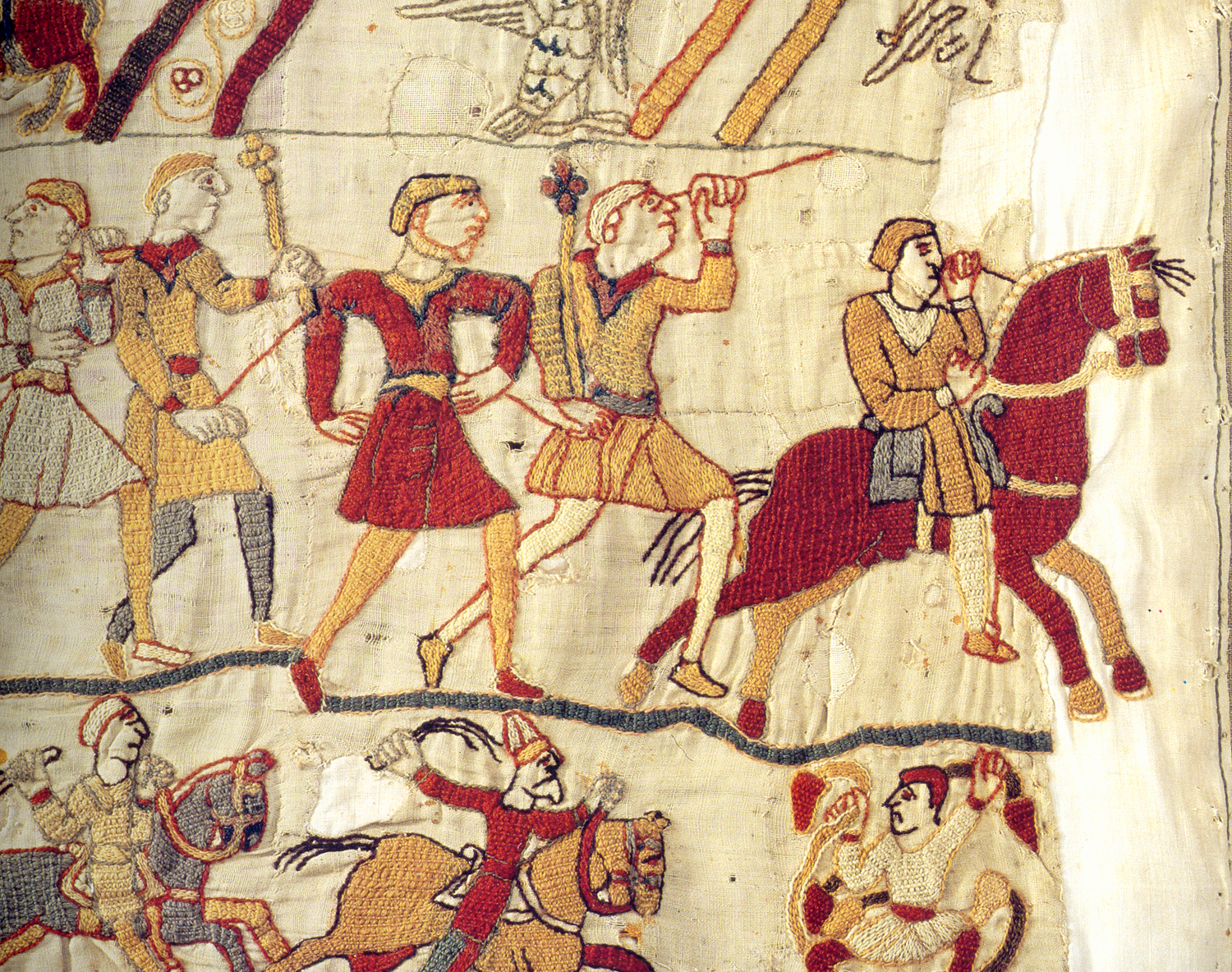
The above is a Creative Commons image of the Bayeux Tapestry from Google Images.
Previous Post
July 31, 2015
Wrestling with Sunday Mornings
Next Post

August 4, 2015 Breaking Bad’s Walter White is My Shining Star
Browse Our Archives
Select a Category A. G. Harmon Alissa Wilkinson Allison Backous Art Authors Brad Fruhauff Bradford Winters Bryan Bliss Caroline Langston Chad Thomas Johnston Chris Hoke Christiana N. Peterson Culture D.G. Myers D.L. Mayfield Daniel Bowman Jr. David Griffith Elizabeth Duffy Faith Film Greg Wolfe Guest Contributor Interview Jan Vallone Jeffrey Overstreet Jessica Eddings-Roeser Jessica Mesman Griffith Kelly Foster Lindsey Crittenden Morgan Meis music Natalie Vestin Nick Olson Peggy Rosenthal Personal Reflection Poetry Friday Reflection Relationships Review Richard Chess Richard Cole Sara Zarr Shannon Huffman Polson Sonya Bilocerkowycz Tania Runyan Tony Woodlief Topical Categories Uncategorized Vic Sizemore Writing
Select a Month October 2018 September 2018 August 2018 July 2018 June 2018 May 2018 April 2018 March 2018 February 2018 January 2018 December 2017 November 2017 October 2017 September 2017 August 2017 July 2017 June 2017 May 2017 April 2017 March 2017 February 2017 January 2017 December 2016 November 2016 October 2016 September 2016 August 2016 July 2016 June 2016 May 2016 April 2016 March 2016 February 2016 January 2016 December 2015 November 2015 October 2015 September 2015 August 2015 July 2015 June 2015 May 2015 April 2015 March 2015 February 2015 January 2015 December 2014 November 2014 October 2014 September 2014 August 2014 July 2014 June 2014 May 2014 April 2014 March 2014 February 2014 January 2014 December 2013 November 2013 October 2013 September 2013 August 2013 July 2013 June 2013 May 2013 April 2013 March 2013 February 2013 January 2013 December 2012 November 2012 October 2012 September 2012 August 2012 July 2012 June 2012 May 2012 February 2008
Follow Us!
TAKE THE
Religious Wisdom Quiz
According to 1 John, what three things testify on earth?
Select your answer to see how you score.
The Spirit, the water, and the blood Prayer, fasting, and almsgiving Faith, hope, and love The Father, the Son, and the Holy Spirit
Related posts from Good Letters

Leonard Cohen’s Holy and Broken Hallelujah

Ready or Not for the Days of Awe


TRENDING AT PATHEOS Catholic

Rejecting Doom: Christian Hope And Human Action
Christianity is a religion of hope. We are to have hope and...

It’s What Comes From Within Which Matters
One of the most difficult things for us to understand is why...

Why I Choose the Eucharist Over the Sermon
Choose the Eucharist, Not the Sermon What are we supposed to get...

5 Design Elements Found in Spiritually Rooted Homes
Putting Spirituality Into Home Decor Our homes are more than our living...

Credo: A Story of God Told with the...
About 10 years ago, I began to imagine a personal "Credo" that...

The Anatomy of Divine Revelation in Catholic Thought
The claim that God has made Himself known to human beings is...
view all Catholic blogs
Ad-Free & Subscriber Log-In Subscription Support
- About Us
- 2026 Calendar
- Videos
- Podcasts
- Library of World Religions
- Faith In Media Tracker
- Advertise With Us
- Write for Us
- Privacy Policy
- Terms of Service
- Do Not Sell My Data
- Contact Us
- Radiant Digital
- Manage Newsletter Subscriptions
- Unsubscribe From Notifications
- Sitemap
Copyright 2008-2026, Patheos. All rights reserved.
Subscription Support Ad-Free & Subscriber Log-In
Follow Patheos