
BuddhistCatholicContemplativeEvangelicalGeneral ChristianHinduJewishLatter-day SaintMuslimNew VisionsProgressive Christian
Beliefs
- Buddhist
- Catholic
- Contemplative
- Evangelical
- General Christian
- Hindu
- Jewish
- Latter-day Saint
- More Voices
- Muslim
- New Visions
- Pagan
- Progressive Christian
Topics
- Religion News
- Food and Religion
- Sports and Religion
- Religious Art
- Religious Music and Entertainment
- Religious Events
- History and Religion
- Style and Religion
- Politics and Religion
- Women in Religion
- Recreation Outdoors and Religion
- Business Finance and Religion
- Careers Workplace and Religion
- Education and Religion
- Family Parenting and Religion
- Health Fitness and Religion
- Home and Religion
- Relationships and Religion
- Technology and Religion
- Travel and Religion
Columnists
- Buddhist Columnists
- Business Finance and Religion Columnists
- Careers Workplace and Religion Columnists
- Catholic Columnists
- Contemplative Columnists
- Education and Religion Columnists
- Evangelists Columnists
- Family Parenting and Religion Columnists
- General Christian Columnists
- Health Fitness and Religion Columnists
- Hindu Columnists
- History and Religion Columnists
- Home and Religion Columnists
- Jewish Columnists
- More Voices Columnists
- Latter Day Columnists
- Muslim Columnists
- New Visions Columnists
- Nonreligious Columnists
- Pagan Columnists
- Politics and Religion Columnists
- Progressive Columnists
- Recreation Outdoors and Religion Columnists
- Relationships and Religion Columnists
- Religion News Columnists
- Religious Art Columnists
- Religious Events Columnists
- Religious Music and Entertainment Columnists
- Sports and Religion Columnists
- Style and Religion Columnists
- Technology and Religion Columnists
- Travel and Religion Columnists
- Women in Religion Columnists
Resource Library
- 2026 Calendar
- Library of World Religions
- The 100 Most Holy Places on Earth
- Patheos Answers
- Podcasts
- Videos
- Faith Leaders Database
- Anglican Episcopalian
- Bahai
- Baptist
- Buddhism
- Christianity
- Confucianism
- Eastern Orthodoxy
- Hinduism
- Holiness and Pentecostal
- ISKCON
- Islam
- Judaism
- Lutheran
- Methodist
- The Church of Jesus Christ of Latter-day Saints
- New Age
- Paganism
- Presbytarian and Reformed
- Protestantism
- Religion Behind the Scenes
- Roman Catholic
- Scientology
- Shia Islam
- Sikhism
- Sufism
- Sunni Islam
- Taoism
- Zen
- See all religions
Research Tools
 Ad-Free & Subscriber Log-In Subscription Support
Ad-Free & Subscriber Log-In Subscription Support
Follow Patheos 

- Trending:
- Forgiveness
- |
- Marriage
- |
- Consciousness
- |
- Death Penalty
- |
- Election
- |
- Halloween
 Good Letters
-
Contributors
- Home
- Catholic
- No Better Place to End, Part 1
No Better Place to End, Part 1
Last updated on: August 12, 2015 at 12:36 am by Guest Contributor
No Better Place to End, Part 1 2015-08-12T00:36:19-07:00 Guest Contributor
Patheos Explore the world's faith through different perspectives on religion and spirituality! Patheos has the views of the prevalent religions and spiritualities of the world.
By Brian Volck
 This post was made possible through the support of a grant from The BioLogos Foundation’s Evolution and Christian Faith program. The opinions expressed are those of the author and do not necessarily reflect the views of BioLogos.
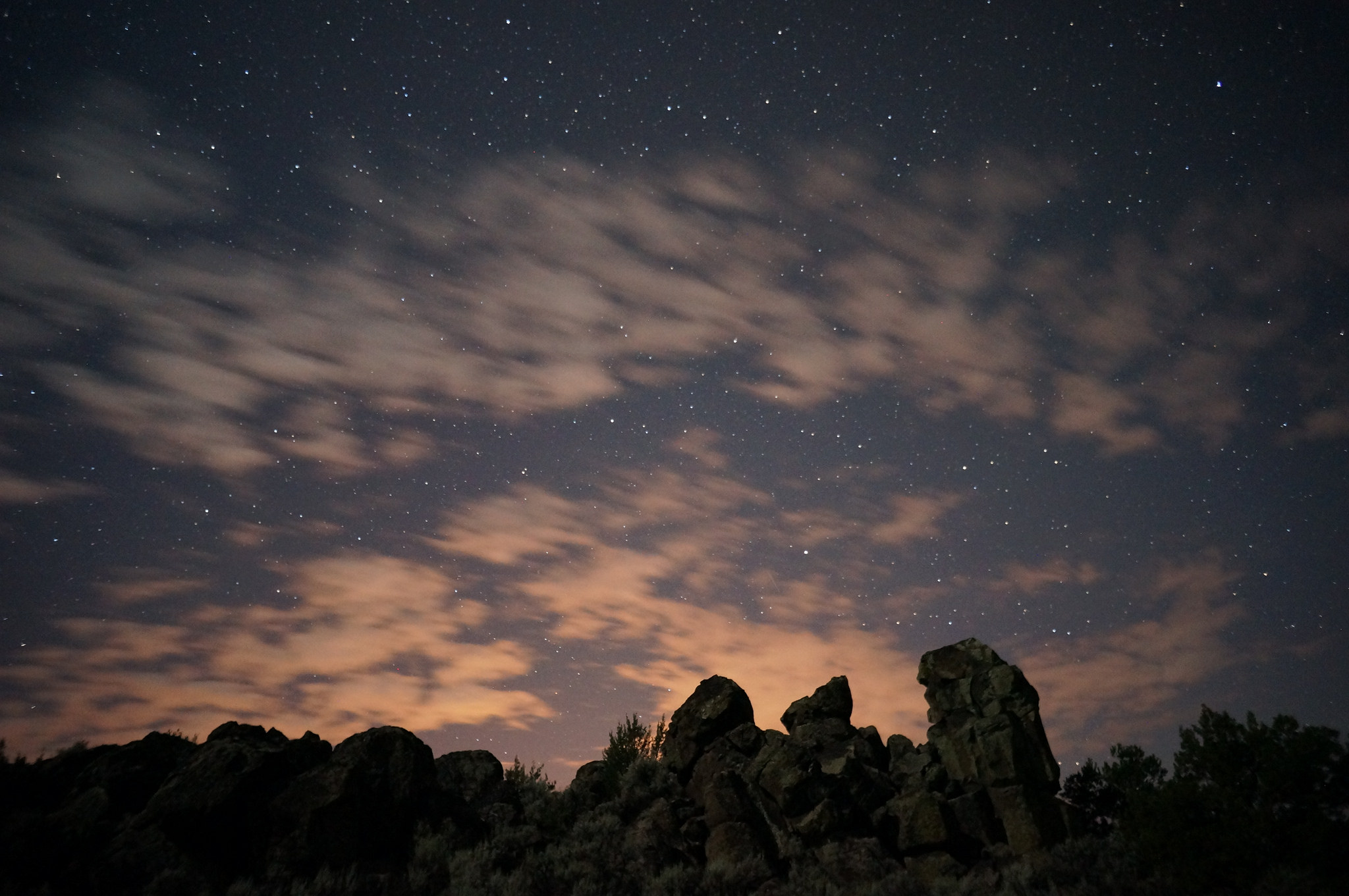
Not long ago, while walking on the Navajo reservation after sunset as the southwest horizon’s showy magenta yielded to purple and black, I spied the planet Venus, dressed as Hesperus, the evening star. Just below, closer to the now hidden sun, stood the fainter disk of Mercury.
I walked on, pondering the evening’s beauty, until gathering darkness revealed farther up the ecliptic—the plane along which the visible planets appear to course—the ruddy glint of Mars. Three planets, descending in line like ships sailing to harbor, heartbreakingly beautiful to conscious creatures, like me, who live so briefly. It was an unmerited gift, a moment of grace, a reminder to be grateful, attentive, and kind while there’s still time.
Even as night settled over the desert, I could still make out the jagged silhouette of Dook’o’oosłííd, the Navajo sacred mountain of the West—named the San Francisco Peaks by Europeans—its snowy crowns faintly visible in the dying light.
I’ve hiked the peaks and found them an island of ascending wonder, where meadows give way to pine and fir, then to aspen, and finally to treeless tundra near the summits. As a reader of geology, I also know the peaks as an immense, eroded stratovolcano, its inner fires quenched many centuries ago. One way of seeing them doesn’t negate the other. To walk in the chilly shade of an aspen grove on rock that once flowed underground as superheated magma invites contemplation, not debate.
I turned my gaze back to the planets, knowing that what appeared to me as tidy alignment masked a vast, complex geometry. Venus and Mercury are closer to the sun than earth, and seen only low in the sky at sunrise or sunset. Mars orbits half again as distant from the sun as Earth, and—to Earthly observers at least—not so closely tethered to the horizon.
The little I understood of astronomy did nothing to diminish the mystery before me, but enlarged and deepened it. It’s true, however, that my ability to know and name what I saw didn’t make me special nor what I saw more beautiful. The gift and mystery abide, independent of names and explanations. My Navajo friends tell me such visionary moments are hozhoni, from their nearly untranslatable word hozho, which rolls beauty, wholeness, harmony, and balance into one glorious immensity. A Navajo doesn’t summon or control hozho. One walks in it.
Beauty and her dark cousin, the sublime, invite us to walk mysterious borderlands outside the rigidly enforced binaries (knowledge versus belief, myth versus truth, subjective versus objective) preferred by theologically naïve champions of faith or the sciences’ loud proselytizers. Fundamentalism, a disease of malignant certainty, blinds young-earth creationists like Ken Ham as much as dismissive antitheists like Richard Dawkins.
It may have been easier to believe in such things as unmediated, certain knowledge sixty years ago, before philosophers of science abandoned hope that scientific language might be purged of all metaphor, interpretation, and assumption. Neil deGrasse Tyson’s glib assertion that “the good thing about science is that it’s true whether or not you believe in it” is true, but not to the degree he seems to believe.
Fruitless squabbles between self-appointed champions of the sciences and faith—two ways of apprehending the real—typically proceed without intellectual humility. (Note: I prefer “faith” and “the sciences” to the falsely monolithic proper nouns “Religion” and “Science.”) The books of nature and scriptural revelation tell us precious little in every sense of the phrase. What treasure we learn from them floats in frail ships on an ocean of unknowing, a mystery into which our paths to knowledge make tentative voyages, but few grand discoveries. Oceanic mystery dwarfs the fleet.
The sciences and faith speak different languages and shouldn’t be expected to say identical things in identical words. They’re musical lines in a polyphonic score where pungent dissonances enliven overarching harmony. In describing, in their own ways, the nature of things, they remind us how all we take for granted is, in fact, utterly contingent. Consider some examples:
The universe need not be beautiful.
Evolutionary theory has ways of explaining human attraction to beauty as conferring some biological advantage, or as a secondary effect of some other adaptation. Such explanations appear untestable, more like Rudyard Kipling’s “Just So Stories” than rigorous proofs, but that doesn’t mean they’re wrong. They imply, however, that things might have turned out otherwise. An evolutionary biologist can’t point to a forerunner of Homo sapiens and say, “Whatever evolves from this creature must, of necessity, hunger for beauty.”
Yet scientists often cite the beauty of a theory as reason to consider it seriously—an odd criterion if beauty truly lies in the genome of the beholder. Albert Einstein’s highest praise for a good theory or piece of work was not that it was correct or exact, but that it was beautiful.
Physicist Paul Dirac found great beauty in mathematics that displayed symmetry, economy of form, deep connections with other mathematics, and maximum structure from the simplest inputs. There’s no scientific reason things must be this way. That images from the Hubble telescope or the internal structure of crystals appeal to us aesthetically is, scientifically speaking, a happy accident, a stroke of cosmic good luck.
The person of faith who sees the universe as God’s creation out of nothing (ex nihilo) has the advantage of seeing beauty as objective, part of the nature of things rather than an internal, subjective response. Tradition holds that God isn’t capricious, but a sovereign God could have made things otherwise and still called creation “very good.” The beauty of the universe is, theologically speaking, gratuitous, a gift, and we are blessed to inhabit it.
What these two ways of seeing might suggest to the person of faith is the patience and self-emptying (kenosis) of the God who loves and sustains creation rather than micromanages it. God is a great artist who, trusting the materials, lets them find their internal logic rather than impose rigid order from the beginning.
To be continued tomorrow.
Brian Volck is Assistant Professor of Pediatrics in the Division of Hospital Medicine at Cincinnati Children’s Hospital Medical Center. Brian received his undergraduate degree in English Literature from Washington University in St. Louis and his MFA in creative writing from Seattle Pacific University. His first collection of poetry, Flesh Becomes Word, was released in October, 2013. He is coauthor of Reclaiming the Body: Christians and the Faithful Use of Modern Medicine and contributed essays to Wendell Berry and Religion: Heaven’s Earthly Life, and The Spirit of Food: Thirty-four Writers on Feasting and Fasting toward God. His essays, poetry, and reviews have appeared America, The Christian Century, DoubleTake, and Image.
Previous Post

August 11, 2015
Happy Pride Parade
Next Post
August 13, 2015 No Better Place to End, Part 2
Browse Our Archives
Select a Category A. G. Harmon Alissa Wilkinson Allison Backous Art Authors Brad Fruhauff Bradford Winters Bryan Bliss Caroline Langston Chad Thomas Johnston Chris Hoke Christiana N. Peterson Culture D.G. Myers D.L. Mayfield Daniel Bowman Jr. David Griffith Elizabeth Duffy Faith Film Greg Wolfe Guest Contributor Interview Jan Vallone Jeffrey Overstreet Jessica Eddings-Roeser Jessica Mesman Griffith Kelly Foster Lindsey Crittenden Morgan Meis music Natalie Vestin Nick Olson Peggy Rosenthal Personal Reflection Poetry Friday Reflection Relationships Review Richard Chess Richard Cole Sara Zarr Shannon Huffman Polson Sonya Bilocerkowycz Tania Runyan Tony Woodlief Topical Categories Uncategorized Vic Sizemore Writing
Select a Month October 2018 September 2018 August 2018 July 2018 June 2018 May 2018 April 2018 March 2018 February 2018 January 2018 December 2017 November 2017 October 2017 September 2017 August 2017 July 2017 June 2017 May 2017 April 2017 March 2017 February 2017 January 2017 December 2016 November 2016 October 2016 September 2016 August 2016 July 2016 June 2016 May 2016 April 2016 March 2016 February 2016 January 2016 December 2015 November 2015 October 2015 September 2015 August 2015 July 2015 June 2015 May 2015 April 2015 March 2015 February 2015 January 2015 December 2014 November 2014 October 2014 September 2014 August 2014 July 2014 June 2014 May 2014 April 2014 March 2014 February 2014 January 2014 December 2013 November 2013 October 2013 September 2013 August 2013 July 2013 June 2013 May 2013 April 2013 March 2013 February 2013 January 2013 December 2012 November 2012 October 2012 September 2012 August 2012 July 2012 June 2012 May 2012 February 2008
Follow Us!
TAKE THE
Religious Wisdom Quiz
What did Job's wife suggest he do during his suffering?
Select your answer to see how you score.
Curse God and die Rebuke his friends Flee to Egypt Burn offerings
Related posts from Good Letters


A Conversation with Alicia Ostriker: Part 1

A Conversation with Alicia Ostriker: Part 2

The Stars of the Earth Cry Out
TRENDING AT PATHEOS Catholic

Rejecting Doom: Christian Hope And Human Action
Christianity is a religion of hope. We are to have hope and...

It’s What Comes From Within Which Matters
One of the most difficult things for us to understand is why...

Why I Choose the Eucharist Over the Sermon
Choose the Eucharist, Not the Sermon What are we supposed to get...

5 Design Elements Found in Spiritually Rooted Homes
Putting Spirituality Into Home Decor Our homes are more than our living...

Credo: A Story of God Told with the...
About 10 years ago, I began to imagine a personal "Credo" that...

The Anatomy of Divine Revelation in Catholic Thought
The claim that God has made Himself known to human beings is...
view all Catholic blogs
Ad-Free & Subscriber Log-In Subscription Support
- About Us
- 2026 Calendar
- Videos
- Podcasts
- Library of World Religions
- Faith In Media Tracker
- Advertise With Us
- Write for Us
- Privacy Policy
- Terms of Service
- Do Not Sell My Data
- Contact Us
- Radiant Digital
- Manage Newsletter Subscriptions
- Unsubscribe From Notifications
- Sitemap
Copyright 2008-2026, Patheos. All rights reserved.
Subscription Support Ad-Free & Subscriber Log-In
Follow Patheos