
BuddhistCatholicContemplativeEvangelicalGeneral ChristianHinduJewishLatter-day SaintMuslimNew VisionsProgressive Christian
Beliefs
- Buddhist
- Catholic
- Contemplative
- Evangelical
- General Christian
- Hindu
- Jewish
- Latter-day Saint
- More Voices
- Muslim
- New Visions
- Pagan
- Progressive Christian
Topics
- Religion News
- Food and Religion
- Sports and Religion
- Religious Art
- Religious Music and Entertainment
- Religious Events
- History and Religion
- Style and Religion
- Politics and Religion
- Women in Religion
- Recreation Outdoors and Religion
- Business Finance and Religion
- Careers Workplace and Religion
- Education and Religion
- Family Parenting and Religion
- Health Fitness and Religion
- Home and Religion
- Relationships and Religion
- Technology and Religion
- Travel and Religion
Columnists
- Buddhist Columnists
- Business Finance and Religion Columnists
- Careers Workplace and Religion Columnists
- Catholic Columnists
- Contemplative Columnists
- Education and Religion Columnists
- Evangelists Columnists
- Family Parenting and Religion Columnists
- General Christian Columnists
- Health Fitness and Religion Columnists
- Hindu Columnists
- History and Religion Columnists
- Home and Religion Columnists
- Jewish Columnists
- More Voices Columnists
- Latter Day Columnists
- Muslim Columnists
- New Visions Columnists
- Nonreligious Columnists
- Pagan Columnists
- Politics and Religion Columnists
- Progressive Columnists
- Recreation Outdoors and Religion Columnists
- Relationships and Religion Columnists
- Religion News Columnists
- Religious Art Columnists
- Religious Events Columnists
- Religious Music and Entertainment Columnists
- Sports and Religion Columnists
- Style and Religion Columnists
- Technology and Religion Columnists
- Travel and Religion Columnists
- Women in Religion Columnists
Resource Library
- 2026 Calendar
- Library of World Religions
- The 100 Most Holy Places on Earth
- Patheos Answers
- Podcasts
- Videos
- Faith Leaders Database
- Anglican Episcopalian
- Bahai
- Baptist
- Buddhism
- Christianity
- Confucianism
- Eastern Orthodoxy
- Hinduism
- Holiness and Pentecostal
- ISKCON
- Islam
- Judaism
- Lutheran
- Methodist
- The Church of Jesus Christ of Latter-day Saints
- New Age
- Paganism
- Presbytarian and Reformed
- Protestantism
- Religion Behind the Scenes
- Roman Catholic
- Scientology
- Shia Islam
- Sikhism
- Sufism
- Sunni Islam
- Taoism
- Zen
- See all religions
Research Tools
 Ad-Free & Subscriber Log-In Subscription Support
Ad-Free & Subscriber Log-In Subscription Support
Follow Patheos 

- Trending:
- Forgiveness
- |
- Marriage
- |
- Consciousness
- |
- Death Penalty
- |
- Election
- |
- Halloween
 Good Letters
-
Contributors
- Home
- Catholic
- How To Begin a Book
How To Begin a Book
Last updated on: August 25, 2015 at 1:00 am by Tania Runyan
How To Begin a Book 2015-08-19T09:51:53-07:00 Tania Runyan
Patheos Explore the world's faith through different perspectives on religion and spirituality! Patheos has the views of the prevalent religions and spiritualities of the world.
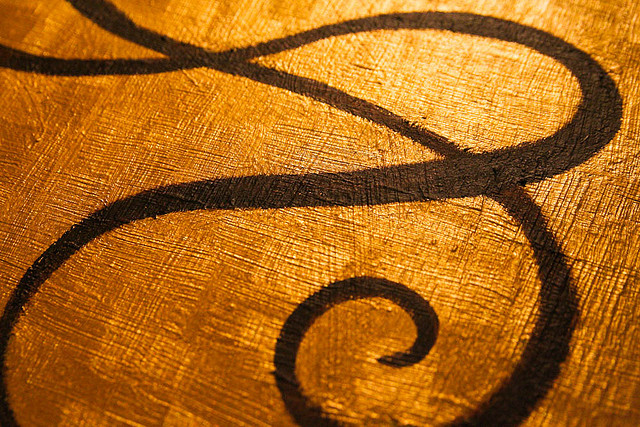 I’m a bit Type A for a poet—or for what people perceive as one. I like to know when and where I’m going with my writing, and why. This is no apology. Without specific goals, I wouldn’t have written a thing since becoming a parent twelve years ago. I make the time and space to write, even perching atop an ottoman in the corner of a stairway to scratch out drafts in the early, nauseated hours of my pregnancies.
My projects are clearly defined. Explore Paul the Apostle with fifty poems. Grapple with the book of Revelation from Patmos to the Great White Throne. Write at least one poem week, unless it’s Christmas or something, until the project is “done.” Then revise with intense, almost physical focus, as if scrubbing a yellow ring from the bathtub. Inspiration? Who has time to wait around for that when the elementary school is requiring five start-of-the-year events?
However, when I flew to Image’s Glen Workshop earlier this month, opting to spend most of the week on retreat, I had no such plan. I knew it was time to start a new collection of poems focusing on the violin, one of my lifelong loves. But I had no idea how to approach it, how to even figure out how to approach it, or how long any of these undefined tasks would take. I just knew I was about to spend a week in Santa Fe with artists, writers, mountains, chocolate, and wine. At least a couple of those are daily necessities.
“What do I do?” I had written my writer-editor friend Cameron a week before. “How do I even begin something like this?”
“Start building a world for yourself,” he said. “A world to write from. Collect links, songs, pictures and artifacts, and keep them in a box or digital file. Enjoy the process of discovery, and you will find your way there.”
It should come as no surprise that the violin, or the traditional Celtic/American fiddle music I’m most interested in, is a vast songscape, as fluid and choppy as the Atlantic over which the Scottish settlers sailed in passage to their new world. And I found myself flipping overboard before even lifting anchor.
I had to start swimming. After reading a bit of Wayfaring Stranger, a book by Fiona Ritchie and Douglas Orr that explores the migration of music from Scotland to Ulster to Appalachia, I stretched out on my dorm bed and listened to several fiddle renditions of “Shady Grove” as the scent of pinyon whispered through the blinds. Before long, I couldn’t get the song out of my head. I took out my electric fiddle and headphones and played the song myself in a number of octaves and keys.
The next day, I watched hours of fiddle players on YouTube. I obsessed over Mark O’Connor’s “Midnight on the Water,” Cape Breton fiddlers Natalie MacMaster and Donnell Leahy performing on TED, and the Nordic Fiddlers Bloc’s “Mountain Bird.” I’m not Irish, Scottish, Canadian, or Norwegian, have no claim to any of these people or histories, and have come to the fiddle relatively recently after a life of just-okay classical playing. Yet I couldn’t escape these tunes.
In the middle of my simultaneous excitement and bafflement, a fellow Glen attendee, Tom, approached me in the coffee shop one afternoon. “What are you working on these days?” he asked. “And how can I help you?”
The Glen community is really that kind of place.
We settled down at a table in front of Tom’s laptop, and I started to play the Nordic Fiddlers Bloc tune. After several seconds, he paused it. “What are you feeling right now?” he asked.
I hadn’t really thought about expressing how or why music makes me feel the way I do. I knew the Scandinavian hardanger fiddle had a way of working into my bones, the sympathetic strings beneath the four main ones ringing in words that cannot be spoken.
“The music brings you to the immediate thin place, doesn’t it?” Tom asked. “The song’s an air? Think about that word.” Then he started to talk about the progressive revelation of the secret things of God.
I felt like I couldn’t move. And I felt like I wanted to dance. (I don’t dance.)
Later that day, I started writing questions:
Why do I like the music I like?
How and why do I identify with music from different cultural heritages?
Why do I play the way I do?
How do lessons, personality, age, and region affect how I play and think about music?
How, exactly, is the violin like the human voice?
I started sharing these questions with friends. Then people proceeded to offer ideas, recommending books and podcasts like Martha Graham’s Blood Memory, and the most recent episode of On Being. Their support kept me suspended in that dangerously beautiful thin place.
The next day, I sat (almost) silently with four other writers in a Santa Fe coffee shop without Wi-Fi. Forced away from online research, I started jotting down lines.
the faces of fiddlers closing their eyes
hair a fermata
shady love, my little grove
the chop and flick of the wrist
The lines seemed to take me nowhere but insisted upon being written.
One afternoon, I played fiddle along with my friend Laura on the Irish whistle. Gold honey locust leaves floated around us, the desert’s coins for our busking. During worship services, I refrained from singing and held my palms to the music. Some nights, I read Rilke and couldn’t bear more than two or three lines of his words rippling through me like vibrating strings.
That week, I got nothing done and everything done. I left with several pages of graphs, names, and illegible lines and dozens of bookmarked songs. Most of all, I continue to hold a feeling I still can’t describe anymore than I can how I felt the first time I pulled a bow across a string in fourth grade, rosin dusting my shoulders.
In his opening address at the Glen, Greg Wolfe said, “art should be the act of discovery, not the expression of what is already known.” So as I give my hands to writing, hands that Luci Shaw anointed with oil that last night of the Glen, I will let the questions come. I will continue to go about my unplanned plan, the plaintive notes of a wayfaring stranger passing her song to the next.
Tania Runyan is the author of the poetry collections Second Sky (Cascade Poiema Series), A Thousand Vessels, Simple Weight, and Delicious Air, which was awarded Book of the Year by the Conference on Christianity and Literature in 2007. Her book How to Read a Poem, an instructional guide based on Billy Collins’s “Introduction to Poetry,” was recently released by T.S. Poetry Press. Her poems have appeared in many publications, including Poetry, Image, Books & Culture, Harvard Divinity Bulletin, The Christian Century, Atlanta Review, Indiana Review, and the anthology In a Fine Frenzy: Poets Respond to Shakespeare. Tania was awarded an NEA Literature Fellowship in 2011.
The above royalty free image is attributed to Steven Depolo on Flickr.
Previous Post

August 24, 2015
Where’s the Guilt?
Next Post
August 26, 2015 A Requiem for Rejects
Browse Our Archives
Select a Category A. G. Harmon Alissa Wilkinson Allison Backous Art Authors Brad Fruhauff Bradford Winters Bryan Bliss Caroline Langston Chad Thomas Johnston Chris Hoke Christiana N. Peterson Culture D.G. Myers D.L. Mayfield Daniel Bowman Jr. David Griffith Elizabeth Duffy Faith Film Greg Wolfe Guest Contributor Interview Jan Vallone Jeffrey Overstreet Jessica Eddings-Roeser Jessica Mesman Griffith Kelly Foster Lindsey Crittenden Morgan Meis music Natalie Vestin Nick Olson Peggy Rosenthal Personal Reflection Poetry Friday Reflection Relationships Review Richard Chess Richard Cole Sara Zarr Shannon Huffman Polson Sonya Bilocerkowycz Tania Runyan Tony Woodlief Topical Categories Uncategorized Vic Sizemore Writing
Select a Month October 2018 September 2018 August 2018 July 2018 June 2018 May 2018 April 2018 March 2018 February 2018 January 2018 December 2017 November 2017 October 2017 September 2017 August 2017 July 2017 June 2017 May 2017 April 2017 March 2017 February 2017 January 2017 December 2016 November 2016 October 2016 September 2016 August 2016 July 2016 June 2016 May 2016 April 2016 March 2016 February 2016 January 2016 December 2015 November 2015 October 2015 September 2015 August 2015 July 2015 June 2015 May 2015 April 2015 March 2015 February 2015 January 2015 December 2014 November 2014 October 2014 September 2014 August 2014 July 2014 June 2014 May 2014 April 2014 March 2014 February 2014 January 2014 December 2013 November 2013 October 2013 September 2013 August 2013 July 2013 June 2013 May 2013 April 2013 March 2013 February 2013 January 2013 December 2012 November 2012 October 2012 September 2012 August 2012 July 2012 June 2012 May 2012 February 2008
Follow Us!
TAKE THE
Religious Wisdom Quiz
What is the biblical view of work?
Select your answer to see how you score.
Work is a curse Work hard as for the Lord Only kings should work Avoid work
Related posts from Good Letters

On Writing Odes: Taking Time to Celebrate


Leonard Cohen’s Holy and Broken Hallelujah
TRENDING AT PATHEOS Catholic

Rejecting Doom: Christian Hope And Human Action
Christianity is a religion of hope. We are to have hope and...

It’s What Comes From Within Which Matters
One of the most difficult things for us to understand is why...

Why I Choose the Eucharist Over the Sermon
Choose the Eucharist, Not the Sermon What are we supposed to get...

5 Design Elements Found in Spiritually Rooted Homes
Putting Spirituality Into Home Decor Our homes are more than our living...

Credo: A Story of God Told with the...
About 10 years ago, I began to imagine a personal "Credo" that...

The Anatomy of Divine Revelation in Catholic Thought
The claim that God has made Himself known to human beings is...
view all Catholic blogs
Ad-Free & Subscriber Log-In Subscription Support
- About Us
- 2026 Calendar
- Videos
- Podcasts
- Library of World Religions
- Faith In Media Tracker
- Advertise With Us
- Write for Us
- Privacy Policy
- Terms of Service
- Do Not Sell My Data
- Contact Us
- Radiant Digital
- Manage Newsletter Subscriptions
- Unsubscribe From Notifications
- Sitemap
Copyright 2008-2026, Patheos. All rights reserved.
Subscription Support Ad-Free & Subscriber Log-In
Follow Patheos