
BuddhistCatholicContemplativeEvangelicalGeneral ChristianHinduJewishLatter-day SaintMuslimNew VisionsProgressive Christian
Beliefs
- Buddhist
- Catholic
- Contemplative
- Evangelical
- General Christian
- Hindu
- Jewish
- Latter-day Saint
- More Voices
- Muslim
- New Visions
- Pagan
- Progressive Christian
Topics
- Religion News
- Food and Religion
- Sports and Religion
- Religious Art
- Religious Music and Entertainment
- Religious Events
- History and Religion
- Style and Religion
- Politics and Religion
- Women in Religion
- Recreation Outdoors and Religion
- Business Finance and Religion
- Careers Workplace and Religion
- Education and Religion
- Family Parenting and Religion
- Health Fitness and Religion
- Home and Religion
- Relationships and Religion
- Technology and Religion
- Travel and Religion
Columnists
- Buddhist Columnists
- Business Finance and Religion Columnists
- Careers Workplace and Religion Columnists
- Catholic Columnists
- Contemplative Columnists
- Education and Religion Columnists
- Evangelists Columnists
- Family Parenting and Religion Columnists
- General Christian Columnists
- Health Fitness and Religion Columnists
- Hindu Columnists
- History and Religion Columnists
- Home and Religion Columnists
- Jewish Columnists
- More Voices Columnists
- Latter Day Columnists
- Muslim Columnists
- New Visions Columnists
- Nonreligious Columnists
- Pagan Columnists
- Politics and Religion Columnists
- Progressive Columnists
- Recreation Outdoors and Religion Columnists
- Relationships and Religion Columnists
- Religion News Columnists
- Religious Art Columnists
- Religious Events Columnists
- Religious Music and Entertainment Columnists
- Sports and Religion Columnists
- Style and Religion Columnists
- Technology and Religion Columnists
- Travel and Religion Columnists
- Women in Religion Columnists
Resource Library
- 2026 Calendar
- Library of World Religions
- The 100 Most Holy Places on Earth
- Patheos Answers
- Podcasts
- Videos
- Faith Leaders Database
- Anglican Episcopalian
- Bahai
- Baptist
- Buddhism
- Christianity
- Confucianism
- Eastern Orthodoxy
- Hinduism
- Holiness and Pentecostal
- ISKCON
- Islam
- Judaism
- Lutheran
- Methodist
- The Church of Jesus Christ of Latter-day Saints
- New Age
- Paganism
- Presbytarian and Reformed
- Protestantism
- Religion Behind the Scenes
- Roman Catholic
- Scientology
- Shia Islam
- Sikhism
- Sufism
- Sunni Islam
- Taoism
- Zen
- See all religions
Research Tools
 Ad-Free & Subscriber Log-In Subscription Support
Ad-Free & Subscriber Log-In Subscription Support
Follow Patheos 

- Trending:
- Forgiveness
- |
- Marriage
- |
- Consciousness
- |
- Death Penalty
- |
- Election
- |
- Halloween
 Good Letters
-
Contributors
- Home
- Catholic
- Wanted: God—Dead or Alive?
Wanted: God—Dead or Alive?
Last updated on: June 17, 2015 at 7:31 am by Peggy Rosenthal
Wanted: God—Dead or Alive? 2015-06-17T07:31:01-07:00 Peggy Rosenthal
Patheos Explore the world's faith through different perspectives on religion and spirituality! Patheos has the views of the prevalent religions and spiritualities of the world.
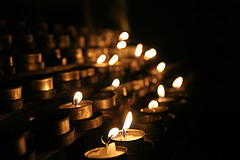 If you practice a religion faithfully—faith-fully—, why do you do this? And why is it this particular religion that you practice?
“The embarrassing fact is that most religious people seem to believe in a religion for no better reason than that their parents believed in it.” So states poet and literary critic Adam Kirsch in his review-essay “Is Reason Enough?” in The New York Review of Books (April 23, 2015).
I just can’t buy this statement. Not, at least, for contemporary western culture. Precisely because we went through the “God is dead” phase throughout most of the twentieth century, when God now comes alive for any of us there’s no predicting where God’s life will lead us.
Naturally, I think first of my own experience. Raised by parents of Jewish heritage who had stopped practicing their religion when they got married, I learned as a child about a few of the Jewish holidays—but in a perfunctory way. For my parents, God was no longer alive in their inherited faith.
When God began to come alive for me in early adulthood, I began reading the Bible. I got to the Gospels and—wow!—they swept me up. I longed to follow Jesus. The longing led me to step (nervously) in the door of various Christian churches on Sunday mornings. I loved them all. All were preaching exactly what I was coming to believe. All the communities seemed to be living out their Christian faith. I longed to be part of such a community.
Then coincidence (or the Holy Spirit?) stepped in. Two acquaintances about my age suddenly died. Both happened to be Catholics. At their funerals, when people went forward for Communion, I found myself hungering for it.
At the same time, I was reading the newly published letters of Flannery O’Connor. She’d heard someone dismiss the Eucharist as “just a symbol,” and in indignant reply wrote: “If it’s just a symbol, to hell with it. It’s the center of existence for me.” How, I thought, can I live without this “center of existence”?
This is how, in my thirties, I came to be baptized as a Catholic.
My sponsor at baptism was a cradle Catholic. But he doesn’t remain a Catholic just because it was his parents’ religion—but because he’s continually nurtured by his faith (even as he disagrees with some of its dogma).
Among my many other friends who practice a religion, if they continue in their parents’ faith, it’s an adult choice. Often they choose another religious practice where God is more alive for them. (At my local mosque, African-Americans have told me they converted to Islam because the Christianity they were raised in carried unacceptable historical racist baggage.)
None of us chooses a religion because of its dogma. And here I do agree with what Adam Kirsch later says: “It is virtually never the case that people choose their faith based on a consideration of the truth claims of all the rival possibilities.”
Kirsch makes this statement in argument with the book he’s reviewing: Life After Faith: The Case for Secular Humanism, by Philip Kitcher. But, no, “argument” isn’t the right word. What I treasure about The New York Review of Books is that its reviews are really, like this one, long conversations between the reviewer and the book under review. And Kirsch’s conversation with Life After Faith is very nuanced.
So Kirsch can sympathize with the book’s central concern, which is to persuade us that ethics do not depend on religion but can be grounded in human reason alone—that, in other words, we can be good without God.
But at the same time, Kirsch pulls the rug out from under many of Kitcher’s secular humanist premises. Kitcher acknowledges, for instance, that the dominant culture’s loss of faith has left a tragic wound—which (to Kitcher’s mind) makes reason-based ethics even more needed. Here is Kirsch’s nuanced response:
The composure and dignity of Life After Faith are owed to this serene confidence that secular humanism can, ultimately, give us what we demand from religion, and on a firmer basis of truth. If the loss of faith is a genuine wound, however, is it really possible to heal it so completely that it doesn’t leave at least a scar?
What excites me about this paragraph is that it respectfully presents Kitcher’s core point while also responding with a devastating question. Religious faith has a grounding, this question implies, that is way beyond where reason can reach.
Kirsch’s equal respect for religion and for secularism is something new to The New York Review of Books these past twenty years or so. Before then, the NYRB was determinedly secularist. Any essay in this leading intellectual magazine that had occasion to mention God (and there were few) would put the word in scorn-quotes: “God.”
Then around the close of the last century, I began noticing with gratitude how the scorn-quotes were disappearing. Essays that had occasion to mention religion or God (and there were more) did so comfortably. It’s not that the NYRB “got religion”—but that it was no longer anxious with the subject.
I specifically remember a review-essay a few years ago on Australian poet (and Christian) Les Murray, which talked matter-of-factly about divinity and grace in regard to Murray’s poems. I was so relieved by this that I burst out with an Alleluia!
Does Adam Kirsch practice his inherited Jewish faith? I don’t know. And I don’t need to know. What I do know—gratefully—is that he and countless other contemporary intellectuals are now comfortable recognizing that God is alive for many of us.
Peggy Rosenthal is director of Poetry Retreats and writes widely on poetry as a spiritual resource. Her books include Praying through Poetry: Hope for Violent Times (Franciscan Media) and The Poets’ Jesus (Oxford). See Amazon for full list. She also teaches an online course, “Poetry as a Spiritual Practice,” through Image’s Glen Online program*.*
Photo above credited to Michael Hilton and used under a Creative Commons license.
Previous Post

June 16, 2015
Before the Fall of Baseball
Next Post
June 18, 2015 A Holy Habitation for Life’s Story
Browse Our Archives
Select a Category A. G. Harmon Alissa Wilkinson Allison Backous Art Authors Brad Fruhauff Bradford Winters Bryan Bliss Caroline Langston Chad Thomas Johnston Chris Hoke Christiana N. Peterson Culture D.G. Myers D.L. Mayfield Daniel Bowman Jr. David Griffith Elizabeth Duffy Faith Film Greg Wolfe Guest Contributor Interview Jan Vallone Jeffrey Overstreet Jessica Eddings-Roeser Jessica Mesman Griffith Kelly Foster Lindsey Crittenden Morgan Meis music Natalie Vestin Nick Olson Peggy Rosenthal Personal Reflection Poetry Friday Reflection Relationships Review Richard Chess Richard Cole Sara Zarr Shannon Huffman Polson Sonya Bilocerkowycz Tania Runyan Tony Woodlief Topical Categories Uncategorized Vic Sizemore Writing
Select a Month October 2018 September 2018 August 2018 July 2018 June 2018 May 2018 April 2018 March 2018 February 2018 January 2018 December 2017 November 2017 October 2017 September 2017 August 2017 July 2017 June 2017 May 2017 April 2017 March 2017 February 2017 January 2017 December 2016 November 2016 October 2016 September 2016 August 2016 July 2016 June 2016 May 2016 April 2016 March 2016 February 2016 January 2016 December 2015 November 2015 October 2015 September 2015 August 2015 July 2015 June 2015 May 2015 April 2015 March 2015 February 2015 January 2015 December 2014 November 2014 October 2014 September 2014 August 2014 July 2014 June 2014 May 2014 April 2014 March 2014 February 2014 January 2014 December 2013 November 2013 October 2013 September 2013 August 2013 July 2013 June 2013 May 2013 April 2013 March 2013 February 2013 January 2013 December 2012 November 2012 October 2012 September 2012 August 2012 July 2012 June 2012 May 2012 February 2008
Follow Us!
TAKE THE
Religious Wisdom Quiz
What was the name of the disciple who replaced Judas Iscariot?
Select your answer to see how you score.
Silas Matthias Barnabas Timothy
Related posts from Good Letters




Meditations of a Library Assistant in the BS...
TRENDING AT PATHEOS Catholic

Rejecting Doom: Christian Hope And Human Action
Christianity is a religion of hope. We are to have hope and...

It’s What Comes From Within Which Matters
One of the most difficult things for us to understand is why...

Why I Choose the Eucharist Over the Sermon
Choose the Eucharist, Not the Sermon What are we supposed to get...

5 Design Elements Found in Spiritually Rooted Homes
Putting Spirituality Into Home Decor Our homes are more than our living...

Credo: A Story of God Told with the...
About 10 years ago, I began to imagine a personal "Credo" that...

The Anatomy of Divine Revelation in Catholic Thought
The claim that God has made Himself known to human beings is...
view all Catholic blogs
Ad-Free & Subscriber Log-In Subscription Support
- About Us
- 2026 Calendar
- Videos
- Podcasts
- Library of World Religions
- Faith In Media Tracker
- Advertise With Us
- Write for Us
- Privacy Policy
- Terms of Service
- Do Not Sell My Data
- Contact Us
- Radiant Digital
- Manage Newsletter Subscriptions
- Unsubscribe From Notifications
- Sitemap
Copyright 2008-2026, Patheos. All rights reserved.
Subscription Support Ad-Free & Subscriber Log-In
Follow Patheos