
BuddhistCatholicContemplativeEvangelicalGeneral ChristianHinduJewishLatter-day SaintMuslimNew VisionsProgressive Christian
Beliefs
- Buddhist
- Catholic
- Contemplative
- Evangelical
- General Christian
- Hindu
- Jewish
- Latter-day Saint
- More Voices
- Muslim
- New Visions
- Pagan
- Progressive Christian
Topics
- Religion News
- Food and Religion
- Sports and Religion
- Religious Art
- Religious Music and Entertainment
- Religious Events
- History and Religion
- Style and Religion
- Politics and Religion
- Women in Religion
- Recreation Outdoors and Religion
- Business Finance and Religion
- Careers Workplace and Religion
- Education and Religion
- Family Parenting and Religion
- Health Fitness and Religion
- Home and Religion
- Relationships and Religion
- Technology and Religion
- Travel and Religion
Columnists
- Buddhist Columnists
- Business Finance and Religion Columnists
- Careers Workplace and Religion Columnists
- Catholic Columnists
- Contemplative Columnists
- Education and Religion Columnists
- Evangelists Columnists
- Family Parenting and Religion Columnists
- General Christian Columnists
- Health Fitness and Religion Columnists
- Hindu Columnists
- History and Religion Columnists
- Home and Religion Columnists
- Jewish Columnists
- More Voices Columnists
- Latter Day Columnists
- Muslim Columnists
- New Visions Columnists
- Nonreligious Columnists
- Pagan Columnists
- Politics and Religion Columnists
- Progressive Columnists
- Recreation Outdoors and Religion Columnists
- Relationships and Religion Columnists
- Religion News Columnists
- Religious Art Columnists
- Religious Events Columnists
- Religious Music and Entertainment Columnists
- Sports and Religion Columnists
- Style and Religion Columnists
- Technology and Religion Columnists
- Travel and Religion Columnists
- Women in Religion Columnists
Resource Library
- 2026 Calendar
- Library of World Religions
- The 100 Most Holy Places on Earth
- Patheos Answers
- Podcasts
- Videos
- Faith Leaders Database
- Anglican Episcopalian
- Bahai
- Baptist
- Buddhism
- Christianity
- Confucianism
- Eastern Orthodoxy
- Hinduism
- Holiness and Pentecostal
- ISKCON
- Islam
- Judaism
- Lutheran
- Methodist
- The Church of Jesus Christ of Latter-day Saints
- New Age
- Paganism
- Presbytarian and Reformed
- Protestantism
- Religion Behind the Scenes
- Roman Catholic
- Scientology
- Shia Islam
- Sikhism
- Sufism
- Sunni Islam
- Taoism
- Zen
- See all religions
Research Tools
 Ad-Free & Subscriber Log-In Subscription Support
Ad-Free & Subscriber Log-In Subscription Support
Follow Patheos 

- Trending:
- Forgiveness
- |
- Marriage
- |
- Consciousness
- |
- Death Penalty
- |
- Election
- |
- Halloween
 Good Letters
-
Contributors
- Home
- Catholic
- Is the Gospel Good News or Bad?
Is the Gospel Good News or Bad?
Last updated on: June 19, 2015 at 3:56 pm by Sara Zarr
Is the Gospel Good News or Bad? 2015-06-19T15:56:22-07:00 Sara Zarr
Patheos Explore the world's faith through different perspectives on religion and spirituality! Patheos has the views of the prevalent religions and spiritualities of the world.
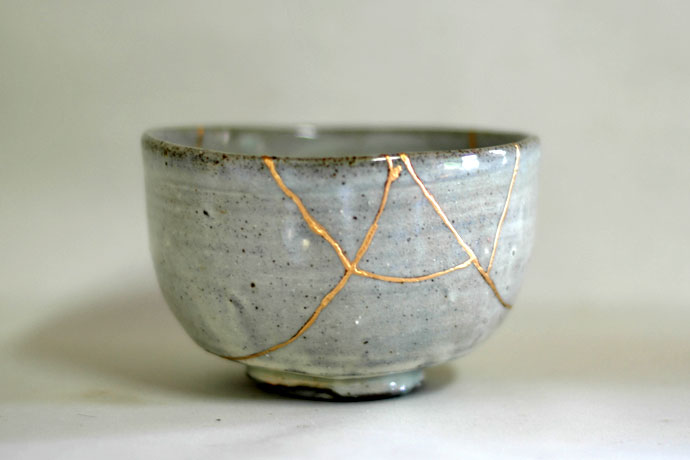 Continuing a little bit what I started with my essay “What Is a Christian?,” I’ve been thinking about how I might articulate the good news of the gospel to myself and perhaps begin to comprehend it.
Theologically, I know basically what the gospel is. And if you ask Google, it returns a Wikipedia page that describes the Christian gospel as “the news of the coming of the Kingdom of God…, and of Jesus’ death on the cross and resurrection to restore people’s relationship with God. It may also include the descent of the Holy Spirit upon believers and the second coming of Jesus.”
That seems pretty straightforward and would fly in any church I’ve been a part of. But sometimes for a lifelong Christian, this can feel more like old news than good news. Occasionally, it even feels like bad news when I’m overwhelmed with questions.
I grew up believing and believed for a long time that a Christian should have an unassailable apologetic for every point of doctrine. I’m not blaming my childhood church or saying this was explicitly taught, but that’s how I perceived sermons and conversations and our way of talking about “witnessing.” Somehow, as far as I observed it, being “prepared to give an answer for the hope that is within you” got easily turned into “be prepared to win arguments, and start them if there’s an opportunity.”
That’s what I believed a solid faith and a true understanding of the gospel was: a clear apologetic arrived at by flawless logic. And with that, a correct position to hold on every social issue or life circumstance—the assurance of being right.
When this way of having religion no longer held up for me in the light of experience and real relationships with people who believed differently, I worried I was losing faith and maybe needed to leave the faith. Did I believe in enough of the right things in the right way to stay in the church? It’s tiring to try to keep up your perfect positions in light of every new question and issue that arises. I gave up.
It used to be that when I read the gospels, whenever Jesus deals with “teachers of the law” I identified with Jesus and the disciples. The Pharisees were Them and I was Us. Now I’m pretty sure I should be identifying much more with the Pharisees.
I don’t know how I missed that Jesus didn’t come to tidy my moral positions or give me talking points on complicated social and theological questions. Any decent public speaker can do that. Instead, Jesus comes into a messy world in a messy way and seems to make it messier. He is not about the fine art of de-cluttering and doesn’t leave a pristine coffee table with a tiny vase holding a single perfect orchid.
No, there is stuff everywhere.
That’s the kind of good news that can sometimes feel like bad news, because the last thing I want is someone or something coming into my cocoon of control and messing stuff up. As tiring as it is to keep beliefs orderly, there can be some comfort in it, too. If there weren’t comfort, religion would not be as popular as it is.
And religion is popular. Even if people are leaving churches, religion is still desired in the form of perfect diet and nutrition, perfect application of technology, perfect correctness in the vocabulary used to talk about culture, perfect simplicity, perfect money management, perfect et cetera.
But the apparent comfort that comes with perfectionism quickly turns on us and can become anxiety and depression and despair—or self-loathing or self-righteousness or self-judgment. That is definitely bad news.
Yet, as I get used to letting my faith be in an ever-greater state of disarray, the sense of it being good news has unexpectedly grown. Here comes Jesus. He, God incarnate, stands at the door and knocks. Or just kind of lets himself in. He sits down in the middle of all the clutter and asks a bunch of questions:
Who do you say I am?
Will you follow?
Will you love this person, this place, this work?
What are you afraid of?
It’s not a neat interaction and the questions aren’t easily answered—except for the last one. The good news is that the answer to that last question becomes, “Nothing,” once I start letting Jesus be the perfect one.
Ironically, I don’t think this way of thinking about it would have gone over well with the Good News Club teachers who were trying to teach eight-year-old me how to witness to my friends with the Wordless Book Song, but a living faith at forty-four is a lot different from one at eight. I want to grow with my faith, not out of it. Letting go of my answers and the anxiety of no longer having them is feeling more and more like good news every day.
Sara Zarr is the author of five novels for young adults, most recently The Lucy Variations, which the New York Times called “an elegant novel.” Her sixth, a collaborative novel with Tara Altebrando, came out December 2013. She’s a National Book Award finalist and two-time Utah Book Award winner. Her books have been variously named to annual best books lists of the American Library Association, Kirkus, Publisher’s Weekly, School Library Journal, The Guardian, the International Reading Association, the New York Public Library and Los Angeles Public Library, and have been translated into many languages. In 2010, she served as a judge for the National Book Award. In fall 2014, she received a MacDowell Colony Fellowship. She currently lives in Salt Lake City, Utah, with her husband, and online at www.sarazarr.com.
Previous Post

June 18, 2015
A Holy Habitation for Life’s Story
Next Post
June 22, 2015 The Art of the Authentic: Bill Baer’s Times Square
Browse Our Archives
Select a Category A. G. Harmon Alissa Wilkinson Allison Backous Art Authors Brad Fruhauff Bradford Winters Bryan Bliss Caroline Langston Chad Thomas Johnston Chris Hoke Christiana N. Peterson Culture D.G. Myers D.L. Mayfield Daniel Bowman Jr. David Griffith Elizabeth Duffy Faith Film Greg Wolfe Guest Contributor Interview Jan Vallone Jeffrey Overstreet Jessica Eddings-Roeser Jessica Mesman Griffith Kelly Foster Lindsey Crittenden Morgan Meis music Natalie Vestin Nick Olson Peggy Rosenthal Personal Reflection Poetry Friday Reflection Relationships Review Richard Chess Richard Cole Sara Zarr Shannon Huffman Polson Sonya Bilocerkowycz Tania Runyan Tony Woodlief Topical Categories Uncategorized Vic Sizemore Writing
Select a Month October 2018 September 2018 August 2018 July 2018 June 2018 May 2018 April 2018 March 2018 February 2018 January 2018 December 2017 November 2017 October 2017 September 2017 August 2017 July 2017 June 2017 May 2017 April 2017 March 2017 February 2017 January 2017 December 2016 November 2016 October 2016 September 2016 August 2016 July 2016 June 2016 May 2016 April 2016 March 2016 February 2016 January 2016 December 2015 November 2015 October 2015 September 2015 August 2015 July 2015 June 2015 May 2015 April 2015 March 2015 February 2015 January 2015 December 2014 November 2014 October 2014 September 2014 August 2014 July 2014 June 2014 May 2014 April 2014 March 2014 February 2014 January 2014 December 2013 November 2013 October 2013 September 2013 August 2013 July 2013 June 2013 May 2013 April 2013 March 2013 February 2013 January 2013 December 2012 November 2012 October 2012 September 2012 August 2012 July 2012 June 2012 May 2012 February 2008
Follow Us!
TAKE THE
Religious Wisdom Quiz
What was the name of the place where bitter water was made sweet?
Select your answer to see how you score.
Elim Rephidim Sinai Marah
Related posts from Good Letters


Morning in a Forgotten Neighborhood


TRENDING AT PATHEOS Catholic

Creation, Preservation, and Teleology in Catholic Theology
As I write this, it is very early Monday morning. Like millions...

The Parable Of The Sower And The Word...
One of Christ’s most famous parables is that of the sower who...

Rejecting Doom: Christian Hope And Human Action
Christianity is a religion of hope. We are to have hope and...

Why I Choose the Eucharist Over the Sermon
Choose the Eucharist, Not the Sermon What are we supposed to get...

5 Design Elements Found in Spiritually Rooted Homes
Putting Spirituality Into Home Decor Our homes are more than our living...

Credo: A Story of God Told with the...
About 10 years ago, I began to imagine a personal "Credo" that...
view all Catholic blogs
Ad-Free & Subscriber Log-In Subscription Support
- About Us
- 2026 Calendar
- Videos
- Podcasts
- Library of World Religions
- Faith In Media Tracker
- Advertise With Us
- Write for Us
- Privacy Policy
- Terms of Service
- Do Not Sell My Data
- Contact Us
- Radiant Digital
- Manage Newsletter Subscriptions
- Unsubscribe From Notifications
- Sitemap
Copyright 2008-2026, Patheos. All rights reserved.
Subscription Support Ad-Free & Subscriber Log-In
Follow Patheos