
BuddhistCatholicContemplativeEvangelicalGeneral ChristianHinduJewishLatter-day SaintMuslimNew VisionsProgressive Christian
Beliefs
- Buddhist
- Catholic
- Contemplative
- Evangelical
- General Christian
- Hindu
- Jewish
- Latter-day Saint
- More Voices
- Muslim
- New Visions
- Pagan
- Progressive Christian
Topics
- Religion News
- Food and Religion
- Sports and Religion
- Religious Art
- Religious Music and Entertainment
- Religious Events
- History and Religion
- Style and Religion
- Politics and Religion
- Women in Religion
- Recreation Outdoors and Religion
- Business Finance and Religion
- Careers Workplace and Religion
- Education and Religion
- Family Parenting and Religion
- Health Fitness and Religion
- Home and Religion
- Relationships and Religion
- Technology and Religion
- Travel and Religion
Columnists
- Buddhist Columnists
- Business Finance and Religion Columnists
- Careers Workplace and Religion Columnists
- Catholic Columnists
- Contemplative Columnists
- Education and Religion Columnists
- Evangelists Columnists
- Family Parenting and Religion Columnists
- General Christian Columnists
- Health Fitness and Religion Columnists
- Hindu Columnists
- History and Religion Columnists
- Home and Religion Columnists
- Jewish Columnists
- More Voices Columnists
- Latter Day Columnists
- Muslim Columnists
- New Visions Columnists
- Nonreligious Columnists
- Pagan Columnists
- Politics and Religion Columnists
- Progressive Columnists
- Recreation Outdoors and Religion Columnists
- Relationships and Religion Columnists
- Religion News Columnists
- Religious Art Columnists
- Religious Events Columnists
- Religious Music and Entertainment Columnists
- Sports and Religion Columnists
- Style and Religion Columnists
- Technology and Religion Columnists
- Travel and Religion Columnists
- Women in Religion Columnists
Resource Library
- 2026 Calendar
- Library of World Religions
- The 100 Most Holy Places on Earth
- Patheos Answers
- Podcasts
- Videos
- Faith Leaders Database
- Anglican Episcopalian
- Bahai
- Baptist
- Buddhism
- Christianity
- Confucianism
- Eastern Orthodoxy
- Hinduism
- Holiness and Pentecostal
- ISKCON
- Islam
- Judaism
- Lutheran
- Methodist
- The Church of Jesus Christ of Latter-day Saints
- New Age
- Paganism
- Presbytarian and Reformed
- Protestantism
- Religion Behind the Scenes
- Roman Catholic
- Scientology
- Shia Islam
- Sikhism
- Sufism
- Sunni Islam
- Taoism
- Zen
- See all religions
Research Tools
 Ad-Free & Subscriber Log-In Subscription Support
Ad-Free & Subscriber Log-In Subscription Support
Follow Patheos 

- Trending:
- Forgiveness
- |
- Marriage
- |
- Consciousness
- |
- Death Penalty
- |
- Election
- |
- Halloween
 Good Letters
-
Contributors
- Home
- Catholic
- Hello, Insomnia, My Old Friend
Hello, Insomnia, My Old Friend
Last updated on: June 9, 2015 at 4:37 pm by Tania Runyan
Hello, Insomnia, My Old Friend 2015-06-09T16:37:01-07:00 Tania Runyan
Patheos Explore the world's faith through different perspectives on religion and spirituality! Patheos has the views of the prevalent religions and spiritualities of the world.
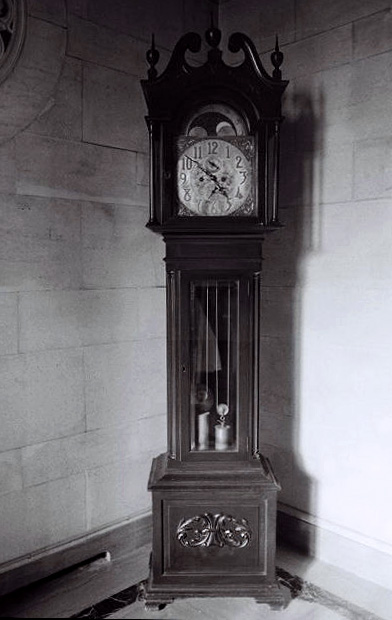 It may have started with the antique grandfather clock in my childhood living room. The mahogany behemoth bonged on the half hour, and whether I was conscious of its waking me or not, the booming rattled my bones: 10:00. 10:30. 11:00. 11:30. Midnight.
Around eighth grade, I began to struggle with falling asleep. As I lay there, I anticipated—dreaded—the half-hour intervals of time. The midnight gongs were the worst: the official passage into the next day, the extended knell of loneliness, the reminder that I was the only person awake in the world. Around then, I would stand in the hallway outside my parents’ room. I knew it was selfish, but I wanted someone, anyone, to join me in my tragic vigil. I rarely even had to say a word. My mom would sense my presence and whisper, “Just close your eyes and lie real still.” It’s like she, too, never slept.
The stiller I lay, the more agitated I became, the weave of the pillow case’s cotton like a waffle iron against my ear, the clock donging till 2:00 or 3:00 before I finally drifted off fitfully, just to wake for school a few hours later.
On the days I didn’t get sleep, I saw everything through the eyes of foggy despair: I can’t concentrate. Got just four hours. I can’t laugh with my friends. Too exhausted. I can’t live for today because it is just a bleary continuation of the day before.
Young adulthood presented the occasional all-nighter, when I would reverse positions in bed, switch blankets, move to the floor, shuffle to the couch. Sometimes Tylenol PM would lure me into a couple hours’ shallow sleep. And after I married, my husband would always lay pillar-still, gently wheezing, for a blissful nine or ten hours.
Insomnia’s most heinous attack, however, hit in my thirties after I gave birth to my second child. Whether postpartum anxiety was the cause or symptom of insomnia, sleep became an obsession, and even with medicine I found myself waking up earlier and earlier: 5:00, 4:00, 3:00. Adrenalin and the screech of red-winged blackbirds kept me at a feverish frayed end of consciousness as I sustained myself with Frappuccinos and Krispy Kremes.
Every insomniac is different. Some of us have trouble falling asleep, while some of us can’t seem to stay there. Some struggle with both ends of the night, wakefulness induced by stress or chemical imbalances. There is rarely an easy solution. People who don’t understand hardcore insomnia say all the things we don’t want to hear: Wear a sleep mask. Drink chamomile tea. Listen to soothing music. You’ll eventually sleep if you get tired enough. It’s like telling a person in a plate-throwing rage to calm down and count to ten.
One book, however, changed my view of insomnia forever.
In Say Goodnight to Insomnia, author Gregg D. Jacobs discusses NSTs, or Negative Sleep Thoughts, such as “How will I function today after such a horrible night of sleep?” He points out that most people function the same cognitively, behaviorally, and physiologically on five and a half hours of sleep as they do on eight. In fact, getting that minimum of “core sleep” usually results in nothing more than yawning and an irritable mood. And even the bad mood can be influenced more by the response to sleep loss than the loss itself.
Jacobs writes:
Recall times in your life when you experienced sleep loss due to pleasurable circumstances such as vacations, late-night socializing or parties, or lovemaking. In contrast to the frustration and aggravation of insomnia, sleep loss under these circumstances does not usually result in impaired daytime mood because these circumstances are under our control and therefore don’t give rise to NST’s.
After reading these words, I determined to change my attitude about sleeplessness. When I woke before dawn, I practiced shifting my panic to excitement: I had some extra time to myself! I started to walk with the sunrise, and though I craved sleep, I began to look forward to these quiet times in the neighborhood watching my newborn’s eyelids flutter as we passed the blooming lilacs. When I had trouble falling asleep in the first place, I settled down with a book and looked forward to hours of quiet time lost in another world. Not surprisingly, my contentment about staying awake often lulled me to sleep pretty quickly.
Insomnia seems to come and go depending on the seasons and stage of life. This spring has been a little more fitful. However, whenever I find myself wide awake at three in the morning, I remind myself that perhaps the need for “me time” outweighs the need for sleep this week. I will survive tomorrow. I may be tired. No matter. There is coffee, and there are still people to love.
Some of my best memories, for example, have been made on trips during which I could barely sleep. The fog did not destroy my friendships, marriage, or career.
While I try to solve my problems rather than luxuriate in them, sometimes I just need to accept them as my reality, my quirky collection of thorns. I’m sensitive, and although that can make my life—and the lives around me—hell, I can also draw upon those rich neurotic resources for my writing. My revulsion toward conflict helps me act as a proactive peacemaker among friends. And my susceptibility to worrying if people like me? It helps me work toward making others feel included. Weaknesses hurt and wreck all manner of plans, but they can also bring a broken, undefined beauty to our lives.
So I give in. I take prescriptions when I need to. And when those don’t work or I wake up too late to take them, I grab a pillow, go downstairs to my sunroom and open the windows. I revel in my aloneness, counting sheep in a Thomas Hardy novel as the crickets and cicadas electrify the air. And then I’m not so alone, which is what I’ve wanted all along, I guess. Keeping sweet vigil into the night with all the insomniacs like you.
Tania Runyan is the author of the poetry collections Second Sky (Cascade Poiema Series), A Thousand Vessels, Simple Weight, and Delicious Air, which was awarded Book of the Year by the Conference on Christianity and Literature in 2007. Her book How to Read a Poem, an instructional guide based on Billy Collins’s “Introduction to Poetry,” was recently released by T.S. Poetry Press. Her poems have appeared in many publications, including Poetry, Image, Books & Culture, Harvard Divinity Bulletin, The Christian Century, Atlanta Review, Indiana Review, and the anthology In a Fine Frenzy: Poets Respond to Shakespeare. Tania was awarded an NEA Literature Fellowship in 2011.
Photograph above by Gaby Av, used under a Creative Commons license.
Previous Post

June 4, 2015
A Place Where We Can Talk
Next Post
June 8, 2015 The Thing Itself: Art and Poverty, Part 1
Browse Our Archives
Select a Category A. G. Harmon Alissa Wilkinson Allison Backous Art Authors Brad Fruhauff Bradford Winters Bryan Bliss Caroline Langston Chad Thomas Johnston Chris Hoke Christiana N. Peterson Culture D.G. Myers D.L. Mayfield Daniel Bowman Jr. David Griffith Elizabeth Duffy Faith Film Greg Wolfe Guest Contributor Interview Jan Vallone Jeffrey Overstreet Jessica Eddings-Roeser Jessica Mesman Griffith Kelly Foster Lindsey Crittenden Morgan Meis music Natalie Vestin Nick Olson Peggy Rosenthal Personal Reflection Poetry Friday Reflection Relationships Review Richard Chess Richard Cole Sara Zarr Shannon Huffman Polson Sonya Bilocerkowycz Tania Runyan Tony Woodlief Topical Categories Uncategorized Vic Sizemore Writing
Select a Month October 2018 September 2018 August 2018 July 2018 June 2018 May 2018 April 2018 March 2018 February 2018 January 2018 December 2017 November 2017 October 2017 September 2017 August 2017 July 2017 June 2017 May 2017 April 2017 March 2017 February 2017 January 2017 December 2016 November 2016 October 2016 September 2016 August 2016 July 2016 June 2016 May 2016 April 2016 March 2016 February 2016 January 2016 December 2015 November 2015 October 2015 September 2015 August 2015 July 2015 June 2015 May 2015 April 2015 March 2015 February 2015 January 2015 December 2014 November 2014 October 2014 September 2014 August 2014 July 2014 June 2014 May 2014 April 2014 March 2014 February 2014 January 2014 December 2013 November 2013 October 2013 September 2013 August 2013 July 2013 June 2013 May 2013 April 2013 March 2013 February 2013 January 2013 December 2012 November 2012 October 2012 September 2012 August 2012 July 2012 June 2012 May 2012 February 2008
Follow Us!
TAKE THE
Religious Wisdom Quiz
What was the primary beverage in biblical times?
Select your answer to see how you score.
Milk Wine Water Beer
Related posts from Good Letters


Morning in a Forgotten Neighborhood


On Writing Odes: Taking Time to Celebrate
TRENDING AT PATHEOS Catholic

Rejecting Doom: Christian Hope And Human Action
Christianity is a religion of hope. We are to have hope and...

It’s What Comes From Within Which Matters
One of the most difficult things for us to understand is why...

Why I Choose the Eucharist Over the Sermon
Choose the Eucharist, Not the Sermon What are we supposed to get...

5 Design Elements Found in Spiritually Rooted Homes
Putting Spirituality Into Home Decor Our homes are more than our living...

Credo: A Story of God Told with the...
About 10 years ago, I began to imagine a personal "Credo" that...

The Anatomy of Divine Revelation in Catholic Thought
The claim that God has made Himself known to human beings is...
view all Catholic blogs
Ad-Free & Subscriber Log-In Subscription Support
- About Us
- 2026 Calendar
- Videos
- Podcasts
- Library of World Religions
- Faith In Media Tracker
- Advertise With Us
- Write for Us
- Privacy Policy
- Terms of Service
- Do Not Sell My Data
- Contact Us
- Radiant Digital
- Manage Newsletter Subscriptions
- Unsubscribe From Notifications
- Sitemap
Copyright 2008-2026, Patheos. All rights reserved.
Subscription Support Ad-Free & Subscriber Log-In
Follow Patheos